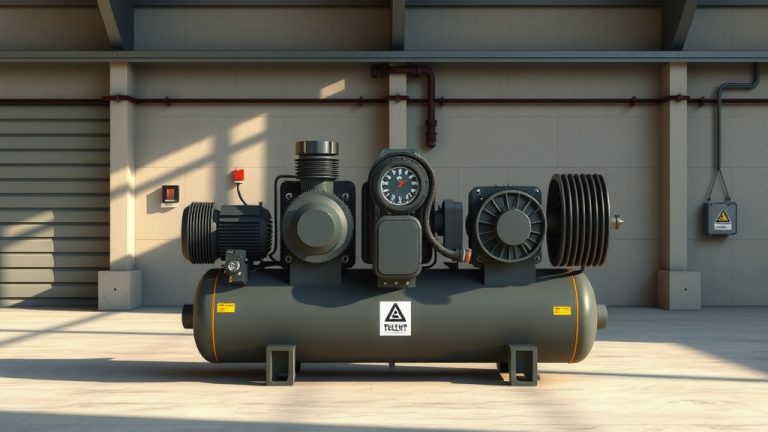
How To Improve Air Compressor Efficiency?
Improving air compressor efficiency involves regular maintenance, proper sizing, and managing air leaks effectively. These steps can significantly lower energy costs and extend your equipment’s lifespan.
To enhance air compressor efficiency, focus on preventive care, optimizing your system for demand, and upgrading outdated components. Even small changes can yield substantial savings.
Here’s a quick summary of what you’ll learn about boosting your air compressor’s efficiency:
- Regular checks and fixing air leaks are your first line of defense.
- Properly sizing your compressor prevents wasted energy from oversizing or undersizing.
- Maintaining air filters and oil quality keeps your system running smoothly.
- Understanding demand and using storage tanks wisely can reduce cycling.
- Considering newer, more efficient compressor technologies offers long-term savings.
How To Improve Air Compressor Efficiency?
You can improve air compressor efficiency by focusing on key areas like leak detection, maintenance, and system optimization. It’s like fine-tuning a car for better gas mileage.
Spotting and Stopping Air Leaks
Think of air leaks as tiny thieves stealing your money. They are often the biggest waste of energy in any compressed air system. Many experts agree that fixing leaks can reduce energy consumption by 20-30% (U.S. Department of Energy).
How do you find these hidden culprits? An easy trick is the “swoosh” test. Listen for hissing sounds around fittings and hoses. You can also spray a soapy water solution on connections; bubbles will reveal leaks.
Once you find a leak, don’t delay! Replace worn seals, tighten connections, or use thread sealant. It sounds simple, but consistent leak management makes a huge difference.
Regular Maintenance is Not Optional
Just like your car needs oil changes, your air compressor needs routine care. This isn’t just about fixing things when they break; it’s about preventing problems.
We found that a well-maintained compressor runs cooler and uses less electricity. What does “regular” mean for your machine? It depends on usage, but checking air filters and oil quality is a great start.
Clean Air Filters Matter
Imagine trying to breathe through a clogged nose; your compressor feels the same way with a dirty filter. A dirty air filter makes your compressor work harder, demanding more energy to pull in air. It’s like trying to run with a hand over your mouth.
Regularly inspecting and replacing air filters ensures a clean air supply. This simple step can significantly reduce the load on your compressor.
Oil Changes and Quality Checks
Compressor oil lubricates internal parts and helps dissipate heat. Old or contaminated oil forces your compressor to strain, increasing friction and heat. This directly impacts its operational efficiency.
Follow your manufacturer’s recommendations for oil type and change intervals. It’s a small investment that protects larger components.
Right-Sizing Your Compressor System
Is your compressor too big or too small? Both scenarios waste energy. An oversized compressor will short-cycle, running inefficiently. A undersized one will constantly run at maximum capacity, wearing out quickly.
Many guidelines suggest measuring your average and peak air demand before choosing a compressor (Compressed Air & Gas Institute). This ensures you get a machine that matches your actual needs, preventing unnecessary energy use.
Optimizing Air Storage and Pressure
Your air receiver tank isn’t just a place to hold air; it’s a strategic component. A properly sized tank can help meet peak demands without forcing your compressor to constantly cycle on and off, which wastes a lot of power.
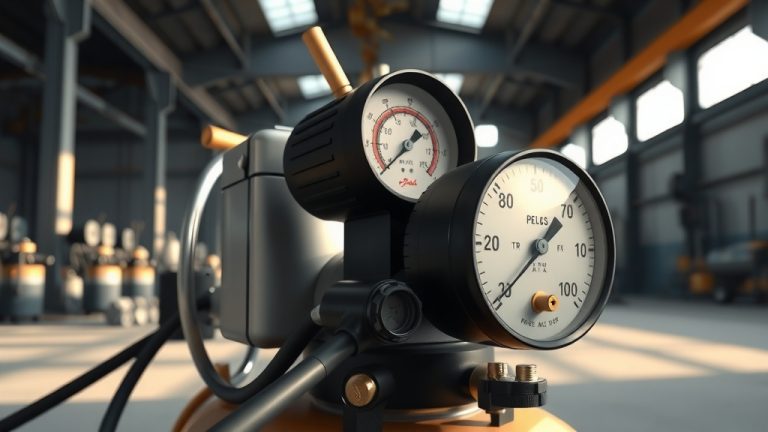
Also, how much pressure do you really need? Many facilities run their systems at higher pressures than necessary. Every 2 PSI reduction in pressure can save you about 1% in energy costs (U.S. Department of Energy). Can you believe that?
Managing Pressure Settings
Review the pressure requirements for your tools and equipment. Can you lower the set point on your compressor without affecting performance? Often, you can find a sweet spot that saves energy.
Consider installing a pressure regulator at the point of use for specific tools. This way, you don’t over-pressurize the entire system for one tool’s need.
Considering Air Quality Components
Wet, dirty air can harm your tools and your compressor. Air dryers and filters remove moisture and contaminants. While these components use a little energy themselves, they protect your entire system.
Dirty air can lead to rust and premature wear in pneumatic tools, forcing your compressor to work harder over time. Investing in good air quality components protects your equipment and maintains system integrity.
Using Efficient Compressor Technologies
If you have an older compressor, modern technology offers significant improvements. Variable Speed Drive (VSD) compressors, for instance, adjust their motor speed to match air demand. This means they only use the power needed, saving substantial energy during fluctuating loads.
Research often connects VSD technology with significant energy reductions, especially in applications with varying air demand (U.S. Department of Energy). It might be a bigger investment upfront, but the long-term savings are compelling.
Comparing Compressor Types
Here’s a look at how different compressor types can impact your energy use:
| Compressor Type | Pros for Efficiency | Considerations |
|---|---|---|
| Fixed Speed Rotary Screw | Good for constant, high demand. | Less efficient with fluctuating demand; frequent load/unload cycles waste energy. |
| Variable Speed Drive (VSD) | Excellent for variable demand; motor speed matches output, major energy savings. | Higher upfront cost. |
| Piston/Reciprocating | Good for intermittent use, lower upfront cost. | Generally less efficient for continuous, high demand than rotary screws. |
Heat Recovery Systems
Did you know that up to 90% of the energy consumed by an industrial air compressor is converted into heat? This heat is often just vented into the atmosphere, a total waste!
Heat recovery systems capture this wasted energy. You can use it to heat water, warm your facility, or for process heating. It’s like getting free energy, significantly boosting overall system efficiency (U.S. Department of Energy).
Implementing a Compressor Management System
For larger systems, a centralized control or management system can orchestrate multiple compressors. These systems ensure that only the necessary compressors run and at their most efficient points.
This prevents compressors from fighting each other or running unnecessarily. It’s like having a smart conductor for your air power orchestra, making sure every instrument plays its part perfectly.
Quick Efficiency Checklist:
- Inspect for air leaks weekly.
- Clean or replace air filters regularly.
- Check and change compressor oil as recommended.
- Verify compressor sizing matches demand.
- Optimize air pressure settings.
- Consider VSD technology for variable loads.
Conclusion
Improving air compressor efficiency isn’t a one-time fix; it’s an ongoing process. By regularly checking for leaks, maintaining your equipment, and optimizing your system’s setup, you can make a real impact. These practical steps not only save you money on energy bills but also extend the life of your valuable equipment. Start with the easiest changes, and you’ll soon see the benefits. Your wallet and your compressor will thank you!
What is the most common cause of air compressor inefficiency?
The most common cause of air compressor inefficiency is typically air leaks within the distribution system. These leaks force the compressor to run longer and more frequently than needed, wasting significant amounts of energy.
How often should I check for air leaks in my system?
For most industrial or busy shop environments, you should ideally check for air leaks at least once a week. For smaller, less critical systems, a monthly check might suffice. Regular vigilance is key to energy savings.
Can a dirty air filter really impact efficiency?
Absolutely, a dirty air filter has a direct and negative impact on efficiency. It restricts airflow into the compressor, forcing the motor to work harder and consume more electricity to achieve the desired pressure and flow.
Is it better to have an oversized or undersized air compressor?
Neither is ideal for efficiency. An oversized compressor will short-cycle frequently, leading to wasted energy and wear. An undersized compressor will run continuously at full capacity, leading to premature wear and potential inability to meet demand. Proper sizing is always best.
How much energy can I save by lowering my system pressure?
Research often indicates that for every 2 PSI reduction in system pressure, you can typically achieve about a 1% energy saving. Reviewing your specific tool and process requirements to find the lowest safe operating pressure can lead to significant savings over time.