How To Design Air Compressor System?
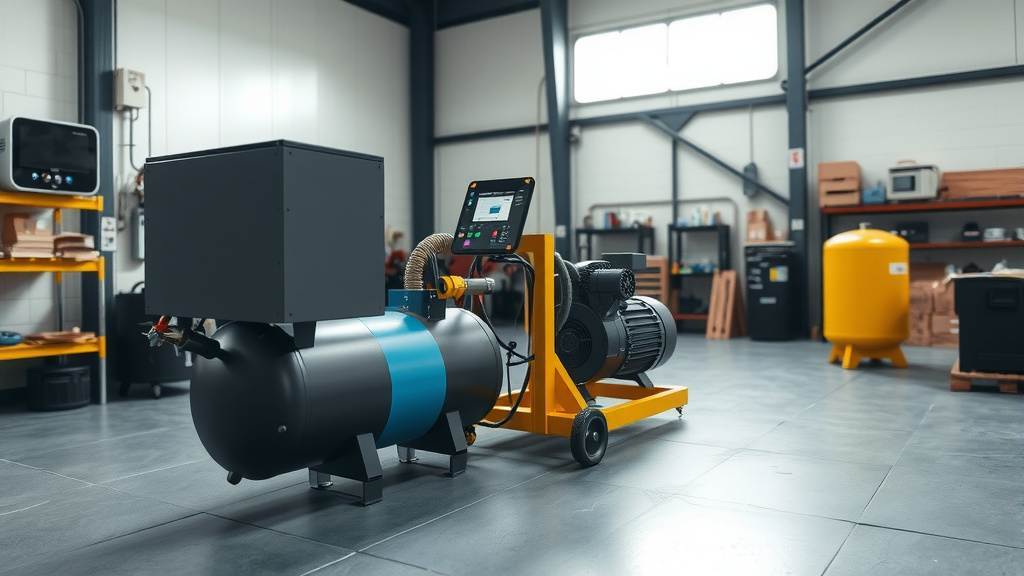
To design an air compressor system, you start by calculating your total air demand, selecting the right compressor type and size, and then adding appropriate air treatment components like dryers and filters.
A well-designed air compressor system ensures efficient operation, minimizes energy waste, and provides a consistent supply of clean, dry air for your specific applications.
Here’s a quick summary of what you need to know for designing an air compressor system:
- Calculate your actual air demand (CFM and PSI) to size your system correctly.
- Choose the best compressor type for your specific application, considering duty cycle and air quality needs.
- Include air treatment components like dryers and filters for clean, dry air.
- Select the right air receiver tank for stable pressure and compressor efficiency.
- Design an efficient piping system to minimize pressure drops and energy loss.
So, you’re thinking about setting up an air compressor system, or maybe upgrading an old one? That’s fantastic! It might seem like a complex puzzle, but with the right steps, you can create a system that truly meets your needs. We want to guide you through this process, making it feel less like a chore and more like building a reliable friend for your workshop or business.
How To Design Air Compressor System?
To design an air compressor system, you must first accurately assess your air requirements, choose suitable equipment, and then plan for proper air treatment and distribution.
Why Proper System Design Matters
Imagine your air compressor system as the lungs of your operation. If the lungs aren’t healthy, the whole body struggles. A poorly designed system can lead to constant headaches: high energy bills, frequent breakdowns, and inconsistent air quality. Many experts say that energy efficiency alone can make or break your budget in the long run.
But when you design it well, it hums along, saving you money, boosting productivity, and keeping your tools happy. It’s like having a trusty workhorse instead of a finicky pony.
Understanding Your Air Needs First
Before you even think about buying equipment, stop and think: what do you actually need air for? Are you running delicate spray painting, heavy-duty impact wrenches, or just inflating tires now and then? This initial step is absolutely crucial. Without it, you’re just guessing, and guesses often cost money.
Calculating Your Air Demand (CFM)
This is where the rubber meets the road. CFM, or cubic feet per minute, tells you how much air your tools consume. You need to list every single tool or process that uses compressed air. Look at their specifications; they usually list the CFM requirement. Then, here’s a trick:
Add up all those CFM figures, but don’t stop there. You won’t run every tool all the time. Apply a diversity factor (usually 50-70% for smaller shops, maybe higher for continuous processes). Then, add a future growth factor, perhaps 10-20%, because who knows what new tools you’ll get next year? We found that underestimating this can leave you short on air when you need it most.
Considering Pressure Requirements (PSI)
Beyond how much air (CFM), you also need to know at what pressure (PSI) your tools operate. Most standard tools run around 90-100 PSI. If one specific tool needs much higher pressure, say 150 PSI, then your entire system must be capable of delivering that. It’s often best to size your compressor for the highest pressure demand, even if other tools use less. You can always reduce pressure, but you can’t magically increase it.
Choosing the Right Compressor Type
This is like choosing the right car for your commute. Do you need a nimble city car or a rugged pickup truck? The two main types are reciprocating (piston) and rotary screw compressors.
Reciprocating vs. Rotary Screw
Let’s break down the common types:
| Feature | Reciprocating (Piston) Compressor | Rotary Screw Compressor |
|---|---|---|
| Duty Cycle | Intermittent use (25-50% on-time) | Continuous use (70-100% on-time) |
| Noise Level | Generally louder | Quieter, often enclosed |
| Air Quality | More oil carryover, requires more filtration | Less oil carryover, generally cleaner air |
| Initial Cost | Lower | Higher |
For a small home garage or occasional use, a piston compressor is often perfect. For a busy manufacturing plant, a rotary screw will be your reliable workhorse, running all day long without breaking a sweat. It’s all about matching the compressor to the demand.
The Importance of Air Treatment
Raw compressed air is often hot, wet, and dirty. Think of it as unpurified water straight from a murky pond. Would you drink that? Probably not! For most applications, especially sensitive tools or painting, you need clean, dry air. This is where air treatment comes in.
Air Dryers: A Must-Have?
Yes, often! Compressed air contains a lot of water vapor, which condenses into liquid water inside your pipes and tools. This causes rust, corrosion, and can ruin your expensive equipment or paint jobs. An air dryer removes this moisture. Research often connects moisture with equipment failure (Purdue University).
The most common types are refrigerated dryers (good for most general applications) and desiccant dryers (for very dry air needs, like medical or critical industrial uses).
Filtration for Clean Air
Beyond water, compressed air also carries tiny particles of dirt, dust, and even oil from the compressor itself. Filters capture these impurities. You might need a series of filters: a particulate filter to catch solids, and an coalescing filter to remove oil aerosols. For incredibly clean air, like in food processing, you might even need carbon filters for odor removal.
Sizing Your Air Receiver Tank
The air receiver tank acts like a battery for your compressed air. It stores air, which helps smooth out pulsations from the compressor and allows the compressor to cycle less often. This “resting” time extends compressor life and saves energy. A general rule of thumb is 1-3 gallons per CFM of compressor output, but this can vary based on your specific application and duty cycle.
A properly sized tank gives your compressor a little breathing room. It prevents your compressor from short-cycling, which is terrible for its motor and overall lifespan. Think of it as a buffer between supply and demand.
Designing Your Air Distribution Network
Now that you have clean, dry air, how do you get it to your tools? The piping system is more than just pipes; it’s an intricate network. We found that poor piping design can cause significant pressure drops, making your tools sluggish and wasting a lot of energy.
Pipe Sizing and Materials
Larger diameter pipes generally mean less pressure drop. For materials, consider steel, copper, or aluminum. Some prefer aluminum because it’s lightweight, easy to install, and resists corrosion. Always remember to install drip legs and drains at low points to catch any remaining moisture. Also, pitch your pipes slightly downwards, allowing gravity to help drain condensation.
Here’s a quick checklist for your piping:
- Use appropriately sized pipes for minimal pressure drop.
- Choose durable, corrosion-resistant materials.
- Install drip legs and automatic drains at low points.
- Slope pipes slightly to aid condensation removal.
- Minimize elbows and fittings to reduce restriction.
System Controls and Automation
Modern air compressor systems aren’t just about raw power; they’re also smart. Advanced controls, like variable speed drives (VSDs), can adjust the compressor’s motor speed to match your actual air demand. This can lead to massive energy savings, especially for operations with fluctuating air needs (US Department of Energy). Other controls manage pressure, optimize sequencing for multiple compressors, and monitor system health.
Think of it as having an autopilot for your air system. It keeps things steady, efficient, and ensures you’re not paying for air you don’t use.
Installation and Ventilation Tips
Where you put your compressor matters a lot. Compressors generate heat, so proper ventilation is key to prevent overheating and maintain efficiency. The air intake should draw in cool, clean air. Dust and high temperatures are the enemies of compressor efficiency and lifespan. Many experts recommend isolating the compressor in a dedicated, well-ventilated room.
Ensure there’s enough space around the unit for maintenance. No one wants to struggle to change a filter in a cramped corner!
Conclusion
Designing an air compressor system doesn’t have to be overwhelming. By carefully assessing your needs, selecting the right components, and paying attention to detail in your piping and controls, you can build a reliable, efficient system. Take your time with each step, consider your future needs, and don’t hesitate to seek advice. A well-designed system will serve you faithfully for years, becoming a quiet, powerful partner in your work.
FAQs
What is the most common mistake when designing an air compressor system?
The most common mistake is underestimating future air demand or failing to account for diversity in tool usage, leading to an undersized compressor that constantly struggles or costs more to run inefficiently.
How do I know if my existing air compressor system is inefficient?
Signs of an inefficient system include your compressor running almost constantly, frequent pressure drops at your tools, high energy bills compared to output, or visible moisture and rust in your air lines.
Should I use an oversized air receiver tank?
While an oversized tank is generally better than an undersized one for stabilizing pressure and reducing compressor cycling, a tank that is excessively large for your CFM demand might take too long to fill, causing delays during peak usage.
What is a pressure drop and why is it bad?
A pressure drop is the reduction in air pressure between your compressor and the point of use, often due to narrow or long pipes, too many fittings, or leaks. It’s bad because it makes tools perform poorly and wastes energy as your compressor works harder to compensate.
Is it always better to buy a larger compressor than needed?
Not necessarily. While a slight buffer for future growth is wise, a significantly oversized compressor can short-cycle frequently, leading to inefficiency and premature wear, especially for fixed-speed models. It’s best to size it accurately for your average demand with a small margin for peak usage.