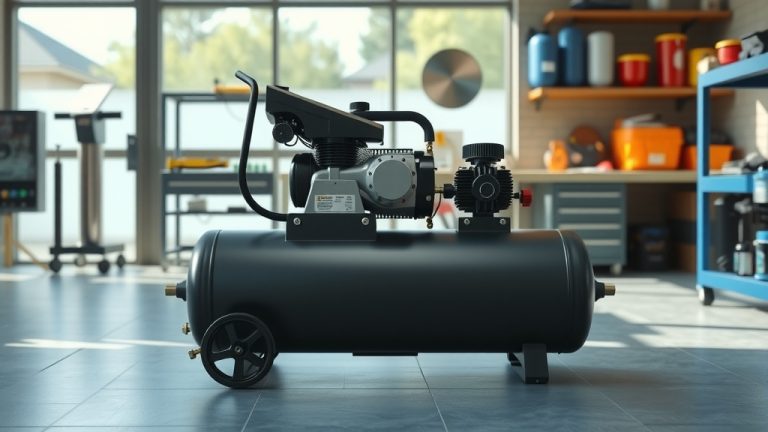
How To Determine Air Compressor Size?
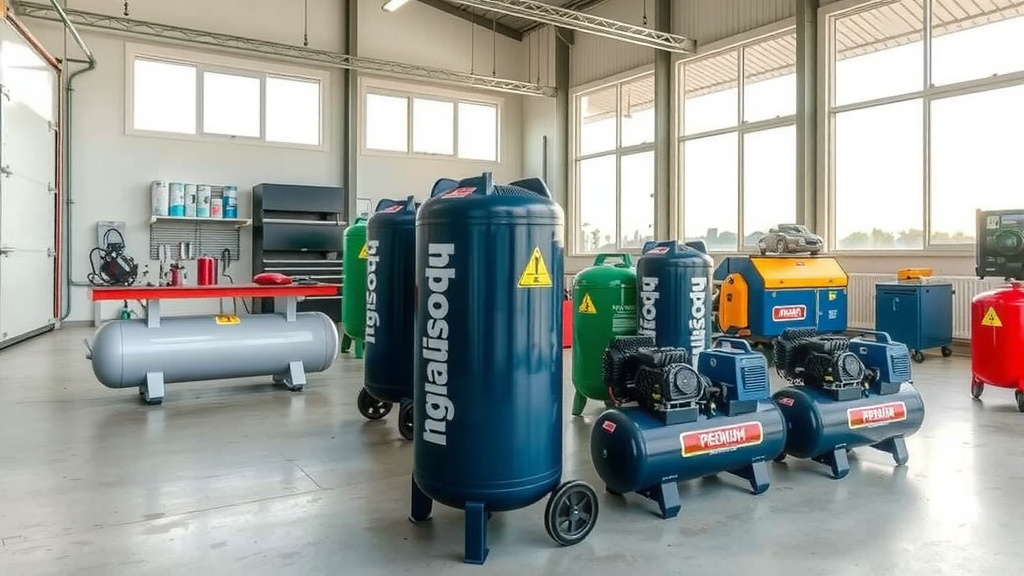
To determine air compressor size, you first need to calculate the total air demand of your tools in Cubic Feet per Minute (CFM) and the required pressure in Pounds per Square Inch (PSI).
Choosing the correct air compressor size ensures your tools operate efficiently, prevents damage, and meets the specific demands of your projects without interruption.
TL;DR: Here’s the quick guide to finding your ideal air compressor:
- Add up the CFM needed for all your air tools, then add a 20-30% safety margin.
- Match the required PSI of your most demanding tool.
- Consider if you need continuous airflow or just intermittent bursts for your tasks.
- Remember, tank size helps with storage, but CFM is the true measure of output.
- Always think about potential future projects to avoid needing an upgrade too soon.
How To Determine Air Compressor Size?
Determining air compressor size involves matching the air flow (CFM) and pressure (PSI) your tools require with the compressor’s output capabilities. It’s about ensuring your equipment runs smoothly and efficiently.
Why Correct Sizing Matters for Your Projects
Getting the right air compressor size is more important than you might initially think. It directly impacts your productivity, tool lifespan, and even your wallet. Too small, and your tools won’t perform; too big, and you’ve overspent.
Avoiding Underpowering Your Tools
Imagine trying to run a high-demand air sander with a tiny, consumer-grade compressor. It just won’t work right. Your tool will stutter, lack power, and could even seize up, wasting your time and creating frustration. Many experts say that underpowering tools shortens their lifespan (Tool Industry Association data).
Preventing Overspending and Wasted Energy
On the other hand, buying a compressor that is significantly larger than your actual needs means spending more money upfront. You also use more electricity than necessary, leading to higher operating costs over time. It’s like buying a semi-truck to pick up groceries; it simply isn’t efficient.
Understanding Key Terms: CFM and PSI
When you start looking at air compressors, two terms will constantly pop up: CFM and PSI. Understanding these is the absolute foundation of proper sizing.
What is CFM? (Cubic Feet per Minute)
CFM measures the volume of air flow an air compressor can produce at a given pressure. Think of it as how much “breathing room” your tools need. A higher CFM number means more air can be delivered, which is vital for tools that run continuously or need a lot of air volume, such as impact wrenches or sanders.
What is PSI? (Pounds per Square Inch)
PSI refers to the pressure of the air being delivered. This is the “force” with which the air pushes your tool. Most tools have a minimum and maximum PSI requirement. You need enough PSI to power the tool, but not so much that you risk damaging it or creating an unsafe situation.
Step-by-Step Guide to Calculating Your Needs
Ready to figure out your specific requirements? Let’s walk through the process together. It’s simpler than it sounds, and it ensures you make a smart decision.
List All Your Air Tools
Start by listing every air-powered tool you own or plan to use. Don’t forget less obvious items like blowguns or tire inflators. This comprehensive list helps you capture all potential demands.
Find Tool Requirements
For each tool on your list, check its manual or manufacturer’s specifications. You’ll be looking for two key numbers: the recommended CFM and PSI. Always look for the “at 90 PSI” CFM rating, as this is a common industry standard.
Calculate Total CFM
This is where it gets a little tricky but remains manageable. If you plan to use multiple tools simultaneously, you’ll need to add up their individual CFM requirements. If you use them one at a time, you only need to match the highest single tool’s CFM. We often found it is best to add a safety margin.
- Identify the tool with the highest CFM requirement.
- For tools used simultaneously, sum their CFM ratings.
- Add a 20-30% buffer to your total CFM. This accounts for air leaks, inefficiencies, and future growth.
- For example, if your total CFM is 10, aim for a compressor that delivers 12-13 CFM.
Consider Duty Cycle and Usage
How often and for how long will you be using your air tools? If you need continuous airflow for extended periods, like with a paint sprayer, you’ll need a compressor with a higher “duty cycle”. For intermittent use, such as occasional nail gun shots, a smaller compressor with a good-sized tank might suffice.
Air Compressor Types and Their Suitability
Air compressors come in different styles, each suited for particular types of work. Understanding the basic differences helps you align the machine with your application. Many experts suggest choosing between piston, rotary screw, and portable models depending on your needs (Compressed Air Magazine).
Piston (Reciprocating) Compressors
These are common for home and small shop use. They work by using pistons to compress air. They are good for intermittent tasks and are generally more affordable.
Rotary Screw Compressors
Often found in industrial settings, rotary screw compressors provide continuous, high-volume air. They are more efficient for constant use but are also significantly more expensive.
Portable Compressors
These are designed for easy movement, often used for job sites or small DIY tasks. They usually have smaller tanks and are ideal for tools with lower CFM requirements.
Tank Size vs. Compressor Output: Don’t Confuse Them
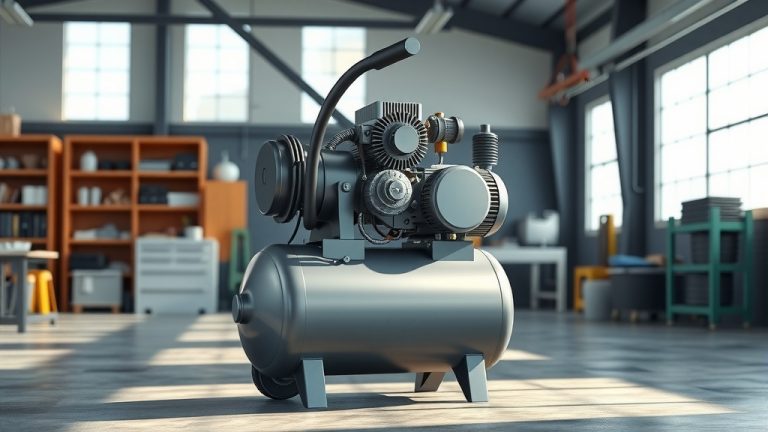
It’s easy to think a bigger tank means a more powerful compressor, but that’s not quite right. The tank stores compressed air, acting like a reservoir. The compressor’s motor and pump determine its actual output (CFM). A larger tank will simply allow the compressor to run less frequently. Here’s a quick comparison:
| Feature | CFM (Output) | Tank Size |
|---|---|---|
| What it measures | Air volume delivered per minute | Volume of stored compressed air |
| Impact on tools | Directly powers tools | Provides air for short bursts; less cycling |
| Critical for | Tool performance and continuous use | Intermittent tool use, reducing motor run time |
| Analogy | The engine’s horsepower | The fuel tank’s capacity |
Planning for the Future
One common mistake is buying a compressor that just barely meets your current needs. We found that users often wish they had a slightly larger unit within a year or two. Think about any new tools or projects you might undertake in the near future. It’s better to have a little extra capacity than to be forced to upgrade too soon.
Essential Checklist Before You Buy
Before you make that final purchase, run through this quick checklist. It helps to ensure you’ve covered all your bases and are getting the best air compressor size for your unique situation.
- Have you calculated your total CFM requirement, including a safety margin?
- Do you know the maximum PSI needed for your most demanding tool?
- Will you use tools continuously or intermittently?
- Is the power source (electrical outlet type) compatible with the compressor?
- Have you considered noise levels, especially if working in a residential area?
- Does the compressor have adequate tank size for your intermittent tasks, if applicable?
Conclusion
Choosing the right air compressor size is a thoughtful process, not a guessing game. By understanding your tools’ CFM and PSI requirements, adding a smart safety margin, and considering your usage patterns, you’ll be well-equipped. A correctly sized compressor means smoother projects, longer tool life, and better overall value for your investment.
What is a good CFM for a home air compressor?
For most general home garage or DIY tasks, a compressor providing around 4-6 CFM at 90 PSI is often a good starting point. This range supports common tools like nail guns, tire inflators, and blowguns. For more demanding tools like air sanders or grinders, you’d need closer to 10-15 CFM.
Does bigger air compressor tank mean more power?
No, a bigger air compressor tank does not mean more power in terms of continuous output. Tank size refers to the air storage capacity. A larger tank lets the compressor motor run less frequently, providing more air for quick bursts, but the actual power and continuous airflow (CFM) are determined by the motor and pump.
Can an air compressor be too big?
Yes, an air compressor can definitely be too big. If you purchase a compressor significantly larger than your needs, you’ll pay more upfront and likely incur higher electricity costs. It can also be physically larger, taking up more space than necessary in your workshop or garage.
What is the difference between SCFM and CFM?
CFM (Cubic Feet per Minute) measures the air volume delivered. SCFM (Standard Cubic Feet per Minute) is a more precise measurement that normalizes CFM to standard conditions of temperature, pressure, and humidity (usually 68°F, 14.7 PSIA, and 36% relative humidity). For practical purposes, when sizing home compressors, the stated CFM at a specific PSI is usually sufficient to compare tools and compressors.
How do I find the CFM of my existing air tools?
You can find the CFM requirement of your existing air tools in their owner’s manual or on the manufacturer’s website. Look for specifications listed as “CFM at 90 PSI” or “Air Consumption.” If you cannot find it, a quick online search for the tool’s model number usually provides this information.