
What Is Air Compressor Aftercooler?
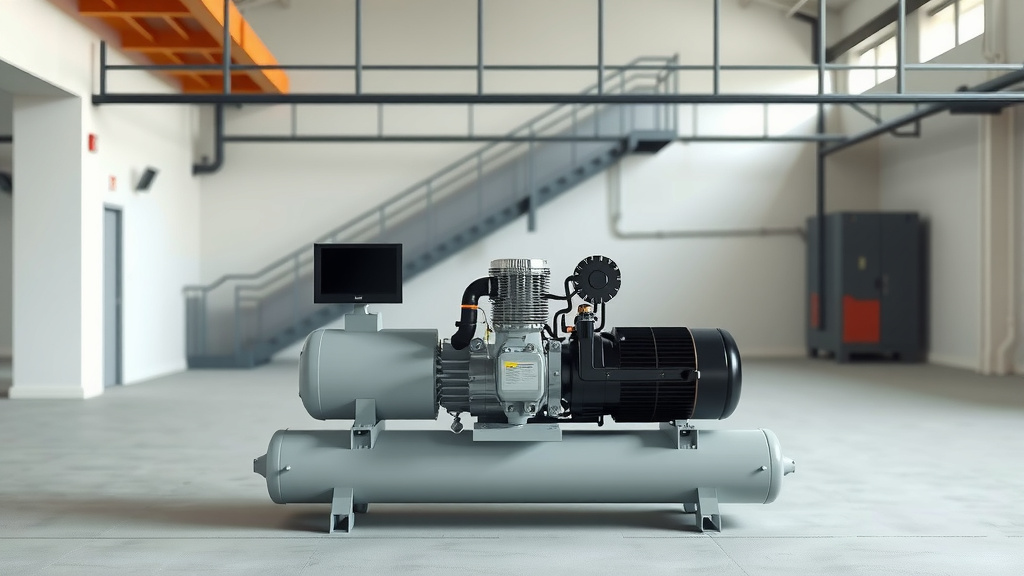
An air compressor aftercooler is a heat exchanger that significantly reduces the temperature of compressed air immediately after it leaves the compressor’s pumping unit. This cooling action is vital for removing a large amount of moisture from your compressed air system.
Essentially, it’s a crucial component that protects your equipment and ensures cleaner, drier air for your applications by condensing water vapor into liquid form.
- An aftercooler cools hot, compressed air to remove harmful moisture.
- It prevents rust, corrosion, and damage to tools and equipment.
- You’ll find them on almost all industrial air compressors, making air quality better.
- Removing water extends the life of downstream equipment like dryers and filters.
- It’s a simple, cost-effective way to get more reliable compressed air.
What Is Air Compressor Aftercooler?
An air compressor aftercooler is like a radiator for your hot, compressed air. Its main job is to cool this superheated air, causing water vapor to condense into liquid form, which you can then drain away. This step is key for any air system.
Why Does Compressed Air Get So Hot?
When an air compressor squeezes air, it creates a lot of heat. This is just physics at work, as pressure builds, temperature rises dramatically. You might feel this heat if you touch the compressor itself.
This hot air holds a lot of moisture, much like a humid summer day. If you don’t cool it down, that moisture becomes a big problem later on.
The Problem with Hot, Wet Air
Imagine tiny water droplets spraying inside your expensive tools or machinery. Not good, right? Hot, wet air causes rust, corrosion, and can damage sensitive components. It also dilutes lubricants and can mess up paint jobs or pneumatic controls.
Many experts say that moisture is the number one enemy of compressed air systems (Compressed Air & Gas Institute).
How Does an Aftercooler Work Its Magic?
The process is quite straightforward. Hot air from the compressor enters the aftercooler. Inside, it flows over cool surfaces, often tubes, which are cooled by either ambient air or circulating water.
As the hot compressed air loses heat, its temperature drops significantly. This rapid cooling forces the water vapor suspended in the air to change into liquid water. Think of a cold drink on a hot day – condensation forms on the outside of the glass.
This newly condensed water then collects in a separator, ready to be drained away. It’s a simple, yet highly effective principle.
Air-Cooled Aftercoolers
These are the most common type, especially for smaller to medium-sized compressors. They work much like a car radiator. Hot air flows through tubes, and a fan blows cooler ambient air over these tubes, carrying heat away.
They are generally simpler to install and maintain. You’ll find these on many rotary screw and piston compressors.
Water-Cooled Aftercoolers
For larger, industrial compressors or where space is tight, water-cooled aftercoolers are often used. These use a separate water supply, usually from a cooling tower or chiller, to remove heat. The water circulates through a shell and tube exchanger, cooling the compressed air.
They can achieve lower discharge air temperatures than air-cooled units. Many engineers prefer them for heavy-duty applications.
The Big Benefits of Using an Aftercooler
Adding an aftercooler to your air compressor system brings a cascade of advantages. You’ll notice these benefits almost immediately, from your tools to your energy bill.
Protect Your Downstream Equipment
Dryer air means less wear and tear on everything connected to your compressor. Tools last longer, pneumatic cylinders operate more smoothly, and delicate instruments are safer. This protection saves you money on repairs and replacements.
Improve Air Quality and Productivity
Cleaner, drier air leads to better results for your applications. Paint finishes are smoother, critical processes run without interruption, and product quality improves. You’ll experience fewer operational headaches and downtime.
Enhance Safety and Efficiency
By removing moisture, you reduce the risk of rust particles entering the air stream, which can be a hazard. Also, a drier system operates more efficiently, as water vapor doesn’t take up valuable space in your pipes. We found that aftercoolers are a key part of an efficient system design.
Extend Air Dryer Lifespan
If you have a refrigerated or desiccant air dryer, an aftercooler acts as its best friend. It removes most of the bulk moisture before the air even reaches the dryer. This means your dryer doesn’t have to work as hard, extending its service life and reducing energy consumption.
Where Does the Aftercooler Fit in the System?
The aftercooler is typically the very first component your hot, compressed air encounters after leaving the compressor’s pumping stage. It sits between the compressor and any other air treatment equipment, like filters or air dryers.
Think of it as the gatekeeper, stopping moisture from ruining your day before it even starts. Research shows its placement is critical for system efficiency (DOE).
Aftercooler Maintenance Checklist
Keeping your aftercooler in top shape is simple but important. Regular checks ensure it continues to do its job effectively, protecting your entire system.
- Clean the cooling fins or tubes regularly to ensure proper heat exchange.
- Check and clean the moisture separator bowl and drain trap.
- Inspect for any leaks in air or water lines, if applicable.
- Ensure the cooling fan (for air-cooled units) is working correctly.
- Monitor discharge air temperature to detect any drops in performance.
Signs Your Aftercooler Needs Attention
How do you know if your aftercooler isn’t pulling its weight? Keep an eye out for these clues. Ignoring them can lead to bigger problems down the line for your air compressor setup.
- Increased moisture in your air lines, tools, or finished products.
- Higher than normal air discharge temperatures after the aftercooler.
- The compressor running more frequently than usual.
- Reduced efficiency in your downstream air dryer.
Common Aftercooler Issues and Solutions
Like any mechanical part, aftercoolers can sometimes face challenges. Knowing what to look for and how to fix it can save you time and money. Here are some common problems you might encounter.
| Issue | Possible Cause | Simple Solution |
|---|---|---|
| Excessive moisture downstream | Clogged fins/tubes, faulty drain, undersized unit | Clean unit, check drain, consult technician |
| High discharge air temperature | Dirty cooling surfaces, fan motor issue (air-cooled), insufficient water flow (water-cooled) | Clean fins/tubes, check fan/motor, verify water supply |
| Water leaking from unit | Corroded tubes, loose fittings, cracked housing | Tighten fittings, repair/replace damaged parts |
| Automatic drain not working | Clogged drain, electrical fault, worn-out valve | Clean drain, check power, replace valve |
Conclusion
Understanding the air compressor aftercooler is really about appreciating how simple solutions can bring big results. This component, often overlooked, is a powerhouse for keeping your compressed air system healthy. It tackles the core issue of heat and moisture, which we found is crucial for any efficient operation.
By investing in a properly sized and maintained aftercooler, you’re not just buying a piece of equipment; you’re safeguarding your tools, improving product quality, and extending the life of your entire air system. Think of it as your first line of defense against the silent, damaging effects of wet air.
How hot does air get after compression?
After air compression, the temperature can soar quite high, often reaching 250°F to 350°F (120°C to 175°C) or even more, depending on the compressor type and pressure ratio. This intense heat is why an aftercooler is so essential.
Can I run an air compressor without an aftercooler?
While some very small, intermittent-use compressors might operate without one, running a continuous or industrial air compressor without an aftercooler is generally not recommended. You would quickly encounter severe moisture problems, damaging tools and downstream equipment, and compromising air quality.
How much moisture does an aftercooler remove?
An efficiently working aftercooler, followed by a moisture separator, can remove a substantial amount of moisture, often between 60% to 80% of the total water vapor present in the compressed air. This makes it a critical first step in air treatment.
What is the ideal temperature after an aftercooler?
The ideal temperature for air exiting an aftercooler is typically within 10-20°F (5-10°C) of the cooling medium’s temperature (ambient air for air-cooled, or cooling water for water-cooled). For most systems, this means air leaves around 100°F (38°C) or cooler.
Does an aftercooler consume much energy?
An aftercooler itself generally consumes very little energy. Air-cooled units require power for a fan, which is usually a small motor. Water-cooled units might rely on an existing cooling water system. The energy saved by protecting other equipment and improving efficiency often outweighs the minimal energy consumption.
