
What Is Air Compressor And How It Works?
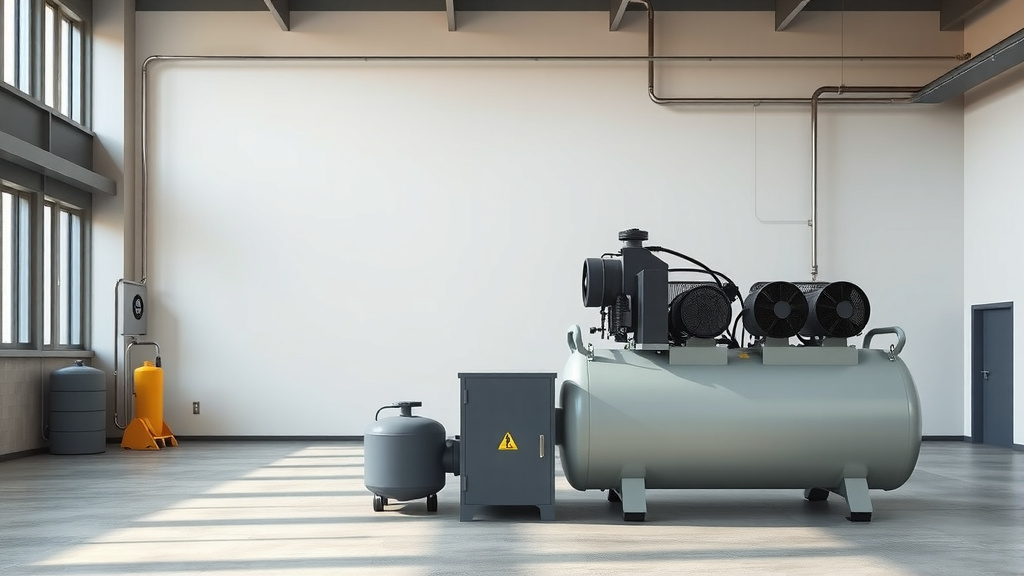
An air compressor is a machine that converts power into kinetic energy by compressing and pressurizing air. Think of it like a powerful lung, sucking in ambient air and squeezing it into a smaller space.
It works by drawing in air, reducing its volume to increase pressure, and then storing this high-pressure air in a receiver tank for later use. This stored energy powers various tools for many tasks.
Here’s a quick overview of what you’ll discover in this guide:
- Air compressors take in regular air and squeeze it into a small tank.
- This squeezed, high-pressure air becomes powerful stored energy.
- You can then use this energy to run many different tools, like drills, paint sprayers, or impact wrenches.
- They come in various types, each suited for specific jobs, from home projects to large industrial applications.
- Choosing the right one means looking at factors like how much air it moves and its storage capacity.
What Is Air Compressor And How It Works?
An air compressor is a device that harnesses the power of pressurized air to operate tools and equipment. It’s essentially a specialized pump designed to take in air from its surroundings and then force it into a smaller volume.
How an Air Compressor Transforms Power
At its core, an air compressor converts one type of energy into another. It takes electrical power or gasoline engine power and turns it into potential energy stored in compressed air. This stored energy is then ready to perform work when you need it.
The Basic Principle: Squeeze and Store
Imagine blowing up a balloon. The air inside becomes pressurized. An air compressor does this on a much larger and more powerful scale. It pulls in air, squeezes it tight, and then keeps it in a tank, waiting to be used. This simple act creates a mighty energy source for many jobs.
Understanding the Core Mechanics of Operation
So, how does this clever machine actually achieve all that compression? It’s a fascinating process involving a few key steps. Understanding these steps can help you appreciate your compressor’s capabilities.
The Intake and Compression Stages
First, the compressor draws in ambient air through an inlet valve. Then, a motor powers a mechanism—often pistons or rotary screws—that physically reduces the volume of this air. As the air’s volume shrinks, its pressure naturally increases. Think of pushing down on a bicycle pump; the air gets denser and pushes back. This increased pressure is the magic ingredient that makes tools work.
Storage and Delivery: The Pressure Tank
Once the air is compressed to a certain pressure, it’s pushed into a storage tank, also called a receiver tank. This tank acts as a battery for your compressed air. When you connect a tool, a regulated amount of this high-pressure air is released through an outlet, powering your device. Many experts say that proper tank size helps maintain consistent airflow for tools (National Institute for Occupational Safety and Health).
Types of Air Compressors: Finding Your Match
Just like cars, air compressors come in various models, each designed for different tasks. Knowing the main types helps you choose the perfect one for your specific needs. We found that the main categories depend on their compression method.
Reciprocating (Piston) Compressors
These are perhaps the most common type, working much like an internal combustion engine. A piston moves up and down inside a cylinder, sucking in air and then pushing it out at higher pressure. They are popular for both small home workshops and larger industrial settings.
Rotary Screw Compressors
Instead of pistons, these compressors use two helical screws that intermesh, trapping air and reducing its volume. Rotary screw models are known for their continuous, quiet operation and are typically found in industrial environments needing a constant air supply. Research often connects these units with greater efficiency for prolonged use (Department of Energy).
Centrifugal Compressors
These large, powerful machines use a rotating impeller to accelerate air, then slow it down to increase pressure. Centrifugal compressors are often used in very large industrial applications where a massive volume of compressed air is needed. They are not what you would find in your garage, but rather in a major manufacturing plant.
Oil-Lubricated vs. Oil-Free Air Compressors
Compressors also vary by how their internal parts are lubricated. Oil-lubricated models use oil to reduce friction and wear, offering greater durability. Oil-free compressors use special coatings to operate without oil, making them ideal for sensitive applications like dentistry or food processing where air purity is critical. Each type has its benefits, impacting maintenance and air quality.
Practical Applications: Where Do We Use Them?
Air compressors are truly versatile tools. You might be surprised at the wide range of tasks they can power, both around your home and in major industries. They provide a clean, powerful, and safe alternative to electric motors for many jobs.
Home & Hobby Uses
Around the house, a small air compressor can be your best friend. Imagine quickly inflating car tires, sports equipment, or even an air mattress. They also power handy tools like nail guns for DIY projects, paint sprayers for furniture makeovers, and blow guns for clearing dust. Many people find them indispensable for weekend projects.
Industrial & Professional Settings
In professional environments, air compressors are the backbone of many operations. Car repair shops use them for impact wrenches and tire changers. Construction sites depend on them for jackhammers and concrete breakers. Factories use them for pneumatic assembly lines, robotic arms, and much more. Their ability to deliver consistent power makes them critical for productivity.
Here’s a quick look at some common uses:
- Powering impact wrenches for vehicle maintenance.
- Operating paint sprayers for smooth finishes.
- Running nail guns for quick construction tasks.
- Inflating tires, balls, and other inflatables.
- Cleaning dusty areas with an air blow gun.
Choosing the Right Air Compressor for You
With so many options, picking the right air compressor can feel a bit overwhelming. But don’t worry! By considering a few key factors, you can easily narrow down your choices and find a machine that perfectly fits your needs. We believe the best choice is always the one that matches your specific work.
What to Consider Before Buying
Before you buy, think about the tasks you’ll perform most often. Will you be inflating tires, painting a fence, or running heavy-duty tools all day? The tools you plan to use dictate the compressor’s requirements. Also, consider your available power source, whether it’s standard household electricity or a need for a gas engine. We found that matching the compressor to the tool is the most important step.
CFM and PSI: Your Key Numbers
When shopping, you’ll often see “CFM” and “PSI.” CFM (Cubic Feet per Minute) tells you how much air the compressor can deliver, while PSI (Pounds per Square Inch) indicates the pressure it can achieve. Your tools will specify the CFM and PSI they require, so ensure your compressor meets those demands. Always choose a compressor that exceeds your tool’s needs by about 10-20% for optimal performance and longevity.
Tank Size Matters
The tank size dictates how much compressed air is stored. A larger tank means the compressor runs less frequently, which can be helpful for tools that use a lot of air intermittently. For continuous use, CFM is more important than tank size. For quick, short bursts, a larger tank provides a helpful buffer. Consider your workspace too, as tank size directly affects a compressor’s footprint. Many experts suggest a larger tank for intermittent, high-demand tools.
Use this checklist to help with your selection:
- List all the tools you plan to power.
- Check the CFM and PSI requirements for each tool.
- Decide if you need an oil-lubricated or oil-free model.
- Consider your available space and noise tolerance.
- Set a realistic budget for your purchase.
Here’s a simplified comparison of common compressor types:
| Compressor Type | Best For | Key Features |
|---|---|---|
| Piston (Reciprocating) | Home shops, light industrial use | Intermittent use, versatile, often portable |
| Rotary Screw | Continuous industrial operation | Quiet, energy efficient, constant airflow |
| Centrifugal | Very large industrial volumes | High volume, oil-free option, complex systems |
Conclusion
Air compressors are truly ingenious machines that turn simple air into a versatile power source. From inflating a bicycle tire to running heavy industrial equipment, their underlying principle of compressing and storing air remains the same. We hope this guide has demystified how these powerful tools work and helped you understand their value. Choosing the right one means considering your specific needs, the tools you’ll use, and the important numbers like CFM and PSI. With this knowledge, you are now well-equipped to appreciate the humble air compressor and perhaps even find the perfect one for your next project. It’s a fundamental piece of equipment that makes countless tasks easier and more efficient.
What are the main components of an air compressor?
The main components include the motor (electric or gas), the air intake valve, the compression pump (piston or rotary screw), a receiver tank for storage, a pressure switch to regulate operation, and a safety valve. Each part plays a critical role in its overall function.
Can I use any air tool with any air compressor?
Not always. Air tools have specific CFM (airflow) and PSI (pressure) requirements. Your air compressor must meet or exceed these requirements for the tool to function effectively and safely. Always check the tool’s specifications before connecting it.
What is the difference between single-stage and two-stage air compressors?
A single-stage compressor compresses air once to reach its desired pressure. A two-stage compressor compresses air in two steps, first to an intermediate pressure and then to a higher final pressure. Two-stage compressors are typically more efficient and reach higher PSI, often used for demanding industrial applications.
How often should I drain my air compressor tank?
We found that you should drain your air compressor tank after every use, or at least daily if used regularly. Condensation builds up inside the tank, and regular draining prevents rust and corrosion. This simple step significantly prolongs the life of your compressor (Occupational Safety and Health Administration).
Are oil-free air compressors better than oil-lubricated ones?
Neither is inherently “better”; it depends on the application. Oil-free compressors produce cleaner air and require less maintenance, making them ideal for sensitive environments. Oil-lubricated compressors often last longer, run quieter, and are more durable for heavy-duty, continuous use. Your specific needs should guide your choice.
