
Can You Use A Regular Air Compressor For Paintball?
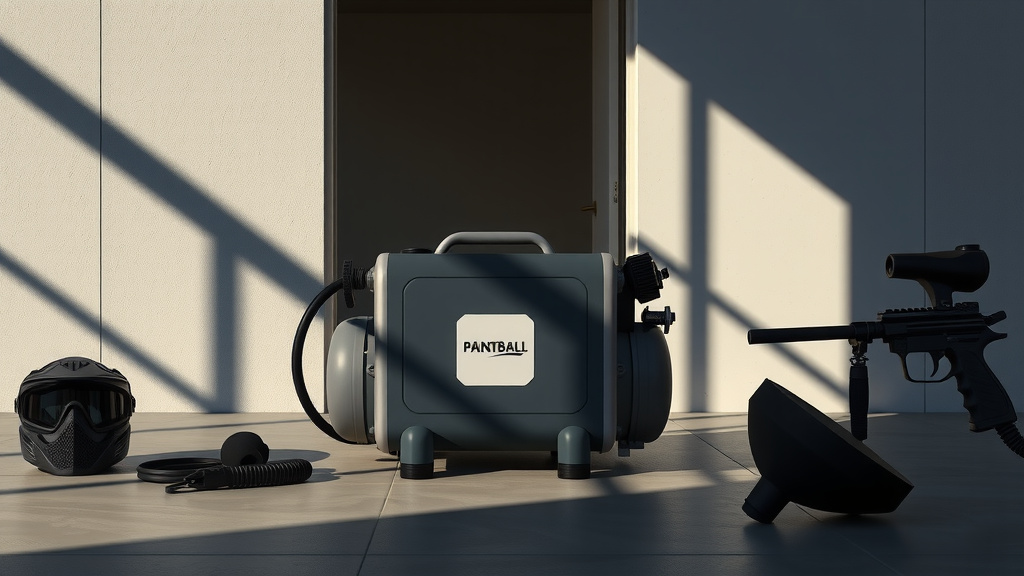
No, you generally cannot use a regular air compressor for paintball because the pressure requirements and air purity standards are vastly different.
Using a standard garage air compressor to fill a paintball tank is unsafe and can damage your equipment or cause serious injury due to incompatible pressure and air quality.
Here’s the TL;DR on using a regular air compressor for paintball:
- Regular compressors don’t reach the high pressures needed for paintball tanks (3000-4500 PSI).
- Their air often contains oil and moisture, which can ruin your paintball marker.
- Filling a high-pressure tank with an incompatible compressor is extremely dangerous.
- Always use specialized High-Pressure Air (HPA) fill stations for paintball tanks.
- For safe play, prioritize proper equipment and filling procedures.
Can You Use A Regular Air Compressor For Paintball?
In short, no, using a regular air compressor for paintball is not a good idea. It’s unsafe and won’t work correctly for your paintball gear.
You’re likely asking this question because you have a home air compressor and want to save a trip to the paintball field. It’s a common thought! However, when it comes to powering your paintball marker, there’s a big difference between your garage compressor and what your paintball tank needs.
The Short Answer: It’s Not Recommended
Many paintball enthusiasts wonder if their trusted home air compressor can fill a paintball tank. The straightforward answer from our research is a resounding no. It’s simply not designed for the job.
Think of it like trying to put diesel in a gas car; they both move vehicles, but the internal mechanisms are completely different. Your paintball tank requires a specific type of air and pressure that a regular compressor can’t provide safely.
Pressure Differences: Why Your Home Compressor Falls Short
Your regular home air compressor, often used for tasks like inflating tires or running air tools, typically produces air at around 90-175 pounds per square inch (PSI). That’s perfect for a nail gun or blowing dust off a workbench.
However, paintball tanks, especially High-Pressure Air (HPA) tanks, need much, much higher pressures. We found that these tanks are designed to hold air at 3000 PSI, 4500 PSI, or even 5000 PSI. That’s a massive difference!
Understanding Paintball Air Needs
Paintball markers operate using either compressed air (HPA) or CO2. Both require specialized tanks that can handle extreme internal pressures. An HPA tank, for instance, is built to store air under thousands of PSI.
Your standard compressor just can’t generate that kind of pressure. Trying to force it would be like trying to fill a bathtub with a squirt gun – frustrating and ultimately ineffective.
Air Quality Matters: Not All Air is Equal
Beyond pressure, there’s another critical factor: air quality. Regular air compressors often introduce oil and moisture into the air they compress. These are side effects of their operation, designed for tools, not delicate paintball markers.
Think about the air you breathe; you want it clean, right? Your paintball marker needs the same consideration.
The Impact of Impurities
Oil and moisture are bad news for your paintball gun’s internal components. We found that these impurities can clog up regulators, corrode seals, and generally reduce the performance and lifespan of your marker. In severe cases, it can cause irreparable damage. Paintball experts consistently stress the importance of clean, dry air for optimal marker function.
Safety Concerns: A Big Red Flag
This is perhaps the most important point. Attempting to fill a high-pressure paintball tank with a regular compressor is incredibly dangerous. Paintball tanks are pressure vessels, and mishandling them can lead to serious accidents.
Many experts say that overfilling or using an incompatible air source can cause a tank to rupture or explode. This isn’t just a minor malfunction; it’s a hazard that can result in severe injury or worse. Your safety and the safety of those around you should always come first.
Understanding Paintball Tank Safety
Paintball tanks undergo regular “hydrotesting” to ensure they can safely hold their rated pressure. Proper filling practices are part of this safety ecosystem. When you use a specialized fill station, you’re trusting in equipment and personnel trained for high-pressure systems (NFPA guidelines).
Can a Regular Compressor Help At All?
While a regular air compressor can’t fill your paintball tank, it still has its uses. It’s a handy tool for many jobs around the house or garage. Here’s where it shines:
- Inflating car tires, bike tires, or sports balls.
- Powering pneumatic tools like nail guns or impact wrenches.
- Cleaning dusty workspaces or blowing debris off surfaces.
- Painting with certain types of spray guns.
So, your compressor is still a valuable asset, just not for filling HPA tanks.
Filling Your Paintball Tank: The Right Way
To safely and correctly fill your paintball tank, you need to visit a specialized fill station. These are typically found at paintball fields, pro shops, or some dive shops.
These stations use high-pressure compressors specifically designed for HPA tanks or large CO2 storage tanks. They have the correct fittings and safety procedures to ensure your tank is filled to the precise pressure without risk. It’s the safest and most reliable method, ensuring your equipment performs as expected and lasts longer.
The Role of HPA Systems
Specialized HPA compressors are built differently. They use multi-stage compression to reach thousands of PSI and often include filtration systems to remove moisture and oil, delivering clean, dry air. This is what your paintball marker truly needs to operate reliably.
HPA vs. CO2: A Quick Comparison
When you’re choosing air for your paintball marker, you’ll generally find two options. Here’s a quick look at how they stack up:
| Feature | High-Pressure Air (HPA) | Carbon Dioxide (CO2) |
|---|---|---|
| Pressure | 3000-5000 PSI (Gas) | 800-850 PSI (Liquid) |
| Consistency | Very consistent shots | Affected by temperature (less consistent) |
| Fill Time | Quick fill | Quick fill |
| Cost | Tanks often cost more | Tanks often cost less |
| Environmental Impact | Clean, dry air (no residue) | Can leave residue, can freeze internal parts |
| Compatibility | Most modern markers | Older markers, some entry-level |
Key Takeaways for Safe Paintball Fun
To ensure you have a safe, enjoyable, and uninterrupted paintball experience, remember these key points:
- Always use specialized High-Pressure Air (HPA) or CO2 tanks for your marker.
- Get your tanks filled at reputable paintball fields or pro shops.
- Never attempt to use a regular household air compressor to fill a paintball tank.
- Regularly inspect your paintball tank for damage or expired hydrotest dates.
- Invest in a good quality HPA system for consistent performance and reliability.
- Prioritize safety protocols at all times when handling compressed air.
Conclusion
While the idea of using your regular home air compressor for paintball might seem convenient, the risks far outweigh any potential benefits. The vast difference in pressure requirements, the need for clean, dry air, and critical safety considerations make it an impractical and dangerous endeavor. Stick to specialized HPA fill stations or CO2 sources for your paintball needs. Your safety and the longevity of your equipment are far too important to compromise.
Is it Safe to Fill a Paintball Tank with a Regular Air Compressor?
No, it is not safe. Regular air compressors cannot achieve the high pressures needed for paintball tanks and may introduce oil or moisture, which are both dangerous and damaging.
What is the Recommended Pressure for Paintball Tanks?
Most High-Pressure Air (HPA) paintball tanks are designed to be filled to 3000 PSI or 4500 PSI. CO2 tanks operate at a much lower pressure, around 800-850 PSI, which is still too high for a regular compressor.
Can I Use a Tire Inflator for Paintball?
Absolutely not. A tire inflator is essentially a small, regular air compressor designed for very low pressures (typically up to 100-150 PSI). It poses the same safety risks and incompatibility issues as a larger home compressor when applied to high-pressure paintball tanks.
Where Can I Get My Paintball Tank Filled Properly?
You should always get your paintball tank filled at a dedicated paintball field, a reputable paintball pro shop, or a dive shop that offers HPA or CO2 fills. These locations have the correct equipment and trained personnel to do it safely.
What’s the Difference Between HPA and CO2 for Paintball?
HPA (High-Pressure Air) provides more consistent shots, especially in varying temperatures, and is cleaner for your marker. CO2 is liquid inside the tank and turns to gas as you shoot, which can cause pressure fluctuations and cooling issues, especially in rapid fire. Most modern markers perform best with HPA.
