
Can You Use An Air Compressor To Fill Balloons?
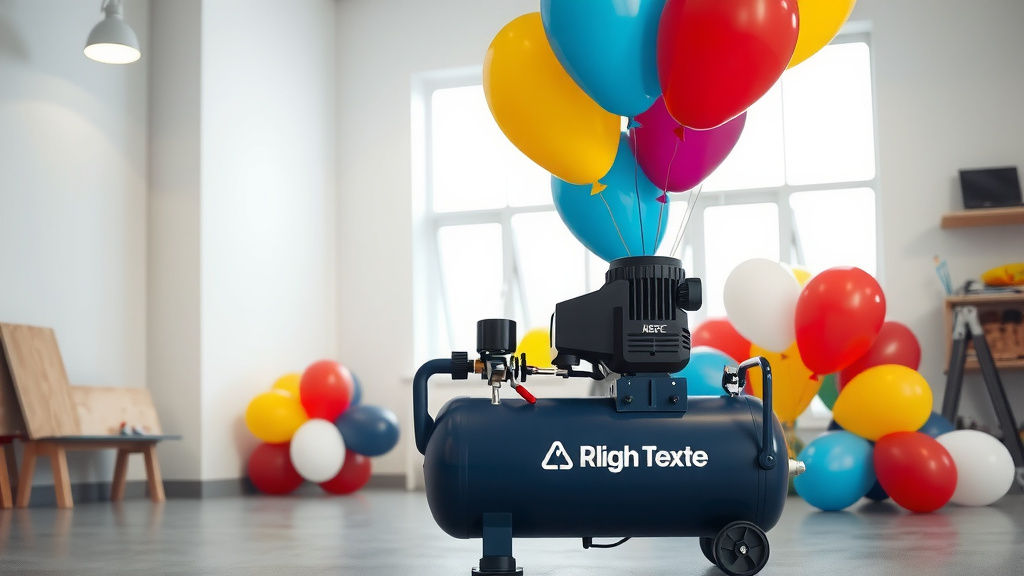
You can use an air compressor to fill balloons, but it is often not recommended for common party balloons due to high pressure and potential safety risks.
Air compressors generate significant pressure and airflow that can easily overinflate and burst delicate balloons, making specialized balloon pumps a much safer option.
- Using an air compressor for balloons can be dangerous because of extreme pressure.
- Most party balloons are too fragile for a typical air compressor.
- Dedicated balloon inflators offer precise, safe inflation without the risk of bursting.
- Always prioritize safety and use the right tool for the job to avoid injury or damage.
- While technically possible with extreme caution, it’s generally a bad idea for casual use.
Can You Use An Air Compressor To Fill Balloons?
While an air compressor can technically fill a balloon, it’s often not a good idea for everyday party balloons. These powerful machines deliver air at pressures far too high for delicate balloon materials.
The risk of bursting balloons, causing potential injury, or simply wasting your supplies is quite high. We always suggest you use tools designed for balloons for the best and safest results.
Understanding Compressor Power and Balloon Fragility
Air compressors are built for demanding tasks, like powering tools or inflating car tires. They move a lot of air very quickly and at high pressure. Balloons, on the other hand, are made of thin latex or foil and are quite fragile.
Imagine using a sledgehammer to tap a nail. It’s overkill, right? That’s similar to using an air compressor for a balloon. The mismatch in power and fragility creates a significant safety issue.
Why Standard Balloons Are Risky
Standard latex party balloons are designed to stretch and hold a small volume of air at very low pressure. An air compressor can deliver many times that pressure in a second. This means your balloon can explode without warning, sending fragments flying.
This explosive potential is not just about a ruined balloon; it’s a real safety hazard. Eyes and ears are particularly vulnerable if a balloon bursts close by (NIH).
The Pressure Problem: PSI and Balloons
Air compressors typically operate at pressures of 90 PSI or more. For context, a car tire might need 30-35 PSI. A party balloon requires only a fraction of one PSI to inflate properly.
Trying to manually regulate such a powerful machine down to almost zero PSI is incredibly difficult. Most compressors lack the fine control needed for such a delicate task, making accurate inflation nearly impossible.
The Risk of Balloon Bursts
A balloon bursting from over-inflation releases sound energy that can be surprisingly loud. Research has shown that a balloon pop can generate noise levels similar to a shotgun blast (University of Alberta). This sudden, loud noise can cause temporary hearing damage, especially in children.
Beyond noise, the rapid release of pressure means pieces of latex or foil can become small, fast-moving projectiles. This increases the risk of eye injuries or cuts.
Dedicated Balloon Inflators: The Safer Choice
For filling balloons, whether for parties or decorations, a dedicated balloon inflator is always the best tool. These devices are specifically designed to deliver air at the correct pressure and volume for balloons.
They are often quieter, much easier to control, and significantly safer than an air compressor. You’ll find them in both electric and hand-pump versions, perfect for hassle-free balloon filling.
Types of Balloon Material Matters
Not all balloons are created equal. Latex balloons are stretchy and more forgiving, but still prone to bursting. Mylar or foil balloons, however, have very little stretch. They can become taut and rigid quickly.
Using an air compressor on a Mylar balloon is almost guaranteed to destroy it. The lack of elasticity means they will burst with even less pressure than latex balloons can handle.
If You Must Use a Compressor: Safety Precautions
If you absolutely must use an air compressor, perhaps for very large, heavy-duty inflatables not typically classified as party balloons, extreme caution is necessary. You will need specialized attachments and regulators.
We found that many experts recommend using an inline pressure regulator that can be set to a very low output. Even then, you should only inflate in a well-ventilated area, away from faces and eyes.
Air Compressor Settings to Consider
For any heavy-duty inflatable, you would need to adjust your compressor’s PSI output to the absolute minimum. Some professionals use a regulator that reduces the output to below 5 PSI. This is a very specific setup.
Also, consider the CFM (Cubic Feet per Minute) of your compressor. A high CFM means a lot of air volume, which can lead to quick over-inflation. A lower CFM setting, if available, would be more forgiving for inflatables.
Comparing Balloon Inflation Methods
Understanding the differences can help you make a safer choice for your balloon needs. Let’s look at how different methods stack up.
| Method | Pros | Cons | Best For |
|---|---|---|---|
| Air Compressor | Fast for large volumes; Powerful | High pressure; Dangerous; Poor control; Loud | Heavy-duty inflatables (rafts, tires) – NOT party balloons |
| Electric Balloon Pump | Fast for party balloons; Low pressure; Easy to use | Can be noisy; Not portable without power | Bulk party balloons; Balloon arches/decorations |
| Hand Pump | Portable; Quiet; Affordable; Good control | Slow for many balloons; Requires effort | Small batches of balloons; On-the-go inflation |
| Helium Tank | Balloons float; Professional look | Expensive; Limited supply; Safety concerns with gas | Floating balloons; Special events |
Checklist for Balloon Inflation Safety
When you’re preparing to inflate balloons, especially if you’re tempted to use an unconventional method, run through this quick checklist:
- Choose the right tool for the job (balloon pump for balloons).
- Wear eye protection if there’s any risk of bursting.
- Keep children and pets at a safe distance during inflation.
- Ensure the inflation area is well-ventilated.
- Inflate slowly and monitor the balloon’s size carefully.
- Always stop before the balloon reaches its maximum capacity.
Avoiding Common Balloon Filling Mistakes
One common mistake is thinking “more air equals bigger balloon.” This isn’t true past a certain point. Over-inflating only weakens the material, leading to early deflation or sudden bursts. Always aim for a slightly softer balloon.
Another error is not understanding the balloon type. Some balloons, like those for balloon animals, are designed to be inflated only partially. Forcing too much air into them will prevent them from being shaped correctly and cause them to rupture.
When Air Compressors Are Totally Inappropriate
An air compressor is absolutely inappropriate for helium-quality balloons. These balloons are meant to float. Using an air compressor, which provides only regular air, will simply fill them with heavy air, causing them to fall to the ground.
Also, never use an air compressor near candles or open flames. While air isn’t flammable, the sudden burst of a balloon can scatter debris, or the compressor itself can pose other electrical hazards near flammables (NFPA guidelines).
Alternative Ways to Fill Balloons
Aside from dedicated electric balloon pumps and hand pumps, you might consider small, disposable helium tanks for floating balloons. For small numbers, simply blowing them up by mouth is always an option, though it requires a bit of lung power.
For water balloons, a garden hose attachment is the most practical and efficient method. Always remember, the goal is a fun and safe experience, so choose your inflation method wisely.
Conclusion
While an air compressor is a powerful and useful tool for many tasks, it is generally not suitable for filling balloons, especially standard party balloons. The extreme pressure and airflow can easily lead to over-inflation, bursting, and potential injury.
For safe, effective, and stress-free balloon inflation, we strongly recommend using a dedicated electric balloon pump or a hand pump. Always prioritize safety and use the right equipment. Your balloons, and your ears, will thank you for it.
Can I use an air compressor to inflate car tires and then balloons?
Yes, you can use an air compressor to inflate car tires. However, switching directly to balloons, even after tire inflation, is highly discouraged. The compressor’s high-pressure output is still too powerful for balloons. It’s safer to use separate, appropriate tools for each task.
What is the safest way to fill a lot of party balloons?
The safest and most efficient way to fill a lot of party balloons is by using an electric balloon pump. These devices are designed to provide the correct volume and pressure for balloons, preventing over-inflation and making the process quick and easy.
Can an air compressor fill water balloons quickly?
Using an air compressor for water balloons is very risky. The high air pressure can rupture the thin latex quickly and violently, causing water and balloon fragments to spray everywhere. A specialized water balloon filling nozzle on a garden hose is a much safer and more effective option.
Do air compressors get hot when used for inflation?
Yes, air compressors can generate a significant amount of heat during operation, especially when running for extended periods. The compressed air itself can also be warm. This heat is generally not an issue for balloons directly, but it indicates the power and potential hazards of the machine.
Is using compressed air for balloons cost-effective?
While you might already own an air compressor, using it for balloons is not truly cost-effective due to the high likelihood of bursting balloons and potential injury. The cost of replacing burst balloons and the safety risks outweigh any perceived savings compared to a relatively inexpensive, dedicated balloon pump.
