
Why Is Water Coming Out of My Air Compressor?
Water comes out of your air compressor because of condensation. Your air compressor takes in humid air, and the compression process causes the water vapor to turn into liquid water. This is a normal part of how compressors work.
You might see this water in the tank, lines, or even coming from your air tools. It’s simply the atmospheric moisture that got sucked in. Ignoring this water can lead to rust and other problems for your equipment over time. We found that managing this moisture is key to compressor health.
- Air compressors turn humid air into liquid water.
- This condensation is totally normal.
- Ignoring the water causes rust and damage.
- Regular draining is super important.
Ready to understand why this happens and what you need to do about it? Let’s walk through the details of how to keep your air compressor happy and dry.
The Science Behind Water in Your Air Compressor
Water appears in your air compressor because of a natural process called condensation. It’s quite simple, really. Your compressor takes in air from its surroundings. This air always contains some level of moisture, even on dry days. Think of it like a sponge, just holding water vapor.
When the compressor squeezes this air, it raises the temperature and pressure. As this hot, compressed air then cools down, the water vapor can no longer stay as a gas. It changes into a liquid. This is the water you see.
Understanding Condensation: How It Works
Condensation is a common natural phenomenon. You see it on a cold glass of soda on a hot day, or on your bathroom mirror after a shower. The air around us contains invisible water vapor. When this air cools or is compressed, the water molecules slow down and come closer together. They then form tiny liquid droplets.
In an air compressor, this process is sped up and intensified. The machine’s job is to make air more dense. This density change is what causes the water to separate from the air. We found that the amount of water produced depends heavily on the humidity of the environment and the compressor’s operating temperature.
The Role of Relative Humidity
Relative humidity tells you how much moisture is in the air compared to how much it can hold. A high relative humidity means there’s a lot of water vapor present. If you live in a humid climate, your air compressor will likely produce more water. It’s just pulling more moisture out of the air to begin with.
This is why some areas, like the Gulf Coast of the US, see compressors collecting buckets of water. Dry desert climates, on the other hand, might see only small amounts. We found that understanding your local humidity helps predict your draining needs.
Temperature’s Impact on Water Production
Temperature plays a big role too. When air is compressed, it gets hot. As this hot air travels through the system and cools, the water vapor turns into liquid. Think of it like rain forming in clouds. The cooling allows the water to condense. The greater the temperature difference between the hot compressed air and the cooler components, the more condensation can occur.
This is why aftercoolers are so effective. They cool the air quickly, forcing more water to condense and be removed early. We found that effective cooling is key to managing moisture downstream.
Where Does the Water Collect?
The water doesn’t just appear out of nowhere. It collects in specific parts of your air compressor system. Knowing these places helps you understand where to look and where to drain. Most of the water will end up in the tank itself, but some can be found in other areas.
The Air Tank: Your Primary Water Trap
The air receiver tank is the largest and most obvious place for water to collect. This is where the compressed air sits and cools. As it cools, the water vapor condenses and settles at the bottom of the tank. Gravity does its work here.
You’ll typically find a drain valve at the very bottom of the tank. This is for regular draining. If you don’t drain it, the water will build up, reducing the tank’s air storage capacity and, more importantly, increasing the risk of internal rust.
Air Lines and Hoses: A Secondary Collection Point
Even after leaving the tank, some water vapor might still be in the air. As this air travels through your air lines and hoses, it continues to cool. This can lead to more condensation. You might see small amounts of water coming out of your air tools if your lines aren’t properly drained or angled. This is especially true for long air lines.
Some systems use moisture traps or drip legs along the air lines to catch this additional condensation. We found that proper setup of your air lines, including slight downward slopes and drain points, can help prevent water from reaching your tools and damaging your work.
Why Water in Your Compressor Is a Problem
While water in your compressor is normal, ignoring it is not good. It can lead to a range of issues, from minor annoyances to serious damage. We found that many common compressor problems are directly linked to unchecked moisture. It’s like letting rust build up in your car — small problem at first, big problem later.
Rust and Corrosion: The Main Threat
The biggest problem water causes is rust. Your air tank is made of steel, and steel plus water equals rust. Rust weakens the tank walls over time, creating a serious safety hazard. A rusted tank can rupture, which is extremely dangerous. Many experts say that rust prevention is the most critical aspect of air compressor maintenance (Occupational Safety and Health Administration).
Rust can also affect internal compressor components, valves, and fittings. It reduces their lifespan and efficiency. Regularly draining your tank is the single most effective way to prevent this corrosion damage.
Damage to Air Tools and Equipment
Water doesn’t just stay in the tank. It can travel with the compressed air to your expensive air tools. This is where you might see spray or sputtering from your paint gun or impact wrench. Water causes internal rust in these tools, leading to premature wear and failure. It can also wash away the lubricants that keep your tools running smoothly.
If you’re painting, water droplets can ruin your finish. If you’re using a sandblaster, moisture can cause media clumping. We found that investing in good air dryers and filters pays off by protecting your tools and your work.
Reduced System Efficiency and Performance
Water buildup in your tank reduces its effective volume. This means your compressor has to run more often to maintain pressure, leading to increased energy consumption and wear on the motor. It’s like trying to fill a bucket that’s already half full of water.
Excess moisture can also interfere with pneumatic controls and components, causing them to malfunction. Overall, a wet system is an inefficient system. You want clean, dry air for optimal performance.
Your Action Plan: How to Manage Compressor Water
Now that you know why water is there and why it’s a problem, what do you do about it? The good news is that managing compressor water is straightforward. It mainly involves regular draining and, for some, adding accessories.
Regular Draining: Your First Line of Defense
The most important thing you can do is drain your air tank regularly. How often? It depends on your humidity, how much you use the compressor, and the tank size. Many manufacturers recommend draining after each use, especially for small tanks. For larger industrial systems, daily draining is common.
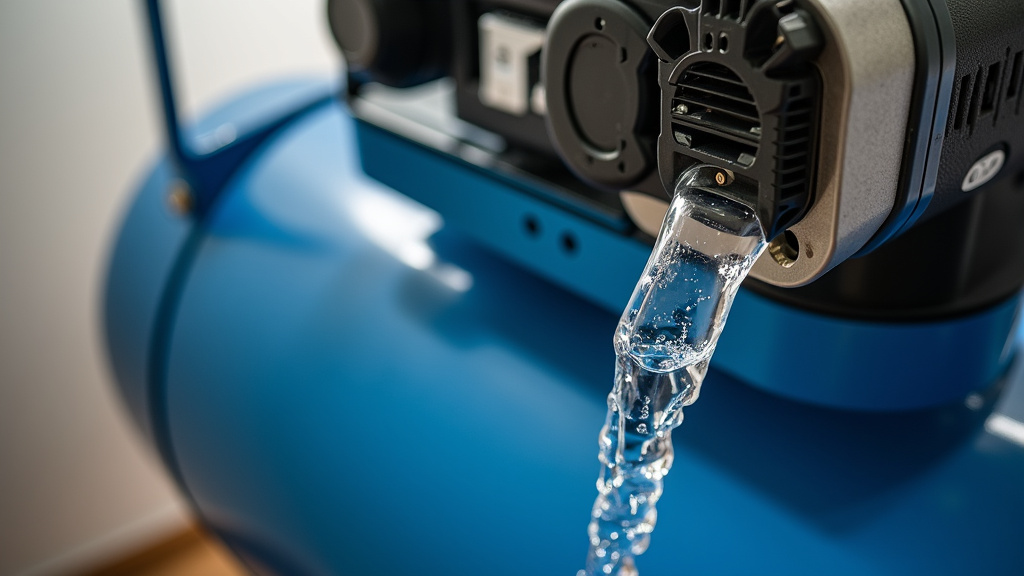
Simply open the drain valve at the bottom of the tank. Let all the water, and any rust particles, escape. Close the valve when only air comes out. This simple habit will significantly extend the life of your compressor.
Here’s a quick checklist for draining your compressor:
- Wear eye protection.
- Locate the drain valve at the bottom of the tank.
- Ensure the compressor is off and depressurized (if possible).
- Open the valve slowly to release water.
- Close the valve when air flows steadily.
- Check for leaks after closing.
Air Dryers: For Serious Moisture Control
If you need truly dry air for sensitive applications like painting, plasma cutting, or medical equipment, you’ll need an air dryer. These devices remove significantly more moisture than simple filters. There are different types, but they all serve the same goal: ultra-dry air.
Refrigerated air dryers cool the air to near-freezing temperatures, causing a large amount of condensation that is then drained. Desiccant dryers use materials that absorb moisture. Choosing the right dryer depends on your needs and budget, but they are essential for moisture-critical tasks.
Filters and Separators: Catching the Rest
Even with draining and possibly a dryer, you can still have some moisture. Coalescing filters and water separators are designed to catch tiny liquid droplets and oil aerosols before they reach your tools. They are typically installed inline, just before the point of use. We found that these devices provide an extra layer of protection for your valuable equipment.
These filters often have automatic drains, making maintenance easier. Regularly checking and replacing filter elements is important for them to work effectively. Think of them as the last defense against unwanted water.
The Lifespan of Your Compressor Depends on You
Water coming out of your air compressor is not a defect; it’s a sign that the compressor is doing its job. However, how you manage that water determines the health and longevity of your equipment. By understanding the causes and taking simple, proactive steps, you can prevent serious problems. Your compressor will thank you with reliable service for years to come. Isn’t that worth a few minutes of your time?
Conclusion
Water from your air compressor is a normal byproduct of physics and operation. You now understand why it forms and collects where it does. Ignoring this moisture can lead to costly repairs and even dangerous situations. By consistently draining your tank and considering appropriate drying accessories, you protect your investment. Your air compressor is designed to serve you well, and a few simple maintenance steps ensure it does so safely and efficiently for many years. Start draining today!
Frequently Asked Questions
Is the water coming out of my compressor dirty or clean?
The water from your air compressor is usually a mix of condensed atmospheric moisture and contaminants. It can contain oil particles from the compressor, rust from the tank, and other airborne debris. We found it’s generally not clean and should be disposed of properly.
Can I just leave the drain valve slightly open all the time?
Leaving the drain valve slightly open is not recommended. It leads to a constant air leak, making your compressor work harder and waste energy. This can also prevent your tank from building and holding proper pressure. It’s best to open it fully for draining, then close it completely.
How often should I drain my air compressor if I don’t use it frequently?
Even if you don’t use your compressor often, you should still drain it regularly. Moisture can collect in the tank over time, especially in humid environments. We recommend draining it at least once a week, or before each use if it sits for extended periods.
Will an automatic drain valve solve all my water problems?
An automatic drain valve is a great convenience and significantly helps manage water. It opens and closes on a set schedule, removing condensed water without manual effort. However, it’s still good practice to periodically check it to ensure it’s functioning correctly and that no clogs have occurred.
Does the type of air compressor (piston vs. rotary screw) affect how much water it produces?
Both piston and rotary screw compressors produce condensation because they both compress ambient air. The amount of water produced depends more on the air’s humidity and temperature than the compressor type itself. However, industrial rotary screw systems often operate continuously and process vast amounts of air, potentially leading to greater overall water output.
