
What Is a Rotary Screw Air Compressor?
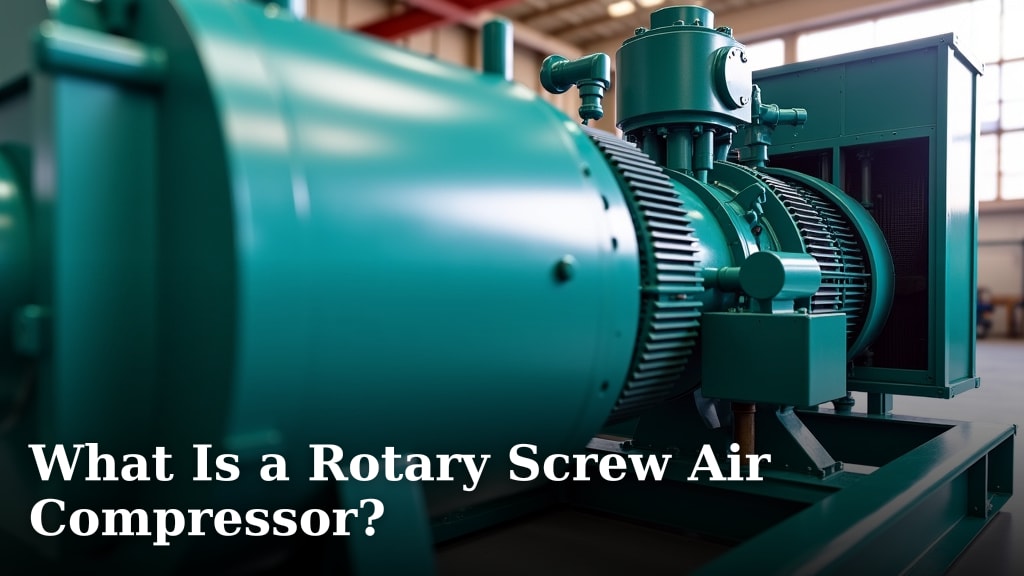
A rotary screw air compressor is a machine that uses two interlocking helical (screw-shaped) rotors to compress air. These compressors are widely used in manufacturing and industrial settings for their reliability and efficiency.
You’ll find them powering everything from factory tools to large construction equipment. We found they are a popular choice when you need a continuous flow of compressed air for long periods.
- A rotary screw compressor uses two spinning screws to compress air.
- They are very efficient and run continuously.
- They are common in industrial and manufacturing environments.
- You can find them in many sizes for different needs.
So, how exactly does this powerful piece of machinery work, and is it the right choice for your needs? Let’s dive in and explore what makes rotary screw air compressors so effective.
Understanding Rotary Screw Air Compressors
So, you’re curious about how these work, right? A rotary screw air compressor is a machine designed to compress air efficiently. It does this by using two internal, spiral-shaped rotors that spin in opposite directions. Think of them like two intertwined screws.
As these rotors turn, they trap air from one end and gradually reduce its volume as it moves through the screws. This action increases the air pressure. This pressurized air is then ready for various industrial and manufacturing tasks.
The Inner Workings: How They Compress Air
Let’s take a closer look at what happens inside one of these machines. It’s quite clever, actually. The process begins with air entering through an inlet valve.
The Screw Mechanism
Once inside, the air encounters the two main components: the male rotor and the female rotor. These aren’t just any screws; they are precisely machined to fit together perfectly, almost like gears. The male rotor usually has convex lobes, while the female rotor has concave flutes. We found this design is key to their effectiveness.
As these rotors rotate, they create a progressively smaller space. The air gets trapped in these diminishing pockets. This continuous reduction in volume is what causes the air to become compressed. It’s a smooth, constant process.
Oil-Injected vs. Oil-Free Designs
Did you know there are two main types? We found that the primary difference lies in whether oil is used within the compression chamber itself. Each has its own advantages, depending on what you need.
- Oil-Injected Compressors: These units use oil that is injected directly into the compression chamber. The oil serves several critical functions. It lubricates the rotors, helping them to run smoothly and reducing wear. It also helps cool the compressed air and seals the gaps between the rotors for maximum efficiency. Most industrial applications use these.
- Oil-Free Compressors: For applications where air purity is absolutely essential, oil-free compressors are the answer. They use specially coated rotors and other engineering solutions to operate without oil in the compression chamber. This means the air exiting the compressor is completely free of oil vapor, which is vital for industries like food and beverage, pharmaceuticals, and medical facilities (Compressed Air & Gas Institute).
Why Choose a Rotary Screw Compressor?
You might be asking, “Why would I pick one of these over other types?” That’s a great question! Rotary screw compressors offer several significant benefits that make them a top choice for many businesses. They are known for their ability to provide a consistent and reliable air supply.
Continuous Operation and Durability
One of the biggest advantages is their ability to run continuously. Unlike piston compressors, which often cycle on and off, rotary screws are designed for non-stop performance. This makes them ideal for demanding industrial settings where downtime is simply not an option.
Their simple design with fewer moving parts also contributes to their exceptional durability. We found they generally have a longer lifespan and require less frequent maintenance compared to some other compressor types.
Efficiency and Energy Savings
Who doesn’t love saving money on energy? Rotary screw compressors are often celebrated for their energy efficiency, especially when they operate at full load. This is because they deliver a steady flow of air without the peaks and valleys of energy consumption you might see in other designs.
Many modern rotary screw compressors come with features like variable speed drive (VSD) technology. VSD allows the compressor to adjust its motor speed to match the demand for air. This means it only uses the power it needs, which can lead to substantial energy savings over time.
Quiet Operation
Noise pollution is a real concern in many workplaces. We found that rotary screw compressors are generally much quieter than reciprocating (piston) compressors. This is due to their continuous, rotary motion, which creates fewer vibrations and pulsation.
A quieter environment can lead to a more comfortable and productive workspace for your team. It can also help meet noise regulations, which is a big plus for many companies.
Comparing Rotary Screw to
Conclusion
You’ve seen how rotary screw air compressors operate, from their clever screw mechanism to the benefits of both oil-injected and oil-free designs. These machines offer continuous, reliable air, making them perfect for industrial demands. Their efficiency and quiet operation can also lead to significant energy savings and a better work environment. By understanding these core features, you can make an informed decision for your specific operational needs. Consider your air purity requirements and operational hours carefully. Choosing the right compressor means maximizing productivity and minimizing long-term costs.
Frequently Asked Questions
What maintenance do rotary screw compressors need?
Regular maintenance for these compressors typically involves changing the oil and filters, inspecting belts, and checking for leaks. We found following the manufacturer’s recommended service schedule is crucial for long-term reliability and efficiency. This helps prevent unexpected downtime.
How long do rotary screw compressors usually last?
With proper maintenance, a rotary screw air compressor can last anywhere from 10 to 15 years, or even longer. Their robust design and fewer moving parts contribute to their excellent longevity. We found consistent servicing is the biggest factor in extending their lifespan.
Can a rotary screw compressor run 24/7?
Yes, these compressors are specifically designed for continuous operation, making them ideal for applications requiring a constant air supply. Unlike piston compressors, they don’t need to cool down as frequently. This capability is a primary reason for their popularity in industrial settings.
What is VSD technology in compressors?
VSD stands for Variable Speed Drive. This technology allows the compressor’s motor to adjust its speed to match the exact demand for compressed air. This results in significant energy savings because the compressor only uses the power it needs, rather than running at full capacity all the time.
Are rotary screw compressors expensive to buy?
While the initial purchase cost of a rotary screw compressor might be higher than some other types, their long-term operating costs are often lower. Their energy efficiency and durability can lead to substantial savings over their lifespan. We found they are a wise investment for businesses needing consistent, high-volume air.
