
What Is the Best Quiet Air Compressor for Apartments?
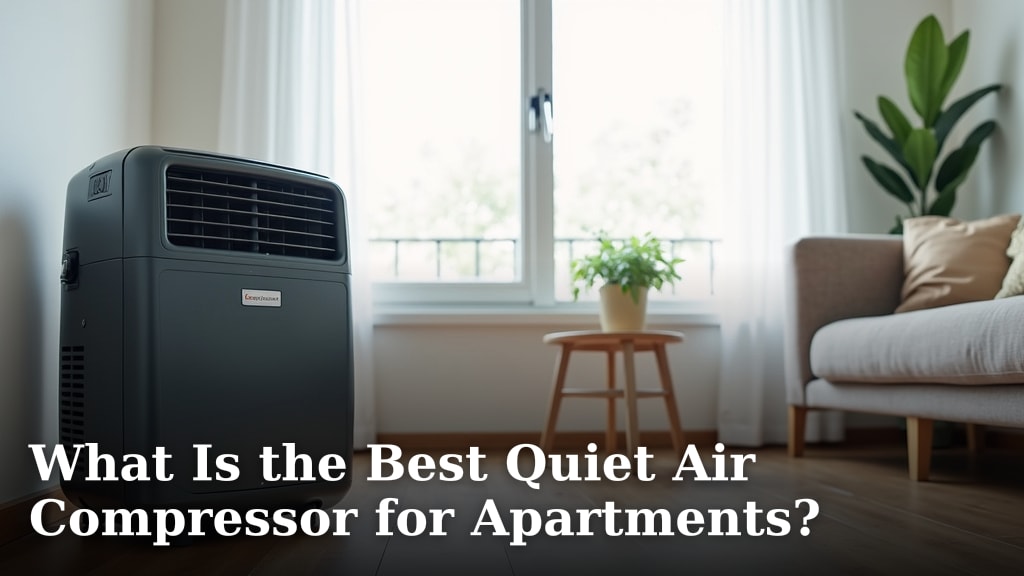
The best quiet air compressor for apartments is often a California Air Tools compressor. These models are known for their low noise levels and efficient performance, making them perfect for shared living spaces.
You want a compressor that won’t annoy your neighbors, right? We found that models like the CAT-1P1060S Light & Quiet are a popular choice. They balance power with a much quieter operation than traditional compressors.
- Quiet air compressors are essential for apartment living.
- California Air Tools is a top brand for quiet models.
- Look for compressors under 60 decibels for minimal noise.
- Portability and tank size are also key factors.
- Oil-free designs require less maintenance.
Choosing the right air compressor for your apartment can be tricky. Let’s walk through everything you need to know to make the best decision for your needs.
Finding the Ideal Quiet Air Compressor for Your Apartment
The ideal quiet air compressor for apartment living balances low noise output with enough power for your tasks. We found that models specifically designed for quiet operation, often under 60 decibels, are your best bet.
Choosing an air compressor when you live in close quarters needs careful thought. You want something that works well without becoming “that neighbor.” It’s about finding that sweet spot between power and peace.
Think about what you’ll use it for. Are you inflating bike tires, running a brad nailer for small projects, or maybe even airbrushing? Your projects will dictate the power and tank size you need.
Understanding Noise Levels (Decibels)
When we talk about “quiet,” what does that actually mean for an air compressor? It’s all about decibels (dB). Decibels measure sound intensity. The lower the number, the quieter the machine.
A normal conversation is usually around 60 dB. A library is about 40 dB. Traditional air compressors can easily hit 80 dB or more, which is like a loud garbage disposal or even a passing truck. That’s definitely not apartment-friendly.
We recommend looking for compressors advertised at 60 dB or less. Many quiet models now boast noise levels in the 40s or 50s. This makes a huge difference in an apartment setting.
The Decibel Scale Explained
The decibel scale is a bit tricky because it’s logarithmic. This means a small increase in decibels represents a much larger increase in sound intensity. For example, a 10 dB increase feels like the sound is twice as loud to our ears (National Institute for Occupational Safety and Health).
- 30 dB: A whisper
- 40-50 dB: Refrigerator hum, quiet office
- 60 dB: Normal conversation, dishwashers
- 70 dB: Vacuum cleaner, washing machine
- 80 dB: Garbage disposal, busy street
- 90 dB: Lawn mower, truck
So, choosing a compressor at 50 dB instead of 60 dB is a big win for your ears and your neighbors. You’re effectively cutting down on a lot of perceived noise.
Key Features for Apartment-Friendly Compressors
Beyond noise, several other features make an air compressor suitable for apartment living. Let’s break them down so you know what to look for.
Tank Size and Portability
You probably don’t have a giant garage. So, size matters! Small, pancake, or hot dog style tanks are often best for apartments. These usually range from 1 to 6 gallons.
A smaller tank means it’s easier to store in a closet or under a bed. It also means it’s lighter and more portable. If you need to move it around your apartment or even take it to a friend’s place, portability is key.
Consider the trade-off, though. A smaller tank means the compressor might cycle on more often to refill the tank. But with a quiet model, this cycling won’t be as disruptive.
Oil-Free vs. Oil-Lubricated
Most quiet air compressors are oil-free. This is a big plus for apartment dwellers. Why?
- Less maintenance: No oil to check or change. This saves you time and mess.
- No oil fumes: You don’t want the smell of oil lingering in your living space.
- Lighter weight: Oil-free designs tend to be lighter, making them easier to move.
- Quieter operation: The design of oil-free pumps often contributes to lower noise levels.
Oil-lubricated compressors are typically heavier, noisier, and require more maintenance. They’re usually found in larger, more powerful units designed for workshops, not apartments.
Power and PSI (Pounds Per Square Inch)
Don’t let the small size fool you; many compact quiet compressors still pack enough punch for common household tasks. PSI determines how much force the compressed air can deliver.
For inflating tires, operating a nail gun for small trim work, or airbrushing, you usually need around 90-120 PSI. Most quiet models can achieve this.
Check the “SCFM” (Standard Cubic Feet per Minute) rating too. This tells you how much air the compressor can deliver at a certain pressure. It’s important for tools that demand a continuous air supply. For light tasks, a lower SCFM is fine.
Comparing Top Quiet Air Compressor Brands
When you’re looking for a quiet air compressor, some brands consistently come up in our research. California Air Tools is a front-runner, but others offer good options too.
| Brand/Model Example | Approx. Noise Level (dB) | Tank Size (Gallons) | Key Advantage | Best For |
|---|---|---|---|---|
| California Air Tools CAT-1P1060S | 56 dB | 1.0 | Extremely quiet, lightweight | Inflating, small finish nailing |
| Rolair JC10 Plus | 60 dB | 2.5 | Durable, good power for size | Brad nailing, airbrushing |
| Makita MAC700 (Quieter than most traditional) | 79 dB | 2.6 | “Big Bore” for faster recovery | Heavier use, but still loud for apt. |
| Senco PC1010 | 68 dB | 1.0 | Compact, portable | Light trim, hobbies |
Remember, while Makita is a solid brand, their MAC700, though quieter than many standard compressors, might still be too loud for typical apartment living. Always check the decibel rating.
What Can You Actually Do with a Quiet Apartment Compressor?
You might be wondering if a small, quiet compressor is truly useful. The answer is a resounding “yes” for many common tasks!
- Inflating: Car tires, bike tires, sports balls, air mattresses.
- Brad and Finish Nailing: Perfect for hanging pictures, installing small trim, crafting, or furniture repair.
- Dusting/Cleaning: Use an air blow gun to clean electronics, keyboards, or dusty corners.
- Airbrushing: For hobbyists, model painting, or intricate art projects.
- Light Stapling: For upholstery or craft projects.
You won’t be framing a house or stripping paint with these small units. But for everyday tasks and DIY projects that don’t require heavy-duty tools, they are incredibly versatile.
Your Apartment Air Compressor Checklist
Before you make a purchase, run through this quick checklist to make sure you’re getting the right unit for your apartment lifestyle.
- Noise Level: Is it 60 dB or less? (The lower, the better for apartments.)
- Tank Size: Is it 6 gallons or smaller? (Consider your storage space.)
- Portability: Can you easily move and store it?
- Oil-Free: Does it require no oil for maintenance?
- PSI/SCFM: Does it meet the requirements for your intended tools?
- Reviews: Have other apartment dwellers found it suitable?
Taking a few moments to evaluate these points will help ensure you bring home a compressor that’s a helper, not a headache, in your apartment.
Maintaining Your Quiet Air Compressor
Even though most quiet compressors are oil-free and low-maintenance, a little care goes a long way. Proper maintenance extends the life of your tool and keeps it running quietly.
The most important thing you can do is drain the tank after each use. Compressed air contains moisture, and this moisture can condense in the tank. If left there, it causes rust, which can damage the tank from the inside out. There’s usually a small drain valve at the bottom of the tank – just open it up and let the water out.
You should also regularly check the air filter. A clogged filter makes the compressor work harder, which can lead to more noise and less efficiency. Most filters are easy to clean or replace.
Finally, keep the compressor in a clean, dry place. This helps protect it from dust and environmental damage. Treat it well, and your quiet compressor will serve you for many years.
Conclusion
Choosing the best quiet air compressor for your apartment boils down to balancing noise, power, and practicality. We found that California Air Tools models often hit this sweet spot, offering low decibel levels perfect for shared living.
Always prioritize compressors under 60 dB, opt for oil-free designs, and consider a tank size that fits your storage and project needs. By using our checklist and maintenance tips, you can confidently select a unit that supports your DIY projects without disturbing your neighbors. Get ready to tackle those apartment projects with quiet efficiency!
Frequently Asked Questions
Are “silent” air compressors truly silent?
No, “silent” is a marketing term. These compressors are much quieter than traditional models, often operating around 40-60 decibels. They’re designed to be less disruptive, but you will still hear them running.
Can I run a small impact wrench with a quiet apartment air compressor?
Generally, no. Small quiet compressors typically lack the sustained CFM (cubic feet per minute) output required for high-demand tools like impact wrenches. They are better suited for inflation, nailing, and airbrushing.
How long can a quiet air compressor run continuously?
Most quiet air compressors designed for apartments are not meant for continuous, heavy use. They typically have duty cycles that require them to rest. Check your model’s specifications, but generally, run times are limited before they need to cool down.
Do quiet air compressors cost more than louder models?
Often, yes. The technology and engineering required to significantly reduce noise while maintaining performance can increase the manufacturing cost. However, the investment is usually worth it for apartment living.
Where should I store my apartment air compressor when not in use?
Store your compressor in a clean, dry area away from extreme temperatures. Many compact models fit easily in a closet, under a workbench, or in a storage cabinet. Just make sure it’s stable and protected from dust.
