
Can You Use an Air Compressor to Spray Paint a Car?
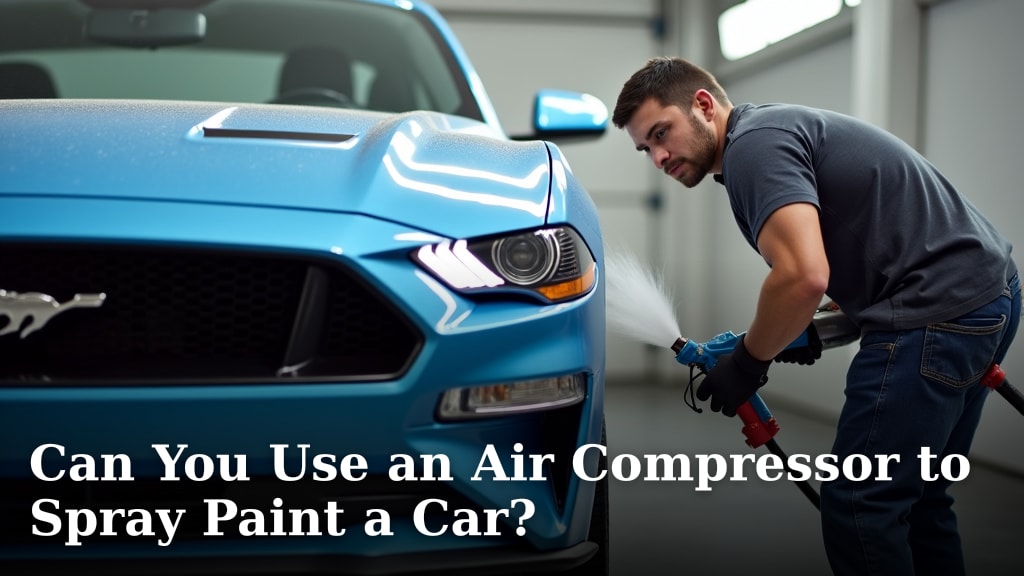
Yes, you absolutely can use an air compressor to spray paint a car, and it’s actually the standard method. You’ll need the right air compressor and a proper spray gun to get a smooth, professional finish.
Painting a car yourself can save you a lot of money, but it requires patience and the correct tools. We found that choosing the right equipment is key to avoiding drips and an uneven coat. It’s more than just having an air compressor; you need one that can handle the job.
- Air compressors are essential for car spray painting.
- You need a compressor with enough CFM and PSI.
- The right spray gun makes a huge difference.
- Proper preparation of the car is critical for good results.
- Safety gear is a must when painting.
Ready to transform your car’s look? Let’s walk through exactly how to set up your air compressor for a successful car paint job, step by step.
Using an Air Compressor for Your Car Painting Project
Yes, an air compressor is absolutely essential for spray painting a car. It’s the engine behind your spray gun, providing the constant, even airflow needed for a smooth, professional finish. Without one, you simply can’t achieve the results you’re aiming for.
Think of it like this: your air compressor is the heart, and the spray gun is the hand that applies the paint. Both need to work perfectly together. Getting this partnership right is the first step toward a beautiful, new car finish.
Understanding Compressor Requirements for Car Painting
Not just any air compressor will do for car painting. This isn’t like inflating tires or blowing dust. Car painting demands a specific type of performance from your compressor. It needs to keep up with the demands of the spray gun.
We found that the biggest mistake many DIY painters make is underestimating the compressor’s needs. This leads to inconsistent pressure, which means uneven paint and a lot of frustration. Let’s make sure you avoid that.
CFM and PSI: Your Key Metrics
When you’re looking at air compressors, two terms will jump out at you: CFM and PSI. These aren’t just technical jargon; they are critical for success.
- CFM (Cubic Feet per Minute): This measures the volume of air your compressor can produce. For car painting, you need a high CFM because spray guns use a lot of air continuously. We often recommend looking for a compressor that delivers at least 15-20 CFM at 90 PSI for serious car painting.
- PSI (Pounds per Square Inch): This measures the air pressure. While spray guns operate at lower PSI (often 20-60 PSI), your compressor needs to produce higher PSI to maintain that consistent flow.
It’s like comparing a garden hose to a fire hose. Both deliver water, but one has significantly more volume and pressure. Your spray gun needs the fire hose equivalent.
Tank Size Matters More Than You Think
The compressor’s tank size is another crucial factor. While CFM tells you how much air it can produce, the tank stores that air. A larger tank provides a buffer of compressed air, allowing the compressor’s motor to run less often and maintain more consistent pressure.
- For car painting, a tank of at least 60-80 gallons is highly recommended. Some professionals even use 100-gallon tanks.
- Why? When you’re spraying, you want a steady, uninterrupted flow. A small tank means the compressor motor will cycle on and off constantly, which can lead to pressure drops and uneven paint application.
Imagine trying to paint a whole car with a tiny spray can. You’d run out of pressure constantly. A large tank prevents that from happening.
Choosing the Right Air Compressor for Car Painting
So, what kind of compressor should you look for? Based on our research, a two-stage, oil-lubricated compressor is generally the best choice for car painting. Here’s why:
- Two-stage compressors compress air in two steps, making them more efficient and capable of higher CFMs and pressures needed for continuous use.
- Oil-lubricated models tend to run cooler, last longer, and are generally more durable than oil-free compressors. They’re built for heavy-duty work.
While an oil-free compressor might seem convenient, we found they often don’t provide the sustained CFM or longevity required for a full car paint job.
| Compressor Feature | Ideal for Car Painting | Why It’s Important |
|---|---|---|
| CFM Rating | 15-20 CFM at 90 PSI | Ensures consistent airflow to the spray gun without lag. |
| Tank Size | 60-80 Gallons (minimum) | Provides a buffer for continuous spraying, preventing pressure drops. |
| Type | Two-Stage, Oil-Lubricated | More efficient, durable, and designed for heavy, continuous use. |
| Power Source | 240V (usually) | Necessary for larger motors required for high CFM production. |
Remember, investing in a good compressor now will save you headaches (and potentially re-dos) later. This is not the place to cut corners if you want a professional-looking finish.
Beyond the Compressor: Essential Air System Components
Your air compressor is just one part of the puzzle. To ensure clean, dry air gets to your spray gun, you’ll need a few other components in your air line setup. These are non-negotiable for a good paint job.
Imagine trying to paint a masterpiece with a dirty brush. The same applies here. Contaminants in your air line can ruin your paint job in an instant.
Air Hoses: Length and Diameter
Don’t just grab any air hose. The length and diameter are important. We recommend a hose with an inner diameter of at least 3/8-inch. This helps minimize pressure drop over longer distances.
- Keep your air hose as short as safely possible to minimize pressure loss.
- Always choose a high-quality, flexible hose designed for air tools.
A flimsy or too-narrow hose will choke your air supply, even if your compressor is a powerhouse. It’s like trying to drink a thick milkshake through a tiny straw.
Air Filters and Regulators: Your Paint Job’s Best Friends
This is where many DIY painters go wrong, and it costs them dearly. You absolutely must have proper filtration and regulation:
- Air Filter (Water Trap): Air compressors generate moisture, and moisture mixed with paint is a disaster. A good water trap filter will remove water and oil vapor from the air line before it reaches your spray gun. Install it as close to the spray gun as possible.
- Air Regulator: This allows you to precisely control the air pressure going to your spray gun. Your spray gun will have a recommended operating PSI, and the regulator lets you dial that in perfectly.
Skipping these steps is like gambling with your paint job. We’ve seen countless cases where a speck of water or oil caused fisheyes or craters in fresh paint. It’s just not worth the risk.
The Right Spray Gun for Car Painting
With your compressor and air line ready, the spray gun is the next star. There are different types, but for car painting, HVLP (High Volume Low Pressure) guns are the industry standard for a reason.
An HVLP gun is designed to deliver a high volume of air at lower pressure, which means more paint gets on the car and less drifts into the air. This saves paint and reduces overspray, making for a cleaner finish.
- HVLP Benefits: Better transfer efficiency, less material waste, finer atomization of paint, and a smoother finish.
- Nozzle Size: Different paints require different nozzle sizes. For primers, you might use 1.8-2.0mm. For base coats and clear coats, typically 1.3-1.5mm. Always check your paint manufacturer’s recommendations.
Matching the right nozzle to your paint is crucial for proper atomization and a smooth flow. It’s like choosing the right brush for a specific painting technique.
Preparation is Paramount for a Professional Finish
Even with the best compressor and spray gun, a poor paint job often comes down to one thing: preparation. This stage is tedious, but it’s where 90% of your success lies.
Think of it as building a house. A weak foundation means a shaky structure. The same applies to painting; a poorly prepped surface will show every flaw through the new paint.
Here’s a quick checklist to get you started on the right track:
- Clean Thoroughly: Wash and degrease the car meticulously. Any dirt or grease will cause adhesion problems.
- Sanding: Sand down the old paint (or primer) to create a surface for the new paint to adhere to. Start with coarser grits and move to finer ones.
- Bodywork: Address any dents, rust, or imperfections. Fill, sand, and prime these areas.
- Masking: Tape off all windows, trim, wheels, and anything you don’t want painted. Use high-quality masking tape and paper.
- Dust Control: Paint in as dust-free an environment as possible. Dust is the enemy of a smooth finish.
We can’t stress this enough: patience during preparation pays off immensely. Rushing this stage will lead to regrets.
Safety First: Protecting Yourself During Painting
Painting a car involves working with chemicals and fine particulates, so personal safety is critical. Don’t take shortcuts here. Your health is more important than a new paint job.
Many experts (like the CDC) emphasize the importance of respiratory protection when dealing with paint fumes and solvents. These can be harmful if inhaled.
Make sure you have:
- Respirator: A NIOSH-approved respirator with organic vapor cartridges is essential. Not a flimsy dust mask.
- Safety Goggles/Face Shield: Protect your eyes from paint splatter and fumes.
- Disposable Coveralls: Protect your skin and clothes from paint.
- Gloves: Chemical-resistant gloves to protect your hands.
- Ventilation: Work in a well-ventilated area, preferably with an exhaust fan.
Remember, paint fumes are not just unpleasant; they can be genuinely dangerous. Always prioritize safety for yourself and anyone nearby.
Conclusion
Yes, you can definitely use an air compressor to spray paint your car, and now you know the critical steps to get it right. We’ve seen that the secret to a professional finish lies in choosing the right equipment – a powerful compressor, proper filtration, and a suitable HVLP spray gun. Don’t forget the vital role of meticulous preparation and, most importantly, prioritizing your safety.
By following these guidelines, you’re well on your way to achieving a stunning, durable paint job. Take your time, focus on the details, and enjoy the satisfaction of transforming your vehicle. You’re ready to tackle your car painting project with confidence!
Frequently Asked Questions
What size air compressor do I need for painting a whole car?
For painting an entire car, you’ll need a robust air compressor. We recommend one that delivers at least 15-20 CFM at 90 PSI. Aim for a tank size of 60-80 gallons to ensure a consistent, uninterrupted airflow while you work.
Can a 30-gallon air compressor paint a car?
While a 30-gallon air compressor might work for very small areas or touch-ups, it’s generally too small for painting an entire car. Its motor will cycle constantly, leading to inconsistent pressure and potentially an uneven finish. You’ll likely experience frequent pauses waiting for it to repressurize.
How much PSI do I need to paint a car?
The actual PSI delivered to your spray gun for painting a car is usually much lower than your compressor’s output, typically ranging from 20-60 PSI. Your compressor needs to generate higher PSI (like 90+ PSI) to maintain that consistent lower pressure at the gun, especially when combined with sufficient CFM.
What is the best type of spray gun to use with an air compressor for car painting?
For car painting, an HVLP (High Volume Low Pressure) spray gun is the best choice. These guns offer excellent transfer efficiency, meaning more paint lands on your car and less goes into the air. This results in less waste, better coverage, and a smoother, more professional finish.
What are the most common mistakes when using an air compressor for car painting?
Common mistakes include using a compressor with insufficient CFM or tank size, neglecting proper air filtration (leading to water/oil contamination), and inadequate surface preparation. Not using the correct safety gear and rushing the process are also frequent pitfalls that can compromise both the paint job and your health.
