
How Much Does It Cost to Run an Air Compressor?
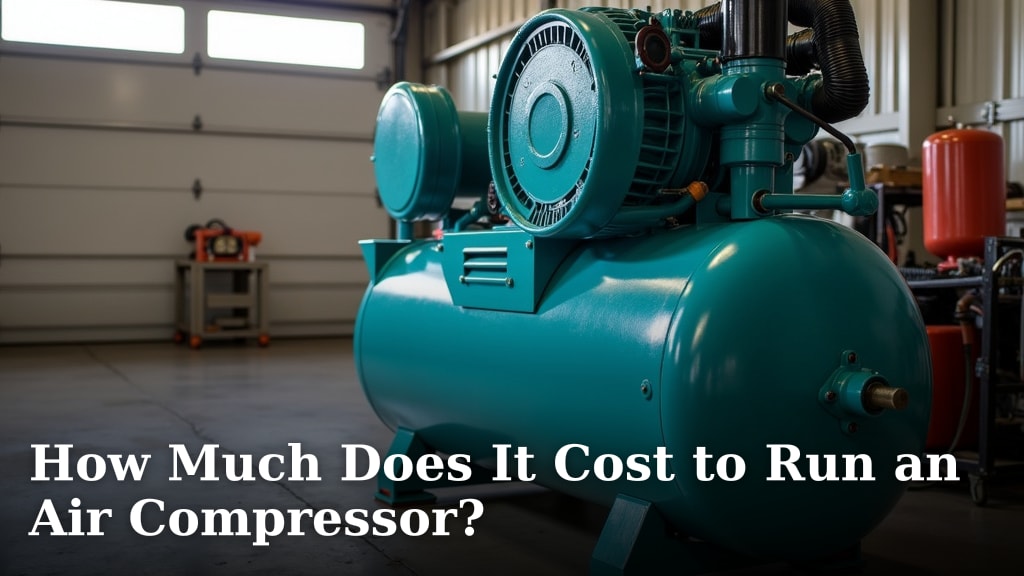
Running an air compressor can cost you anywhere from $0.50 to $5.00 per hour, depending on its size and how often you use it. We found that most home workshops see costs around $1.50 per hour of active use.
The total expense is not just about the motor running; it includes the electricity consumed and potential maintenance. Your specific air compressor model and local energy rates play a big role in the final bill.
TL;DR:
- Hourly costs vary widely (from $0.50 to $5.00+).
- Electricity consumption is the biggest factor.
- Larger compressors cost more to run.
- Local energy prices directly impact your bill.
- Maintenance also adds to the total cost.
So, how do you figure out exactly what your air compressor costs to run? Let’s break down the details and help you understand your expenses.
Understanding Your Air Compressor’s Running Costs
So, you want to know what your air compressor is really costing you? It’s a smart question. Many factors play into the total expense, far beyond just the initial purchase price. Let’s break down where those dollars go.
The Primary Cost Driver: Electricity
The biggest chunk of your air compressor’s running cost will almost always be electricity. Think of it like a hungry engine; it needs fuel. For an air compressor, that fuel is watts and volts.
Your compressor’s motor needs power to squeeze air into its tank. The harder it works, or the longer it runs, the more electricity it pulls from the wall. This is a direct relationship to your utility bill.
How to Calculate Energy Consumption
Calculating your specific cost can feel a bit like math class, but it’s simpler than you might think. We’ve done the research and found a straightforward formula. You need a few key pieces of information first.
- Compressor’s horsepower (HP) or wattage (W).
- Your local electricity rate (per kilowatt-hour, or kWh).
- How many hours you use the compressor actively.
Here’s the basic formula we use: (HP x 746) / 1000 = kW. Then, kW x hours of use x electricity rate = total cost. Remember, 1 horsepower equals about 746 watts (U.S. Department of Energy).
Finding Your Local Electricity Rate
Your local utility company’s bill or website is the best place to find your electricity rate. It’s usually shown as cents per kilowatt-hour (kWh). Rates vary widely by state and even by time of day. For example, some areas have higher rates during peak hours.
We’ve found that average residential electricity rates in the U.S. can range from 10 cents to over 30 cents per kWh. This difference alone can significantly change your hourly cost.
Impact of Air Compressor Size and Type
Not all air compressors are created equal, and neither are their appetites for electricity. A small pancake compressor for occasional nail gun use will cost far less than a large stationary unit powering an entire automotive shop.
Think about your compressor’s horsepower. A higher HP generally means more power and, therefore, more electricity used per hour. It’s like comparing a small car to a big truck; the truck uses more gas.
Comparing Different Compressor Types
Different types of compressors have varying efficiencies. Piston-driven compressors are common for home and small shop use. Rotary screw compressors are usually found in industrial settings, known for continuous, efficient operation.
A smaller, 1-2 HP compressor might draw around 1500 watts. A larger 5 HP unit could pull 3700 watts or more. This wattage difference directly translates to how much juice it’s drinking from your power outlet.
Factors Influencing Air Compressor Efficiency
Beyond the raw power consumption, several things affect how efficiently your compressor uses that electricity. An efficient compressor gets more work done with less power, saving you money.
Are you getting the most out of your machine? Sometimes, small adjustments can lead to big savings on your utility bill. It’s like tuning up your car for better gas mileage.
Air Leaks in Your System
This is a big one. Air leaks are money leaks. If your air lines, fittings, or tools have even small leaks, your compressor has to run longer and harder to maintain pressure. We’ve seen that even a tiny leak can waste a surprising amount of energy.
Imagine trying to fill a bucket with water that has a hole in it. You keep pouring, but the bucket never gets full as quickly as it should. Your compressor is doing the same thing, constantly trying to catch up.
Pressure Settings
Are you running your compressor at a higher pressure than you actually need? For every 2 PSI reduction in pressure, you can often see about a 1% energy savings (U.S. Department of Energy). This can add up!
If your tool only needs 90 PSI, there’s no reason to set your compressor to 120 PSI. Your compressor works harder to reach that higher pressure, consuming more electricity in the process.
Ambient Temperature and Ventilation
Compressors perform better and more efficiently in cooler environments. If your compressor is struggling in a hot, poorly ventilated area, it has to work harder. This increased effort means more electricity use.
Good ventilation helps dissipate heat, allowing the compressor to run more smoothly. Think of it like trying to run on a hot day versus a cool one; you’re more efficient when you’re not overheating.
Beyond Electricity: Other Costs to Consider
While electricity is the star of the show when it comes to running costs, it’s not the only performer. There are other ongoing expenses that contribute to the total cost of owning and operating an air compressor.
Ignoring these can give you an incomplete picture of your true expenses. It’s like buying a pet; you don’t just pay for the animal, you pay for food, vet visits, and toys too.
Maintenance Expenses
Just like any other piece of machinery, air compressors need regular maintenance to run effectively and last longer. This includes things like changing air filters, oil changes for oil-lubricated models, and checking for wear and tear.
Neglecting maintenance can lead to bigger problems and costly repairs down the road. A well-maintained compressor runs more efficiently and uses less power. Many manufacturers suggest following a maintenance schedule to avoid premature failure.
- Regularly check and clean air filters.
- Change oil according to the manufacturer’s guidelines (for oil-lubricated models).
- Drain condensation from the tank daily to prevent rust.
- Inspect hoses and fittings for leaks.
- Check drive belts for tension and wear.
Wear and Tear on Components
Over time, parts wear out. Valves, seals, and motors have a lifespan. While not a direct running cost per hour, the need to replace these components is part of the overall ownership expense. We’ve found that proactive maintenance can often extend the life of these parts.
Running your compressor optimally, without overworking it, can reduce how quickly parts wear out. This saves you money in the long run by delaying expensive component replacements.
Estimating Your Hourly Running Cost: A Practical Example
Let’s put it all together with a hypothetical example. This can help you visualize the cost for your own setup.
Let’s say you have a 3 HP air compressor. You use it for about 2 hours per day, 5 days a week. Your local electricity rate is 15 cents per kWh.
- Convert HP to watts: 3 HP x 746 watts/HP = 2238 watts.
- Convert watts to kilowatts: 2238 watts / 1000 = 2.238 kW.
- Calculate daily cost: 2.238 kW x 2 hours/day x $0.15/kWh = $0.67 per day.
- Calculate weekly cost: $0.67/day x 5 days/week = $3.35 per week.
- Calculate monthly cost: $3.35/week x 4 weeks/month = $13.40 per month.
This example shows how even a seemingly small hourly cost can add up over time. And this is just for electricity!
| Compressor Size (HP) | Approx. Wattage | Cost per Hour (at $0.15/kWh) | Cost per Hour (at $0.25/kWh) |
|---|---|---|---|
| 1 HP | 746W | $0.11 | $0.19 |
| 2 HP | 1492W | $0.22 | $0.37 |
| 3 HP | 2238W | $0.34 | $0.56 |
| 5 HP | 3730W | $0.56 | $0.93 |
| 7.5 HP | 5595W | $0.84 | $1.40 |
Remember, these figures are estimates for continuous run time. Many compressors cycle on and off, so your actual active run time might be less than your total usage time.
Conclusion
Understanding your air compressor’s running cost helps you make smarter decisions. You now know that electricity is the main expense. We’ve seen how much factors like size and efficiency matter.
By checking for leaks and optimizing pressure, you can save real money. Regular maintenance also keeps costs down in the long run. Take these steps to ensure your air compressor runs as efficiently as possible.
Start by finding your electricity rate today. Then, calculate your compressor’s true cost.
Frequently Asked Questions
Is it cheaper to run a 110V or 220V air compressor?
For the same horsepower, the actual energy consumed is nearly identical. However, 220V compressors can be more efficient for larger motors. They draw less amperage, which can reduce heat and voltage drop in wiring.
How can I make my air compressor more energy-efficient?
Focus on preventing air leaks in your system. Also, set the pressure to the minimum required for your tools. Keeping the compressor in a cool, well-ventilated area helps improve efficiency too.
Does tank size affect the running cost of an air compressor?
Not directly for continuous operation. A larger tank simply stores more air, meaning the compressor cycles less often. This can reduce wear and tear, but the electricity used per minute of active compression remains similar.
How often should I drain the water from my air compressor tank?
You should drain the tank daily, especially if you use your compressor often. This prevents rust and corrosion inside the tank. Neglecting this can lead to tank failure over time.
Do oil-free air compressors cost less to run than oil-lubricated ones?
Oil-free compressors often have lower maintenance costs because they don’t need oil changes. However, they can be noisier and may have a shorter lifespan. Their energy consumption per HP is generally comparable to oil-lubricated models.
