
How To Use 12 Volt Air Compressor?
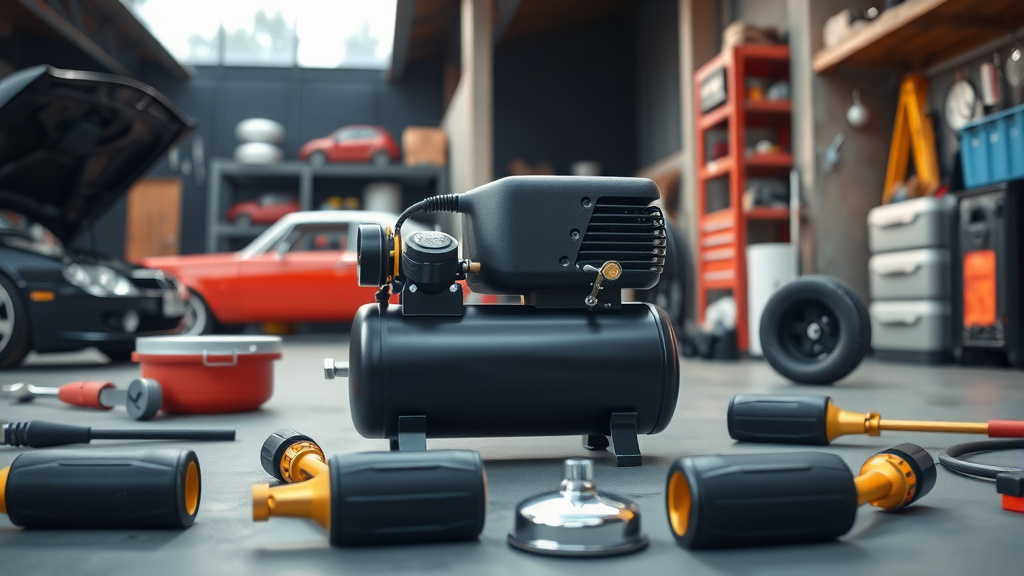
A 12-volt air compressor primarily uses your vehicle’s 12V DC power outlet, also known as a cigarette lighter socket, or direct connection to the battery terminals to function.
To use a 12 Volt Air Compressor, you connect it to your car’s power source, attach the hose to the item needing air, set the desired pressure, and turn the compressor on.
- Connect your 12V air compressor to a compatible vehicle power source, either the cigarette lighter or battery terminals.
- Attach the air hose securely to the tire valve or inflatable item.
- Check the item’s recommended pressure (PSI) and set your compressor, if it has a digital gauge.
- Turn on the compressor and monitor the pressure as it inflates.
- Disconnect and store safely once inflation is complete.
Picture this: you’re on a road trip, miles from anywhere, and your tire looks a little flat. What do you do? This is where a 12 Volt Air Compressor becomes your best friend. These handy devices are designed to run from your car’s power, making them perfect for roadside emergencies or simply topping off your tires at home. We understand you want clear, simple steps to use it right. Let’s make sure you’re ready for anything.
How To Use 12 Volt Air Compressor?
You use a 12-volt air compressor by connecting it to your vehicle’s power outlet or battery, attaching the nozzle to your item, setting the pressure, and letting it inflate. It’s a straightforward process once you know the basics.
Understanding Your 12V Air Compressor
Before you even think about inflating, take a moment to look at your compressor. You’ll usually find an air hose, a power cord, and often a pressure gauge. Some models have a digital display; others use an analog dial. Knowing these parts will make the whole process much smoother for you.
What’s in the Box?
Most 12V compressors come with various nozzles. These adaptors allow you to inflate different items, from bicycle tires to sports balls. We found that keeping these organized makes them much easier to use when needed.
Safety First: Important Checks Before You Start
Safety is not just a suggestion; it’s essential when using any equipment. Always check your compressor for any damage before use. Ensure the power cord is not frayed and the air hose is not cracked. A damaged hose can reduce efficiency and even be dangerous. We always advise a quick visual inspection.
You also want to make sure you are in a well-ventilated area. While 12V compressors typically don’t produce many fumes, good airflow is always a good practice. Think about where you’re working. Is it clear of obstacles? Can you move around easily?
Connecting Your Compressor to Power
This is where your car becomes the power station. There are typically two ways to connect your 12-volt air compressor.
Using the Cigarette Lighter Socket (12V DC Outlet)
Many smaller 12V compressors simply plug into your car’s cigarette lighter socket. This is often the easiest and most convenient option. Just push the plug firmly into the socket until it clicks into place. Some vehicles may call this a power accessory outlet.
We found that vehicles have a limit on how much power this outlet can supply. If your compressor is a higher-amp model, it might trip a fuse. Consult your car’s manual if you’re unsure (National Highway Traffic Safety Administration).
Direct to the Battery Terminals
For more robust 12V air compressors, or if your cigarette lighter outlet isn’t strong enough, you’ll connect directly to your car battery. These compressors usually come with alligator clips. Connect the red clip to the positive (+) terminal and the black clip to the negative (-) terminal. Always connect clips to the battery first, then plug into the compressor.
Connecting directly ensures your compressor gets ample power, reducing the risk of blowing a fuse. Many experts recommend this for longer inflation times or larger tires.
Attaching the Air Hose and Nozzle
Once powered, it’s time to connect the air hose to what you need to inflate. Most commonly, this is a tire valve. Simply screw the hose fitting onto the tire valve stem until it’s snug. Don’t overtighten; you just need a good seal. If you have an inflator that “clips on,” just push it onto the valve stem and flip the lever to lock it.
For items like sports balls or inflatable toys, you’ll need one of those specialized nozzles. Select the right one and attach it to the end of the air hose. Then, insert the nozzle into the item’s inflation port. It sounds simple, right? It truly is.
Setting and Monitoring Tire Pressure
Before you turn on the compressor, know your target pressure. For tires, you’ll find this information on a sticker inside your car’s driver-side door jamb, or in your vehicle manual. This is the recommended PSI (pounds per square inch). Don’t go by the number on the tire’s sidewall; that’s the maximum pressure, not the operating pressure (Tire Industry Association).
If your compressor has a digital display, you can pre-set the desired PSI. It will often shut off automatically once that pressure is reached. For analog gauges, you’ll need to watch the dial carefully as it inflates. Stop the compressor periodically to check the reading accurately. We found this prevents over-inflation.
Starting the Inflation Process
Now, turn on your 12V air compressor. You’ll hear it hum or buzz as it begins to work. Keep an eye on the pressure gauge. It’s always a good idea to stay near the compressor and the item being inflated. This way, you can quickly react if anything seems amiss. Small adjustments in your routine can make a big difference.
Here’s a quick checklist to keep you on track:
- Check compressor and power cords for damage.
- Connect to vehicle power (12V outlet or battery).
- Attach the correct nozzle to the item.
- Know your target PSI for inflation.
- Turn on the compressor and monitor pressure.
- Disconnect and store equipment safely.
Tips for Efficient and Safe Use
Even though it’s a simple tool, a few tips can enhance your experience. For longer inflation tasks, especially with battery-connected compressors, it’s wise to keep your vehicle’s engine running. This maintains battery voltage and avoids draining it. Many experts say this helps your car’s electrical system.
Don’t run your compressor continuously for too long. Most 12V models have a duty cycle, meaning they need breaks to cool down. Check your compressor’s manual for specific run times. Pushing it too hard can shorten its lifespan.
When to Use Your 12V Air Compressor?
The versatility of a 12V compressor is quite surprising. You can use it for your car tires, bicycle tires, sports equipment, inflatable pools, or even air mattresses for camping. It’s a truly portable powerhouse. Many of us keep one in our car for emergencies or even regular tire checks.
| Item to Inflate | Typical PSI Range | Connection Type |
|---|---|---|
| Car Tire (Passenger) | 30-35 PSI | Screw-on or clip-on valve |
| Bicycle Tire (Road) | 80-120 PSI | Presta/Schrader adapter |
| Sports Ball | 7-12 PSI | Needle adapter |
| Air Mattress | Low (e.g., 0.5-1 PSI) | Wide mouth adapter |
This table gives you a general idea, but always consult the item itself for exact recommendations. You don’t want to guess when it comes to pressure settings.
Conclusion
Using a 12-volt air compressor is a straightforward and extremely useful skill to master. Whether you’re facing a low tire on the road, getting ready for a bike ride, or inflating toys for the kids, this device simplifies it all. By following these simple steps – connecting it properly, selecting the right nozzle, and monitoring pressure – you’ll become a pro in no time. It’s truly about being prepared and confident in handling everyday situations.
FAQs About 12 Volt Air Compressors
How long does a 12V air compressor take to inflate a car tire?
The inflation time for a car tire with a 12V air compressor varies widely based on the compressor’s power and the tire’s size and initial pressure. Small tires going from 20 to 30 PSI might take 2-5 minutes, while larger, completely flat tires could take 10-15 minutes or more. It truly depends on your specific model and situation.
Can I leave my car’s engine off while using a 12V air compressor?
For very short tasks, like topping off a single tire by a few PSI, you can often leave your car’s engine off. However, for longer inflation periods or if you’re inflating multiple items, it’s generally advised to keep your engine running. This prevents draining your car’s battery, especially with more powerful compressors, and helps maintain a stable power supply.
What is the difference between PSI and BAR on an air compressor gauge?
PSI stands for “pounds per square inch” and is the most common unit of pressure measurement in the United States. BAR is a metric unit of pressure, where 1 BAR is approximately 14.5 PSI. Some compressor gauges offer both readings, giving you flexibility depending on what the item you’re inflating specifies. You will often see both units displayed.
Can a 12V air compressor inflate truck tires?
While a standard 12V air compressor can inflate most light truck tires, it might take a considerable amount of time and effort, especially if the tire is completely flat. Heavy-duty truck tires (like those on semi-trucks) often require higher pressure and volume that a small 12V unit cannot provide efficiently. For larger truck tires, a more powerful, possibly larger, 12V or 24V compressor designed for trucks would be a better choice.
How do I maintain my 12V air compressor for a longer lifespan?
To extend the life of your 12V air compressor, store it in a cool, dry place away from direct sunlight and extreme temperatures. Always clean it after use, ensuring no dirt or debris clogs the vents. Allow it to cool down between uses, especially if you’ve run it for a long period, adhering to its duty cycle. Regularly check the air hose for cracks and the power cord for fraying. Good care means your compressor will be ready when you need it most.
