
Do You Need a Special Outlet for a 220V Air Compressor?
Yes, you often need a special 240-volt outlet for a 220V air compressor. Most household outlets are 120V. Your 220V compressor requires a higher voltage connection to run effectively. Trying to use a standard outlet can damage your compressor or trip your breaker.
Air compressors above a certain horsepower typically need this 240V power. This isn’t just about plugging it in. It’s about providing the correct electrical support for its motor. Many home garages and workshops don’t have these outlets pre-installed.
- Most home outlets are 120V.
- 220V air compressors need a 240V outlet.
- A special outlet prevents damage and ensures performance.
- You may need an electrician to install one.
We’ve researched the common setups and found that understanding your compressor’s needs is key. Let’s walk through exactly why this matters and what you might need to do to get your air compressor powered up safely.
Powering Your Air Compressor: Do You Need a Different Outlet?
You’ve got your shiny new air compressor, ready to tackle any project. But before you plug it in, you might be wondering if your standard wall outlet is up to the job. For most 220V air compressors, the answer is often a resounding no. Standard home outlets provide 120 volts, while your compressor needs a beefier 240 volts to run efficiently and safely.
Think of it like trying to power a powerful appliance with a tiny battery. It just won’t perform well, and you risk damaging the appliance or causing electrical problems. Many people discover this when they try to hook up a larger compressor and either nothing happens, or their breaker trips instantly.
Understanding Voltage: 120V vs. 240V for Compressors
Your home’s electrical system is typically set up with two main voltage levels: 120V and 240V. Standard outlets, the ones you use for lamps, TVs, and most small appliances, are 120V. These are perfect for low-power devices.
Air compressors, especially those with larger motors (often 2 horsepower and up), require more power. This is where the 240V connection comes in. A 240V outlet delivers twice the electrical “push” compared to a 120V outlet. This increased voltage is essential for the compressor’s motor to start smoothly and run without straining.
Why Your Compressor Needs 240V
When you start a 220V (which really means 240V in the US electrical system) air compressor, its motor needs a strong surge of power to overcome inertia and begin compressing air. A 120V outlet simply can’t provide this initial jolt reliably.
Trying to run a 240V compressor on a 120V circuit can lead to several problems. The motor might struggle to start, overheat, or even burn out prematurely. You could also find yourself constantly tripping your home’s circuit breaker, which is a safety mechanism designed to prevent overloads. We’ve seen reports where users damage their compressor’s motor by attempting this, leading to expensive repairs or replacements.
The Role of Horsepower and Amperage
The requirement for a 240V outlet is often tied to the compressor’s horsepower (HP) and amperage (Amps) ratings. Generally, compressors with motors above 1.5 to 2 HP will need a 240V circuit.
Higher HP motors draw more current (Amps) to produce more power. While a 120V circuit can handle a certain amperage, it quickly becomes insufficient for the demands of larger compressors. Many 240V compressors operate in the 5 to 15 Amp range, sometimes even higher, which is well beyond the capacity of a typical 15 or 20 Amp 120V circuit without overloading.
Horsepower to Voltage Connection
It’s not just about the number on the box. The physics of motor operation dictates this. A motor needing more torque to spin up requires more voltage. Think of it like a heavy door; it needs a strong push to get moving. For larger compressors, that strong push comes from 240V.
Amperage and Circuit Breakers
Your home’s electrical panel has circuit breakers to protect circuits from overcurrent. A standard 120V outlet might be on a 15A or 20A breaker. A 240V compressor, especially larger ones, might require a dedicated 20A or 30A breaker, all at the higher voltage. Trying to run a compressor that needs 25A on a 20A circuit (even if it were 240V) would trip the breaker, but attempting it on 120V adds an extra layer of strain.
Identifying Your Compressor’s Electrical Needs
The first step in knowing if you need a special outlet is to check your air compressor’s specifications. This information is usually found on a data plate attached to the compressor itself, or it will be clearly stated in the owner’s manual.
Look for details like voltage (V), amperage (A), and horsepower (HP). This will tell you exactly what kind of power it requires. Most compressors requiring 208V-240V will also indicate the necessary amperage for the circuit. This is your key piece of information.
Where to Find the Specs
The data plate is usually located on the motor housing, the tank, or near the power cord. It’s a small metal or plastic label that lists all the critical operating details. If you can’t find it, your owner’s manual is the next best place. Many manufacturers also list specifications on their websites.
Common Voltages and Plug Types
While we often say “220V,” in the US, the standard household voltage that delivers this is actually 240V. You’ll also see compressors listed as 208V, which often run on a 240V circuit, especially in industrial settings. The plug on the compressor’s cord will also be a clue. 240V plugs are different from standard 120V plugs and are designed to fit only 240V receptacles.
We found that looking at the plug is an easy way to get a visual confirmation. If it has three or four prongs and looks significantly different from your standard household plugs, it’s a strong indicator it’s for a higher voltage or amperage circuit.
What Kind of Outlet Do You Need?
If your compressor requires 240V, you’ll need a dedicated 240V outlet. This isn’t just a different socket; it’s part of a dedicated electrical circuit run from your breaker panel.
These outlets are physically distinct from 120V outlets. They often have different slot configurations to prevent you from plugging a 120V device into a 240V circuit (or vice-versa, though that’s less common). The amperage rating of the outlet and the circuit breaker must also match the compressor’s requirements.
NEMA Configurations
Electrical outlets and plugs in North America follow NEMA (National Electrical Manufacturers Association) standards. For 240V, you’ll commonly see NEMA 6-15R or 6-20R receptacles. A 6-15R is rated for 15 Amps, and a 6-20R is rated for 20 Amps.
A NEMA 6-15 plug has two parallel blades and a U-shaped ground pin. A NEMA 6-20 plug has one straight blade, one angled blade, and a U-shaped ground pin. The specific NEMA type tells you the voltage and amperage rating. It’s important to match the outlet to your compressor’s plug and electrical needs.
Matching Plug to Outlet
When you look at your compressor’s plug, note its NEMA configuration. Then, ensure the outlet you install is the corresponding NEMA type and amperage rating. For example, if your compressor has a NEMA 6-20P plug, you need a NEMA 6-20R outlet on a 20A, 240V circuit.
Dedicated Circuits Are Key
A 240V outlet for your air compressor should almost always be on its own dedicated circuit. This means the circuit breaker in your electrical panel that controls this outlet is exclusively for this one purpose. It’s not shared with other outlets or lights.
Why is this important? Because air compressors draw a lot of power, especially when they start up. A dedicated circuit ensures that this power draw doesn’t affect other appliances in your home and that the compressor has all the power it needs without risking an overload on shared circuits. Many experts recommend a dedicated circuit for any motor-driven appliance drawing significant power.
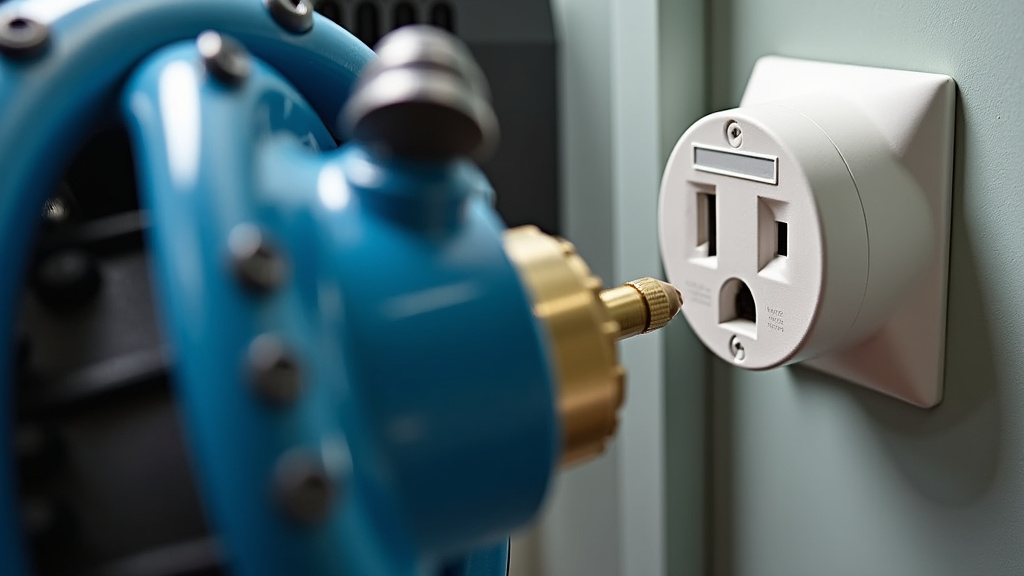
Do You Need an Electrician?
For most homeowners, the answer is a definite yes. Installing a new 240V outlet and circuit involves working with your home’s main electrical panel. This is not a DIY project for the inexperienced. It requires a good understanding of electrical codes, wiring, and safety procedures.
An unqualified person attempting this work risks serious injury, fire hazards, and damage to their electrical system. We strongly advise consulting a qualified electrician. They have the tools, knowledge, and licensing to do the job safely and correctly.
When to Call a Professional
You should call an electrician if:
- Your home doesn’t have a 240V outlet already installed.
- You need a new circuit run from your breaker box.
- You’re unsure about your home’s current electrical capacity.
- You don’t have the necessary tools or knowledge for electrical work.
What an Electrician Will Do
A qualified electrician will:
- Assess your current electrical panel for capacity.
- Determine the correct wire gauge and breaker size for your compressor.
- Run new wiring from the panel to the desired outlet location.
- Install the appropriate 240V outlet (e.g., NEMA 6-15R or 6-20R).
- Ensure the installation meets all local electrical codes.
While it might seem like an added expense, hiring an electrician provides peace of mind and ensures the safety and proper function of your air compressor setup. We’ve heard too many stories about DIY electrical mishaps to not recommend professional help here.
Can You Use an Adapter?
Generally, no, you cannot use a simple adapter to plug a 240V air compressor into a standard 120V outlet. Adapters are designed for specific situations, like changing plug shapes for different countries or connecting devices with slightly different pin configurations. They do not change the voltage supplied by the outlet.
Attempting to use an adapter to force a 240V appliance into a 120V circuit is dangerous and ineffective. It’s like trying to use a headphone adapter to power a microwave – the fundamental power delivery is wrong.
Why Adapters Won’t Work for Voltage Conversion
Voltage conversion requires transformers or other specialized electrical components. A simple plug adapter is just that – a plug adapter. It doesn’t convert electricity from 120V to 240V. If you find a device marketed as a “voltage converter adapter” for this purpose, be extremely cautious. Many are not designed for the high amperage draw of air compressors and could be a fire hazard.
Getting Your Compressor Ready: A Checklist
Before you plug in your 220V air compressor, run through this quick checklist:
- Check Your Compressor’s Label: Confirm the required voltage (240V) and amperage.
- Identify the Plug Type: Note the NEMA configuration and number of prongs on your compressor’s cord.
- Assess Your Outlets: Do you have a compatible 240V outlet nearby? Or will you need one installed?
- Consider the Circuit: Is the potential 240V outlet on a dedicated circuit?
- Call an Electrician: If you’re unsure about any of the above or need a new outlet installed, schedule a visit.
- Test Safely: Once installed, ensure the outlet and plug make a secure connection before turning on the compressor.
Conclusion
So, to wrap things up, your 220V air compressor almost certainly needs its own 240V outlet. Standard 120V outlets just can’t provide the power your compressor’s motor requires to operate safely and efficiently. You’ll need to check your compressor’s specifications for its exact voltage and amperage needs.
For most people, this means arranging for a dedicated 240V circuit and outlet to be installed. Don’t guess about electrical work; it’s best to call a qualified electrician to ensure everything is set up correctly and safely. Get that dedicated outlet installed, and you’ll be ready to power your projects without worry!
Frequently Asked Questions
Can I use my 220V air compressor on a 120V outlet if I just get a heavy-duty extension cord?
No, a heavy-duty extension cord won’t change the voltage. A 120V outlet still only provides 120 volts, which is insufficient for a 220V (240V) compressor. Using an extension cord designed for higher power won’t fix the underlying voltage mismatch and can still lead to motor damage or tripped breakers.
How can I tell if my compressor is 120V or 240V just by looking at it?
The easiest way is to look at the plug on the power cord. 240V plugs are physically different from standard 120V plugs – they often have three or four prongs and a unique shape. You can also find the voltage listed on the compressor’s data plate or in its manual.
What happens if I try to run a 240V compressor on a 120V circuit?
Your compressor’s motor will likely struggle to start or run at all. You might hear it hum or try to turn, but it won’t have enough power. This can cause the motor to overheat, potentially leading to premature failure, and you’ll likely trip your circuit breaker repeatedly.
Do I need a 240V outlet if my air compressor is only rated for 1.5 HP?
Generally, compressors around 1.5 to 2 horsepower and above are the ones that start requiring 240V. It’s always best to check the specific amperage (A) and voltage (V) ratings on your compressor’s data plate. If it lists 208V-240V, you’ll need that type of outlet.
If I have a 240V outlet, can I plug my 120V shop lights into it?
No, you should never plug a 120V device into a 240V outlet. The higher voltage will almost certainly destroy the 120V device immediately and could cause a fire hazard. Always match the voltage of the appliance to the voltage of the outlet.
