
What Tools Can Run Off a 20 Gallon Compressor?
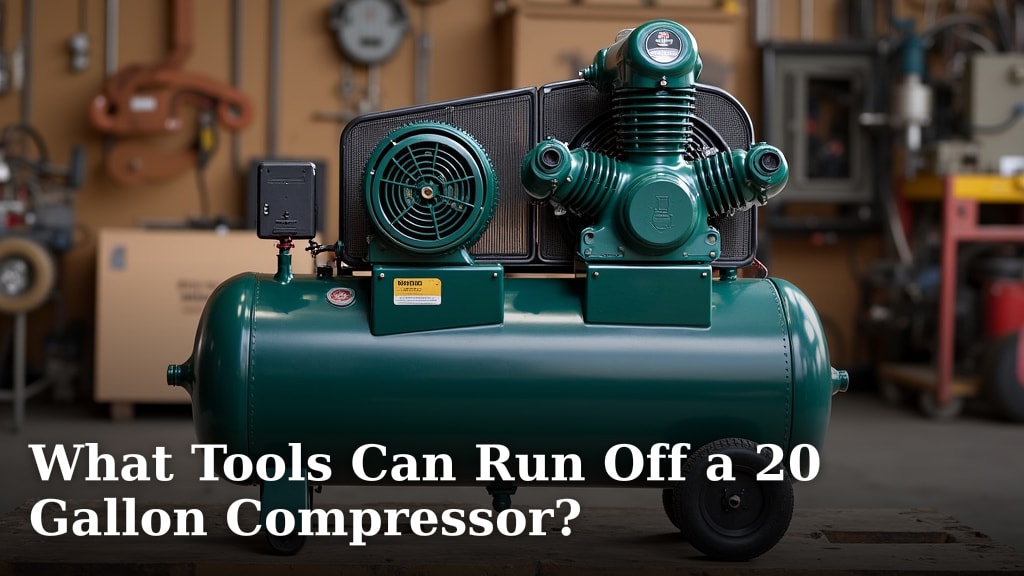
You can run a wide variety of air tools off a 20-gallon air compressor. This size is great for home garage projects and DIY tasks. It provides enough air for many common tools like nail guns, impact wrenches, and sanders.
A 20-gallon compressor offers a good balance between portability and power. It’s a step up from smaller pancake compressors. This means you can tackle more demanding jobs without constantly waiting for the tank to refill. We found this size is a popular choice for hobbyists and small workshops.
- Most common air tools work well.
- Great for DIY and home garage use.
- Handles tasks like nailing and light auto repair.
- Offers a good blend of power and portability.
Let’s dive into which specific tools you can power up with your 20-gallon compressor.
“`htmlPowering Your Projects with a 20-Gallon Air Compressor
A 20-gallon air compressor is a versatile workhorse for any home garage. It’s the perfect size for a wide array of DIY projects and common workshop tasks. You might be wondering what exactly you can run with this capacity. We’ve researched the common applications and found that it handles many tools beautifully.
The key is understanding the air demands of your tools. Tools that use a lot of air in short bursts work best. This means your compressor’s tank size and its ability to refill quickly are important factors. Let’s look at the tools that are a great fit for your 20-gallon setup.
Essential Tools for Your 20-Gallon Compressor
Fastening Tools: Nail Guns and Staplers
Nail guns and staplers are some of the most popular air tools. They work by rapidly firing nails or staples into materials. Your 20-gallon compressor is an excellent match for these. They don’t typically require a constant high volume of air. Instead, they use short, powerful bursts.
You’ll find different types of nailers. Framing nailers are used for construction work. Brad nailers and finish nailers are perfect for trim and lighter tasks. Staplers are also great for upholstery or attaching fabric. We found that most common pneumatic nailers and staplers operate efficiently with a 20-gallon tank. Just ensure your tool’s CFM (Cubic Feet per Minute) rating doesn’t exceed your compressor’s output. This is usually listed on the tool itself.
Impact Wrenches: Automotive and Mechanical Tasks
Tired of wrestling with stubborn bolts? An impact wrench is your answer. This tool delivers high torque for tightening and loosening nuts and bolts. A 20-gallon compressor can power many impact wrenches, especially for home use and light automotive repair.
You’ll want to check the CFM requirements for your specific impact wrench. Larger, more powerful models might drain your tank faster. However, for general car maintenance, tire changes, or DIY assembly, a 20-gallon compressor is usually sufficient. You might need to pause briefly between heavy-duty tasks to let the tank recharge. We found this is a common trade-off for many users.
Choosing the Right Impact Wrench
When selecting an impact wrench, consider its torque rating. Higher torque means more power. Also, look at its average air consumption. A tool needing around 4-5 CFM at 90 PSI will work well. Your 20-gallon compressor can likely supply this. Many experts suggest looking for tools that don’t constantly run at their maximum output. This will prolong the life of both the tool and your compressor.
Air Sanders: Smoothing and Finishing Work
Achieving a smooth finish on wood or metal often requires an air sander. Orbital sanders and random orbital sanders are common choices. These tools need a consistent supply of air to operate effectively. Can your 20-gallon compressor handle them?
Generally, yes, but with a caveat. Sanders tend to use air more continuously than nail guns. For short sanding sessions or light-duty finishing, your 20-gallon compressor will do a fine job. If you’re planning to sand large surfaces for extended periods, you might notice the compressor kicking on more frequently. We found that for hobbyist woodworking or small repair jobs, it’s usually adequate. Larger projects might require breaks.
Types of Air Sanders
There are several types of air sanders:
- Orbital Sanders: These move in small circles, providing a smooth finish.
- Random Orbital Sanders: Similar to orbital sanders, but their rotation is less predictable, reducing swirl marks.
- Detail Sanders: Smaller and more precise for tight spots.
Many detail sanders and smaller orbital sanders have lower CFM requirements. These will be a better fit for your 20-gallon compressor. Always check the tool’s specifications.
Grinders and Polishers: Metalworking and Detailing
Angle grinders and buffers are used for cutting, grinding, and polishing metal. They can be demanding on an air compressor. For light-duty grinding or occasional polishing, a 20-gallon compressor can work.
However, these tools often have higher CFM requirements. If you’re using a grinder to cut through thick metal or a polisher for hours, your compressor might struggle to keep up. We found that many DIYers use them for short tasks like removing rust or smoothing welds. For serious metal fabrication, you might need a larger compressor.
Air Brushes: Fine Art and Detail Painting
If you’re into detailed painting, model making, or even custom T-shirts, an airbrush is fantastic. Airbrushes use a very small amount of air. Your 20-gallon compressor is more than capable of running an airbrush. In fact, it might be overkill!
You’ll likely be able to run an airbrush for a very long time without the compressor cycling on. This allows for uninterrupted creative flow. We found that the main benefit here is consistent pressure. It provides a steady, fine spray for intricate designs. Many airbrush compressors are small, but a 20-gallon unit will certainly do the job with ease.
Air Blow Guns and Cleaning Tools
Need to clear dust, debris, or sawdust from your workspace or car? Air blow guns are perfect for this. They use a concentrated blast of air. Your 20-gallon compressor is more than adequate for this task.
Blow guns are very efficient. They use minimal air volume for short bursts. You can use them to clean off work surfaces, tools, or even automotive parts. We found that keeping a blow gun handy is incredibly useful for maintaining a clean workspace. Your compressor will handle this task without breaking a sweat.
Inflating Tires and Sports Equipment
Many 20-gallon compressors come with or can easily power a tire inflator. This is handy for keeping your car, bike, or trailer tires properly inflated. It’s also useful for inflating sports balls or air mattresses. This is a low-demand task for your compressor.
You can use a simple tire chuck attachment or a more sophisticated inflator with a pressure gauge. The 20-gallon tank provides enough stored air to inflate multiple tires or items quickly. We found this to be a very convenient feature for everyday use.
Tools That Might Push the Limits
Large Sandblasters
Tools like portable sandblasters require a very high volume of air. They need a continuous flow to operate effectively. A 20-gallon compressor is generally not powerful enough for most sandblasting applications, especially for larger jobs. We found that sandblasters typically require compressors with much larger tanks and higher CFM ratings. Trying to run one might result in the compressor running constantly and not providing adequate pressure.
Large Paint Sprayers (HVLP)
High Volume Low Pressure (HVLP) paint sprayers are efficient, but some models still demand a significant amount of air. While your 20-gallon compressor can handle smaller touch-up spray guns, larger sprayers used for painting entire cars or furniture might be too much. You might experience pulsating spray or need very frequent breaks. We recommend checking the CFM rating carefully. For extensive painting projects, a larger compressor is often necessary. For extensive painting projects, a larger compressor is often necessary.
Key Considerations for Your 20-Gallon Compressor
When deciding if a tool is compatible, look at two main specs:
- CFM (Cubic Feet per Minute): This measures the volume of air the tool uses.
- PSI (Pounds per Square Inch): This measures the air pressure.
Your compressor will have its own CFM and PSI ratings, usually measured at 90 PSI. Try to match the tool’s needs to your compressor’s output. For example, if your compressor delivers 5 CFM at 90 PSI, look for tools that use around 4-5 CFM or less.
Here’s a quick checklist to help you out:
- Check the tool’s CFM requirement.
- Compare it to your compressor’s CFM output at 90 PSI.
- Understand that short bursts are fine; continuous use might require breaks.
- Consider the duty cycle of your compressor.
- Larger, continuous-use tools may need a bigger compressor.
- Don’t forget the air hose – it can affect pressure and flow.
By understanding these factors, you can confidently select the right tools for your 20-gallon air compressor, ensuring smooth operation and satisfying project completion.
“`Conclusion
Your 20-gallon air compressor is a capable tool for many home garage projects. We found it excels with tools that use air in short bursts, like nail guns and impact wrenches. For continuous use tools like larger sanders or grinders, you might need to work in shorter sessions or consider a bigger compressor. Understanding your tool’s CFM needs compared to your compressor’s output is key. Now you’re ready to confidently choose the right air tools and get those projects done!
Frequently Asked Questions
Can I run a die grinder continuously with a 20-gallon compressor?
Generally, no. Die grinders tend to use air more continuously and at a higher volume. Your 20-gallon compressor will likely struggle to keep up for extended periods. You may need to take breaks to allow the tank to refill.
What’s the difference between CFM and PSI for my compressor?
CFM (Cubic Feet per Minute) measures the volume of air your compressor can deliver. PSI (Pounds per Square Inch) measures the air pressure. Most tools list their CFM needs at a specific PSI, usually 90 PSI. Matching these is essential for good tool performance.
Will my 20-gallon compressor work for automotive painting?
For minor touch-ups or small parts, it might be sufficient. However, for painting an entire car or large furniture pieces with an HVLP sprayer, a 20-gallon compressor is likely too small. You’ll probably experience inconsistent spray and frequent compressor cycling.
How do I know if my tool’s CFM is too high for my compressor?
Check the specifications plate on your air tool; it will list its CFM requirement at a given PSI. Compare this to your compressor’s output rating (usually found on the compressor itself, also at 90 PSI). If the tool’s CFM is significantly higher than your compressor’s output, it’s likely too demanding for continuous use.
Can I run multiple air tools at once with a 20-gallon compressor?
It’s generally not recommended. A 20-gallon compressor is best suited for running one tool at a time. Attempting to power two tools simultaneously, especially if they have moderate air demands, will quickly deplete your air supply and strain the compressor.
