
What Is the Best Tank Size for Painting Cars?
When choosing a tank size for painting cars, bigger is generally better, with 60-gallon air compressors being a popular and effective choice for most DIY and even some professional automotive painting jobs. This size offers a good balance of sufficient air supply and manageability. While smaller tanks can work for touch-ups, a larger tank prevents your compressor from running constantly, ensuring a smoother, uninterrupted paint flow for a better finish. We found that anything less than 30 gallons can struggle to keep up.
Selecting the right air compressor tank is vital for achieving a professional-looking paint job. It directly impacts the volume of air your spray gun receives and the consistency of pressure. Many automotive painters agree that an undersized tank leads to frustrating issues like sputtering paint and inconsistent spray patterns. We researched this extensively and found that a 60-gallon tank is often cited as the sweet spot for car painting projects, providing enough CFM (cubic feet per minute) to power most paint guns without breaking a sweat. It’s a significant upgrade from smaller models.
- A 60-gallon tank is a great starting point for car painting.
- Bigger tanks mean less compressor cycling and more consistent air.
- Look for adequate CFM to match your paint sprayer.
- Undersized tanks can ruin your paint job’s finish.
- This size offers a good mix of power and practicality.
Let’s dive into why tank size matters so much and what other factors you should consider before you buy. We’ll help you find the perfect compressor to get your car looking sharp.
Choosing the Right Air Compressor Tank Size for Your Car Paint Job
Selecting the correct air compressor tank size is a major step. It directly influences the quality of your automotive paint finish. You don’t want a compressor that quits before you do. We’ve looked into what works best for car painting.
Many painters agree that a 60-gallon tank is often the sweet spot. It provides ample air for most spray guns. This size balances power with practicality for many users. Let’s break down why this size is so popular and what you should consider.
Understanding Air Compressor Basics for Painting
Before we dive deep into tank sizes, let’s quickly cover how air compressors work for painting. Your compressor pulls in air, compresses it, and stores it in a tank. When you pull the trigger on your spray gun, this stored air is released. It atomizes the paint and pushes it onto your car’s surface. The tank acts as a reservoir. It ensures a consistent supply of air pressure.
CFM vs. Gallons: What’s the Difference?
It’s easy to get confused between tank size (gallons) and air output (CFM). Gallons refer to the storage capacity of the tank. CFM stands for Cubic Feet per Minute. This measures how much air the compressor can deliver per minute. Both are vital, but they tell different stories.
Think of the tank size like a water balloon. A bigger balloon holds more water. This means you can spray longer before needing to refill. CFM is like the width of the hose you’re spraying through. A wider hose (higher CFM) delivers more water faster. You need enough storage (gallons) and enough delivery speed (CFM) for your paint sprayer.
Why CFM Matters for Spray Guns
Your spray gun has specific CFM requirements. These are usually listed in its manual. If your compressor can’t supply enough CFM, you’ll run into problems. The air pressure will drop. This causes the paint to sputter. It can lead to an uneven, blotchy finish. You might end up with runs or drips.
Researching your paint sprayer’s CFM needs is step one. Most HVLP (High Volume Low Pressure) spray guns used for automotive work require around 8-12 CFM at 40 PSI. Some professional guns might need more. A compressor with a low CFM rating will struggle to keep up, even with a large tank.
The Role of Tank Size in Paint Quality
Now, let’s focus on the tank. Why is that 60-gallon recommendation so common? It comes down to consistency and run-time.
Preventing Compressor Cycling: The Big Advantage
Air compressors have a pressure switch. When the air in the tank drops to a certain level, the motor kicks on to rebuild pressure. If your tank is too small, this switch will cycle on and off very frequently. Imagine trying to paint while someone keeps turning the water pressure up and down.
This constant cycling means the air pressure delivered to your spray gun is also cycling. It can lead to subtle but noticeable variations in your paint job. A larger tank provides a buffer. It allows the compressor to run for longer periods, building up a substantial reserve of air. This reserve ensures a more stable and consistent air pressure reaching your spray gun.
We found that smaller tanks, especially those under 30 gallons, tend to cycle much more. This can be incredibly frustrating during a long painting session. The motor will run almost constantly. This leads to overheating and premature wear and tear. It also means more noise. A 60-gallon tank can often deliver paint for several minutes before the motor needs to restart.
Cooler Air and Less Moisture
Compressors compress air. As air is compressed, it heats up. Hot air can hold more moisture. When this air cools inside the tank, water vapor condenses. This water can find its way into your paint lines and onto your car.
A larger tank provides more residence time for the compressed air. As the air sits in the tank, it cools down. This cooling helps condense out more moisture. Many larger compressors also come with built-in moisture separators or drain valves. A bigger tank, combined with proper draining, helps deliver drier air to your paint gun.
This is critical. Water in your paint lines is a recipe for disaster. It can cause fisheyes, blisters, and other surface defects. These are hard to fix. A larger tank contributes to a more controlled environment for delivering clean, dry air.
How Different Tank Sizes Measure Up for Car Painting
Let’s look at common tank sizes and how they might perform for your automotive painting needs. This will give you a clearer picture of why we recommend a certain range.
| Tank Size (Gallons) | Typical CFM Rating (Approx.) | Suitability for Car Painting |
|---|---|---|
| 1-20 Gallons | 2-5 CFM | Not recommended for full car painting. May work for very small touch-ups with specific low-CFM spray guns, but will cycle constantly. |
| 20-30 Gallons | 4-8 CFM | Marginal. Can struggle significantly, especially for continuous spraying. Expect frequent cycling and potential pressure drops. Better for occasional small repairs. |
| 30-60 Gallons | 6-15 CFM | Good starting point. A 30-gallon can work in a pinch if you spray in short bursts and allow recovery time. A 50-60 gallon tank is much more comfortable and reliable for most DIY jobs. |
| 60+ Gallons | 12+ CFM | Ideal for professionals and serious DIYers. Provides ample air for extended spray sessions, professional spray guns, and multiple tools. Offers the most consistent pressure. |
As you can see from the table, smaller tanks often come with lower CFM ratings. This is a double whammy. You have less storage and less output. Even a powerful 30-gallon compressor might not be enough for a full car job if it has low CFM.
The 60-Gallon Sweet Spot Explained
So, why is 60 gallons so often recommended? For many hobbyists and even some professional shops, a 60-gallon compressor strikes an excellent balance. It usually pairs with a motor that can deliver sufficient CFM (often 10-15+ CFM at 90 PSI).
This combination allows for a good amount of continuous spray time. You can paint a panel or two before the tank needs a significant refill. The pressure stays much more consistent. This is what leads to a smoother, more professional finish. It prevents those frustrating moments where your spray gun suddenly sputters.
When Might You Need More (or Less)?
If you’re painting very large vehicles like trucks or RVs, or if you’re using air-hungry tools like sanders or grinders alongside your paint gun, you might consider something larger than 60 gallons. Professional auto body shops often use 80-gallon or even 120-gallon units. These provide maximum air reserve and sustained power.
On the flip side, if you only plan on doing tiny touch-ups or small repairs, you might get away with a smaller tank, perhaps a 20-30 gallon unit. However, be prepared for more frequent cycling and a higher chance of interruptions. We found that even for small jobs, the frustration with smaller tanks often outweighs the cost savings.
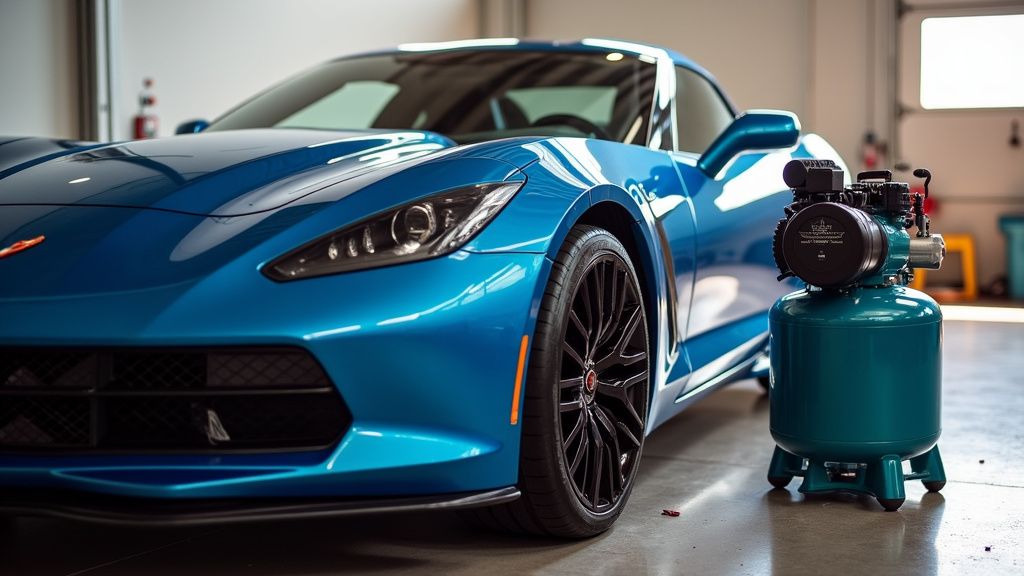
Other Factors to Consider Beyond Tank Size
While tank size is a primary concern, it’s not the only factor. You need to look at the whole package to ensure you get the best compressor for your needs.
Horsepower and Pump Type
Horsepower (HP) gives you an idea of the motor’s power. Generally, more HP means more power to drive the compressor pump. However, HP can be misleading as manufacturers often use “peak” HP which isn’t sustained. Look at the actual CFM output at a useful pressure (like 90 PSI) as a more reliable metric.
Compressor pumps come in different types, like oil-lubricated and oil-free. Oil-lubricated pumps are typically more durable and quieter. They tend to run cooler, which can also help with moisture reduction. Oil-free pumps are lighter and require less maintenance but can be louder and run hotter. For painting, the quieter operation and cooler running of an oil-lubricated pump are often preferred.
Duty Cycle: How Long Can It Run?
Duty cycle refers to how long a compressor motor can run continuously before needing to cool down. A 50% duty cycle means the compressor can run for 5 minutes out of every 10. A 75% duty cycle is better, allowing 7.5 minutes of run time.
For painting, you want the highest duty cycle possible. This usually means looking for industrial-grade or professional compressors. A higher duty cycle unit will likely have a more robust motor and cooling system. This translates to less interruption and better longevity.
Portability vs. Stationary Units
Are you painting in your garage and need to move it around? Or do you have a dedicated paint booth? Many 60-gallon compressors are stationary units. They are too heavy and bulky to move easily. Some come with wheels, but they are still substantial.
Consider your workspace. If you need to move the compressor frequently, you might look for a smaller, portable unit. However, as we’ve seen, smaller portable units often lack the necessary CFM and tank size for good automotive painting. For a 60-gallon compressor, assume it will likely be in one place.
Quick Checklist for Your Car Painting Compressor
Here’s a quick rundown to help you remember the key points when choosing your compressor:
- Check your paint sprayer’s CFM requirement.
- Aim for at least 60 gallons for most car painting.
- Verify the compressor’s CFM output at 90 PSI.
- Look for a high duty cycle (75% or more).
- Consider oil-lubricated pumps for durability and cooler running.
- Factor in noise level and power requirements.
Conclusion
You’ve learned that for car painting, a 60-gallon air compressor is your best bet. It offers the ideal balance of air storage and consistent pressure needed for a smooth finish. Anything smaller risks interruptions and a subpar job. Always pair this tank size with adequate CFM to match your paint sprayer. Investing in the right compressor means less frustration and a professional look you can be proud of. Now, you’re ready to make an informed purchase and get your project rolling!
Frequently Asked Questions
What’s the minimum tank size I can get away with for car painting?
While we recommend 60 gallons, you might manage with a 30-gallon tank for small touch-ups or if you paint in very short bursts. Be prepared for frequent compressor cycling and potential pressure drops. Anything less than 30 gallons is generally not suitable for automotive painting projects.
Can I use a smaller compressor if it has a high CFM rating?
CFM is critical, but tank size still matters greatly. A high CFM rating is useless if the tank is too small to maintain that output for any length of time. You need both sufficient CFM and adequate tank volume for consistent air delivery during your paint job.
Will a bigger tank really make my paint job look better?
Yes, a larger tank contributes directly to a better finish. It provides a buffer, ensuring more consistent air pressure. This consistency prevents paint sputtering and uneven application, leading to a smoother, more professional final look on your car.
How does tank size affect moisture in the air?
Larger tanks allow compressed air more time to cool down. As air cools, moisture condenses out. A bigger tank, combined with proper draining, helps deliver drier air to your spray gun. This is vital for preventing defects like fisheyes in your paint.
Should I prioritize CFM or tank size if I have to choose?
You need both, but for car painting, a larger tank size like 60 gallons is often the starting point. Once you have that size, then focus on ensuring its CFM output meets or exceeds your paint sprayer’s requirements. It’s a two-part equation for success.
