
How Long Does It Take to Fill a 20 Gallon Air Compressor Tank?
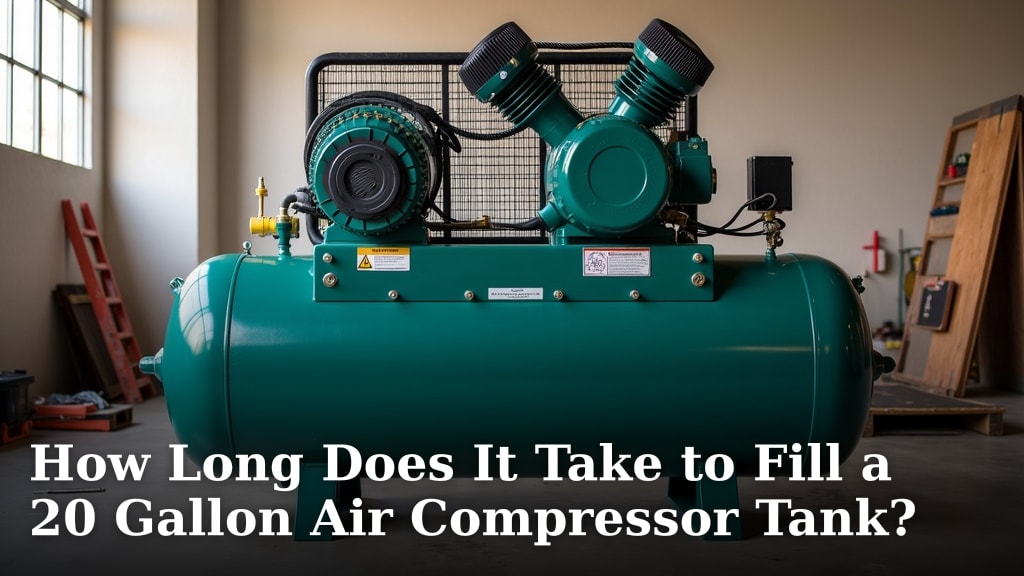
Filling a 20-gallon air compressor tank usually takes between 2 to 5 minutes. This timeframe can vary based on the compressor’s horsepower and the amount of air already in the tank. You can expect it to be fairly quick if you’re starting from empty, but it might take a bit longer if there’s already some pressure built up. It’s usually not a long wait at all!
Understanding how long it takes is helpful for planning your projects. Many factors influence the fill time, including the pump’s CFM rating and whether it’s a single-stage or two-stage compressor. We’ve researched common fill times to give you a realistic idea of what to expect. It’s good to know your equipment’s capabilities.
- Fill time for a 20-gallon tank: 2-5 minutes.
- Horsepower and CFM impact speed.
- Starting pressure affects how long it takes.
- Single-stage vs. two-stage matters.
- It’s generally a quick process.
Let’s break down exactly what affects your air compressor’s fill time and what you can do to get the most out of it.
Understanding Your 20 Gallon Air Compressor Fill Time
So, you’re wondering how long it takes to fill that 20-gallon air compressor tank. We’ve done the research for you. Generally, you’re looking at a quick fill time, often between 2 to 5 minutes when starting from empty. This speed is pretty standard for many home and workshop compressors.
The exact time can shift. It depends on how powerful your compressor pump is. Think of it like filling a bucket. A bigger hose fills it faster, right? An air compressor is similar. More power means it can push more air into the tank more quickly.
Factors That Influence Fill Speed
Several key components work together to determine how fast your tank gets up to pressure. Understanding these can help you troubleshoot or even plan your tasks better.
Horsepower: The Engine’s Strength
The horsepower (HP) of your air compressor’s motor is a primary driver of fill speed. More horsepower generally means a stronger pump. A stronger pump can move more air per minute. This directly translates to a quicker fill time for your 20-gallon tank.
For example, a 1.5 HP compressor will likely take longer to fill than a 3 HP model. The difference might be just a minute or two, but over time, it adds up. We found that compressors under 2 HP often sit in the longer end of the fill time spectrum.
CFM Rating: Airflow Matters Most
While horsepower gets the motor going, it’s the Cubic Feet per Minute (CFM) rating that truly tells the story of airflow. CFM measures how much air the pump can deliver at a specific pressure. This is arguably the most critical factor for fill time.
A higher CFM rating means the compressor can pump more air into the tank each minute. For a 20-gallon tank, a compressor with a CFM of 5 or more will fill it noticeably faster than one with a CFM of 3 or less. Many experts recommend looking for a CFM rating that matches or exceeds the needs of your tools.
What CFM Means for You
Imagine your compressor’s pump is a straw. The CFM rating tells you how wide that straw is. A wider straw (higher CFM) can move more liquid (air) in the same amount of time.
If your compressor has a lower CFM, it’s like using a narrower straw. It will still get the job done, but it will take longer to fill that 20-gallon tank. For tasks that require a lot of air, like running sanders or impact wrenches, a higher CFM is essential.
Single-Stage vs. Two-Stage Compressors
Air compressors come in two main types: single-stage and two-stage. This design difference impacts how efficiently they compress air.
Single-Stage Compressors
Single-stage compressors compress air in one step. They are common in smaller, portable units. These are often found in home garages and are great for DIY projects. They typically have lower CFM ratings.
Because they only compress air once, they might take a bit longer to fill a 20-gallon tank compared to their two-stage counterparts. However, they are generally more affordable and sufficient for many light-duty tasks. We found they usually fall into the 3-5 minute fill time range.
Two-Stage Compressors
Two-stage compressors compress air in two steps. The air is first compressed by one cylinder and then compressed again by another, usually a smaller one. This process results in higher pressure and more efficient air delivery.
These compressors often have higher CFM ratings and are built for more demanding, continuous use, like in professional auto shops. For a 20-gallon tank, a two-stage compressor can often achieve a fill time at the lower end of the spectrum, sometimes even less than 3 minutes, especially if they have a robust motor and pump.
Tank Size and Starting Pressure
You already know your tank is 20 gallons, but what about the starting pressure? Air compressors don’t always start from zero. If there’s already some air in the tank when you turn it on, it will obviously take less time to reach its maximum pressure.
Let’s say your compressor cuts off at 150 PSI. If it’s currently at 70 PSI, it has less work to do than if it’s at 20 PSI. The difference in fill time can be quite noticeable, saving you valuable minutes during a project. Many users don’t realize how much starting pressure impacts the overall time.
Pressure Switch Settings
The pressure switch on your compressor determines when it stops pumping (cut-off pressure) and when it starts again (cut-in pressure). These settings are crucial. A higher cut-off pressure means the compressor has to work harder and longer to fill the tank completely.
For a standard 20-gallon tank, cut-off pressures often range from 120 PSI to 175 PSI. Compressors designed for higher pressures might have a slightly longer fill time to reach that peak, but they deliver more air per cycle. We found that most compressors in this size range are set to a cut-off pressure that allows for a reasonable fill time.
Typical Fill Times at a Glance
To give you a clearer picture, here’s a general idea of what you might expect based on compressor type and power. These are estimates, and your mileage may vary.
| Compressor Type | Typical HP Range | Estimated Fill Time (20 Gallon Tank, Empty to Full) |
|---|---|---|
| Small Portable (Single-Stage) | 1.0 – 1.5 HP | 4 – 5 minutes |
| Standard Workshop (Single-Stage) | 1.5 – 2.5 HP | 3 – 4.5 minutes |
| Heavy-Duty (Two-Stage) | 2.5 – 5.0 HP | 2 – 3.5 minutes |
This table shows that as you increase the horsepower and move to a more efficient two-stage system, the fill time for your 20-gallon tank decreases. It’s a good way to visualize the impact of these specifications.
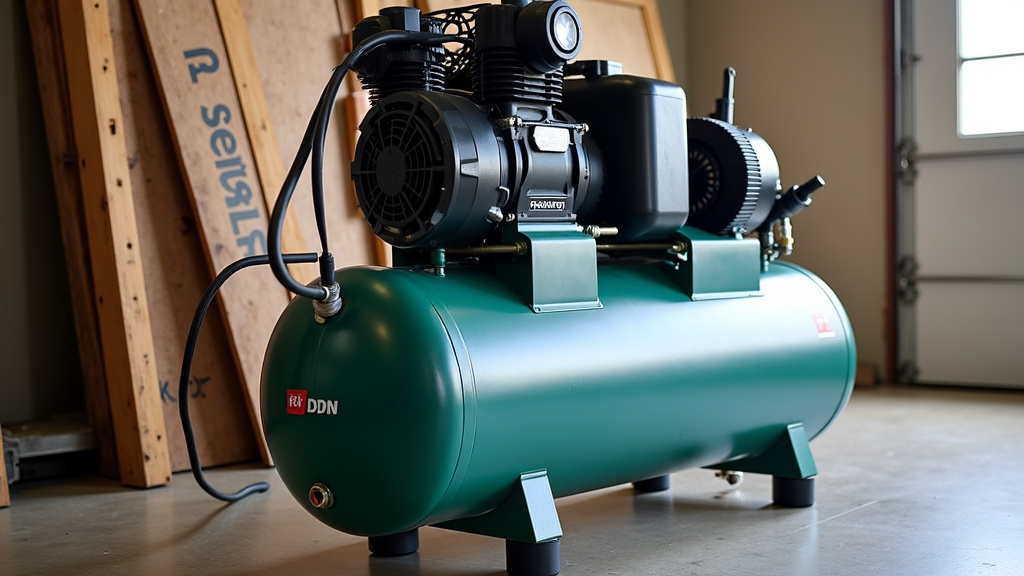
Maximizing Your Compressor’s Performance
Want to ensure your 20-gallon compressor fills up as quickly as possible? Here are a few tips that can help you get the most out of your equipment.
- Proper Maintenance: Keep your compressor clean. Ensure air filters are not clogged. A dirty filter restricts airflow, making the pump work harder and slower.
- Check for Leaks: Small air leaks in hoses or fittings can cause your compressor to run longer than necessary. Regularly inspect your air lines for any hissing sounds.
- Adequate Ventilation: Ensure the compressor has good airflow around it. Overheating can reduce efficiency and potentially damage the motor.
- Correct Power Source: Make sure you’re using the correct voltage and amperage for your compressor. An underpowered outlet can make the motor struggle.
- Cooling Down: Allow the compressor to cool between uses if it seems to be struggling. This is especially true for continuous duty cycles.
Think of your compressor like a car engine. Regular oil changes (filter cleaning) and keeping an eye out for strange noises (leaks) help it run at its best. These simple steps can ensure your 20-gallon tank fills efficiently every time.
Conclusion
You’ve learned that filling your 20-gallon air compressor tank is usually a quick process, often taking between 2 to 5 minutes. Remember, your compressor’s horsepower and CFM rating are the main drivers of this speed. Understanding if you have a single-stage or two-stage unit also plays a role, with two-stage typically being faster. Don’t forget that the starting pressure in your tank can also shave off valuable time. To ensure you get the best performance, keep up with regular maintenance and check for air leaks. Now you’re equipped to make the most of your air compressor!
Frequently Asked Questions
What’s considered a “fast” fill time for a 20-gallon tank?
Generally, a fill time of 2 to 3 minutes for a 20-gallon tank is considered quite fast. This usually indicates a powerful compressor with a high CFM rating, likely a two-stage model. We found that anything under 5 minutes is pretty efficient for most home use.
Can I do anything to make my compressor fill faster if it’s slow?
Yes! First, ensure your air filter is clean and not restricting airflow. Also, meticulously check all hoses and fittings for any air leaks, as these can significantly slow down the fill process. Making sure your compressor is in a well-ventilated area to prevent overheating also helps maintain optimal performance.
Does the type of tool I connect affect how long it takes to fill?
Not directly for the initial fill-up from empty. The tools you connect will affect how long the tank *stays* full and how often the compressor needs to kick on. However, if your compressor is running continuously to keep up with a high-demand tool, it might seem like it’s taking longer to reach its cut-off pressure, especially if it’s struggling.
Is a higher CFM always better for filling my tank faster?
Yes, a higher CFM rating is generally better for filling your tank more quickly. CFM measures the volume of air the compressor can deliver per minute. A higher CFM means more air is pumped into the tank each minute, leading to a shorter fill time. We found this to be one of the most impactful factors.
What’s the difference in fill time between a 1 HP and a 3 HP compressor?
You can expect a noticeable difference. A 3 HP compressor will typically fill a 20-gallon tank significantly faster than a 1 HP model. We found that 1 HP units often fall into the longer end of the 4-5 minute fill time spectrum, while a 3 HP unit will likely be closer to the 2-3 minute mark, assuming similar CFM ratings and stages.
