How To Use DeWalt Jump Starter Air Compressor?
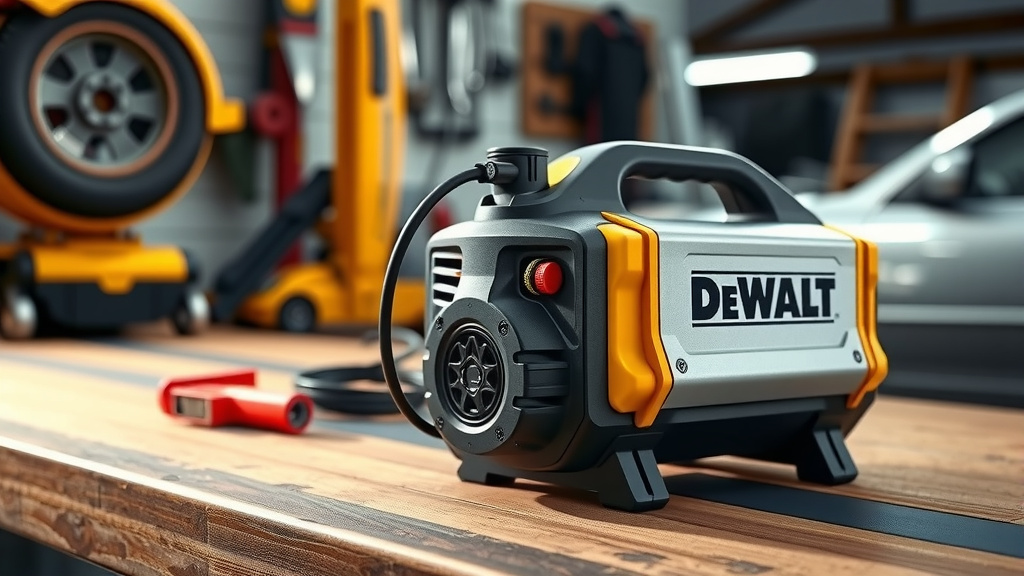
Using a DeWalt Jump Starter Air Compressor involves connecting it to your vehicle’s battery for a jump start and then attaching its air hose to inflate tires, sports equipment, or other inflatables.
You’ll typically connect the positive and negative clamps to your car battery, power on the unit, and then select the desired pressure for inflation using the built-in compressor function.
- The DeWalt Jump Starter Air Compressor is a versatile tool for both starting dead batteries and inflating tires.
- You connect it directly to your vehicle’s battery terminals for power, just like traditional jump starters.
- Its integrated air compressor feature lets you quickly top off low tires or inflate various items on the go.
- Always check your tire’s recommended PSI and monitor the compressor’s gauge to avoid over-inflation.
- This device offers peace of mind, combining two essential roadside assistants into one portable unit.
Picture this: you’re ready for an adventure, but your car won’t start, or worse, you discover a flat tire. Sound familiar? We’ve all been there! That’s why tools like the DeWalt Jump Starter Air Compressor are such a game-changer for many drivers.
This handy device isn’t just for getting your car running again; it also helps you with those low tire pressure woes. Think of it as your roadside superhero, ready to tackle two common problems with one convenient unit.
But how do you really use it to its full potential? Let’s walk through it together, step by step, so you can feel confident and prepared for whatever the road throws your way. You’ll be a pro in no time!
How To Use DeWalt Jump Starter Air Compressor?
Using a DeWalt Jump Starter Air Compressor involves a few straightforward steps, first for jump-starting, and then for its versatile air compression functions.
Understanding Your DeWalt Unit
Before you dive in, take a moment to get familiar with your specific DeWalt model. Each unit might have slightly different buttons or port layouts. Locate the jump starter clamps, the air hose, and the control panel for the compressor.
Many models also feature a digital display, which will show you battery status and tire pressure. We found that a quick glance at the owner’s manual can save you a lot of guesswork later on (DeWalt User Manuals).
Safety First: Your Checklist
Safety is paramount whenever you’re working with vehicle electronics or compressed air. You want to protect yourself and your equipment. Here’s a quick safety checklist:
- Read your DeWalt manual thoroughly.
- Wear safety glasses and gloves.
- Ensure your vehicle is in park and the engine is off.
- Confirm your DeWalt unit is adequately charged.
- Keep children and pets away from the working area.
- Avoid working in wet conditions.
Getting Ready to Jump Start Your Car
First things first, make sure your DeWalt unit is fully charged. You wouldn’t want to try jump-starting with a drained device, would you? A good rule of thumb is to charge it regularly, especially if it sits for a while.
Many experts say keeping the unit charged ensures it’s ready when you need it most. You also need to confirm your car battery is not severely damaged, just flat.
Connecting the Jump Starter Clamps
This part is critical. Proper connection ensures safety and effectiveness. You’ll see two clamps: a red one for positive and a black one for negative. Connecting them incorrectly can cause sparks or damage.
Always connect the red clamp to your car’s positive (+) battery terminal first. Then, attach the black clamp to a clean, unpainted metal surface on your car’s engine block or chassis, away from the battery itself.
Starting Your Vehicle
Once the clamps are securely attached, turn on your DeWalt jump starter. Follow the specific instructions on your unit for engaging the jump-start function. Most units have a power button or switch.
Now, try to start your car. If it doesn’t start right away, give it a moment, perhaps 30 seconds to a minute, and try again. If your car starts, congratulations! Disconnect the clamps in reverse order: black first, then red.
Using the Air Compressor Function
After a successful jump start, or perhaps on a different day for a different need, you might use the air compressor. This is where the DeWalt unit really shines as a dual-purpose tool. It’s perfect for tires, bike tubes, or even sports balls.
Checking Tire Pressure
Before you add air, you need to know how much to add. You can find your vehicle’s recommended tire pressure (PSI) on a sticker inside your driver’s side door jamb or in your car’s owner’s manual. Don’t go by the number on the tire itself; that’s the maximum pressure.
It’s like baking a cake – you follow the recipe, not just guess how much sugar to add. Getting the right pressure helps with fuel efficiency and tire longevity (AAA).
Attaching the Air Hose
The DeWalt unit comes with an air hose, often stored conveniently on the side or back. Unscrew the cap from your tire’s valve stem and firmly screw or clip the compressor’s air hose attachment onto the valve stem. You should hear a slight hiss as it connects.
Ensure it’s a tight seal to prevent air from escaping during inflation. A poor connection means you’re just compressing air into the atmosphere, not your tire.
Setting the Desired Pressure
Most DeWalt air compressors have a digital display where you can set your target PSI. Use the plus and minus buttons to adjust this number to your vehicle’s recommended tire pressure. This pre-set function is a real lifesaver, as it prevents over-inflation.
Many units will also automatically shut off once that pressure is reached, which we found to be an incredibly convenient feature.
Inflating Your Tire
Once you’ve set the pressure, simply press the “on” button for the compressor. The unit will start pumping air into your tire. Watch the display as it inflates. You’ll hear the compressor working, which is completely normal.
When the desired pressure is reached, the compressor will typically stop automatically. Disconnect the air hose quickly and replace the valve stem cap.
Other Uses for the Air Compressor
Your DeWalt unit isn’t just for car tires. It’s a versatile tool! Think about bike tires, inflatable sports equipment like basketballs or footballs, or even small air mattresses for camping. Most units come with different nozzle attachments for these purposes.
This adaptability makes it a truly valuable addition to your garage or emergency kit. It’s like having a swiss army knife for inflation needs!
Maintenance Tips for Longevity
To ensure your DeWalt Jump Starter Air Compressor lasts for years, a little TLC goes a long way. Always recharge the unit after each use, especially after a jump start, to keep the internal battery healthy.
Store it in a cool, dry place, away from extreme temperatures. Regularly check the air hose and attachments for any signs of wear or damage. Proper maintenance means it will be ready whenever you are.
Comparing DeWalt Jump Starter vs. Standalone Units
Sometimes you might wonder if a combined unit is truly better than separate tools. We found there are clear advantages and some trade-offs to consider, depending on your needs.
| Feature | DeWalt All-in-One Unit | Separate Jump Starter & Compressor |
|---|---|---|
| Portability | One compact unit, easy to carry. | Two items to carry, potentially bulkier. |
| Convenience | One tool for two common problems. | Requires grabbing two separate tools. |
| Cost | Often a more economical purchase. | Can be more expensive buying two quality tools. |
| Power/Capacity | Good for most consumer vehicles/inflation tasks. | Potentially higher capacity in dedicated professional units. |
Conclusion
Learning how to use your DeWalt Jump Starter Air Compressor correctly can bring you tremendous peace of mind. It’s more than just a tool; it’s a reliable travel companion that helps you overcome unexpected roadside hiccups. From bringing a dead battery back to life to ensuring your tires are perfectly inflated, this versatile device truly has your back.
By following these steps and prioritizing safety, you’ll be able to use your DeWalt unit confidently and efficiently, keeping your journeys smooth and worry-free. Isn’t that what we all want?
What kind of battery does the DeWalt Jump Starter Air Compressor have?
Most DeWalt Jump Starter Air Compressors utilize a sealed lead-acid battery or, in newer models, a lithium-ion battery. These internal batteries power both the jump start function and the air compressor, and they are rechargeable.
How long does it take to charge a DeWalt Jump Starter Air Compressor?
Charging times can vary significantly based on the model and how depleted the battery is. Generally, a full charge might take anywhere from 12 to 24 hours for lead-acid models, while lithium-ion versions can often charge much faster, sometimes in just a few hours.
Can I leave the DeWalt Jump Starter Air Compressor plugged in all the time?
While some DeWalt models might have maintenance or trickle charge modes, it’s generally not recommended to leave lead-acid jump starters plugged in constantly, as this can shorten battery life. Lithium-ion models often have smarter charging circuits that prevent overcharging, but always check your specific model’s manual for guidance.
What if my tire pressure gauge on the DeWalt unit shows a different reading than my car’s TPMS?
It’s common for there to be slight discrepancies between different pressure gauges. The DeWalt unit provides an accurate reading for inflation purposes. If the difference is minor, it’s usually not a concern. For critical accuracy, many mechanics recommend an independent, calibrated tire pressure gauge.
Is the DeWalt Jump Starter Air Compressor suitable for large truck tires?
While a DeWalt Jump Starter Air Compressor is excellent for passenger cars, SUVs, and light trucks, its compressor might not be powerful enough for the larger volume and higher pressure requirements of heavy-duty truck tires (e.g., commercial semi-trucks). We found that dedicated, more robust industrial compressors are typically needed for those applications.