
How To Use Portable Air Compressor For Tires?
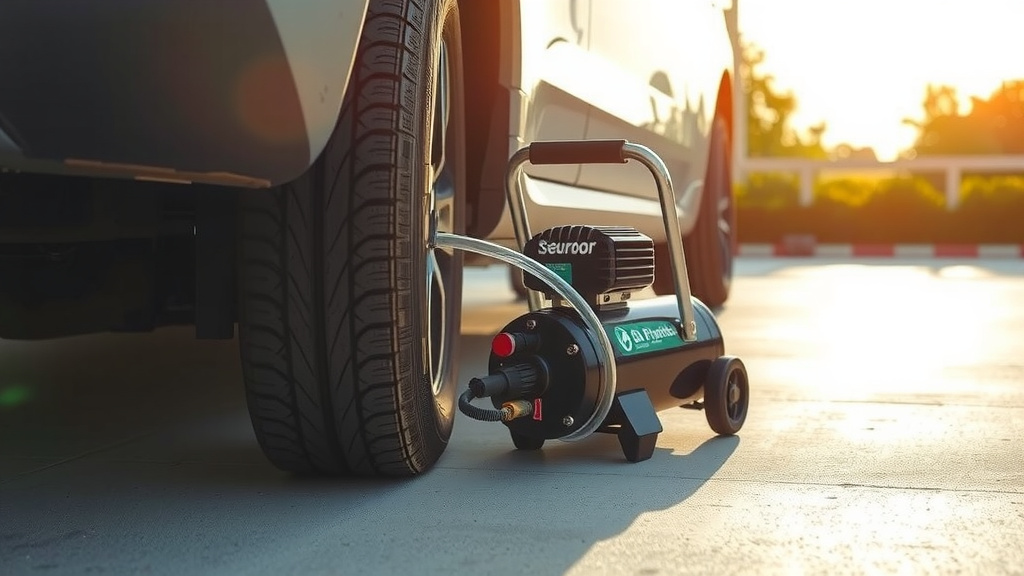
Using a portable air compressor for tires involves connecting it to your tire’s valve stem, setting the desired pressure (PSI), and then turning it on to inflate until the correct level is reached.
This handy device allows you to easily maintain optimal tire pressure, improving safety, fuel efficiency, and tire lifespan right from your driveway or on the go.
- Get your portable air compressor ready and park safely.
- Check your tire’s recommended PSI on the door jamb or owner’s manual.
- Connect the compressor hose firmly to the tire valve stem.
- Set the target PSI on your compressor and turn it on.
- Inflate slowly, monitoring the gauge, then disconnect quickly.
How To Use Portable Air Compressor For Tires?
Using a portable air compressor to inflate your tires is simpler than you might think. It gives you control over your vehicle’s safety and performance.
Many drivers find this tool a true convenience, especially for roadside emergencies or regular maintenance.
Why Keep Your Tires Properly Inflated?
Think of your tires as the foundation of your vehicle. Correct tire pressure means better road grip and stability.
We found that properly inflated tires also contribute to improved fuel efficiency, saving you money at the pump (Department of Energy).
Additionally, they help your tires last longer, delaying costly replacements. It’s a small task with big rewards.
Choosing the Right Portable Air Compressor
Not all portable compressors are the same. Some run on your car’s 12V outlet, while others plug into a standard wall socket.
Consider what you’ll use it for most. A 12V unit is perfect for roadside needs, while an AC-powered one might be faster for home use.
Many experts say to look for a unit with an accurate built-in gauge and a sturdy construction.
Understanding Power Sources: 12V vs. AC
Portable air compressors come with different power options. Each has its benefits depending on your needs.
It’s important to match the compressor to where and when you plan to use it most.
| Feature | 12V DC Compressor | AC Powered Compressor |
|---|---|---|
| Power Source | Car’s cigarette lighter or 12V outlet | Standard wall outlet (120V) |
| Portability | Highly portable, good for roadside | Less portable, usually for garage or home use |
| Inflation Speed | Generally slower for car tires | Often faster due to more power |
| Best For | Emergency top-offs, recreational vehicles | Regular car maintenance, workshops |
Getting Ready: Pre-Inflation Steps
Before you even plug in your compressor, a few preparatory steps make the process smoother and safer. Don’t skip these; they are genuinely helpful.
Finding Your Tire’s Recommended Pressure
Where do you find this crucial number? It’s not on the tire sidewall, which shows the maximum pressure. Instead, look for a sticker on your driver’s side door jamb.
You might also find it in your vehicle’s owner’s manual. This number, typically in PSI (pounds per square inch), is your target.
Safety First: Parking and Stability
Always park your vehicle on a flat, stable surface. Engage your parking brake to prevent any accidental movement.
This simple step ensures both your safety and an accurate pressure reading. Safety is always paramount when working with your car.
The Simple Steps to Inflate Your Tires
Ready to get those tires just right? Follow these straightforward instructions. You’ll be done in minutes!
Connecting the Hose
Locate the valve stem on your tire. It’s usually a small, rubber or metal protrusion. Unscrew the small cap.
Now, firmly attach the compressor’s hose nozzle to the valve stem. You’ll want a snug fit to prevent air leaks.
Some nozzles screw on, while others use a lever-lock mechanism. Make sure it’s secure.
Setting the PSI
Many modern portable compressors have a digital display where you can preset your desired PSI. Input the number you found earlier.
If your compressor is older, you’ll need to watch the gauge as it inflates. We found that digital gauges often offer more precision.
Monitoring and Inflating
Turn on your compressor. It will start to make noise and inflate the tire. Watch the pressure gauge carefully.
Once it reaches your target PSI, or slightly above if you’re quick, turn the compressor off. It’s often better to go slightly over and release air than to go under.
Disconnecting Safely
Quickly disconnect the hose from the valve stem. You might hear a small hiss as a tiny bit of air escapes; that’s normal.
Replace the valve cap. This simple cap helps keep dirt and moisture out of the valve, protecting it.
When NOT to Use Your Portable Compressor
While great for topping off, a portable compressor isn’t always the solution. If your tire is completely flat due to a large puncture, it won’t hold air.
Similarly, if you see visible damage like bulges or deep cuts, inflating it could be dangerous. In such cases, call roadside assistance or visit a professional.
Maintaining Your Portable Air Compressor
A little care goes a long way in extending the life of your compressor. After each use, coil the hose neatly.
Store it in a dry, cool place away from direct sunlight. We found that keeping the unit clean also helps its longevity.
- Store in a clean, dry place.
- Coil the power cord and air hose neatly.
- Check for any damage to hoses or connectors.
- Clean exterior casing with a damp cloth.
- Read the user manual for specific maintenance (e.g., filter checks).
Common Mistakes to Avoid
Even with a simple tool, certain missteps can lead to problems. Let’s make sure you avoid them.
One common mistake is over-inflating your tires, which can reduce grip and make your ride harsher.
Another is inflating cold tires immediately after driving; tires should ideally be cold for an accurate reading (NHTSA).
Always double-check your PSI target before starting.
Conclusion
Using a portable air compressor for your tires is a simple yet incredibly beneficial skill. It offers convenience, peace of mind, and contributes to your vehicle’s overall health and safety.
By following these easy steps, you can ensure your tires are always at their optimal pressure, ready for the road ahead. Isn’t that a great feeling?
How often should I check my tire pressure?
Many experts recommend checking your tire pressure at least once a month and before long trips. Temperature changes can affect pressure, so more frequent checks during seasonal shifts are wise.
Can I use a portable air compressor for other inflatables?
Yes, many portable air compressors come with different nozzle attachments suitable for inflating sports balls, air mattresses, and even bicycle tires. Always check the compressor’s manual for its full capabilities.
What if my tire valve stem is leaking?
If you suspect a valve stem leak, you might hear a hissing sound or notice constant air loss. A temporary fix involves tightening the valve core, but often, the stem itself might need replacing by a professional.
Is it better to over-inflate or under-inflate slightly?
Neither is ideal. Under-inflated tires can cause excessive heat buildup and tire failure, while over-inflated tires reduce traction and accelerate wear on the center tread. Aim for the recommended PSI precisely for safety and tire longevity.
How long does it take to inflate a car tire with a portable compressor?
The time varies greatly depending on the compressor’s power and how low the tire pressure is. Typically, topping off a slightly low car tire might take 2-5 minutes per tire, while inflating a nearly flat tire could take 5-10 minutes or more.
