How Air Compressor Regulator Works?
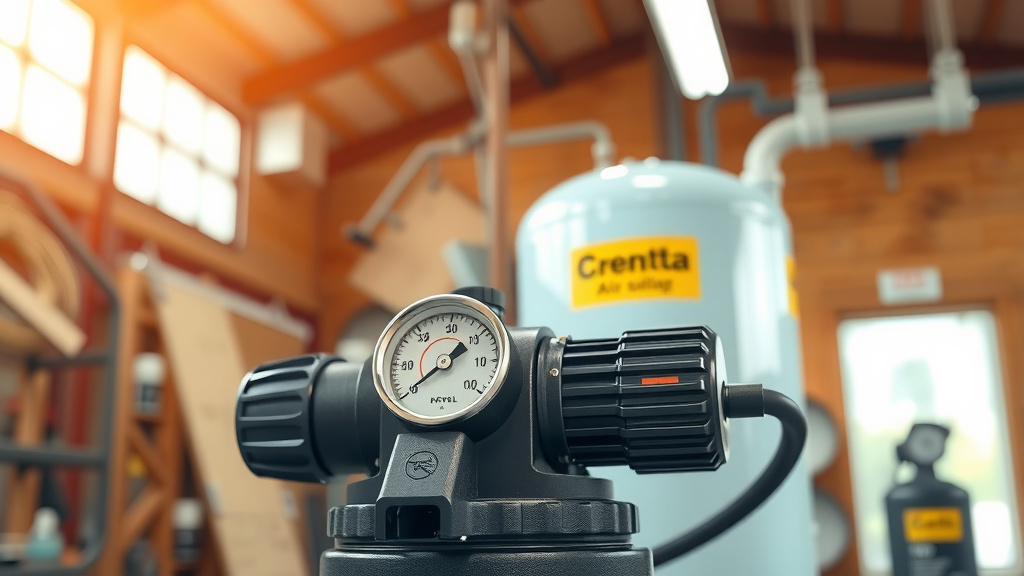
An air compressor regulator works by sensing the downstream pressure and precisely adjusting a spring-loaded diaphragm or piston to maintain a consistent output pressure, regardless of fluctuations from the air tank.
This essential device protects your tools and ensures precise operation, taking the high, inconsistent pressure from your compressor tank and delivering a steady, usable airflow right when you need it.
- Regulators are like a critical traffic cop for your air compressor, ensuring consistent pressure delivery.
- They use internal components like diaphragms and springs to balance upstream and downstream air pressure.
- Setting the correct pressure protects your valuable pneumatic tools from damage and ensures your projects turn out great.
- Ignoring your regulator can lead to inconsistent tool performance and even safety issues.
- Regular checks and occasional maintenance keep your air system running smoothly and reliably.
How Air Compressor Regulator Works?
Your air compressor regulator works by taking the high-pressure air from the tank and reducing it to a specific, constant pressure level you set for your tools.
It acts like a gatekeeper, ensuring your pneumatic tools get the steady air supply they need to function correctly and safely.
What Exactly is an Air Compressor Regulator?
Think of an air compressor regulator as the pressure control center for your pneumatic system. It’s a mechanical valve.
This valve adjusts the air pressure leaving your compressor tank before it reaches your air tools. Without it, tools would get inconsistent, often too-high, pressure.
Why Do You Need a Regulator? It’s About Control!
You need a regulator to protect your tools and ensure accurate work. Your air compressor tank holds air at very high pressures, often 100-175 PSI.
Most air tools, however, operate best at much lower pressures, typically around 60-90 PSI (industry standards often suggest checking tool manuals).
A regulator prevents tool damage and provides the right pressure for the job.
Key Components: The Anatomy of a Regulator
We found that a typical air compressor regulator has a few core parts. You’ll usually see a spring, a diaphragm or piston, and a valve.
These pieces work together in harmony to manage air flow. Understanding them helps you see how they deliver consistent air pressure.
The Diaphragm (or Piston)
This is a flexible disc or a solid cylinder that responds to pressure changes. It’s like the “brain” of the regulator, sensing how much air pressure is on the output side.
Many experts say this component is vital for the regulator’s responsiveness and accuracy.
The Adjusting Spring
This spring applies force to the diaphragm or piston. When you turn the adjustment knob, you compress or decompress this spring.
More compression means you’re asking for higher output pressure.
The Valve Seat and Poppet
The poppet is a small plug that opens and closes against the valve seat. It’s the gate that controls how much high-pressure air enters the regulator from the tank.
When the poppet opens, air flows. When it closes, air flow stops or slows down.
Step-by-Step: How it Controls Air Pressure
It might seem like magic, but the process is quite logical. Here’s a simple breakdown of how an air compressor regulator works:
- You set the desired output pressure by turning the adjustment knob, compressing the spring.
- The compressed spring pushes down on the diaphragm (or piston).
- This push opens the poppet valve, allowing high-pressure air from the tank to flow into the output chamber.
- As air fills the output chamber, pressure builds up underneath the diaphragm.
- When the pressure underneath the diaphragm equals the force from the spring, the diaphragm pushes up.
- This upward movement causes the poppet valve to partially close, restricting further air flow.
- The regulator reaches a balance, maintaining your set output pressure consistently.
Setting Your Regulator: A Quick Guide
Setting your regulator is straightforward. First, always check your air tool’s pressure requirement (often printed on the tool itself or in its manual).
Then, simply turn the adjustment knob on the regulator. Clockwise increases pressure, counter-clockwise decreases it. Watch the gauge for your target PSI.
Pressure Drop: Understanding What Happens
Sometimes, you might notice your tool performing poorly even if the regulator gauge shows the correct pressure. This is often due to “pressure drop.”
Pressure drop happens when air flows through hoses, fittings, and quick couplers. Friction and restrictions cause the pressure to fall slightly before it reaches your tool (research shows this is a common issue in air systems).
This means the pressure *at the tool* might be lower than the pressure *at the regulator gauge*. It’s a common factor in optimizing air delivery.
Common Regulator Problems (and Simple Fixes)
Regulators are sturdy, but they can experience issues. If your regulator isn’t holding pressure, or it’s constantly leaking, it could be a worn diaphragm or a dirty valve seat.
Often, a simple cleaning or a replacement diaphragm kit can fix these issues, saving you from buying a whole new unit. Regular inspection helps here.
Troubleshooting Checklist for Your Regulator
- Check for air leaks around connections with soapy water.
- Ensure the adjustment knob isn’t stuck or stripped.
- Verify the input pressure from the tank is adequate.
- Inspect the air filter for clogs (if your regulator has one).
- Consider if internal components might be worn out.
Maintenance Tips for a Long-Lasting Regulator
Keeping your regulator in top shape is easy. We found that the biggest enemies are dirt, moisture, and extreme temperatures.
Draining your compressor tank regularly prevents moisture buildup. Also, ensure your regulator is installed in a clean, dry location (OSHA guidelines often recommend this for air systems).
Occasionally, you might want to disassemble and clean the internal components. This simple care can significantly extend its lifespan.
When to Consider an Upgrade?
If your current regulator struggles to maintain consistent pressure, even after cleaning, or if you’re upgrading to tools that demand higher precision, it might be time for a new one.
Some regulators offer finer adjustments or faster response times, which can make a big difference for delicate work. Look for one that matches your tool’s exact needs.
Understanding Regulator Types
Did you know there are different kinds of regulators? The most common are standard (relieving) and non-relieving types.
Relieving regulators can vent excess downstream pressure, which is handy if you accidentally set the pressure too high. Non-relieving types do not vent, requiring you to manually lower the pressure.
For most home and small shop applications, a relieving regulator is generally preferred for its ease of use and safety.
Choosing the Right Regulator
Selecting a regulator depends on your needs. Consider the maximum output pressure you require, the flow rate (CFM) of your tools, and your budget.
Many experts suggest matching the regulator’s maximum flow rate to exceed your compressor’s output and your tools’ combined needs. This prevents flow restriction, which can cause unexpected pressure drops.
Comparing Regulator Features
Understanding these differences can help you pick the perfect fit for your workbench.
| Feature | Basic Regulator | Precision Regulator |
|---|---|---|
| Adjustability | Standard increments, less precise. | Fine-tune adjustments, very accurate. |
| Response Time | Good for general tasks. | Faster, reacts quickly to pressure changes. |
| Pressure Drop | More susceptible to flow-related drops. | Designed to minimize pressure drop. |
| Cost | Generally more affordable. | Higher initial investment. |
| Best For | General shop, DIY, framing nailers. | Painting, delicate assembly, airbrushes. |
Safety First: Regulator Best Practices
Always ensure your regulator is correctly installed and compatible with your air compressor system. Never exceed the maximum input pressure rating of your regulator.
Regularly check for leaks and ensure all connections are secure. A well-maintained and correctly used regulator is a safe regulator (Industry safety guidelines stress this point).
Conclusion
Your air compressor regulator is a surprisingly simple yet crucial component of your pneumatic setup. It acts as the intelligent bridge between your high-pressure tank and your delicate air tools.
By understanding how it works, its core components, and how to maintain it, you empower yourself to get the most out of your tools. Remember, precise pressure means better work, safer operation, and longer tool life. So, take a moment to appreciate this unsung hero of your air system!
How do I know if my air compressor regulator is bad?
You might suspect a faulty regulator if your air tools receive inconsistent pressure, even after adjusting the knob. Other signs include audible air leaks directly from the regulator, an inability to hold a set pressure, or if the gauge reading constantly fluctuates without tool use. It might also struggle to reach the desired pressure.
Can you run an air compressor without a regulator?
While you technically *can* run an air compressor without a regulator, it’s highly unadvisable for most applications. Without a regulator, your tools would receive the full, unregulated pressure directly from the tank, which is often too high and inconsistent. This can quickly damage your tools and lead to unsafe operating conditions.
What is the difference between a relieving and non-relieving air regulator?
A relieving regulator can automatically vent (release) excess downstream air pressure if it exceeds the set point, allowing you to easily decrease the pressure without needing to disconnect a tool. A non-relieving regulator, on the other hand, cannot vent excess pressure. To lower the pressure on a non-relieving type, you’d need to use air from the line or manually bleed it off.
How often should I check my air compressor regulator?
It’s a good practice to visually inspect your air compressor regulator before each use for any obvious damage or leaks. For internal checks and cleaning, many experts suggest a more thorough inspection annually, especially if you use your compressor frequently. Regular checks can prevent minor issues from becoming major problems.
Does regulator position matter for air compressor performance?
Yes, the position of your regulator can affect performance. It should be installed close to the point of use or after any air filters and lubricators in your air line. This ensures that the regulated pressure is delivered as consistently as possible to your tools, minimizing any further pressure drop in the lines after regulation.