How To Use DeWalt Portable Air Compressor?
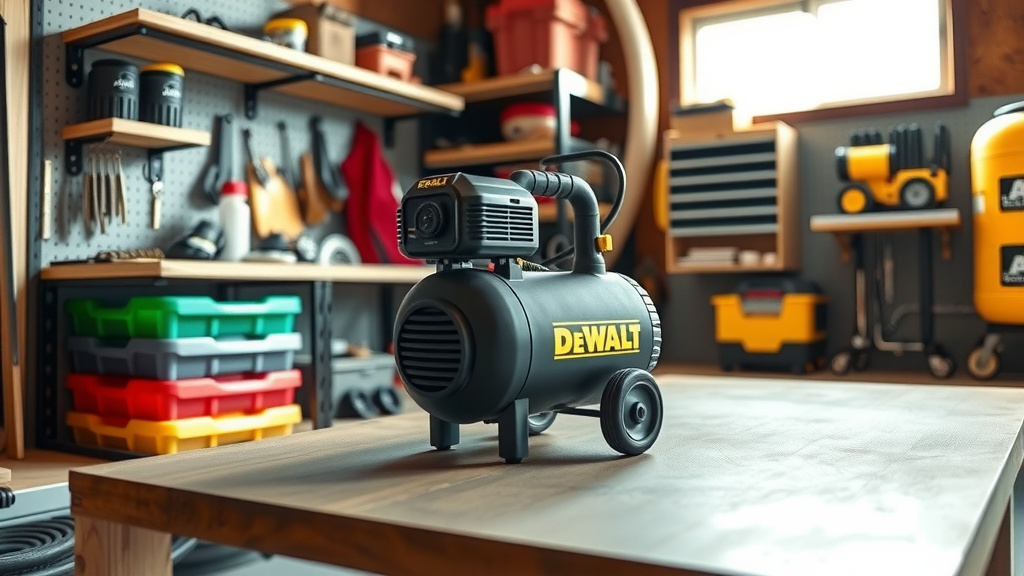
Using your DeWalt portable air compressor involves a few simple steps, starting with placing it on a stable, level surface. You’ll then connect your air hose and preferred tool before powering on the unit and adjusting the pressure regulator.
Always remember to drain any moisture from the tank after each use to ensure your DeWalt portable air compressor performs reliably and lasts longer.
- The most vital first step is always to review your specific DeWalt model’s manual for unique instructions and safety data.
- Safety gear, like eye and ear protection, is non-negotiable when operating any air compressor.
- Connecting the hose and tool securely prevents air leaks and ensures efficient operation for all your tasks.
- Properly adjusting the PSI (Pounds per Square Inch) regulator is essential to match the air pressure needs of your specific pneumatic tool.
- Regular maintenance, such as draining the tank and checking filters, significantly extends the life and reliability of your compressor.
How To Use DeWalt Portable Air Compressor?
Using a DeWalt portable air compressor is straightforward. You prepare the unit, connect your tools, and then power it up to perform your tasks efficiently.
This guide will walk you through each step, making sure you get the most out of your powerful tool.
Why Choose a DeWalt Portable Air Compressor?
DeWalt compressors are known for their durability and portability. They are designed for easy transport, making them perfect for job sites or home projects.
Many users find these units offer reliable power in a compact package. They are a popular choice for their versatility.
Understanding Your DeWalt Model
Every DeWalt compressor model might have slight differences. We recommend always consulting your owner’s manual first.
This manual provides specific details about your unit’s features and safety protocols. It is your best source of information.
Safety First: Essential Precautions
Before you even plug in your compressor, safety must be your top priority. Air compressors operate under high pressure and can be noisy.
Protecting yourself and others around you is very important. Think of safety as your best assistant on any project.
- Always wear safety glasses or goggles to protect your eyes from debris.
- Use ear protection, such as earmuffs or earpl, to prevent hearing damage from noise.
- Ensure your work area is clean and well-lit to avoid trips or accidents.
- Place the compressor on a stable, level surface. This prevents tipping during operation.
- Keep children and pets away from the compressor and tools while they are in use.
- Never point an air nozzle at yourself or others; high-pressure air can cause serious injury.
Getting Started: Initial Setup
Once you have read the manual and are prepared with safety gear, it’s time to set up your compressor. This typically takes just a few moments.
Proper setup ensures your compressor runs smoothly from the start. It is like laying a good foundation.
Choose a location that is dry and well-ventilated. This helps prevent overheating and keeps the motor cool.
Plug the compressor into an appropriate electrical outlet. Make sure the outlet matches the voltage requirements listed in your manual.
Common DeWalt Portable Air Compressor Models and Their Uses
DeWalt offers various models, each suited for different tasks. Understanding your model helps you use it effectively.
We found that smaller pancake or hot dog compressors are great for quick jobs, while larger twin-stack models offer more sustained power.
| DeWalt Model Type | Typical CFM & PSI | Best For |
|---|---|---|
| Pancake Compressor (e.g., DWFP55126) | 2.6 CFM @ 90 PSI, 165 Max PSI | Brad nailing, stapling, inflating tires |
| Hot Dog Compressor (e.g., D55153) | 4.0 CFM @ 90 PSI, 200 Max PSI | Framing/roofing nailers, light automotive |
| Twin-Stack Compressor (e.g., D55168) | 5.0 CFM @ 90 PSI, 200 Max PSI | Heavy framing, multiple pneumatic tools |
Connecting Your Air Hose and Tools
This step brings your compressor to life, allowing it to power your pneumatic tools. It’s like connecting the dots.
Most DeWalt compressors use quick-connect fittings, which make attaching and detaching hoses very easy. Push the fitting onto the compressor’s air outlet until it clicks.
Then, attach your air tool to the other end of the hose. Make sure both connections are secure to prevent air leaks.
A leaky connection can reduce tool performance and waste compressed air, so always double-check.
Powering Up and Building Pressure
Now you are ready to turn on the compressor. Locate the power switch, usually a simple on/off toggle.
Flip the switch to the “on” position. You will hear the motor start, and the tank will begin to fill with air.
Watch the pressure gauge. The compressor will run until it reaches its maximum pressure, then it will automatically shut off. This is a normal operation.
It’s like a car filling its fuel tank; it stops when full. The compressor will cycle on again as you use air.
Adjusting Air Pressure (PSI)
Different tools require different air pressures. Using the correct PSI is important for both tool performance and safety.
Your compressor has a regulator knob, usually near the pressure gauges. Turn this knob to adjust the outgoing air pressure.
We found that many tools have their recommended PSI listed directly on the tool or in its manual (Power Tool Institute).
Always set the pressure to match your tool’s requirement. Too much pressure can damage tools or workpieces.
- For brad nailers, usually 70-90 PSI is sufficient.
- Tire inflation often requires specific PSI based on the tire’s sidewall recommendations.
- Blow guns for cleaning typically work well around 50-70 PSI.
- Heavy-duty tools like framing nailers might need 90-120 PSI for consistent power.
Practical Applications: What Can You Do?
With your DeWalt portable air compressor, a wide range of tasks becomes much easier and faster. Think of the time you will save.
You can inflate car tires, bike tires, or sports equipment. It’s also excellent for powering pneumatic nail guns for carpentry.
Many experts say air compressors are also ideal for blowing dust and debris from workspaces or equipment (OSHA guidelines).
Some users even use them for airbrushing or light paint spraying, expanding their project capabilities.
Maintaining Your Compressor for Longevity
Regular maintenance is key to keeping your DeWalt compressor running efficiently for years. It is like taking care of your car.
After each use, you must drain the air tank. Locate the drain valve, usually at the bottom of the tank, and open it to release condensed water.
This prevents rust from building inside the tank, which could lead to damage or even failure (Compressed Air and Gas Institute).
Additionally, check and clean the air filter periodically, as a clogged filter can reduce efficiency. Your manual will tell you how.
Troubleshooting Common Issues
What if your compressor is not working quite right? Don’t worry, many issues have simple solutions.
If you experience low pressure, check all hose connections for leaks. Even a small leak can significantly reduce output.
If the compressor won’t start, ensure it is properly plugged in and the circuit breaker hasn’t tripped. Sometimes it’s the simplest explanation.
Loud, unusual noises could signal a problem with the motor or pump. If unsure, it is best to consult a professional or the manual.
Storing Your Compressor Properly
When your projects are done, proper storage will protect your compressor until the next time you need it. A little care goes a long way.
Always disconnect the power cord and store it neatly. Release all air pressure from the tank by opening the drain valve and the regulator.
Store your DeWalt compressor in a clean, dry location. Extreme temperatures can affect its components.
Many units can be stored vertically to save space. Check your manual for specific storage recommendations.
Conclusion
Using your DeWalt portable air compressor is a straightforward process once you understand the basic steps. From initial setup and safety precautions to operating and maintaining the unit, each phase plays a role in successful and safe operation.
By following these guidelines and regularly checking your specific model’s manual, you can ensure your compressor provides reliable service for all your projects, helping you get the job done right every time.
What is the ideal PSI for inflating car tires with a DeWalt compressor?
The ideal PSI for car tires varies by vehicle. You should always consult your vehicle’s owner’s manual or the sticker inside the driver’s side door jamb for the recommended tire pressure. Never exceed the maximum PSI listed on the tire’s sidewall.
Can I use an extension cord with my DeWalt portable air compressor?
Using an extension cord is generally discouraged, but if necessary, it must be a heavy-duty, outdoor-rated cord that is as short as possible. The gauge of the wire should be thick enough (e.g., 12 or 10 gauge) to handle the compressor’s power requirements and prevent voltage drop, which can damage the motor.
How often should I drain the tank on my DeWalt air compressor?
It’s a good practice to drain the air tank after every single use, especially in humid environments. Water condensation can lead to rust inside the tank, shortening its lifespan and potentially contaminating your air tools. Draining it regularly prevents this build-up.
My DeWalt compressor is running constantly, what could be wrong?
If your DeWalt compressor runs constantly and doesn’t build up pressure, it often points to an air leak. Check all hose connections, fittings, and the tank itself for any signs of escaping air. A faulty pressure switch or check valve could also be the cause, which might require professional inspection.
Is it normal for the compressor to get hot during operation?
Yes, it is normal for the motor and pump of your DeWalt air compressor to become warm or even hot during operation, especially during prolonged use. However, if it feels excessively hot to the touch or if the thermal overload switch trips frequently, it could indicate an issue like insufficient ventilation or a failing component, and should be investigated.