How To Use Husky 3 Gallon Air Compressor?
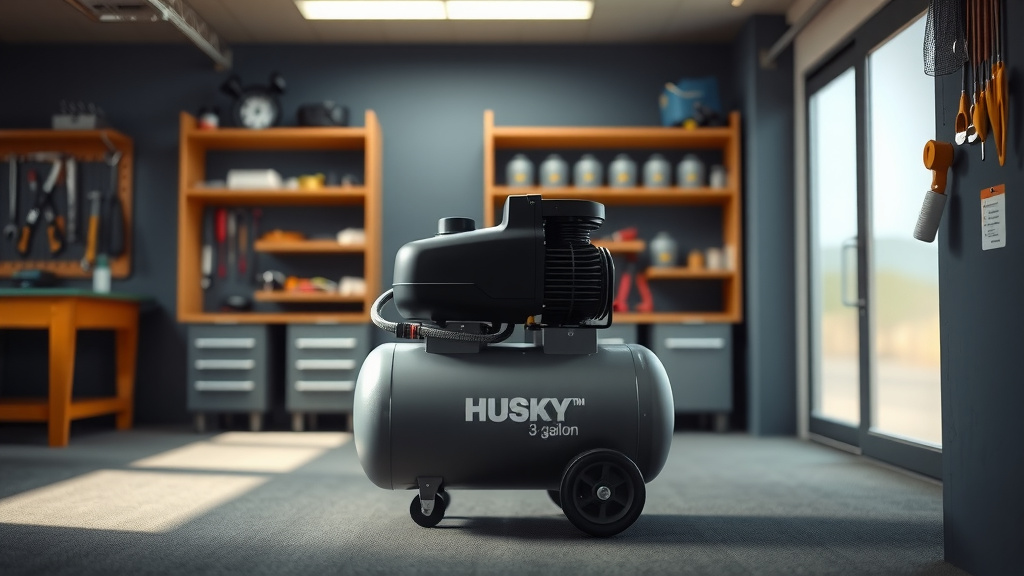
Using your Husky 3 Gallon Air Compressor involves simple steps: first, connect your air tool, then plug in the compressor, and finally, adjust the pressure to your task’s requirements using the regulator.
Always remember to drain any moisture from the tank after each use to maintain the longevity and performance of your Husky 3 Gallon Air Compressor.
- Get started fast with your Husky 3-gallon air compressor by checking components and connecting tools.
- Understand basic safety rules to keep yourself and your equipment protected.
- Learn to power up, set pressure, and operate your compressor for various tasks.
- Discover essential maintenance like draining water and storing properly for long-term use.
- Troubleshoot common issues quickly to keep your projects moving smoothly.
How To Use Husky 3 Gallon Air Compressor?
Using your Husky 3 Gallon Air Compressor is straightforward once you know the basics. This compact, portable unit is ideal for many common household and workshop jobs. Think about inflating tires, powering small nail guns, or cleaning dusty areas.
Getting Started: Your First Steps
Before you even plug it in, a few quick checks ensure everything is ready. This initial setup takes only a few minutes but saves headaches later. It’s like checking your car’s oil before a long trip; a small effort now prevents bigger problems.
Unboxing and Inspection
When you first unbox your Husky 3 Gallon Air Compressor, take a moment to look it over. Is everything there? Are there any visible damages from shipping? We found that quickly checking for loose parts or dents can save you a return trip to the store.
What’s In The Box?
Your compressor usually comes with the main unit and an owner’s manual. Sometimes, a quick-connect coupler or an initial air hose might be included. Always consult your manual to see the exact components you should have.
Safety First: Always A Priority
Working with any power tool requires respect for its capabilities. Air compressors store pressurized air, which demands a few safety considerations. Many experts say that proper safety practices are your best defense against accidents (OSHA guidelines).
Essential Safety Gear
Before you begin, always wear safety glasses to protect your eyes from debris. Hearing protection is also a good idea, as compressors can be noisy. You might not think about it, but a small air leak can really surprise your ears!
Understanding Your Compressor’s Features
Your Husky compressor has a few key parts. You’ll see the air tank, the motor, the pressure gauges, and the regulator. The pressure relief valve is a crucial safety component that prevents over-pressurization.
Setting Up For Success
Now that you’ve inspected it and thought about safety, it’s time to get your Husky 3 Gallon Air Compressor ready for action. This involves connecting your tools and ensuring a stable power supply.
Connecting Air Tools
Most Husky compressors use a universal quick-connect coupler. This means you simply push your air tool’s plug into the compressor’s coupler until it clicks. It’s as easy as plugging in a garden hose to a faucet.
Powering It Up
Plug your compressor into a grounded electrical outlet. Avoid extension cords if possible. If you must use one, ensure it’s heavy-duty and rated for the compressor’s power draw. Turn the power switch to the “ON” position.
Operating Your Husky Compressor
Once powered on, the compressor will begin to fill its tank with air. You’ll hear the motor run, and the pressure gauge will climb. It will stop automatically once it reaches its maximum pressure.
Setting the Right Pressure
The regulator knob on your compressor lets you adjust the air pressure sent to your tool. Turn it clockwise to increase pressure, counter-clockwise to decrease. Always set the pressure according to your tool’s and task’s requirements (tool manufacturer guidelines).
Starting Your Project
With the pressure set, you’re ready to go! Squeeze the trigger on your air tool, and the compressor will maintain the airflow. If the tank pressure drops too low, the compressor will kick back on to refill it – that’s normal.
Common Uses for Your Husky 3 Gallon Compressor
This compact compressor is a versatile companion for many tasks. It might not build a skyscraper, but it’s perfect for home and small workshop needs.
- Inflating Tires: Car tires, bike tires, sports balls – a simple task.
- Small Brad Nailing: Ideal for trim work or craft projects.
- Cleaning Dust: With an air blow gun, you can quickly clear debris from workspaces or electronics.
- Airbrushing: For hobbyists or small painting projects, it provides a consistent air supply.
Maintenance Tips for Longevity
A little care goes a long way in extending the life of your compressor. Think of it like watering a plant; consistent, small efforts keep it thriving.
Draining the Tank
This is arguably the most important maintenance step. After each use, open the drain valve located at the bottom of the tank. This releases condensed moisture, preventing rust inside the tank. Rust can compromise the tank’s integrity over time.
Cleaning Air Filters
Check your air filter regularly. A dirty filter can restrict airflow and make the motor work harder. Most filters can be cleaned with compressed air or simply replaced if too dirty. We found that a clean filter keeps the compressor running efficiently.
Troubleshooting Common Issues
Even the most reliable tools can have hiccups. Here are quick fixes for a few common problems you might encounter.
| Issue | Possible Cause | Quick Fix |
|---|---|---|
| Compressor won’t start | No power, circuit tripped | Check plug, reset breaker |
| Low air pressure | Regulator setting, air leak | Adjust regulator, check connections |
| Compressor runs constantly | Air leak in tank/lines | Check for audible leaks, tighten fittings |
| Excessive noise | Loose components | Inspect for loose screws or panels |
Storage Best Practices
When your projects are done for the day, proper storage ensures your Husky 3 Gallon Air Compressor is ready for next time. It’s like putting your tools back in the toolbox; keeping them safe and sound.
Where To Store Your Compressor
Store your compressor in a dry, clean environment. Avoid areas with extreme temperatures or high humidity. A garage shelf or a corner in your workshop usually works well. Make sure the drain valve is closed after draining.
Checklist for Every Use
Here’s a quick mental checklist to run through each time you use your compressor. It’s a simple routine to ensure safety and optimal performance.
- Inspect for damage.
- Wear safety glasses.
- Check air filter.
- Connect tools securely.
- Set correct pressure.
- Drain tank after use.
Conclusion
Your Husky 3 Gallon Air Compressor is a reliable, portable powerhouse for countless home and garage tasks. By understanding its basic operation, prioritizing safety, and performing routine maintenance, you can ensure it serves you well for many years. It’s a straightforward tool designed for ease of use, making your projects a little bit easier and a lot more efficient. We found that a well-maintained compressor becomes a valuable asset in any toolkit.
Can a Husky 3 Gallon Air Compressor run an impact wrench?
A Husky 3 Gallon Air Compressor typically lacks the sustained airflow (CFM) and tank capacity to efficiently run most impact wrenches for extended periods. It might work for very light-duty, quick lug nut removal, but it’s generally better suited for smaller tasks like inflation or brad nailing. Impact wrenches demand higher CFM for continuous operation.
How often should I drain the water from my Husky 3 Gallon Air Compressor?
You should drain the water from your Husky 3 Gallon Air Compressor’s tank after every use. Condensation builds up inside the tank as air is compressed, and regular draining prevents rust and corrosion, extending the life of your compressor and preventing contaminants from reaching your tools.
What kind of oil does a Husky 3 Gallon Air Compressor use?
Many Husky 3 Gallon Air Compressors are “oil-free” models, meaning they do not require any oil for lubrication. Always check your specific model’s owner’s manual to confirm. If your model is an oil-lubricated type (less common for small portable units), it would typically use a non-detergent compressor oil.
Can I use my Husky 3 Gallon Air Compressor for painting?
While a Husky 3 Gallon Air Compressor can technically supply air for very small-scale, hobby-grade airbrushing, it’s generally not ideal for larger painting projects with standard spray guns. Its limited tank size and CFM may lead to inconsistent pressure and frequent cycling, which can affect paint finish quality. Larger tanks and higher CFM are usually needed for good painting results.
Why does my Husky 3 Gallon Air Compressor keep cycling on and off?
If your Husky 3 Gallon Air Compressor is constantly cycling on and off, it could indicate an air leak. Check all connections, hoses, and the tank for any audible hissing sounds. A leak causes the tank pressure to drop, triggering the compressor to refill it more frequently than normal. Another possibility is a faulty pressure switch, but leaks are more common.