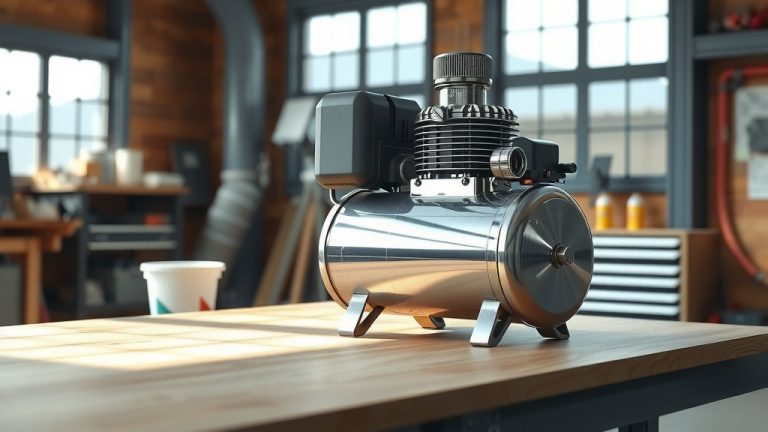
What Is A Good Air Compressor?
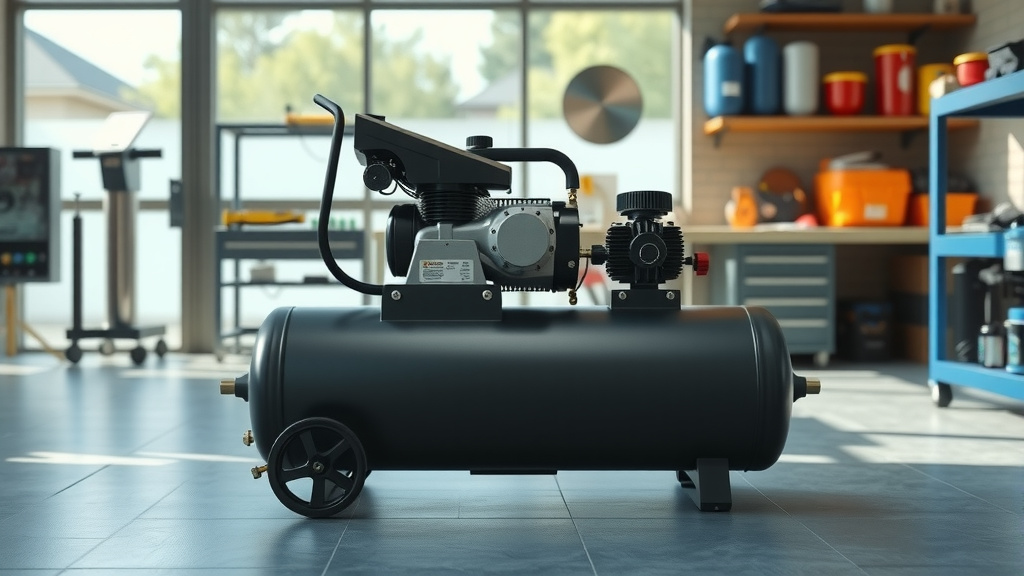
A good air compressor is one that perfectly matches your specific needs, providing adequate airflow (CFM) and pressure (PSI) for your tools without excessive noise or maintenance demands. It’s about finding the right balance between power, tank size, and portability for your projects.
Look for an air compressor with enough power for your most demanding tasks, a tank size that suits your usage patterns, and a durable build from a reputable manufacturer to ensure long-term reliability.
- A good air compressor precisely fits your job, offering the right CFM and PSI.
- Consider your tools and typical usage to pick the ideal tank size and power source.
- Prioritize durability and brand reputation for a lasting, reliable investment.
- Noise level and maintenance needs are also key factors for a satisfying experience.
- Ultimately, the “best” compressor is the one that makes your work easier and more efficient.
What Is A Good Air Compressor?
A good air compressor is essentially your reliable partner for tasks ranging from inflating tires to powering impact wrenches. It’s not about the biggest or most expensive, but the one that truly fits your needs and budget.
Why Do You Even Need An Air Compressor?
Ever tried to loosen a stubborn bolt or paint a fence with a brush? An air compressor can transform these chores. It powers pneumatic tools, which are often lighter and more powerful than their electric counterparts.
Think about how much time and effort you could save. From construction projects to simple garage tasks, the right compressor makes a world of difference. It’s like having an extra set of strong, tireless hands.
Understanding PSI and CFM: Your Power Duo
When you start looking at air compressors, you’ll see “PSI” and “CFM” everywhere. Don’t worry, they’re simpler than they sound. These two numbers tell you how much work a compressor can really do for you.
PSI stands for Pounds per Square Inch. This is the maximum pressure the compressor can deliver. It dictates how much force your tools can exert. For example, inflating a car tire might need around 30-40 PSI, while a paint sprayer needs higher pressure.
CFM means Cubic Feet per Minute. This is the volume of air the compressor can produce. It’s incredibly important because it tells you if the compressor can keep up with your tools. Many experts say your compressor’s CFM should always exceed the CFM requirements of your most demanding tool (Popular Mechanics).
Tank Size: Bigger Isn’t Always Better
The tank on an air compressor stores compressed air. Think of it like a reserve battery. A larger tank means you get more air before the motor kicks in again, offering longer continuous operation for high-demand tools.
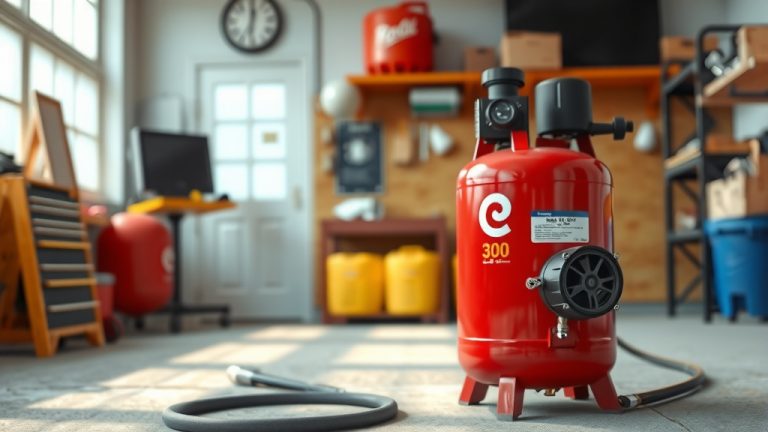
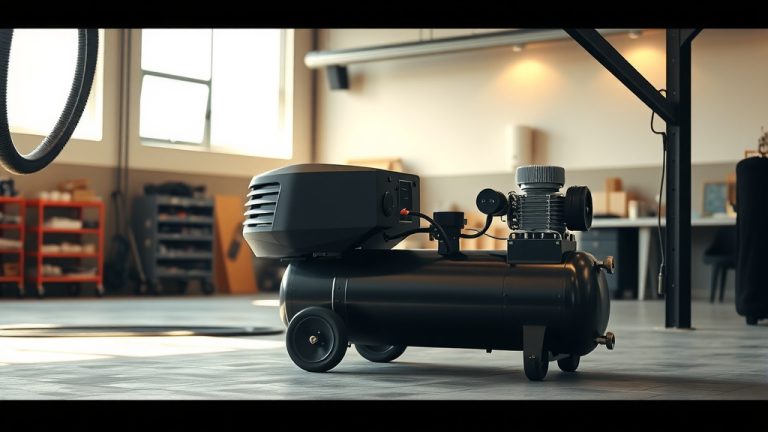
For quick tasks like inflating basketballs or clearing dust, a small pancake or hot dog compressor (1-6 gallons) is perfectly fine. They are super portable and easy to store in your garage.
If you’re using tools like nail guns or impact wrenches for longer periods, a medium-sized tank (10-30 gallons) is often recommended. This size keeps the motor from cycling too frequently, which is better for its lifespan.
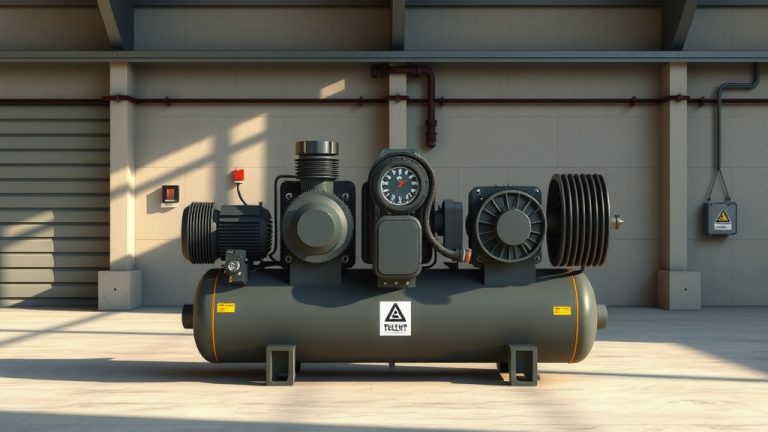
For professional shops or extensive sanding and painting, a large stationary tank (60-80 gallons or more) is what you’ll need. These provide sustained airflow for heavy-duty, continuous use.
Oil-Lubricated vs. Oil-Free: A Key Decision
This choice often comes down to maintenance and the type of air quality you need. We found that each type has its own set of advantages.
| Feature | Oil-Lubricated Air Compressor | Oil-Free Air Compressor |
|---|---|---|
| Noise Level | Quieter operation | Louder operation |
| Maintenance | Requires regular oil changes | Lower maintenance needs |
| Lifespan | Generally longer lifespan | Often shorter lifespan |
| Air Quality | Risk of oil in air (may need filters) | Clean, oil-free air |
| Cost | Often higher upfront cost | Often lower upfront cost |
Power Source: Electric or Gas?
Your power source choice often depends on where you plan to use your compressor. Both electric and gas models have their pros and cons that you should consider.
Electric compressors are fantastic for indoor use because they produce no fumes. They simply plug into a standard outlet, making them convenient for most garages or workshops. However, you’re limited by cord length or the nearest power source.
Gas-powered compressors are built for job sites where electricity might not be available. They are generally more powerful and offer excellent portability, moving wherever the work takes you. Just remember, they are louder and cannot be used indoors due to exhaust fumes.
Noise Level: Your Ears Will Thank You
Some air compressors can be incredibly noisy, sounding like a jet engine taking off! If you’re working in a shared space or for extended periods, a quieter model is a blessing. Research often shows that sustained exposure to high noise levels can be damaging (NIH).
Look for models advertised as “quiet” or “low noise.” Many newer oil-free designs are surprisingly hushed. Your neighbors and your ears will definitely appreciate a quieter machine.
Portability: Where Will You Use It?
Are you moving your compressor around the house, taking it to different job sites, or keeping it in one spot? Your answer will guide your portability choice. Smaller compressors are lightweight and have handles, while larger ones might have wheels or be stationary units.
Durability and Brand Reputation: Investing Smartly
A good air compressor is an investment, so you want it to last. Many experts say that researching brand reputation can save you headaches later. Look for brands known for their sturdy construction and reliable performance.
Reading reviews from other users often gives you a real-world picture of a compressor’s quality. A well-built machine might cost a little more initially, but it usually pays off by serving you for years to come.
Maintenance Matters: Keep It Running Smoothly
Just like your car, an air compressor needs a little love to perform its best. Regular maintenance can significantly extend its life and efficiency. We found that neglecting these simple steps can lead to premature failure.
- Drain the tank: Do this after every use to prevent rust and corrosion.
- Check oil levels: If you have an oil-lubricated model, ensure the oil is at the correct level.
- Clean air filters: A clogged filter makes the compressor work harder.
- Inspect hoses: Look for cracks or leaks in your air hoses regularly.
- Tighten fasteners: Vibration can loosen bolts over time; give them a quick check.
Matching Your Compressor to Your Tools
This is where it all comes together. Before buying, list all the tools you plan to use with your air compressor. Check their individual CFM and PSI requirements. We found that the compressor should meet or slightly exceed the highest demand among your tools for optimal performance (Home Depot Guide).
Conclusion
Choosing a good air compressor doesn’t have to be overwhelming. By focusing on your specific needs regarding PSI, CFM, tank size, and power source, you can find a machine that feels custom-made for you. Remember to consider noise, portability, and the long-term value of a reputable brand. With the right compressor, your projects will become much easier and more enjoyable. Happy compressing!
What is the difference between single-stage and two-stage air compressors?
A single-stage compressor compresses air once, delivering it to the tank. A two-stage compressor compresses the air twice, reaching higher pressures and often being more efficient for heavy-duty, continuous use in professional settings.
Can I use any air tool with any air compressor?
Not necessarily. Each air tool has specific CFM and PSI requirements. Your air compressor must meet or exceed these requirements for the tool to operate effectively and prevent damage to either the tool or the compressor.
How often should I drain the air compressor tank?
It’s best practice to drain the air compressor tank after every use. This prevents moisture buildup, which can lead to rust and corrosion inside the tank, significantly shortening the compressor’s lifespan.
What safety precautions should I take when using an air compressor?
Always wear appropriate safety gear, including eye protection. Ensure the compressor is placed on a stable, level surface. Never direct compressed air at yourself or others, and always depressurize the tank before performing any maintenance.
Is a higher horsepower (HP) always better for an air compressor?
Not always. While HP indicates motor strength, CFM is often a more critical factor for matching the compressor to your tools’ actual air consumption. A higher CFM, even with similar HP, can mean better performance for sustained tasks.