What Is A Good Air Compressor For Automotive?
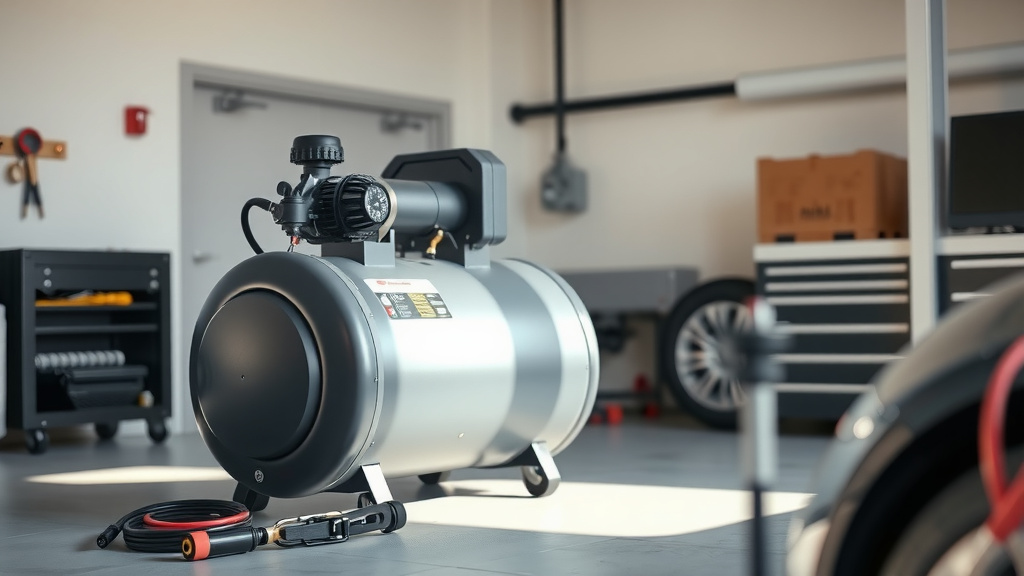
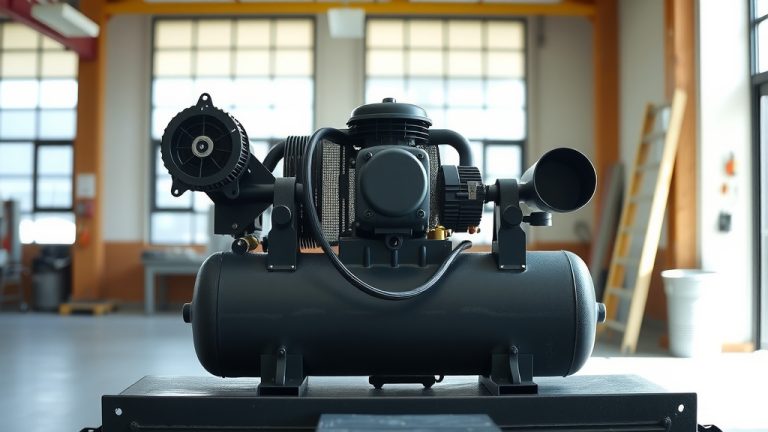
A good air compressor for automotive work balances sufficient CFM, PSI, and tank capacity to power your specific tools efficiently.
For most home garage or DIY automotive tasks, a compressor offering 3-5 CFM at 90 PSI with at least a 20-gallon tank provides excellent versatility.
Here’s a quick overview of what makes an air compressor good for your car repair or maintenance needs:
- Match your compressor’s CFM output to your most demanding air tools.
- A larger tank size means more sustained airflow without the motor constantly running.
- Consider if you need a portable unit for various tasks or a stationary one for a dedicated spot.
- Noise level can greatly impact your comfort, especially in a home garage.
- Balancing price with **durability and performance** is key for a wise investment.
What Is A Good Air Compressor For Automotive?
A good air compressor for automotive use is one that reliably meets the air requirements of your tools without constant waiting. It should provide a steady supply of air at the necessary pressure and volume for tasks like tire inflation, impact wrench use, and painting.
Understanding Air Compressor Basics
Picking the right air compressor can feel a bit like decoding a secret language at first. But don’t worry, we will break down the key terms so you can make an informed choice. It’s all about matching the compressor’s capabilities to your garage’s needs.
CFM: The Real Power Metric
CFM stands for Cubic Feet per Minute. This number is perhaps the most important for automotive work. It tells you the volume of air your compressor can deliver continuously. Think of it as the engine power for your air tools. Many tools list their CFM requirements, often at a specific PSI.
If your compressor’s CFM is too low, your tools will run weakly or stall. Imagine trying to run a marathon on a single glass of water! Research shows matching your tool’s CFM requirement plus a buffer of 1-2 CFM is a smart approach (Air Compressor Guide).
PSI: Air Pressure Explained
PSI means Pounds per Square Inch. This indicates the pressure at which air is delivered. Most automotive air tools operate around 90 PSI. Tire inflation, however, needs lower pressure, typically 30-35 PSI for car tires.
All compressors list a maximum PSI, but what matters most is the CFM delivered at a working PSI, like 90 PSI. You want enough pressure to activate tools, but the volume of air (CFM) keeps them going.
Tank Size: Your Air Reservoir
The tank size, measured in gallons, is your compressor’s storage unit. A larger tank stores more compressed air. This means the compressor motor runs less frequently, offering more sustained airflow for demanding tasks.
For quick jobs like inflating tires, a smaller tank might suffice. But for prolonged use with impact wrenches or grinders, a 20-gallon tank or larger is far better. It gives you a longer window of continuous operation before the motor kicks in again.
Matching Your Compressor to Your Automotive Tools
Your choice of air compressor hinges directly on the air tools you plan to use. Just like you wouldn’t use a hammer to drive a screw, you wouldn’t buy a tiny compressor for heavy-duty grinding. Each tool has its own air appetite.
Common Automotive Air Tools and Their Needs
Let’s look at what some popular tools typically demand:
- Impact Wrenches: These are power-hungry. You’ll likely need 4-6 CFM at 90 PSI for 1/2-inch impact wrenches to bust those stubborn lug nuts.
- Ratchet Wrenches: Less demanding than impacts, they often require 2-4 CFM at 90 PSI.
- Die Grinders and Cut-Off Tools: These spinning wonders can consume a lot of air, usually 5-8 CFM at 90 PSI. Make sure your compressor can keep up.
- Air Drills: Similar to ratchet wrenches, expect 3-5 CFM at 90 PSI.
- Tire Inflators/Blow Guns: These are pretty modest, needing only 1-3 CFM at 90 PSI. Almost any compressor can handle these basic tasks easily.
- Paint Sprayers (HVLP): For serious painting, an HVLP sprayer needs a consistent, high volume of air. You might look for 10-15 CFM at 30-40 PSI for quality finishes.
Types of Air Compressors for Auto Work
When you start shopping, you’ll notice different styles of compressors. Each design offers specific benefits and trade-offs. Knowing the differences helps you pick one that fits your garage best.
Portable vs. Stationary Models
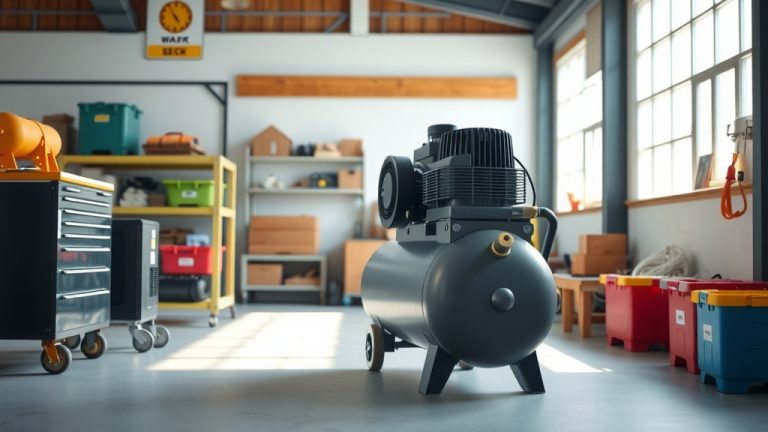
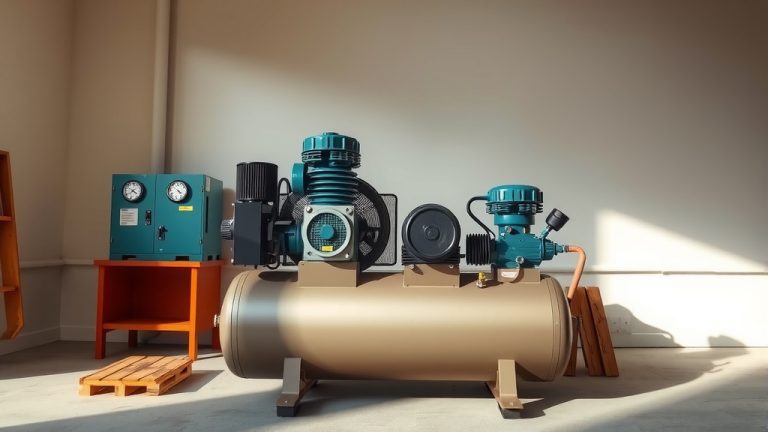
Do you need to move your air compressor around the garage or even to other locations? A portable compressor, typically 6-30 gallons, is wheeled and easy to relocate. They are fantastic for home users or smaller shops. On the flip side, stationary models are large, heavy, and often permanently installed. They offer superior power and tank capacity, perfect for professional settings where movement isn’t a factor.
Oiled vs. Oil-Free Compressors
This refers to the pump type. Oiled compressors use oil to lubricate the pump, reducing friction and heat. They tend to be more durable, run cooler, and are generally quieter. However, they need regular oil changes and can potentially introduce oil into the air line if not properly filtered.
Oil-free compressors, as the name suggests, don’t use oil. They are often lighter, require less maintenance, and deliver cleaner air. The trade-off is they can be noisier and may not last as long as their oiled counterparts, as we found through our research.
Key Features to Consider
Beyond CFM and tank size, several other features can greatly influence your satisfaction with an air compressor. These factors often speak to comfort, durability, and overall value.
Noise Levels and Your Sanity
Air compressors can be loud, often reaching 80-90 decibels. That’s like a lawnmower running right next to you! If your garage is attached to your home or you plan to use the compressor frequently, a quieter model (60-75 decibels) is a blessing. Many manufacturers now offer “silent” or “ultra-quiet” compressors, which are a game-changer for home users.
Horsepower (HP) – A Secondary Factor
Horsepower indicates the motor’s strength. While higher HP often correlates with higher CFM, it’s not a direct measurement of air output. Always prioritize CFM at 90 PSI over HP. Two compressors with the same HP can have different CFM ratings. Focus on what directly powers your tools.
Duty Cycle and Longevity
The duty cycle tells you how long the compressor can run continuously before needing to rest. A 50% duty cycle means it can run for 5 minutes, then needs 5 minutes to cool down. For automotive tasks, you often need extended use. Look for compressors with a higher duty cycle or those designed for continuous operation if you plan on heavy, prolonged work.
Making Your Choice: A Quick Checklist
Ready to make a decision? Use this handy checklist to ensure you’re considering all the right points:
- Tool Requirements: Have you listed the CFM and PSI needs of your primary automotive tools?
- Tank Size: Is the tank large enough for sustained use or just occasional bursts?
- CFM at 90 PSI: Does the compressor meet or exceed the highest CFM need among your tools?
- Noise Level: How important is a quiet operation for your workspace?
- Portability: Do you need to move it around, or will it stay in one spot?
- Budget: Does it fit your financial plan without sacrificing essential features?
The Investment: Cost vs. Value
Air compressor prices vary widely, from a couple of hundred dollars for basic models to thousands for professional-grade units. Don’t just look at the upfront cost. Consider the long-term value. A slightly more expensive compressor with better CFM, a larger tank, and a quieter operation might pay for itself in saved time, less frustration, and greater durability. We often find that investing a bit more initially leads to much greater satisfaction down the road.
Here’s a simplified comparison of what you might expect:
| Compressor Type | Typical CFM (at 90 PSI) | Tank Size | Best For |
|---|---|---|---|
| Small Portable | 1-3 | 1-6 gallons | Tire inflation, blow guns, small brad nailers |
| Mid-Range Portable | 3-5 | 10-30 gallons | Impact wrenches, ratchets, light grinding |
| Stationary/Heavy Duty | 5-15+ | 30-80+ gallons | Paint spraying, continuous grinding, sandblasting |
Conclusion
Choosing a good air compressor for automotive tasks boils down to understanding your specific needs and matching them to the compressor’s capabilities. Focus on CFM at 90 PSI, a suitable tank size for your tools, and consider practical aspects like noise and portability. By paying attention to these details, you’ll select a compressor that becomes a reliable workhorse in your garage, helping you tackle projects with ease and efficiency.
What CFM rating should I look for when buying an air compressor for automotive use?
You should primarily look for an air compressor that provides at least 4-6 CFM at 90 PSI for common automotive tasks like using impact wrenches and air ratchets. For more demanding tools like die grinders or paint sprayers, aim for 8-15 CFM or higher.
Is a 20-gallon air compressor tank size enough for home automotive work?
Yes, a 20-gallon air compressor is generally a very good size for most home automotive work. It provides enough stored air to run impact wrenches, air ratchets, and tire inflators without the motor cycling on too frequently, offering a good balance of capacity and portability.
Are oil-free air compressors suitable for automotive applications?
Oil-free air compressors can be suitable for many automotive applications, especially if you prioritize lower maintenance and cleaner air delivery. However, be aware they can sometimes be louder and may have a shorter lifespan compared to well-maintained oiled compressors, though technology is constantly improving.
What is the ideal PSI for automotive air tools?
Most standard automotive air tools, such as impact wrenches, air ratchets, and air drills, are designed to operate optimally at around 90 PSI. You should always check the specific PSI requirement for each tool you plan to use.
How much does a good automotive air compressor typically cost?
The cost of a good automotive air compressor can vary widely based on its CFM, tank size, and features. For a capable model suitable for a home garage, you can expect to pay anywhere from $300 to $800, with professional-grade units ranging much higher.