What Is The Smallest Air Compressor To Paint A Car?
The smallest air compressor generally capable of painting a car needs to provide a consistent 10-15 CFM at 90 PSI to effectively power most spray guns, though miniature airbrush compressors are far too small for vehicle bodywork.
For a proper car paint job, you’ll typically need a compressor with a minimum 30-gallon tank and a motor designed for sustained use, prioritizing performance and capacity over just the physically smallest air compressor to paint a car.
Here’s a quick overview of what you’ll find in this guide:
- Discover why “smallest” isn’t always “best” for car painting.
- Understand the essential CFM and PSI numbers you truly need.
- Learn about tank size and its surprising impact on your paint finish.
- Get practical tips on choosing the right compressor for your project.
What Is The Smallest Air Compressor To Paint A Car?
Honestly, the absolute smallest air compressor isn’t the right tool for painting an entire car. While tiny models exist for airbrushing or touch-ups, a full car paint job demands specific power and sustained airflow that only larger units can provide.
Thinking Beyond “Smallest”: What You Really Need
When you’re painting a car, you’re not looking for the smallest size; you’re looking for the right amount of power. A good paint job relies on consistent air pressure and volume. Imagine trying to water your garden with a tiny squirt gun versus a proper hose – it’s a similar idea for painting.
The Crucial Numbers: CFM and PSI Explained
You’ll often hear about CFM and PSI. CFM (Cubic Feet per Minute) tells you how much air your compressor can deliver. PSI (Pounds per Square Inch) measures the air pressure. For car painting, CFM is the king. Your spray gun needs a steady CFM to atomize paint smoothly (National Motor Museum Trust).
Why CFM Matters More for Paint Quality
Think of CFM as the muscle behind your spray gun. If your compressor can’t keep up with your gun’s CFM demands, the paint will sputter, look uneven, or simply not apply correctly. This leads to a frustrating and poor finish, which nobody wants after hours of prep work.
Minimum CFM Requirements for Car Painting
Most HVLP (High Volume Low Pressure) spray guns, which are popular for car painting, require anywhere from 10 to 25 CFM at 90 PSI. Some smaller detail guns might use less, but for overall body panels, you’ll need a compressor that can maintain these levels continuously. We found that aiming for at least 15 CFM at 90 PSI gives you good flexibility.
The Role of Tank Size: More Than Just Storage
The tank size of your air compressor acts like a buffer. A larger tank stores more compressed air, allowing the compressor pump to rest between cycles. This provides a more consistent air supply to your spray gun, reducing pulsations and ensuring a smoother finish. Many experts recommend a minimum 30-gallon tank for car painting (Auto Body Repair & Paint).
Small Tanks for Small Jobs
For very small touch-ups, perhaps a door ding or a mirror, a smaller tank (5-10 gallons) might technically get the job done. However, you’ll find the compressor runs almost constantly, leading to more noise and less consistent air pressure. It’s often not worth the headache for anything larger than a minor spot repair.
The Right Compressor Type for Your Project
For most DIY car painters, a piston-style air compressor is the standard. These come in single-stage and two-stage varieties. Two-stage compressors offer higher CFM and are better suited for sustained, demanding tasks like painting an entire car, providing more power and efficiency.
Considering Portability vs. Power
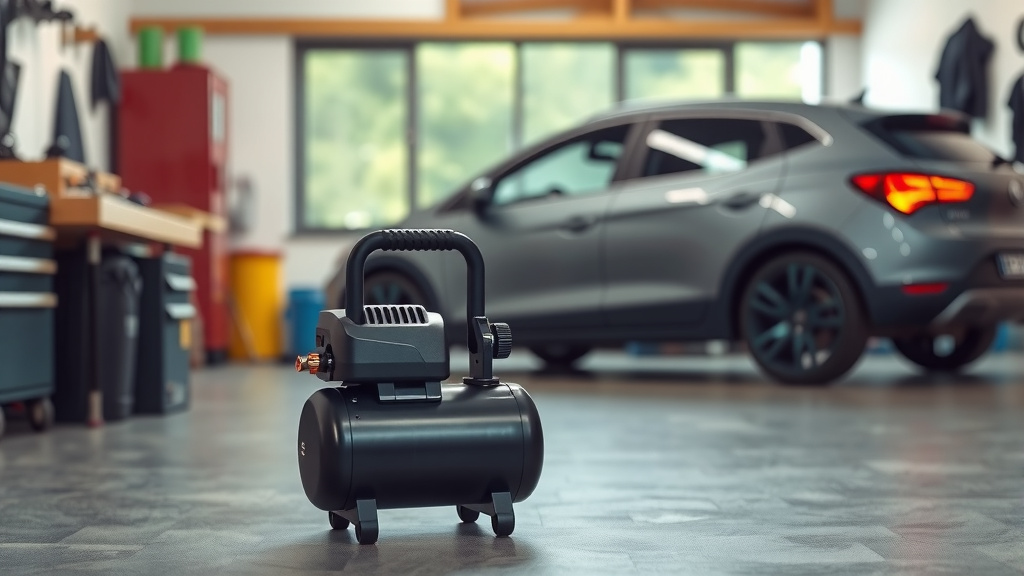
The “smallest” compressors are often chosen for portability. While portable units are great for quick jobs around the house, they typically lack the CFM and tank size needed for car painting. You’ll usually be trading portability for the necessary painting power. You must decide which is more important for your specific needs.
Essential Compressor Accessories for Painting
Beyond the compressor itself, you’ll need a few key accessories. An air filter/regulator is critical to remove moisture and oil from the air, preventing paint defects. A good air hose with the right diameter is also important to maintain proper airflow and avoid pressure drops.
Here’s a quick checklist for choosing the right compressor:
- Check your spray gun’s CFM requirement.
- Aim for a compressor that exceeds your gun’s CFM by 20-30%.
- Look for a minimum 30-gallon tank for sustained painting.
- Ensure the compressor can deliver at least 90 PSI.
- Consider a two-stage piston compressor for better performance.
The Trade-Off: Cost vs. Performance
Investing in a capable air compressor for car painting is a significant expense. Trying to save money by going too small often leads to poor results and wasted paint. We found that a mid-range compressor offering solid CFM and tank size offers the best balance of performance and value for serious hobbyists.
When a Small Compressor Just Won’t Do
Imagine trying to make a smooth cake frosting with a tiny whisk. It’s possible, but it takes forever and the results are often lumpy. Painting a car with an undersized compressor is similar: you might technically get paint on the car, but the finish will likely be uneven, streaky, or pitted due to inconsistent air supply.
Understanding Your Spray Gun’s Demands
Before you even look at compressors, check the manufacturer’s specifications for your spray gun. This information, often found in the manual or online, will tell you the exact CFM and PSI range required for optimal performance. This is your starting point for compressor shopping.
Here’s a comparison to help visualize the difference:
| Feature | Airbrush Compressor (Smallest) | Car Painting Compressor (Recommended) |
|---|---|---|
| CFM Output | 0.5 – 2 CFM | 10 – 25+ CFM |
| Tank Size | Under 1 gallon (or tankless) | 30+ gallons |
| PSI Max | Up to 60 PSI | 125 – 175 PSI |
| Typical Use | Models, crafts, small details | Full car painting, bodywork |
| Sustained Use | Short bursts, limited | Long periods, consistent airflow |
Conclusion
While the idea of using the smallest air compressor to paint a car might be appealing for convenience or cost, the reality is that a quality paint job demands a more robust setup. Prioritize CFM, tank size, and consistent air delivery over mere physical size. Investing in the right equipment will save you frustration and lead to a much more satisfying, professional-looking finish. Think of it as buying the right brush for a masterpiece, not just any brush.
How many CFM does it take to paint a car?
You typically need an air compressor that can deliver at least 10-15 CFM (Cubic Feet per Minute) at 90 PSI (Pounds per Square Inch) to effectively power an HVLP spray gun for painting a car. Always check your specific spray gun’s requirements.
Can a 20-gallon air compressor paint a car?
A 20-gallon air compressor might struggle with painting an entire car. While it could handle smaller panels, it would likely run almost constantly, leading to inconsistent air pressure and potential overheating. A 30-gallon tank or larger is generally recommended for full car paint jobs.
Is a pancake air compressor good for painting?
No, a pancake air compressor is generally not suitable for painting a car. These small, portable units have very limited CFM output and tiny tanks (usually 1-6 gallons). They are designed for quick, intermittent tasks like nailing or inflating, not for the continuous, high-volume airflow needed for automotive painting.
What size air compressor do I need for auto body painting?
For serious auto body painting, including full vehicle repaints, you should aim for an air compressor with at least 15-20 CFM at 90 PSI and a minimum tank size of 60-80 gallons. This provides enough reserve air and consistent flow for larger projects and demanding spray guns.
Can I paint a car with an airbrush compressor?
Absolutely not. An airbrush compressor is designed for tiny detail work, like models or artwork, delivering only 0.5-2 CFM. It lacks the power, tank capacity, and sustained airflow necessary to paint even a small section of a car, let alone the entire vehicle.