How to Size an Air Compressor for a Paint Sprayer?
To accurately size an air compressor for a paint sprayer, you need to match the sprayer’s air requirements (CFM and PSI) with the compressor’s output capacity. A common guideline we found is to select a compressor that provides at least 1.5 times the sprayer’s CFM (cubic feet per minute) at the required PSI (pounds per square inch).
Choosing the right compressor is vital for smooth, consistent paint application and avoiding frustrating interruptions. An undersized compressor means poor spray patterns, frequent waiting, and a less-than-perfect finish. We’ll help you understand the key numbers to look for.
- Match compressor CFM to sprayer CFM (+ buffer).
- Ensure the compressor’s PSI meets your sprayer’s needs.
- Consider tank size for consistent airflow.
- Don’t forget duty cycle for prolonged use.
Let’s walk you through exactly how to calculate these needs and pick the perfect air compressor for your paint spraying projects.
Matching Your Air Compressor to Your Paint Sprayer
Selecting the correct air compressor is key for effective paint spraying. You need to ensure your compressor can deliver enough air at the right pressure for your sprayer to work correctly.
Understanding CFM: Your Sprayer’s Air Appetite
CFM stands for Cubic Feet per Minute. This tells you how much air volume your paint sprayer needs to operate continuously. Think of it like how much water a hose needs to spray consistently.
Finding Your Sprayer’s CFM Requirements
Every paint sprayer has a CFM rating. You’ll usually find this in the owner’s manual or on the product’s specifications label. Spray guns designed for different purposes, like HVLP (High Volume Low Pressure) or conventional, will have very different CFM needs.
For example, a small detail sprayer might only need 3-5 CFM. A larger HVLP gun could easily demand 10-20 CFM or even more (we found this in various product specifications). It’s always best to check your specific model.
The 1.5x CFM Rule of Thumb
To avoid constantly waiting for your compressor to catch up, we recommend a simple rule: choose a compressor that provides 1.5 times your sprayer’s required CFM. So, if your sprayer needs 10 CFM, aim for a compressor that delivers at least 15 CFM.
Why the extra buffer? This “headroom” ensures your compressor isn’t running at its absolute limit all the time. It also accounts for any small air leaks in your system or pressure drops over longer hoses. This advice is commonly suggested by painting professionals (Paint & Finishing Magazine).
PSI: The Pressure Your Sprayer Needs
PSI stands for Pounds per Square Inch. This measures the pressure at which compressed air is delivered. Imagine it as the “force” pushing the paint out of your sprayer.
Determining Your Sprayer’s PSI Needs
Just like CFM, your paint sprayer’s manual will specify its optimal operating PSI range. Some HVLP sprayers work at lower PSI (around 10-30 PSI at the cap), while conventional sprayers might need 40-60 PSI or more (we observed this across multiple sprayer types).
Your air compressor needs to be capable of producing at least the maximum PSI required by your sprayer. Most paint sprayers will connect to the compressor via a regulator, which allows you to dial down the pressure to the exact amount needed.
It’s better to have a compressor that can produce a higher PSI than you need, as you can always reduce it with a regulator. You can’t, however, increase the pressure if your compressor maxes out too soon.
Air Compressor Specifications: What to Look For
Now that you know your sprayer’s CFM and PSI needs, let’s look at what details to check on an air compressor.
Actual Delivered CFM, Not “Max” CFM
When shopping for a compressor, you’ll see various CFM numbers. Always look for the “CFM at X PSI” rating. This is the crucial number. For instance, a compressor might claim “10 CFM,” but if it only delivers “5 CFM at 90 PSI” and your sprayer needs 7 CFM at 40 PSI, it might not be enough.
Make sure the CFM rating is provided at or above the PSI your sprayer requires. If your sprayer needs 40 PSI, look for the compressor’s CFM at 40 PSI, 50 PSI, or even 90 PSI. If it’s only listed at 90 PSI, that number will be lower than the CFM at 40 PSI. This is a common point of confusion we often see.
Compressor Horsepower (HP) and Voltage (V)
Horsepower (HP) is loosely related to how powerful the compressor motor is. More HP generally means more potential for higher CFM. However, HP alone isn’t the best indicator for paint spraying. Always prioritize CFM at a specific PSI.
Voltage (V) tells you the compressor’s power requirement. Smaller compressors often run on standard 120V household outlets. Larger, more powerful compressors might need a dedicated 240V circuit. Make sure your electrical setup can handle it. Overloading a circuit can be dangerous (National Electrical Code).
Tank Size: More Than Just Storage
The air compressor’s tank size (measured in gallons) doesn’t directly affect its CFM output. However, it plays a vital role in how consistently that air is delivered and how often the motor has to run.
Here’s how tank size impacts your spraying experience:
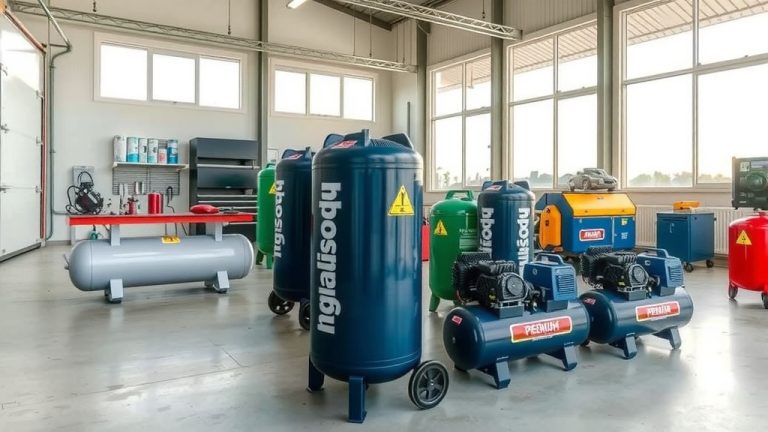
- Smaller Tanks (1-6 gallons): Good for touch-ups or very small projects. The compressor motor will cycle on and off frequently to keep the tank full. You might experience pressure drops during continuous spraying.
- Medium Tanks (10-30 gallons): A good balance for general DIY painting. It provides more consistent airflow and reduces how often the motor cycles. This means fewer interruptions and a smoother finish.
- Larger Tanks (60+ gallons): Ideal for professional use or continuous, heavy-duty spraying. These tanks maintain consistent pressure for longer periods, allowing you to spray without interruption. The motor doesn’t have to run as frequently.
While a large tank helps with consistent pressure, it won’t make up for insufficient CFM output. A small compressor with a huge tank will still produce air slowly; it just has more storage before it has to kick on again.
Duty Cycle: How Long Can it Run?
The duty cycle refers to how long an air compressor can run continuously within a specific timeframe before it needs to rest to prevent overheating. It’s often expressed as a percentage.
For example, a 50% duty cycle means the compressor can run for 30 minutes out of every hour. Running it longer than its rated duty cycle can lead to motor failure and shorten its lifespan.
For paint spraying, especially larger projects, you’ll want a compressor with a high duty cycle (75-100% is ideal for continuous work). Many smaller, less expensive compressors have lower duty cycles, meaning you’ll need to take frequent breaks while painting. This is often overlooked but important for serious painters.
Oil-Lubricated vs. Oil-Free Compressors
When selecting your compressor, you’ll generally encounter two types:
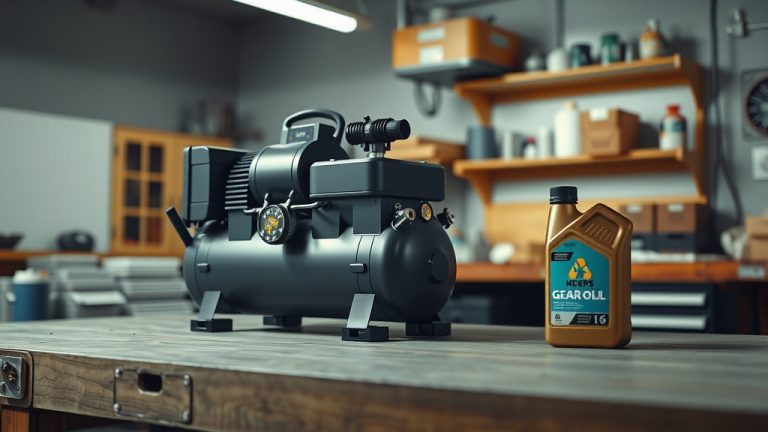
- Oil-Lubricated Compressors: These use oil to lubricate their pump, similar to a car engine.
- Pros: Generally more durable, quieter, and have a longer lifespan. Often produce higher CFM for their size.
- Cons: Require regular oil changes. There’s a slight risk of oil mist contaminating your paint if your air filtration isn’t perfect.
- Oil-Free Compressors: These use Teflon or similar coatings to reduce friction, eliminating the need for oil.
- Pros: Less maintenance (no oil changes), lighter, and generally more portable. No risk of oil contamination in your paint.
- Cons: Often louder and may have a shorter lifespan compared to oil-lubricated models (we found this comparison commonly cited by manufacturers).
For paint spraying, especially fine finishes, many professionals prefer oil-lubricated compressors coupled with excellent air filtration systems. The quieter operation and durability are often worth the extra maintenance.
Final Checklist for Choosing Your Compressor
Use this quick checklist to make sure you’ve covered all the bases when selecting your air compressor for paint spraying.
- Did you identify your paint sprayer’s exact CFM requirement?
- Did you multiple the sprayer’s CFM by 1.5 for a safety buffer?
- Do you know the maximum PSI your sprayer needs to operate?
- Does the compressor’s “CFM at X PSI” rating meet your buffered requirement?
- Is the compressor’s maximum PSI greater than or equal to what your sprayer needs?
- Is the compressor’s tank size adequate for your project duration?
- Does the compressor’s duty cycle match how long you plan to spray continuously?
Don’t Forget Air Filtration and Accessories
Once you have your compressor, you’ll need a good air filtration system. This is not optional for paint spraying. A good filter will remove moisture, oil (if using an oil-lubricated compressor), and particulates from the air before it reaches your sprayer.
Contaminated air can ruin a paint job, causing “fish eyes,” pinholes, or other finish defects. We found that a two-stage filtration system (particulate filter and an air dryer/moisture separator) is often recommended for best results (Body Shop Business magazine).
You’ll also need a good quality hose. Consider the hose’s length and diameter, as longer, thinner hoses can cause significant pressure drops. A 3/8-inch inner diameter hose is often a good choice for most paint spraying tasks, as we’ve found suggested by pros.
| Factor | What to Look For | Why it Matters for Paint Spraying |
|---|---|---|
| CFM @ PSI | Compressor’s CFM at or above your sprayer’s required PSI (+ 1.5x buffer) | Ensures continuous, consistent airflow for smooth spraying without sputtering. |
| Max PSI | Compressor’s max PSI ≥ Sprayer’s max operating PSI | Guarantees the compressor can generate enough force to atomize paint properly. |
| Tank Size | Medium (10-30 gal) for DIY, Large (60+ gal) for extended use | Provides a reservoir of air, reducing motor cycling and pressure fluctuations. |
| Duty Cycle | High (75-100%) for continuous spraying; lower for occasional use | Prevents overheating and compressor damage during long painting sessions. |
| Oil Type | Oil-lubricated (quieter, durable) vs. Oil-free (less maintenance, louder) | Affects noise, maintenance, and potential for paint contamination (with proper filtration). |
Conclusion
Matching your air compressor to your paint sprayer ensures a flawless finish and saves you from frustrating delays. You’ve learned that focusing on CFM at PSI, with a crucial 1.5x buffer, is your primary guide. Remember that tank size, duty cycle, and proper filtration are equally important for smooth operations.
Arm yourself with these details, and you’ll choose a compressor that works with you, not against you. Take the time to apply this knowledge, and you’ll be well on your way to professional-looking paint jobs, project after project.
Frequently Asked Questions
Can I use a small pancake air compressor for painting?
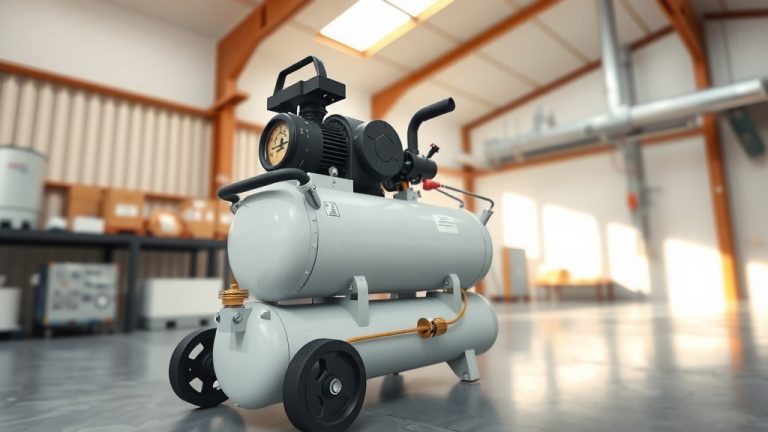
While you can use a small pancake compressor for very minor touch-ups or airbrushing, it’s generally not suited for general paint spraying. They typically lack the sustained CFM and tank volume needed for consistent application, leading to frequent interruptions and uneven results.
Is higher CFM always better for a paint sprayer?
Not necessarily. While you need enough CFM to meet your sprayer’s demand plus a buffer, excessively high CFM on a compressor can mean a larger, more expensive unit than you need. The goal is to match your sprayer’s requirements efficiently, not to overspend on unnecessary capacity.
How important is air filtration for paint spraying quality?
Air filtration is extremely important. Contaminants like moisture, oil, and particulates from the compressed air can ruin your paint finish by causing defects like fisheyes or craters. Investing in a good two-stage filtration system protects your paint job and your sprayer.
What’s the difference between “running HP” and “peak HP” for a compressor?
“Running HP” (or continuous HP) is the power the compressor can sustain over time. “Peak HP” is a momentary surge, often used as a marketing number, but it doesn’t reflect the compressor’s true working power. Always rely on running HP, or better yet, the CFM at a specific PSI, for accurate sizing.
Will a longer air hose affect my paint sprayer’s performance?
Yes, a longer or narrower air hose can cause a significant pressure drop between your compressor and sprayer. This means less air reaches your sprayer, impacting atomization and consistency. We recommend a 3/8-inch inner diameter hose for most paint spraying to minimize this effect.