
How Many Amps Does Air Compressor Draw?
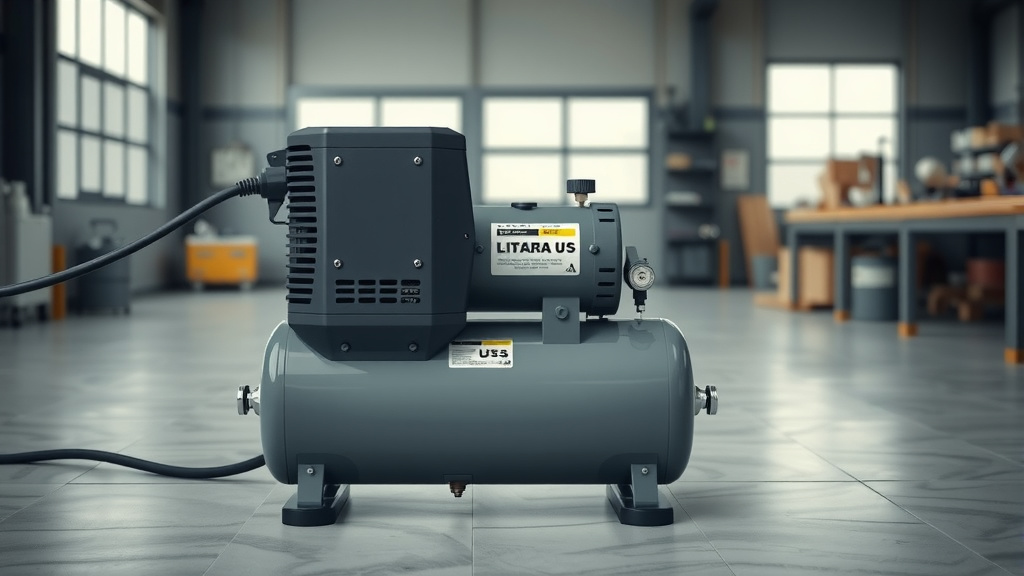
Typically, a 120-volt air compressor can draw anywhere from 10 to 20 amps when running, but this depends on its horsepower and how hard it’s working.
Understanding how many amps an air compressor draws is vital for choosing the right circuit breaker and extension cord for safe and efficient operation.
- A standard 120V air compressor usually pulls between 10-20 amps.
- Larger 240V compressors, often for workshops, can draw 20-50 amps or even more.
- Horsepower, tank size, and pressure ratings all significantly impact amperage.
- Always match your compressor’s amp draw to your electrical circuit and extension cords.
- Ignoring amp requirements can lead to tripped breakers, damaged equipment, or safety risks.
How Many Amps Does Air Compressor Draw?
Typically, a common 120-volt air compressor for home use draws between 10 to 20 amps, with larger industrial models requiring significantly more power.
Ever wonder why your lights might dim for a second when your air compressor kicks on? Or why a circuit breaker sometimes trips? It’s all about the amps! Knowing your air compressor’s amp draw isn’t just technical jargon; it’s about safety and operational efficiency.
You want your tools to work, right? And you definitely want to avoid electrical hazards. This guide will walk you through what amp draw means for your compressor and why it’s so important for your workshop or garage.
What Exactly is an Amp?
Think of electricity like water flowing through a pipe. Volts are the water pressure, and amps are the volume of water flowing. So, an amp (ampere) measures the rate of electrical current flowing through a circuit. The more amps, the more electricity is being used.
When your air compressor runs, it pulls a certain amount of this electrical current. This “pull” is what we refer to as its amp draw. It’s the total electrical demand your compressor places on your power supply.
Why Does Amp Draw Matter to You?
Understanding amp draw is crucial for a few practical reasons. First, it helps you choose the correct circuit breaker for your outlet. A compressor drawing 20 amps on a 15-amp circuit is a recipe for trouble.
Second, it guides your choice of extension cords. Using an undersized cord for a high-amp compressor can cause overheating and potential fire hazards (Electrical Safety Foundation International).
Factors Influencing Air Compressor Amp Draw
Not all air compressors are created equal, and neither are their electrical appetites. Several key factors determine how many amps your specific unit will draw. Let’s break them down.
Horsepower (HP) Rating
This is perhaps the most significant factor. Generally, the higher the horsepower, the more work the compressor can do, and therefore, the more electricity it needs. A 1 HP compressor will draw fewer amps than a 5 HP monster.
It’s like comparing a compact car to a big truck; the truck needs more fuel to do its job. We often see a direct correlation between HP and amperage.
Voltage (120V vs. 240V)
Voltage plays a huge role. Most portable home compressors run on standard 120-volt outlets. Larger, more powerful compressors, especially those in workshops, typically require 240-volt power. For the same horsepower, a 240V compressor will draw roughly half the amps compared to a 120V unit because of the higher voltage pushing the current.
This is why workshops often install dedicated 240V circuits. It allows them to run more powerful machinery safely and efficiently.
Tank Size and Pressure (PSI)
While horsepower directly correlates to amp draw, tank size and pressure influence how often the compressor runs. A larger tank might mean the motor runs less frequently, but when it does run, it still pulls its rated amps.
Building higher pressure (PSI) also means the motor works harder for longer periods. This doesn’t necessarily increase the instantaneous amp draw, but it does mean the compressor is operating at its peak amp draw for longer durations.
Motor Type and Efficiency
Different motors have varying efficiencies. Newer, more efficient motors might draw slightly fewer amps for the same output compared to older models. Always check the data plate on your specific compressor for accurate electrical specifications.
Typical Amp Draw Examples for Air Compressors
To give you a clearer picture, let’s look at some common scenarios. Remember these are general estimates; your specific model might differ slightly.
| Compressor Type (HP) | Voltage | Approximate Running Amps | Recommended Breaker Size |
|---|---|---|---|
| 1-2 HP Portable | 120V | 10-15 Amps | 15-20 Amps |
| 2-3 HP Portable | 120V | 15-20 Amps | 20-30 Amps |
| 3-5 HP Stationary | 240V | 20-25 Amps | 30 Amps |
| 5-7.5 HP Stationary | 240V | 25-35 Amps | 40 Amps |
Notice the jump in breaker size for higher amp draws. It’s not just a suggestion; it’s a fundamental safety measure for your electrical system (National Fire Protection Association).
Understanding Starting Amps vs. Running Amps
Here’s a little secret: air compressors, like many motors, draw a lot more power for a split second when they first start up. This is called “starting amps” or “inrush current.” It can be 2 to 3 times higher than the normal running amps.
Your circuit breaker needs to be able to handle this brief surge without tripping. Most modern breakers have a delay built in for this exact reason, but it’s something to keep in mind if you experience frequent trips upon startup.
Safety First: Matching Amps to Your Electrical System
Safety is paramount when dealing with electrical tools. Mismatching your compressor’s amp draw with your electrical setup can lead to significant problems. Think of it like trying to fill a swimming pool with a garden hose; it’s just not going to work efficiently, and you might damage the hose!
Circuit Breaker Sizing
Your circuit breaker protects your wiring from overheating. If your compressor draws more amps than the breaker is rated for, the breaker will “trip” to cut power, preventing damage or fire. Always ensure your compressor’s running amp draw is less than 80% of the breaker’s rating for continuous use (electrical safety standards often recommend this margin).
Extension Cord Selection
An extension cord is not just a longer wire; it’s a crucial link in your electrical chain. Using a thin, long cord for a high-amp compressor causes voltage drop and heat buildup. Always use a heavy-duty, short extension cord with the appropriate gauge (thickness) for your compressor’s amp draw. Lower gauge numbers mean thicker wires, which can carry more current safely.
- Check your compressor’s data plate for its exact amp rating.
- Never use an extension cord longer than necessary.
- Opt for 12-gauge or 10-gauge cords for most high-amp compressors.
- Ensure the cord is rated for outdoor use if you are working outside.
- Avoid daisy-chaining multiple extension cords together.
Reading Your Compressor’s Data Plate
The most accurate information about your compressor’s electrical needs will always be found on its data plate. This small metal or plastic label is usually located on the motor housing or near the power cord. It will list the voltage, phase, frequency, and, crucially, the full load amps (FLA) or running amps.
Some plates might also show “locked rotor amps” (LRA), which is a very high inrush current under specific fault conditions, not the typical starting amps.
What If Your Compressor Trips the Breaker?
It can be frustrating when your compressor constantly trips the breaker. But it’s a sign that something isn’t right. Here’s a quick checklist to troubleshoot the problem:
- Is the circuit breaker rated correctly for your compressor’s amp draw?
- Are you using a proper gauge extension cord, if any?
- Are there other high-power tools plugged into the same circuit?
- Is the compressor motor getting enough ventilation and not overheating?
- Is the compressor trying to start under a load (with pressure already in the tank)?
- Is the motor itself showing signs of wear or damage?
Sometimes, the compressor might simply be too powerful for your existing home wiring. Many experts suggest a dedicated circuit for any tool drawing significant power to avoid issues.
Conclusion
Understanding how many amps your air compressor draws is more than just a technical detail; it’s a cornerstone of electrical safety and operational efficiency. By knowing your compressor’s requirements, you can make informed decisions about circuit breakers, extension cords, and even where you plug it in.
Always prioritize safety, consult your compressor’s data plate, and ensure your electrical setup can handle the demand. This simple knowledge helps you avoid frustrating trips, potential damage, and keeps your compressor running smoothly for years to come. Now go forth and inflate, paint, or power with confidence!
How do I find out the exact amp draw of my air compressor?
The most precise way is to check the data plate, often a sticker or metal tag, located on the motor housing of your air compressor. It typically lists the “Full Load Amps” (FLA) or “Running Amps.” If you cannot locate it, consult your compressor’s owner’s manual.
Can I use a 15-amp breaker for a 20-amp air compressor?
No, you should never use a 15-amp breaker for a compressor that draws 20 amps. This will cause the breaker to trip frequently and could potentially damage the breaker or the compressor over time. Always match or exceed the compressor’s full load amps with the breaker’s rating, following the 80% continuous use rule.
Will a long extension cord increase my air compressor’s amp draw?
A long or undersized extension cord won’t directly increase the amp draw shown on the compressor’s data plate. However, it will cause a significant voltage drop at the compressor. This voltage drop makes the motor work harder, potentially drawing more current and leading to overheating in the cord and the compressor motor itself, which can cause damage or tripping.
Is it normal for an air compressor to trip the breaker when it starts up?
Occasional tripping on startup can happen, especially if the breaker is already close to its limit or if the compressor has a very high “inrush current” (starting amps). However, frequent tripping indicates an issue: either the circuit is undersized, the compressor has a problem, or the extension cord is inadequate. It’s not normal for a healthy setup to trip often.
What happens if I use an air compressor on a circuit that’s too small?
If you use an air compressor on a circuit that’s too small, the circuit breaker will trip repeatedly, interrupting your work. Prolonged use can cause the breaker to wear out, the wiring in your walls to overheat, and potentially lead to electrical fire hazards. It can also strain the compressor motor, reducing its lifespan. Always match the compressor to an appropriately sized circuit.
