
What Is the Best Air Compressor for Impact Wrenches?
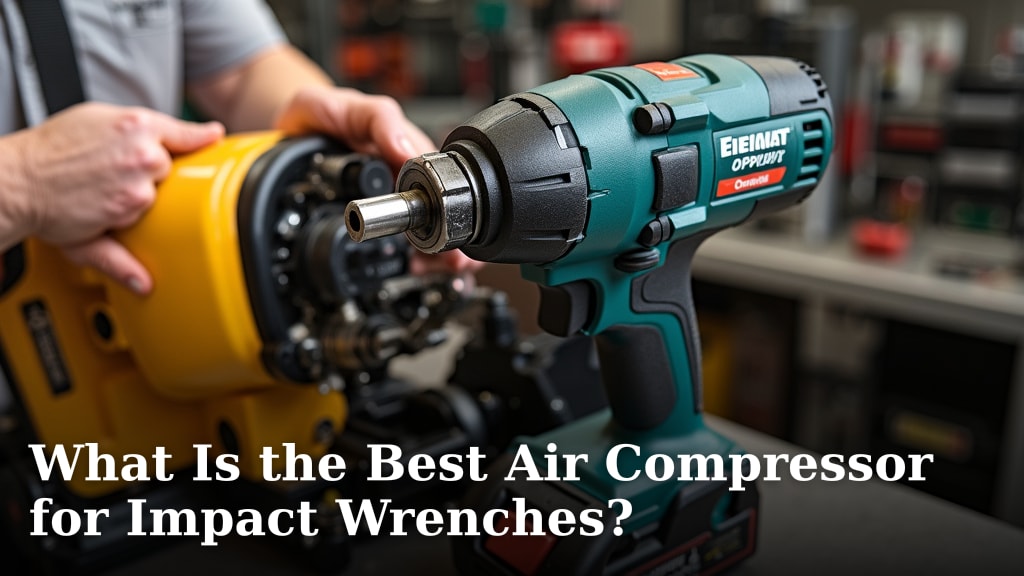
For most impact wrenches, we found that the best air compressor will have at least 4-5 CFM at 90 PSI with a 20-gallon tank. This combination provides enough consistent airflow and storage for most common impact wrench tasks without constant waiting.
You need to match your compressor’s output to your impact wrench’s needs. A compressor with too little power means your tool won’t work correctly. We also found that tank size affects how long you can work continuously before the compressor kicks on again.
TL;DR:
- Aim for 4-5 CFM at 90 PSI.
- A 20-gallon tank is usually ideal.
- Match compressor output to your impact wrench.
- Larger tanks mean less waiting.
- Don’t underpower your tools.
Ready to figure out what kind of air compressor will be your impact wrench’s best buddy? We’ll help you pick the right one for your garage or workshop.
Choosing the Right Air Compressor for Your Impact Wrench
Matching your air compressor to your impact wrench’s needs is crucial for getting any job done right. You need enough power to spin those bolts.
When you’re looking for an air compressor, you’ll encounter a few key terms. Understanding these will help you make a smart choice.
Understanding CFM and PSI: Your Power Numbers
Let’s talk about the two most important numbers you’ll see on an air compressor: CFM and PSI. These aren’t just technical jargon; they tell you exactly what your compressor can do.
What is PSI?
PSI stands for Pounds per Square Inch. This measures the pressure of the air your compressor can deliver. Think of it like the “push” behind the air. Most impact wrenches need about 90 PSI to work effectively.
If your compressor can’t maintain at least 90 PSI, your impact wrench will feel weak. It won’t have the force to loosen stubborn nuts or tighten them correctly. So, 90 PSI is your baseline.
What is CFM?
CFM stands for Cubic Feet per Minute. This measures the volume of air your compressor can deliver. Think of it as the “amount” of air. Your impact wrench continuously consumes air while it’s working.
If your compressor delivers too little CFM, your impact wrench will start strong but quickly lose power. It’s like trying to fill a bucket with a leaky hose. We found that most impact wrenches need at least 4 CFM at 90 PSI to operate well.
Some heavy-duty impact wrenches might need even more CFM, perhaps 6 or 7. Always check your specific tool’s requirements. Look for the “CFM @ 90 PSI” rating on your impact wrench or in its manual. Then, pick a compressor that meets or slightly exceeds that number.
Tank Size: How Much Air Can You Store?
Beyond CFM and PSI, the compressor’s tank size is your next big consideration. The tank is like a battery; it stores compressed air.
A larger tank allows you to work longer before the compressor motor kicks on again to refill it. This means fewer interruptions and a more consistent workflow. Imagine you’re removing several lug nuts from a car. A small tank might make the compressor cycle on and off frequently.
For most typical garage tasks with an impact wrench, we found that a 20-gallon tank is a good starting point. This provides a decent reserve of air.
If you’re only using your impact wrench for quick, intermittent tasks, like changing a tire once in a while, you might get away with a 10 or 15-gallon tank. But if you plan on extended use or multiple fasteners, a 20-gallon tank or larger will save you time and frustration.
For professional use or very demanding jobs, you might even consider a 30-gallon tank or more. The bigger the tank, the longer your impact wrench can run without the compressor having to catch up.
Motor Horsepower (HP): The Heart of the Compressor
The horsepower of the compressor’s motor dictates how quickly it can generate compressed air and refill the tank. While not as critical as CFM and PSI, it certainly plays a role.
A higher HP motor generally means faster recovery times. This is especially important for larger tanks, where a small motor would take a long time to fill them. For a 20-gallon tank, a motor in the 1.5 to 2 HP range is usually sufficient.
Don’t get too fixated on HP alone, though. Many manufacturers will market high HP numbers. What truly matters is the compressor’s sustained CFM at a given PSI.
Duty Cycle and Pump Type: Reliability and Longevity
How long do you want your compressor to last? How often will you use it? These questions lead us to duty cycle and pump type.
Understanding Duty Cycle
The duty cycle tells you how long a compressor can run continuously within a given period before it needs to rest. For many consumer-grade compressors, the duty cycle is not explicitly stated but is assumed to be intermittent. This means they are designed for stop-and-go use, not continuous operation.
If you plan on using your impact wrench for longer periods, consider compressors designed for heavier use. These often have better cooling systems.
Oil-Lubricated vs. Oil-Free Pumps
This is a big one for maintenance and noise. We found that most compressors come with one of these two pump types:
- Oil-Lubricated Pumps: These pumps use oil to lubricate their moving parts, similar to a car engine. They generally run quieter, last longer, and are often more durable. However, they require periodic oil changes and checking the oil level. Many experts say they are better for consistent, heavier use.
- Oil-Free Pumps: These pumps use coatings, like Teflon, to reduce friction. They are typically lighter, more portable, and require less maintenance (no oil changes). The trade-off is that they are often much noisier and may have a shorter lifespan than their oil-lubricated counterparts. If noise is a big concern for your workspace, this is a factor to weigh.
Compressor Specifications Checklist for Impact Wrenches
To help you keep track, here’s a quick checklist of what to look for when buying an air compressor for your impact wrench:
- Minimum 4-5 CFM @ 90 PSI (match your tool’s needs)
- At least a 20-gallon tank (or larger for extended use)
- Sufficient motor HP (1.5-2 HP for 20-gallon tanks)
- Consider an oil-lubricated pump for durability and quieter operation
- Check noise levels if working in a shared or residential area
Portable vs. Stationary Compressors: Where Will You Use It?
Your workspace environment plays a role in your compressor choice. Are you moving it around or keeping it in one spot?
Portable compressors are great if you need to take your tools to different locations. These typically have smaller tanks (under 20 gallons) and are often oil-free for easier transport. They are excellent for tasks that don’t require continuous airflow.
Stationary compressors are usually larger, often oil-lubricated, and designed to stay in one place. They offer larger tank capacities and higher CFM outputs, making them ideal for a dedicated workshop or garage where you’ll be doing a lot of work with air tools. We found these are better suited for regular impact wrench use due to their capacity and durability.
Think about where you’ll be performing most of your tasks. If you’re working on a vehicle in your driveway one day and then building something in the backyard the next, a portable unit might be more practical. If you have a permanent shop, a larger, stationary unit will serve you well.
Budget Considerations: How Much Should You Spend?
Compressors vary widely in price. While it’s tempting to go for the cheapest option, remember that quality and performance often come with a price tag. We found that investing a bit more upfront can save you headaches and replacement costs down the road.
A good quality air compressor suitable for impact wrenches (meeting our recommended CFM and tank size) can range from a few hundred dollars to over a thousand. Consider your long-term needs and how often you’ll be relying on this tool.
| Feature | Impact on Performance | Recommendation for Impact Wrenches |
|---|---|---|
| CFM @ 90 PSI | Sustained power of the tool | 4-5 CFM (check tool manual) |
| Tank Size | How long you can work continuously | 20 Gallons (minimum) |
| Motor HP | How fast the tank refills | 1.5 – 2 HP for 20-gallon tanks |
| Pump Type | Noise and maintenance | Oil-lubricated for longevity and quietness |
| Portability | Ease of movement | Stationary for workshop; Portable for varied jobs |
| Noise Level | Comfort in the workspace | Consider dB rating, especially for oil-free units |
Conclusion
Choosing the right air compressor for your impact wrench doesn’t have to be complicated. Focus on matching your tool’s CFM at 90 PSI needs first. Then, consider a tank size of at least 20 gallons to avoid constant interruptions. An oil-lubricated pump will generally offer more durability and quieter operation for your workshop.
By prioritizing these factors, you’ll ensure your impact wrench always has the power it needs. You’ll get your jobs done efficiently and with less frustration. Take this advice, check your specific impact wrench requirements, and pick a compressor that truly supports your work.
Frequently Asked Questions
Can I use a small pancake air compressor with an impact wrench?
You can, but it’s not ideal for continuous work. Pancake compressors usually have small tanks and low CFM, meaning they’ll cycle on and off frequently. This can interrupt your workflow and make jobs take longer.
How much CFM does a typical lug nut removal require?
Removing lug nuts is a short burst task, but your impact wrench still needs sufficient CFM to break them loose. We found most impact wrenches use 4-5 CFM at 90 PSI for these quick applications. A larger tank helps deliver this quick burst of power effectively.
Is a higher PSI always better for an impact wrench?
Not necessarily. While 90 PSI is the standard for most impact wrenches, exceeding their recommended PSI can actually damage your tool. Always operate your impact wrench within the pressure range specified by the manufacturer.
Do I need a regulator for my air compressor when using an impact wrench?
Yes, a regulator is very important. It allows you to adjust the air pressure delivered to your impact wrench, ensuring it operates at its optimal and safe PSI. Most compressors come with one, but if not, it’s an essential addition.
How loud are air compressors, and should I be concerned about noise?
Air compressors can be quite loud, especially oil-free models. Noise levels are measured in decibels (dB). If you’re working in a garage connected to your home or near neighbors, consider a quieter, oil-lubricated model. Hearing protection is always a good idea when operating any air tools.
