
Can You Use an Air Compressor to Inflate a Pool?
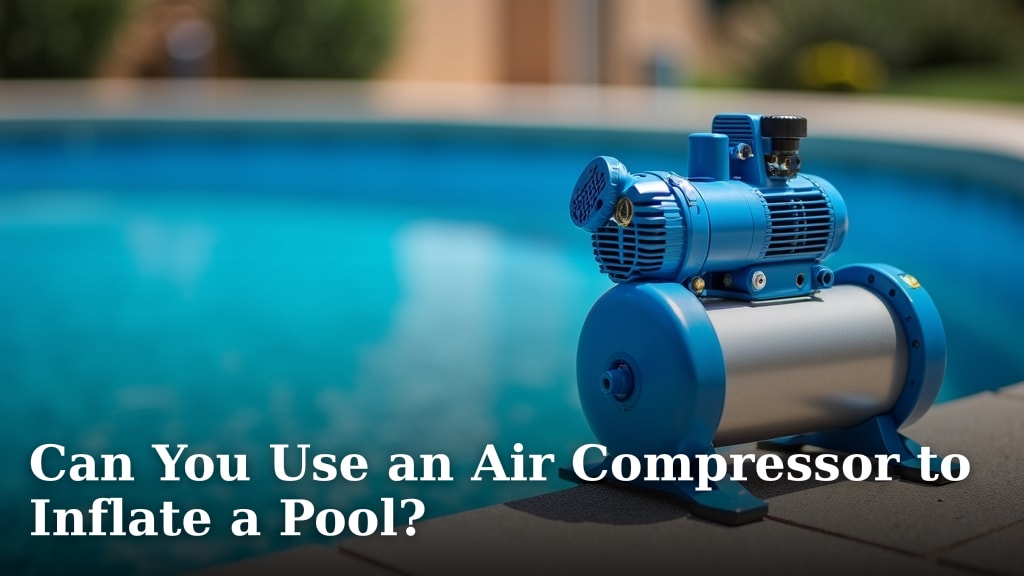
Yes, you can use an air compressor to inflate a pool, but you need to be careful. It’s much faster than a hand pump. However, using too much pressure can damage your inflatable pool.
Many people wonder if their garage air compressor is suitable for pool toys. We found that most common air compressors are powerful enough. The key is to control the airflow and monitor the inflation. You want a firm, but not overinflated, pool.
- Air compressors inflate pools quickly.
- Risk of overinflation is high.
- Use the right nozzle for a good seal.
- Monitor pressure carefully as you inflate.
- Never leave inflation unattended.
So, let’s explore how to safely and effectively use your air compressor for pool inflation. We’ll show you exactly what to do to avoid any mishaps and get your pool ready for summer fun.
Inflating Your Pool with an Air Compressor: A How-To Guide
You’re ready to get that inflatable pool set up. But is your trusty air compressor the right tool for the job? We found that with a few precautions, it absolutely can be.
The main benefit? Speed. A good air compressor can fill your pool much faster than a manual pump. This means less waiting and more splashing for you and your family.
However, the key word here is “caution.” An air compressor delivers a lot of air quickly. You need to control that power to avoid damaging your pool.
Understanding Your Air Compressor
Before you even think about attaching a nozzle, take a moment to look at your air compressor. What kind do you have? Most household compressors are perfectly suitable.
You’ll typically find two main types: pancake compressors and hot dog compressors. Both work by storing compressed air in a tank. This stored air is what inflates your pool.
We found that compressor size doesn’t matter as much as its output and control features. A small, portable unit can work just as well as a larger garage model, as long as it has the right attachments.
Checking CFM and PSI
Your compressor’s specifications are important. You’ll often see numbers like CFM (Cubic Feet per Minute) and PSI (Pounds per Square Inch). These tell you how much air it moves and at what pressure.
For inflating a pool, you don’t need high PSI. In fact, too much PSI is what causes problems. What you want is decent CFM, which indicates the volume of air.
Most inflatable pools only need 1-2 PSI to be firm. Your air compressor likely puts out 90 PSI or more. This is why careful control is so essential.
Gathering the Right Equipment
Having the right tools makes all the difference. Don’t just grab any nozzle and hope for the best. A few key items will ensure a smooth inflation process.
You’ll need the compressor, of course. But you also need the correct nozzle, and ideally, a pressure gauge. These items help you stay in control.
Think of it like baking. You wouldn’t just throw ingredients together. You measure them precisely. Inflating your pool requires similar attention to detail.
Choosing the Correct Nozzle
This is perhaps the most important part of your setup. Inflatable pools have large valve openings. Your standard air compressor nozzle for car tires won’t fit.
You’ll need a specialty inflation nozzle. Many air compressor kits include these. They are usually cone-shaped or have stepped adapters to fit various valve sizes.
Look for a nozzle that creates a snug seal with your pool’s inflation valve. A loose connection means air will escape, making the job take longer and potentially overworking your compressor.
Do You Need a Pressure Gauge?
A pressure gauge isn’t strictly necessary, but we found it’s a very good idea. It helps you monitor the actual pressure inside the pool.
Some pool pumps come with integrated gauges. For air compressors, you can get inline gauges. These fit between your compressor hose and the inflation nozzle.
While you can use the “feel” method (squeezing the pool walls), a gauge provides an objective measurement. It helps prevent overinflation, which is the biggest risk.
Step-by-Step Pool Inflation Guide
Now that you have your equipment ready, let’s get that pool inflated. Follow these steps carefully to ensure safety and prevent damage.
Remember, patience is key. Don’t rush the process, especially if this is your first time using an air compressor for a pool.
Here’s a simple checklist to guide you:
- Unfold your pool completely.
- Locate all inflation valves.
- Attach the right nozzle.
- Set compressor to low PSI.
- Inflate in short bursts.
- Monitor firmness constantly.
Preparing Your Pool
First, unroll your inflatable pool in the spot where you want it to be. Once it’s full of air and water, it will be very difficult to move.
Make sure the ground is clear of any sharp objects. A small stone can easily puncture a new pool. Lay down a tarp or ground cloth if you have one.
Find all the inflation valves. Most multi-chamber pools have separate valves for each ring or section. You’ll inflate these one by one.
Connecting and Inflating
Attach the correct inflation nozzle to your air compressor hose. Then, securely insert the nozzle into the pool’s first inflation valve.
If your compressor has an adjustable pressure regulator, turn it down to the lowest setting. You want volume, not extreme pressure.
Begin inflating in short bursts. Hold the nozzle firmly. Allow air to flow for a few seconds, then release. Check the firmness of the pool section.
| Action | Why it’s Important |
|---|---|
| Use a low-pressure setting. | Prevents sudden overinflation. |
| Inflate in short bursts. | Gives you time to assess firmness. |
| Monitor constantly. | Avoids stretching or bursting the material. |
| Listen for changes in sound. | Can indicate too much pressure. |
Monitoring Firmness and Avoiding Overinflation
As you inflate, frequently feel the pool walls. You want the material to be firm, but still have a little give. It should not feel rock-hard.
A good rule of thumb is that you should be able to press your thumb into the inflated surface about half an inch. If it feels like a bouncy ball, it’s probably too firm.
Overinflation is the biggest danger. It can stress the seams, leading to leaks or even a sudden rupture. We found that most pool damage from inflation comes from this very issue (Consumer Product Safety Commission).
Safety Precautions You Must Take
Using an air compressor isn’t just about getting the job done. It’s about doing it safely. Your pool, and your well-being, depend on it.
Never walk away from an air compressor while it’s inflating something. Things can go wrong very quickly, especially with the high pressure involved.
Always keep children and pets away from the inflation area. The compressor can be loud, and a bursting pool can be startling, or worse.
Don’t Walk Away While Inflating
It can be tempting to start the compressor and do something else for a minute. Resist this urge! A minute is all it takes to go from perfectly inflated to seriously damaged.
Your attention is your best safety device. Stay focused on the pool and the inflation process until each chamber is properly filled and sealed.
Imagine your air compressor as a powerful tool. Like a power saw, it needs your full attention when in use. It’s not a set-it-and-forget-it device.
The Dangers of Overinflation
We’ve mentioned it a few times, but it bears repeating: overinflation is your enemy. The material of inflatable pools is designed to expand, but only so much.
Exceeding the material’s elastic limit puts immense stress on the seams. These are the weakest points. Eventually, the pressure will find a way out.
This can result in a loud, sudden burst, potentially sending plastic fragments flying. Not only does this ruin your new pool, but it could also cause injury.
Also, an overinflated pool is more prone to sun damage. The stretched material becomes thinner and more vulnerable to UV rays, shortening its lifespan.
Conclusion
Using an air compressor to inflate your pool is a fantastic way to save time and effort. You can get that pool ready for splashing much faster than with a manual pump. Just remember that careful control is essential.
Always prioritize safety. Pay close attention to your compressor settings and the firmness of your pool. By following these simple steps, you’ll avoid common pitfalls like overinflation and keep your pool in great shape. Get ready to enjoy a refreshing summer!
Frequently Asked Questions
Can a regular tire inflator be used for a pool?
Yes, a regular tire inflator can work, but you’ll need the right adapter nozzle for the pool’s larger valve. Tire inflators typically have high PSI, so you must inflate in very short bursts and constantly check the pool’s firmness to prevent overinflation.
How do I know if I’m overinflating my pool?
An overinflated pool will feel rock-hard and have no give when you press on it. You should be able to press your thumb into the material about half an inch. If you hear stretching sounds or see seams bulging, stop immediately.
What kind of nozzle do I need for an inflatable pool?
You need a specialty inflation nozzle designed for larger valves. These are often cone-shaped or have stepped adapters. Your air compressor kit might include one, or you can buy a universal set at most hardware stores or online.
Is it better to use a manual pump or an air compressor for a pool?
An air compressor is much faster and less physically demanding than a manual pump. However, a manual pump is safer against overinflation because it’s harder to put too much air in. The best choice depends on your comfort with power tools and desire for speed.
Can I use a shop vacuum in reverse to inflate a pool?
Yes, many shop vacuums have a “blower” function that can be used to inflate pools. This method is often safer than an air compressor because shop vacs move a high volume of air at very low pressure. Just make sure you have an adapter that fits the pool’s valve.
