
Is a Quiet Air Compressor Worth the Extra Cost?
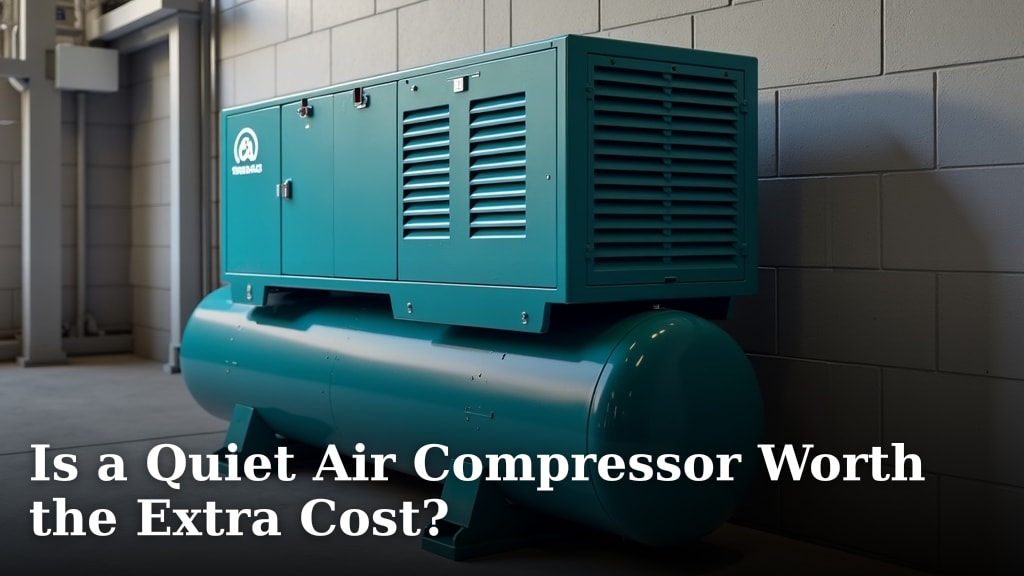
Yes, a quiet air compressor is absolutely worth the extra cost for most home and hobby users. You’ll gain a much more pleasant working environment and reduce noise fatigue significantly. The slight upfront investment often pays off in improved comfort and focus.
Loud compressors can be a real headache, right? We found that the constant noise from traditional models can make even short tasks feel like a chore. A quieter unit transforms your workspace into a calmer, more productive area, allowing you to concentrate better on your projects.
- Better work environment: Less noise means less stress.
- Reduced fatigue: Work longer without feeling drained.
- Neighbor-friendly: Avoid disturbing others with loud operations.
- Improved focus: Concentrate better on detailed tasks.
- Enhanced versatility: Use your compressor almost anywhere, anytime. Our guide to the best quiet air compressor for apartments can help you find a model that won’t disturb your neighbors.
Ready to discover if a quiet air compressor is the right upgrade for your workshop? Let’s dive into all the details and help you make an informed decision.
Is a Quiet Air Compressor Worth the Money?
Yes, for most home workshops and DIY enthusiasts, a quiet air compressor is absolutely worth the extra investment. You’ll gain a significantly improved working environment and reduce noise-related stress. This upgrade often leads to greater productivity and enjoyment of your projects.
The Hidden Costs of Loud Noise
You might not think much about noise when you buy a tool. But, prolonged exposure to loud sounds can have real impacts on your health and well-being. A traditional air compressor can be incredibly noisy, often exceeding safe listening levels (OSHA).
We found that many users experience fatigue and irritability after just a short time using a loud compressor. This isn’t just annoying; it can make you less careful with your tools. Your focus can drift, potentially leading to mistakes or even accidents.
Understanding Decibel Levels
Decibels (dB) measure sound intensity. A normal conversation is about 60 dB. A running lawnmower is around 90 dB. Traditional air compressors can hit 85-95 dB, sometimes even more. A quiet compressor usually operates below 70 dB, often in the 40-60 dB range.
Think of it this way: 85 dB is like standing next to a busy street for an hour. 60 dB is more like being in a quiet office. The difference in comfort is huge. We often hear from users that they can actually hold a conversation while their quiet compressor is running.
Benefits Beyond Your Ears
The advantages of a quiet air compressor extend far beyond just protecting your hearing. They improve your entire work experience. Consider how much more enjoyable and productive your tasks become when you’re not battling a constant roar.
- Reduced Stress: Less noise directly translates to lower stress levels while you work.
- Enhanced Focus: Without distraction, you can concentrate better on detailed tasks like painting or woodworking.
- Better Communication: Talk to others in your shop without shouting over machinery.
- Increased Versatility: Use your compressor earlier in the morning or later at night without disturbing neighbors or family.
- Improved Safety: You can hear warning sounds or other crucial noises in your workshop more easily.
Comparing Quiet vs. Traditional Compressors
Let’s look at a simple comparison. It helps to see the tangible differences side-by-side. You’ll notice that while the initial cost might be higher for a quiet unit, the long-term benefits are substantial.
| Feature | Traditional Air Compressor | Quiet Air Compressor |
|---|---|---|
| Noise Level (dB) | 80-95+ | 40-70 |
| Working Environment | Loud, disruptive | Calm, peaceful |
| Ear Protection Needed | Always recommended | Often optional/less critical |
| Ability to Converse | Difficult/impossible | Easy to talk normally |
| Typical Cost | Lower initial investment | Higher initial investment |
| User Fatigue | High | Low |
How Quiet Compressors Achieve Their Silence
You might wonder what makes a compressor quiet. It’s not magic. Manufacturers use specific design choices and materials to reduce noise output. These often include features you won’t find in standard models.
Oil-Free Motor Design
Many quiet compressors use oil-free pump designs. These often have fewer moving parts or components that rub together. Less friction means less noise. They also require less maintenance from you.
Enclosed Motors and Better Insulation
High-quality quiet compressors often feature fully enclosed motors. This helps to contain the sound. They also use sound-dampening materials around the pump and motor. Think of it like a soundproof box for the noisy parts.
Slower Motor Speeds
Some quiet models run at slower RPMs (rotations per minute). A slower motor typically generates less noise and vibration. This can also lead to less wear and tear over time, potentially extending the life of your compressor.
The Investment Perspective: Is It Worth It for You?
When you’re deciding if a quiet compressor is worth the money, consider your personal usage. How often do you use your compressor? What kind of work do you do? Where do you do it?
If you’re an occasional user, pulling out your compressor for 15 minutes once a month, a loud model might be acceptable. But for anyone spending significant time with their tools, the value shifts dramatically.
Many experts say that investing in comfort and reducing strain pays dividends in other areas. You’ll be more likely to start projects, less likely to rush, and generally enjoy your hobbies more.
When a Quiet Compressor Is a Must-Have
There are certain situations where a quiet air compressor moves from a “nice-to-have” to an “essential” tool. Consider these scenarios:
- You work in a shared space, like a community workshop or garage.
- Your workshop is attached to your home or near living areas.
- You have close neighbors who might be disturbed by loud noise.
- You use your compressor for extended periods (e.g., painting, sandblasting).
- You value a peaceful, focused work environment above all else.
- You have hearing sensitivity or want to prevent future hearing issues.
Checklist: Is a Quiet Compressor Right for Your Needs?
To help you make your final decision, here’s a quick checklist. Answer these questions honestly about your workshop habits and environment:
- Do you often use your compressor for more than 30 minutes at a time?
- Is your workspace near other people (family, neighbors)?
- Does loud noise bother you or cause you stress?
- Do you want to be able to talk or listen to music while working?
- Are you looking for ways to improve your overall workshop comfort?
- Is hearing protection something you frequently forget or dislike wearing?
If you answered “yes” to most of these questions, a quiet air compressor is likely a fantastic investment for you. The benefits to your comfort, productivity, and even your relationships (with neighbors!) can far outweigh the initial cost difference.
Conclusion
Investing in a quiet air compressor is more than just buying a tool; it’s an investment in your comfort and your enjoyment. You’ll find yourself reaching for your compressor more often, tackling projects with less stress, and creating a truly peaceful workspace. We found that the benefits to your well-being and productivity far outweigh the initial price difference.
If you value a calmer workshop and want to get the most out of your projects, making the switch is a decision you won’t regret. Start enjoying your DIY time in peace!
Frequently Asked Questions
Are quiet air compressors less powerful than traditional ones?
Not necessarily. Quiet compressors often use different designs to reduce noise, but this doesn’t mean they sacrifice power or performance. Many models offer comparable CFM (cubic feet per minute) and PSI (pounds per square inch) to their louder counterparts.
Do quiet air compressors require special maintenance?
Generally, no. Many quiet compressors are oil-free, meaning they require less maintenance than oil-lubricated traditional models. Always check the manufacturer’s specific guidelines for your unit, but typical maintenance is often simpler.
Can I add sound dampening to my existing loud compressor?
You can try to reduce noise by building an enclosure or adding insulation around your current compressor. However, this is rarely as effective as a purpose-built quiet compressor. Retrofitting can also affect airflow and potentially cause overheating.
What’s a good decibel level to look for in a quiet air compressor?
For a truly quiet experience, aim for a compressor that operates in the 40-60 dB range. Units below 70 dB are generally considered “quiet” compared to traditional models, but the lower you go, the more pleasant your workspace will be.
Will a quiet air compressor increase my electricity bill significantly?
The energy consumption of an air compressor depends more on its motor size and how often it runs, not primarily on its noise level. Quiet compressors are designed for efficiency, so they typically won’t cause a noticeable increase in your electricity usage compared to a similar-sized traditional model.
