
Can You Use an Air Compressor without Oil?
Yes, you can use an air compressor without oil, but only if it’s an oil-free air compressor specifically designed for that purpose. Never operate an oil-lubricated compressor without oil; doing so will cause severe damage.
Many people wonder about the different types of compressors. Understanding if your unit is oil-lubricated or oil-free is key. Using the wrong approach can lead to costly repairs and frustration. We’re here to help clarify this often-confusing topic for you.
- Oil-free compressors don’t need oil.
- Oil-lubricated compressors always need oil.
- Running an oil-lubricated compressor without oil causes damage.
- Check your compressor’s manual to know its type.
Ready to learn more? Let’s walk through everything you need to know about air compressors, oil, and how to keep your equipment running smoothly.
Understanding Oil-Lubricated vs. Oil-Free Air Compressors
Okay, let’s dive into the core difference that will guide all your choices: whether your air compressor needs oil or not. This isn’t just a minor detail; it’s a fundamental design distinction. Think of it like the difference between a gasoline car and an electric car – they both get you from point A to point B, but they operate on entirely different principles when it comes to fuel.
What Makes an Oil-Lubricated Compressor Work?
Many traditional air compressors are oil-lubricated. This means they rely on oil to keep their internal moving parts smooth and cool. Without this oil, friction would quickly build up, leading to excessive heat and metal-on-metal grinding.
Imagine your car engine running without oil; it’s a similar disaster waiting to happen. The oil acts as a lubricant, a coolant, and even helps seal the components to improve efficiency. These compressors are often found in workshops and industrial settings where durability and high power are needed. They tend to be more robust and can handle heavier workloads.
The Role of Oil in These Compressors
The oil in an oil-lubricated compressor does a few critical jobs. First, it reduces friction between moving parts like pistons, cylinders, and bearings. This lessens wear and tear, extending the life of the machine. Second, it helps to dissipate heat generated during compression, keeping the components from overheating. Finally, it creates a better seal within the compressor, which means more efficient air compression (National Institute of Standards and Technology).
The World of Oil-Free Compressors
On the other hand, oil-free air compressors are designed from the ground up to operate without any lubricating oil in the compression chamber. How do they do this? They use materials like Teflon or other specialized coatings on their pistons and cylinders. These coatings provide the necessary lubrication without the need for liquid oil.
This design choice has some significant advantages, which we’ll explore shortly. It also means they’re built differently than their oil-lubricated cousins. You wouldn’t try to pour oil into an oil-free compressor, just as you wouldn’t try to put gasoline into an electric car.
How Oil-Free Designs Avoid Lubrication
Instead of oil, oil-free compressors often use permanent lubrication or materials that inherently reduce friction. For example, some models use piston rings made from PTFE (Polytetrafluoroethylene), a material known for its incredibly low friction properties. Other designs might use sealed bearings that are pre-lubricated for life, meaning you never need to add oil yourself. This makes them much more convenient for certain applications.
Why Not All Compressors Are Created Equal
It’s vital to recognize that an air compressor isn’t just a generic tool. There are distinct categories, and understanding them helps you make the right choices for your projects. Treating all compressors the same is like assuming all vehicles can go off-roading – it’s just not true, and trying it could lead to trouble!
Consequences of Running an Oil-Lubricated Compressor Dry
This is where things can go really wrong. If you have an oil-lubricated compressor and try to operate it without oil, you’re setting yourself up for expensive damage. The internal components, particularly the piston and cylinder, will experience rapid wear due to metal-on-metal contact. The absence of cooling oil means these parts will quickly overheat, leading to seizing and permanent failure.
It’s not just a matter of reduced performance; it’s a recipe for a completely broken machine. We’ve heard countless stories of people forgetting to check the oil or accidentally running their unit dry, only to find themselves needing a costly repair or replacement.
- Increased Friction: Parts grind against each other.
- Overheating: No oil to cool the components.
- Rapid Wear: Metal parts quickly degrade.
- Component Seizure: Parts weld together due to heat and friction.
- Complete Breakdown: The compressor stops working entirely.
Why Oil-Free Doesn’t Mean Maintenance-Free
While oil-free compressors eliminate the need for oil changes and oil level checks, they aren’t entirely maintenance-free. They still have filters that need to be cleaned or replaced, and often have other wear parts. The “oil-free” label applies specifically to the compressor’s pumping mechanism, not necessarily to every single part of the machine. Always refer to your owner’s manual for specific maintenance schedules.
You still need to drain moisture from the tank regularly, check air filters, and ensure electrical connections are secure. It’s just a different set of tasks compared to an oil-lubricated unit.
Identifying Your Compressor Type
Before you do anything, you need to confirm what kind of compressor you own. Don’t guess! This is the most important step to prevent accidental damage. It’s like checking the fuel type for your car before filling up.
Reading Your Owner’s Manual
The absolute best way to know your compressor type is to consult its owner’s manual. This document contains all the manufacturer’s specifications, including whether it’s oil-lubricated or oil-free, the type of oil (if any) it requires, and its maintenance schedule. If you’ve misplaced your manual, try searching online with the compressor’s make and model number; most manufacturers provide digital versions.
Visual Cues and Labeling
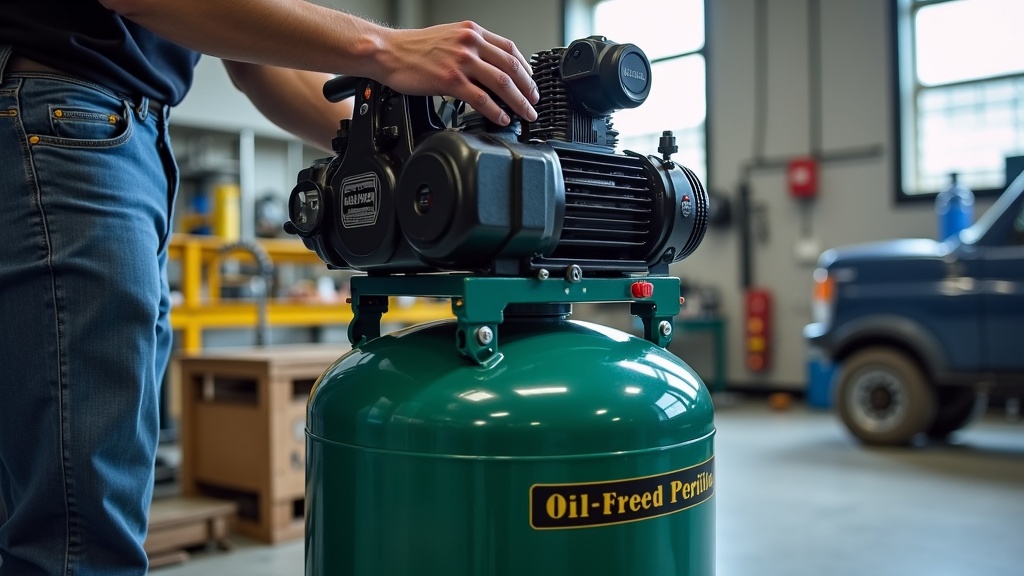
If the manual isn’t handy, look for clues on the compressor itself. Many oil-lubricated models will have a dipstick, an oil fill cap, or a sight glass to check the oil level. They often have labels specifying “Compressor Oil” or “SAE 30” near the fill port. Oil-free compressors, by contrast, will typically lack these features. Some may even be explicitly labeled “Oil-Free” on the casing.
What to Look For: A Quick Checklist
- Is there an oil dipstick or sight glass?
- Is there an oil fill cap?
- Are there any labels indicating “oil” or “lubrication” instructions?
- Does the manufacturer’s plate or sticker say “oil-free” or “maintenance-free”?
Choosing the Right Compressor for Your Needs
Now that you understand the fundamental differences, how do you decide which type is best for you? It really comes down to what you plan to use it for.
| Feature | Oil-Lubricated Compressors | Oil-Free Compressors |
|---|---|---|
| Noise Level | Generally quieter | Often louder |
| Maintenance | Requires oil changes, oil level checks | No oil maintenance; filter checks |
| Lifespan | Often longer with proper maintenance | Generally shorter (wear on coatings) |
| Portability | Can be heavier; needs to stay upright | Lighter; can be used at various angles |
| Air Quality | Risk of oil carryover in compressed air | Clean, oil-free air output |
| Cost (Initial) | Can be higher for heavy-duty models | Often lower for smaller units |
| Applications | Heavy-duty tools, continuous use, automotive | Painting, brad nailing, airbrushing, dental, food processing |
When an Oil-Lubricated Compressor Shines
If you’re a professional mechanic, a serious DIY enthusiast, or run a workshop that needs a compressor for extended periods and high-demand tools, an oil-lubricated model is often the better choice. They’re built for durability, tend to operate more quietly, and can typically handle continuous, heavy use. The trade-off is the need for regular oil checks and changes, much like maintaining your car’s engine.
The Benefits of Going Oil-Free
For lighter tasks around the house, hobby projects, or applications where oil contamination is a concern (like painting, airbrushing, or medical uses), an oil-free compressor is ideal. They’re typically lighter, more portable, and require less messy maintenance. You don’t have to worry about oil getting into your air supply, which is a huge plus for certain jobs. They are also generally more affordable for casual users.
Essential Maintenance for All Air Compressors
Regardless of whether your compressor uses oil or not, there are some universal maintenance tasks you should always perform. Think of these as the basic health checks for any piece of equipment you want to last.
Draining the Air Tank Regularly
This is probably the most overlooked but crucial step for all air compressors. As air is compressed, moisture in the air condenses and collects at the bottom of the tank. If this water isn’t drained, it can lead to rust inside the tank, weakening its structure over time and potentially causing dangerous failure. Many experts, including those at the Occupational Safety and Health Administration (OSHA), recommend draining your tank daily or after each use, especially in humid environments.
There’s usually a drain valve at the bottom of the tank. Just open it up, let the water (and any rust flakes) flow out, and close it when it’s just air coming out. It’s a simple task that takes less than a minute and can save your compressor’s life.
Checking and Cleaning Air Filters
The air filter is your compressor’s first line of defense against dirt and debris. A clogged air filter forces your compressor to work harder, reducing its efficiency and potentially shortening its lifespan. Check your filter regularly – how often depends on your usage and environment. If it looks dirty, clean it or replace it according to your manual’s instructions. A clean filter ensures your compressor breathes easily and performs at its best.
Here’s a quick checklist for universal compressor care:
- Drain the air tank after every use or daily.
- Inspect and clean the air filter regularly.
- Check hoses for cracks or leaks.
- Tighten any loose nuts or bolts.
- Store your compressor in a clean, dry area.
Conclusion
You’ve learned that not all air compressors are the same. Understanding if your unit is oil-lubricated or oil-free is essential for its longevity. Never run an oil-lubricated compressor without oil, or you risk serious damage. Oil-free units offer convenience, while oil-lubricated models provide durability for heavier tasks.
Always check your owner’s manual first. Make sure you drain the tank and clean your filters regularly. By following these simple guidelines, you’ll ensure your air compressor stays in top working order for years to come. Your equipment will thank you!
Frequently Asked Questions
Can I convert an oil-lubricated compressor to run without oil?
No, you absolutely cannot convert an oil-lubricated compressor to run without oil. These compressors are designed with specific internal components that require oil for lubrication and cooling. Removing the oil would quickly lead to overheating and catastrophic failure.
How do I know if my compressor is oil-free if I don’t have the manual?
Look for visual cues on the compressor itself. Oil-lubricated models usually have a dipstick, an oil fill cap, or a sight glass to check oil levels. Oil-free compressors will lack these features and might even have “Oil-Free” explicitly stated on their casing or data plate.
What kind of damage occurs if an oil compressor runs without oil?
Running an oil-lubricated compressor without oil causes severe friction between internal metal parts. This leads to rapid wear, extreme overheating, and eventual seizure of components like pistons and cylinders. The compressor will stop working and often requires costly repairs or full replacement.
Do oil-free compressors last as long as oil-lubricated ones?
Generally, oil-lubricated compressors tend to have a longer lifespan, especially with proper maintenance. Oil-free compressors rely on specialized coatings that can wear down over time, potentially leading to a shorter overall operational life compared to their oil-lubricated counterparts.
Is “maintenance-free” the same as “oil-free” for air compressors?
“Oil-free” means no oil is needed for the compression mechanism. However, “maintenance-free” is a bit misleading. While oil-free compressors don’t need oil changes, they still require other maintenance tasks like draining the tank, cleaning air filters, and checking hoses to ensure proper function and longevity.
