
How to Troubleshoot an Air Compressor That Cycles Too Fast?
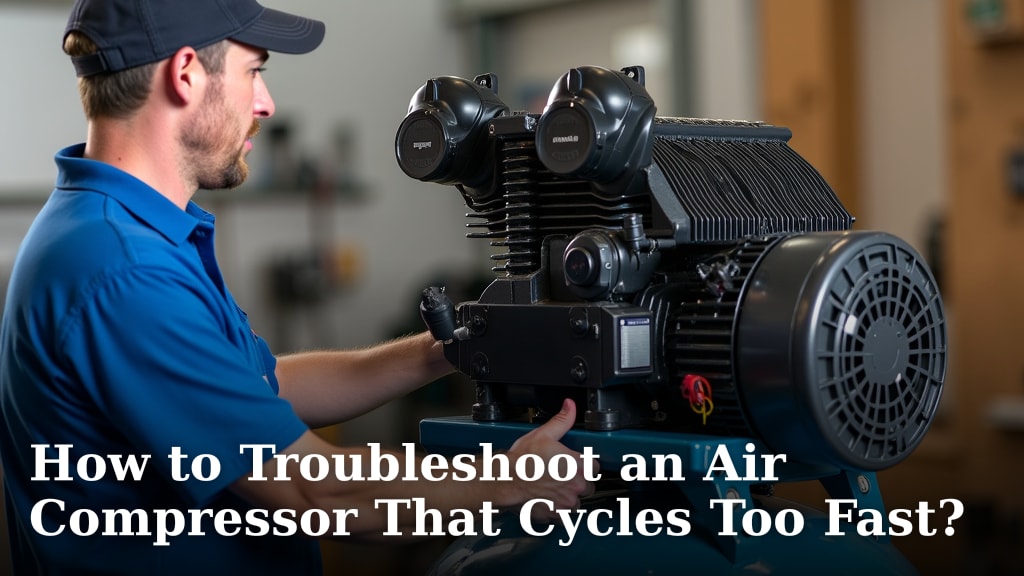
If your air compressor is cycling too fast, it’s likely due to a pressure switch issue or a problem with your tank’s air. You might be facing frequent starts and stops. This can be frustrating, but it’s usually fixable with a few troubleshooting steps.
An air compressor that kicks on and off too quickly often wastes energy. It also puts extra strain on the motor. We found that most of these problems stem from simple adjustments or component checks. Understanding the cause helps you get back to steady operation and protect your equipment.
- Check the pressure switch settings.
- Inspect for air leaks in the system.
- Verify the tank’s pressure is holding.
- Look for a faulty check valve.
Let’s walk through the common culprits and how to fix them so your compressor runs smoothly again.
Troubleshooting Your Air Compressor’s Rapid Cycling
When your air compressor kicks on and off too frequently, it’s not just annoying; it can signal underlying issues. You want steady power, not a constant battle between cycles. We found that this rapid cycling, sometimes called “short cycling,” often points to a few common problems. Fortunately, most of these are fixable by you. Let’s get your compressor running smoothly again.
Understanding Why Air Compressors Short Cycle
Short cycling means your compressor is turning on and off much more often than it should. Instead of a long run followed by a break, it’s a quick burst and then off. This puts extra wear and tear on the motor and pump. It also means your compressor might not be building up enough pressure for your tools. We’ve seen this happen most often because of issues with air pressure regulation or air leaks.
The Pressure Switch: Your Compressor’s Thermostat
Think of the pressure switch as the thermostat for your air compressor. It tells the motor when to turn on and when to shut off based on the tank’s air pressure. If this switch isn’t set correctly or is malfunctioning, it can cause your compressor to cycle too fast.
Checking and Adjusting the Pressure Switch Settings
The pressure switch has two main settings: the cut-in pressure and the cut-out pressure. The cut-in pressure is when the compressor turns on. The cut-out pressure is when it turns off. For most home compressors, the difference (called the differential) is usually around 20-30 PSI. For example, it might turn on at 90 PSI and off at 120 PSI.
First, locate your pressure switch. It’s usually a small box with a lever or knob on top, connected to the air tank. You might also see a dial or screws for adjustment. We found that many pressure switches have adjustment screws. One screw typically adjusts the cut-out pressure (how high it goes before shutting off), and another adjusts the differential (the range between on and off).
If the cut-out pressure is set too low, the compressor will reach it quickly and shut off before it has a chance to build sufficient pressure. Similarly, if the differential is too narrow, the compressor will cycle on and off rapidly as the pressure fluctuates slightly. Many experts suggest adjusting the cut-out pressure slightly higher, ensuring a larger tank pressure build-up before the switch trips the motor off. Always consult your compressor’s manual for specific instructions.
When to Suspect a Faulty Pressure Switch
Sometimes, adjusting the settings isn’t enough. The switch itself might be worn out or damaged. If you’ve checked the settings and there are no obvious air leaks, a faulty pressure switch is a strong possibility. Symptoms can include the compressor not shutting off at all, or turning on and off erratically even when the tank is full. We’ve found that a sticky diaphragm inside the switch can cause it to react too slowly or too quickly. In such cases, the switch needs to be replaced. You can test a pressure switch by carefully checking the electrical contacts for wear or corrosion.
Air Leaks: The Silent Energy Drainers
Air leaks are a common nemesis for any air compressor owner. Even a small leak means your compressor has to work harder and run longer to maintain pressure. If the leak is significant enough, it can cause the compressor to cycle rapidly. It’s like trying to fill a bucket with a hole in it – the compressor keeps trying to catch up.
Identifying Leaks in Hoses and Fittings
You’ll want to systematically check every part of your air system. Start with the obvious places: hoses, couplings, and connections to tools. Use a soapy water solution for this. Spray it on all the connections, hoses, and fittings. Look for bubbles. Bubbles mean air is escaping, and you’ve found a leak. We found that often, a loose connection at a quick-connect fitting or a cracked hose is the culprit. Tighten any loose fittings first. If you find a cracked hose, it needs to be replaced.
Checking for Leaks at the Tank and Regulator
Don’t forget the tank itself and the air regulator. The tank valve and the drain valve at the bottom of the tank can sometimes develop leaks. Listen closely for hissing sounds. The regulator assembly, which controls the output pressure, can also be a source of leaks. If you can’t find a leak with soapy water, you might need to consider if the tank itself has a seal issue, though this is less common. We’ve seen that leaks at the regulator often mean the internal seals are failing and the regulator unit needs replacement.
The Check Valve: A Critical One-Way Street
The check valve is a vital component. Its job is to prevent air from flowing back from the tank into the compressor pump when the pump stops running. If this valve fails, compressed air can leak back into the pump. This can cause the tank pressure to drop rapidly, triggering the pressure switch to start the compressor again almost immediately. It’s a primary reason for short cycling, especially right after the compressor shuts off.
How to Inspect and Test the Check Valve
The check valve is usually located between the pump head and the air tank. It often looks like a small brass fitting. To test it, run the compressor until it shuts off. Listen carefully. If you hear air hissing from the pump head area, the check valve is likely leaking. Some check valves can be unscrewed and inspected for debris or damage. Many experts recommend replacing the check valve if you suspect it’s faulty, as they can be inexpensive and tricky to repair effectively.
Tank Pressure and Air Consumption: The Balancing Act
Your air compressor’s ability to keep up depends on the balance between how quickly it can fill the tank and how quickly you’re using the air. If your air consumption is too high for the compressor’s capacity, or if the tank isn’t holding pressure, it will cycle quickly. If the tank’s pressure is not holding, it can cause the compressor to cycle too fast.
Assessing Your Air Tool’s Demand
Are you using air tools that require a lot of air? Something like a large sandblaster or a continuous-use spray gun can drain your tank faster than a small compressor can replenish it. If your compressor is consistently cycling rapidly while you’re using a particular tool, that tool might be the issue. We found that upgrading to a larger tank or a compressor with a higher CFM (Cubic Feet per Minute) rating is the solution if your tools are simply too demanding.
Ensuring the Tank Holds Pressure
Even with no leaks and a working check valve, if the tank itself has integrity issues, it won’t hold pressure. However, tank integrity issues are rare and usually involve visible damage or rust. A more common reason the tank might *seem* like it’s not holding pressure is simply that the cut-out pressure is set too low on the pressure switch, as we discussed earlier. If you’ve ruled out leaks and the check valve, and your tools aren’t overly demanding, double-check that pressure switch setting again. We found that a quick cycle can sometimes be deceptive, making you think the tank isn’t holding, when really the switch is just telling it to turn off prematurely.
Quick Troubleshooting Checklist
Here’s a handy checklist to help you pinpoint the problem:
- Check Pressure Switch: Ensure settings are correct and the switch operates smoothly.
- Listen for Leaks: Use soapy water on all fittings, hoses, and valves.
- Inspect Check Valve: Listen for air escaping from the pump head after shutoff.
- Verify Tool Demand: Is your air tool consuming air faster than the compressor can supply?
- Test Tank Holding: After shutoff, does the pressure drop quickly (indicating a leak or check valve issue)?
- Examine Motor Strain: Does the motor sound like it’s struggling or overheating? This can indicate pressure issues.
By methodically going through these steps, you should be able to identify why your air compressor is cycling too fast and get it back to efficient operation. Many times, it’s a simple fix that restores peace to your workshop.
Conclusion
You’ve now learned the most common reasons your air compressor might be cycling too fast. We’ve seen that issues with the pressure switch, pesky air leaks, or a malfunctioning check valve are usually the culprits. Even your air tool’s demand can play a role in this rapid start-and-stop cycle. Don’t let this keep you from your projects. Grab your toolbox, a bit of soapy water, and systematically work through these checks. You’ve got this!
Frequently Asked Questions
My air compressor just shut off, and it’s already turning back on. What’s wrong?
This is a classic sign of a faulty check valve. When the check valve fails, compressed air leaks back from the tank into the pump. This causes the tank pressure to drop quickly, triggering the pressure switch to restart the compressor almost immediately.
Can a simple air leak really make my compressor cycle so fast?
Yes, absolutely. Even a small air leak forces your compressor to work harder and run longer to maintain pressure. A significant leak can cause the tank pressure to drop fast enough that the compressor kicks on and off repeatedly, especially if it’s a continuous leak.
How often should a typical air compressor cycle?
There’s no single answer, as it depends on tank size and air usage. However, a healthy compressor shouldn’t be cycling every minute or two. You should expect it to run for a sustained period to fill the tank, then stay off until the pressure drops considerably during tool use.
What if my pressure switch looks fine, but the compressor still cycles too fast?
If you’ve verified the settings are correct and checked for leaks, the pressure switch itself might be internally damaged or worn. A sticky diaphragm or corroded electrical contacts can cause erratic behavior. In such cases, replacing the pressure switch is usually the best solution.
Is it bad for my air compressor if it cycles too fast?
Yes, rapid cycling puts unnecessary strain on your compressor’s motor and pump. This constant starting and stopping can lead to premature wear and tear, potentially shortening the lifespan of your equipment. It also wastes electricity.
