
What Is the Best Air Compressor for Hobby Model Painting?
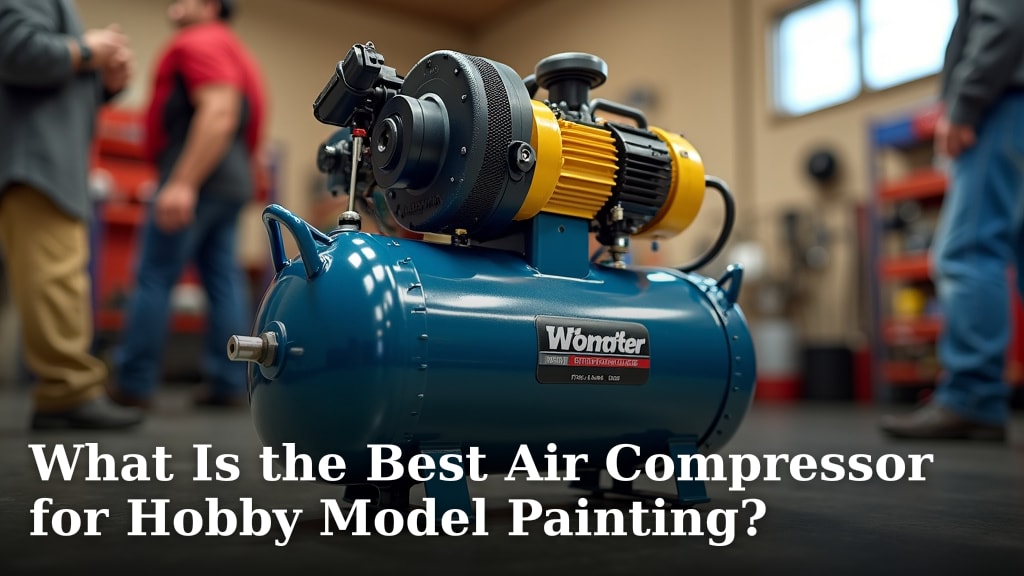
The best air compressor for hobby model painting is typically a piston-driven model with a small tank (0.5 to 2 gallons) and an adjustable regulator. You’ll want one that runs quietly and delivers consistent, oil-free air. Many hobbyists find single-piston compressors offer a great balance of performance and price for airbrushing.
When choosing, think about your workspace. Do you need something portable and quiet? Your airbrushing setup depends on air pressure and volume. Having a compressor that can supply steady airflow is key to smooth paint application. We’ve researched many options to help you pick the right one.
- Look for a piston-driven compressor.
- A small tank (0.5-2 gallons) is usually ideal.
- Ensure it has an adjustable regulator.
- Oil-free models are best for clean air.
- Consider noise level and portability.
Let’s dive into what makes an air compressor a great fit for your model painting projects and the top features you should be looking for.
Choosing the Right Air Compressor for Your Hobby Painting
Finding the best air compressor for your model painting projects can feel like searching for a tiny, perfect brush. You want something that’s reliable, quiet, and easy to manage. We’ve looked into what makes a compressor a great companion for your airbrushing hobby. The goal is to get consistent air delivery without breaking the bank or your eardrums.
Understanding the Core Components of an Air Compressor
Air compressors work by compressing air and storing it in a tank. This stored air is then released at a controlled pressure through a regulator. For model painting, you’re not looking for industrial-strength power. You need precision and steady airflow. Most hobby compressors use a piston-driven mechanism to achieve this. You can technically use a regular air compressor for airbrushing, but it’s best to understand the differences.
Piston vs. Other Compressor Types
For hobbyists, piston compressors are generally the way to go. They are simpler and more affordable than rotary screw or centrifugal compressors. These larger types are overkill for airbrushing models. Piston compressors come in oil-lubricated and oil-free varieties. For model painting, you absolutely want an oil-free model. Any oil mist can contaminate your paint and ruin your finish. Many manufacturers focus on oil-free designs for clean air output.
The Importance of an Oil-Free Design
Think of it like this: you’re painting delicate model parts. The last thing you need is a puff of compressor oil landing on your freshly applied paint. An oil-free compressor prevents this potential disaster. It ensures the air you’re spraying is clean and pure. This is critical for achieving smooth, professional-looking results on your models. We found that most reputable brands for hobbyist use offer oil-free options.
Key Features to Look For in Your Airbrush Compressor
When you’re browsing for a compressor, several features will stand out. These are the elements that will directly impact your painting experience. Focusing on these will help you narrow down your choices quickly and effectively.
Tank Size: Small and Mighty
You’ve likely seen compressors with massive tanks. Those are for inflating tires or running power tools. For airbrushing, a small tank is ideal. A tank size between 0.5 and 2 gallons is generally perfect. Why small? A smaller tank means the compressor motor cycles on and off more frequently. This is actually a good thing for airbrushing. It keeps the air pressure consistent. It also helps prevent overheating of the motor. You’ll get fewer bursts of air and a steadier spray.
Adjustable Regulator: Your Pressure Control Hub
This is perhaps the most critical feature. An adjustable regulator allows you to dial in the precise air pressure needed for your airbrush and paint. Different paints and techniques require different pressures. For example, fine detail work might need lower pressure, while coverage coats could use slightly more. Being able to fine-tune this is essential for control. Most good hobby compressors include a regulator with a gauge so you can see the pressure setting. We found that models with a range of adjustment from 0-60 PSI are common and sufficient.
Airflow (CFM) and PSI: The Performance Metrics
You’ll see terms like PSI (pounds per square inch) and CFM (cubic feet per minute). PSI tells you the maximum pressure the compressor can deliver. CFM tells you how much air volume it can supply. For airbrushing, PSI around 20-40 is usually sufficient for most tasks. Your airbrush itself will have a recommended operating pressure range. CFM is also important, though less so than for air tools. A compressor that delivers around 0.5 to 1.0 CFM is plenty for airbrushing. Too much CFM can actually be detrimental, leading to overspray.
Matching Compressor to Airbrush
It’s important that your compressor can meet the demands of your airbrush. Always check the manufacturer’s recommendations for both your airbrush and compressor. A good rule of thumb is that the compressor’s CFM output should be at least 1.5 to 2 times the CFM requirement of the airbrush. Most hobby airbrushes are quite efficient, so a modest compressor will work well. You don’t need a monster unit.
Noise Level: Keep the Peace
If you’re painting in an apartment or shared space, noise is a big concern. Many compressors can sound like a small jet engine. Thankfully, manufacturers are increasingly focusing on quiet operation. Look for compressors advertised as “low noise” or “silent.” These often use better motor designs or sound-dampening materials. Many units are rated in decibels (dB). Something around 45-60 dB is considered relatively quiet. We found that even well-performing compressors can be surprisingly quiet these days.
Portability and Size: Where Will You Paint?
Do you have a dedicated hobby room, or do you pack up after each session? If you need to move your setup, consider a compact and lightweight compressor. Many small tank models are designed with handles for easy transport. Some even come as a single unit with the compressor and airbrush holder integrated. Think about the space you have available for storage and setup too. A smaller footprint is often a big plus for home hobbyists.
Understanding Different Compressor Configurations
When you start looking, you’ll notice variations in how compressors are configured. These differences can affect performance, cost, and usability.
Single-Piston vs. Double-Piston Designs
Single-piston compressors are the most common for entry-level to intermediate hobbyists. They are generally less expensive and provide adequate airflow and pressure for most airbrushing tasks. Double-piston compressors, on the other hand, can deliver more air volume (CFM) and might recover pressure faster. They are often a bit quieter and can handle more demanding tasks or multiple airbrushes. For pure model painting, a good single-piston unit is usually more than enough. We found many users are perfectly happy with single-piston performance.
Compressors with Air Tanks vs. Tankless Models
We’ve already discussed the benefits of a small tank. A tank acts as a buffer, storing compressed air. This means the motor doesn’t have to run constantly. It also helps to smooth out any minor pulsations from the piston. Tankless compressors operate differently. They compress air on demand. While they can be very compact, they tend to run more continuously and can sometimes produce a more pulsating air stream. For consistent paint flow, a tank is generally preferred for model airbrushing. The stored air provides a buffer against pressure drops.
Essential Accessories for Your Airbrushing Setup
Beyond the compressor itself, a few accessories can greatly enhance your airbrushing experience. These items help you manage the air, protect your work, and keep everything running smoothly.
Air Filters and Moisture Traps
Even with an oil-free compressor, moisture can build up in the air lines. This condensation can cause sputtering or affect your paint. A moisture trap or in-line water separator is highly recommended. It filters out water and oil residue. This ensures you get the cleanest possible air to your airbrush. Many models are small and easily attach between the compressor and your airbrush hose. An air filter also helps remove dust and debris from the air supply.
Hoses and Connectors
You’ll need a hose to connect your compressor to your airbrush. Ensure the hose has the correct fittings for both your compressor’s output and your airbrush’s inlet. Standard sizes are common, but it’s always good to double-check. Braided nylon hoses are durable and flexible. Some compressors come with a basic hose, but you might want to upgrade for better flexibility or length. You’ll need a suitable air hose to connect your compressor to your airbrush.
Putting It All Together: Your Hobby Painting Checklist
To recap, here’s a quick checklist to help you find that perfect compressor:
- Oil-Free Operation: Absolutely essential for clean air.
- Small Tank (0.5-2 Gallons): For consistent pressure and control.
- Adjustable Regulator with Gauge: To fine-tune your air pressure.
- Quiet Operation: Look for low decibel ratings if noise is a concern.
- Compact & Portable: Especially if you move your setup often.
- Adequate PSI/CFM: Ensure it meets your airbrush’s needs (typically 20-40 PSI, 0.5-1.0 CFM is plenty).
By focusing on these key elements, you can confidently select an air compressor that will serve you well for all your model painting adventures. Happy painting!
Conclusion
You’ve learned that the best air compressor for hobby model painting is an oil-free piston model with a small tank and an adjustable regulator. Prioritizing quiet operation and portability will also enhance your painting sessions. By focusing on these key features, you’re well-equipped to choose a compressor that offers reliable performance without overwhelming your workspace. Now it’s time to take this knowledge and find the perfect compressor to bring your detailed models to life. Happy painting!
Frequently Asked Questions
How much PSI do I really need for model airbrushing?
For most hobby model painting, you’ll find that a pressure between 20-40 PSI is more than sufficient. Your airbrush and the type of paint you’re using will dictate the exact pressure. Always check the recommendations for your specific airbrush model.
Can I use a regular shop air compressor for model painting?
While a large shop compressor might technically work, it’s often overkill and can be too powerful and noisy for delicate model work. You’ll have better control and cleaner air with a compressor designed specifically for airbrushing, usually featuring a smaller tank and precise regulator.
What’s the difference between single-piston and double-piston compressors for hobbyists?
A single-piston compressor is typically more affordable and perfectly adequate for most model painters. A double-piston model can deliver more air volume and recover pressure faster, making it suitable for more demanding tasks or if you find yourself painting for extended periods.
Is a moisture trap really necessary if my compressor is oil-free?
Yes, a moisture trap or water separator is highly recommended even with oil-free compressors. Condensation can still form in the air lines due to changes in temperature and pressure, and this trap ensures clean, dry air for a smooth paint finish.
How important is CFM for an airbrush compressor?
CFM (cubic feet per minute) measures the volume of air. For airbrushing models, you don’t need a high CFM. A compressor delivering around 0.5 to 1.0 CFM is generally plenty for most airbrushes and provides a consistent, controllable spray.
