
Is a Home Air Compressor Loud Enough to Bother Neighbors?
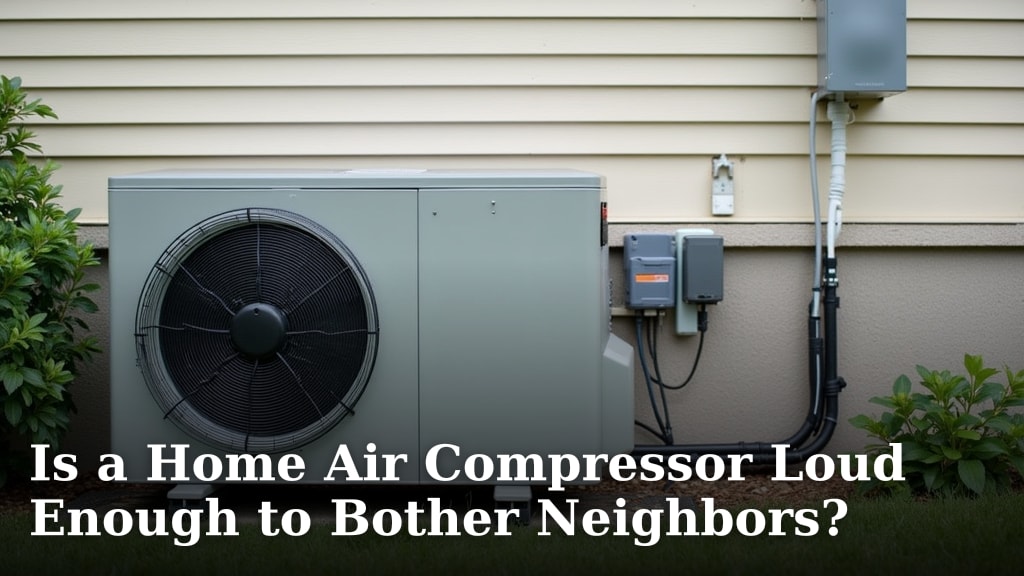
Yes, a home air compressor can be loud enough to bother neighbors, especially if you live in close quarters or run it for extended periods. The noise level largely depends on the type and size of the compressor, as well as its location and any soundproofing measures you take. Consider implementing soundproofing measures to reduce noise transmission.
We found that even smaller compressors can produce noise that travels through walls and open windows. Larger, industrial-grade models are almost always too loud for residential use without special considerations. Understanding the decibel ratings and potential sound travel is key to avoiding neighborly disputes.
- Air compressors can be noisy and disturb neighbors.
- Noise depends on compressor type, size, and placement.
- Look for decibel ratings to gauge loudness.
- Sound travels easily through walls and open windows.
- Quieter options and soundproofing can help.
Below, we’ll break down what makes an air compressor loud and what you can do to keep the peace in your neighborhood.
You’ve got your shiny new air compressor, ready to tackle DIY projects. But before you fire it up, you might be wondering: “Will this thing wake the whole neighborhood?” It’s a valid concern! Many home air compressors can indeed be loud enough to disturb your neighbors, especially in densely populated areas.
Understanding Air Compressor Noise Levels
So, what makes an air compressor noisy? It’s primarily the motor and the pump working together. The motor drives the pump, which compresses air. This mechanical action, along with the air escaping through the exhaust and any vibrations, creates the sound you hear.
Decibel Ratings: What They Mean for You
You’ll often see decibel (dB) ratings listed for air compressors. This is your best bet for comparing noise levels before you buy. Think of it like a volume knob for sound. A quiet conversation is around 60 dB. A vacuum cleaner might be 70-80 dB. Many portable air compressors operate in the 70-90 dB range.
We found that anything consistently above 80 dB can be quite disruptive. For reference, a normal conversation is about 60 dB. A busy street can reach 85 dB. So, an 85 dB air compressor is like having a mini-highway next to your house when it’s running (National Institute on Deafness and Other Communication Disorders).
Factors Affecting Perceived Loudness
The decibel rating is a good starting point, but how loud it *seems* to your neighbor depends on a few things:
- Distance: The further away, the quieter it sounds.
- Obstructions: Walls, fences, and trees can muffle sound.
- Type of Noise: A consistent hum is less jarring than a sudden clatter.
- Duration: A quick burst is less bothersome than continuous noise.
- Time of Day: Noise is much more noticeable early morning or late evening.
Different Compressor Types and Their Noise Profiles
Not all air compressors are created equal when it comes to noise. The design and intended use play a big role. We’ve looked at the common types you might encounter for home use.
Piston Compressors: The Usual Suspects
These are the most common for home workshops. They use a piston to compress air, much like an engine. They are generally more affordable and widely available but also tend to be the loudest.
Single-Stage vs. Two-Stage Piston
Single-stage compressors compress air once. They are usually smaller and less powerful, but still can be noisy. Two-stage compressors compress air twice, making them more efficient for demanding tasks but often even louder due to the extra compression.
Rotary Screw Compressors: Generally Quieter, But Bigger
These are more industrial and less common for typical home DIYers. They use rotating screws to compress air. They are typically much quieter than piston compressors, often operating in the 60-75 dB range. However, they are also much larger and more expensive.
Oil-Lubricated vs. Oil-Free
Oil-lubricated compressors tend to be quieter because the oil acts as a lubricant and can help dampen vibrations. Oil-free compressors, while lower maintenance, often rely on less-lubricated parts that can create more friction and noise.
How Sound Travels and Affects Your Neighbors
You might think, “My garage is pretty insulated, how can they hear it?” Sound is a tricky thing. It travels through the air, but also through solid materials.
Through Walls and Doors
Even a solid wall isn’t a perfect sound barrier. High-frequency sounds can vibrate through the materials. Think of it like tapping on a table; someone on the other side can hear it. Air compressor noise, especially the higher-pitched whine of the motor, can definitely travel through standard drywall and even some brick.
Through Windows and Vents
This is where noise really escapes. Windows are obvious weak points, especially if they are older or not properly sealed. Open windows are a direct invitation for noise to travel. Similarly, any vents or gaps in your home’s structure can act as sound pathways.
Ground Vibrations
Larger compressors can also cause vibrations in the ground or the structure they are sitting on. These vibrations can travel and be perceived as noise by neighbors, especially if you have attached garages or shared foundations.
Estimating Noise Impact: A Simple Comparison
To give you a better idea, here’s a rough comparison of common noise levels. Remember, these are general estimates, and your specific compressor and environment will vary.
| Sound Source | Approximate Decibels (dB) | Likelihood of Neighbor Complaint |
|---|---|---|
| Whisper | 30 dB | Very Low |
| Quiet Library | 40 dB | Low |
| Normal Conversation | 60 dB | Low |
| Household Refrigerator | 40-50 dB | Low |
| Average Window Air Conditioner | 50-60 dB | Moderate |
| Many Portable Air Compressors | 70-90 dB | High |
| Lawn Mower | 90-100 dB | Very High |
| Rock Concert | 110-120 dB | Extreme |
As you can see, many home air compressors fall into a noise category similar to a lawn mower. If you’ve ever been bothered by a neighbor’s lawnmower, you can understand why your compressor might be an issue.
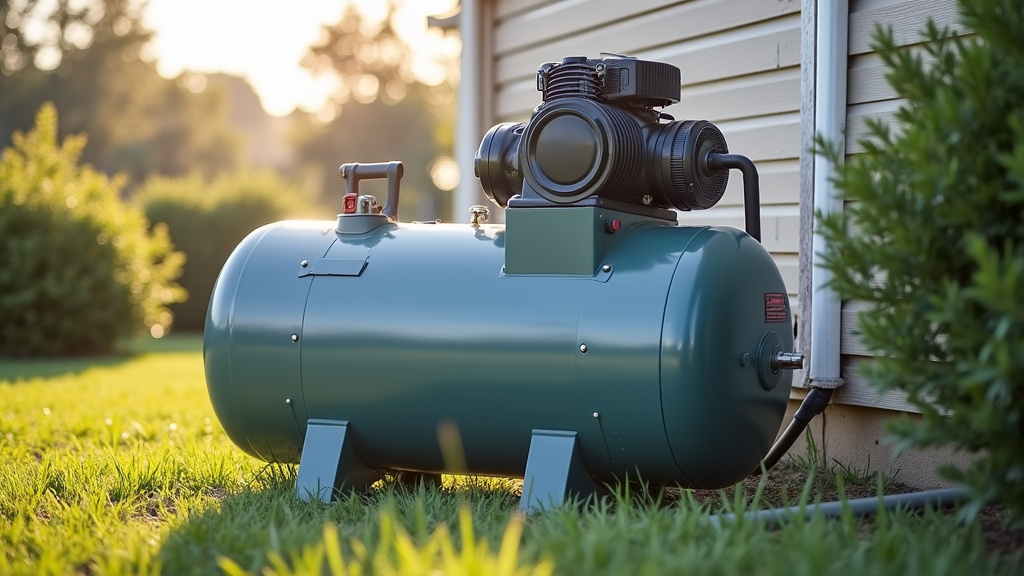
Strategies to Reduce Air Compressor Noise
Okay, so you’ve realized your compressor might be a neighborhood nuisance. The good news is you have options to quieter operation and maintain good relations.
Choose a Quieter Compressor Model
When buying, look for models specifically advertised as “quiet” or “low-noise.” These often have features like sound-dampening enclosures, slower motor speeds, or improved pump designs. We found that some manufacturers are actively developing quieter technologies. When buying, look for models specifically advertised as “quiet” or “low-noise” for less disturbance.
Strategic Placement is Key
Where you put your compressor matters a lot. Avoid placing it directly against a shared wall or near an open window. Placing it in a corner of a garage or shed can help contain some of the sound.
- Positioning: Face the compressor’s exhaust away from neighboring properties.
- Surface: Place it on a thick rubber mat or anti-vibration pads. This dampens vibrations that travel through the floor.
- Enclosure: If possible, use an existing sturdy structure like a shed or a detached garage.
DIY Soundproofing Solutions
You don’t always need to buy a new compressor. You can often soundproof your existing setup. One effective method is to build a sound-dampening box or enclosure around the compressor.
Building a Sound Box
Use dense materials like MDF or plywood for the main structure. Line the inside with sound-absorbing foam or mass-loaded vinyl (MLV). Ensure there’s still adequate ventilation to prevent overheating! You can add a quieter exhaust fan if needed. Many online guides can show you how to build these. Remember, a good soundproof box can reduce noise levels significantly.
Operational Etiquette: Being a Good Neighbor
Sometimes, the simplest solution is the best. Be mindful of when and how long you use your air compressor. Try to schedule noisy tasks during reasonable hours, like midday on a weekend, and avoid early mornings, late evenings, or holidays. If a task only requires a short burst of air, don’t let the compressor run unnecessarily.
Your Neighborly Air Compressor Checklist
Here’s a quick rundown to help you assess and manage your air compressor’s noise:
- Check your compressor’s decibel (dB) rating.
- Identify its primary noise-producing components (motor, pump).
- Consider its placement – is it near shared walls or windows?
- Evaluate your current soundproofing measures.
- Think about the typical hours you use it.
- Look for “quiet” compressor models if buying new.
Conclusion
You’ve learned that home air compressors can definitely be loud enough to disrupt your neighbors. The noise comes from the motor and pump, and its impact depends on the compressor’s decibel rating, type, and how you place it. Sound travels through walls and windows easily, making even seemingly contained noise a potential issue. Don’t worry, though! By choosing a quieter model, strategic placement, and simple soundproofing, you can minimize noise. The easiest way to maintain peace is to be considerate of your neighbors with your usage times.
Frequently Asked Questions
What is the quietest type of air compressor for home use?
Generally, rotary screw compressors are the quietest, often operating in the 60-75 dB range. However, these are usually larger and more expensive than typical home models. For more common home use, look for “quiet” piston compressors that feature sound-dampening enclosures and slower motor speeds.
How can I tell if my air compressor is too loud for my neighbors?
If your compressor consistently runs above 70-80 dB, it’s likely loud enough to be heard and potentially bother neighbors, especially if you live in close proximity. Listen for complaints or observe if the noise is easily audible through walls or windows when it’s in use.
Is an oil-free air compressor louder than an oil-lubricated one?
Typically, yes. Oil-lubricated compressors tend to be quieter because the oil helps dampen vibrations and mechanical friction. Oil-free models often have more friction, leading to increased noise levels.
Can I put my air compressor in a shed to reduce noise?
Yes, placing your compressor in a detached shed or garage can help significantly. Ensure the shed is well-constructed and consider adding insulation or sound-dampening materials to further reduce noise transmission to nearby homes.
How far away can noise from an air compressor travel?
The effective range for hearing compressor noise varies greatly depending on its decibel level, ambient noise, and obstructions. However, sounds in the 70-90 dB range can often be heard 50 feet or more away, especially through open windows or poorly insulated walls.
