How To Use DeWalt Air Compressor 4.5 Gallon?
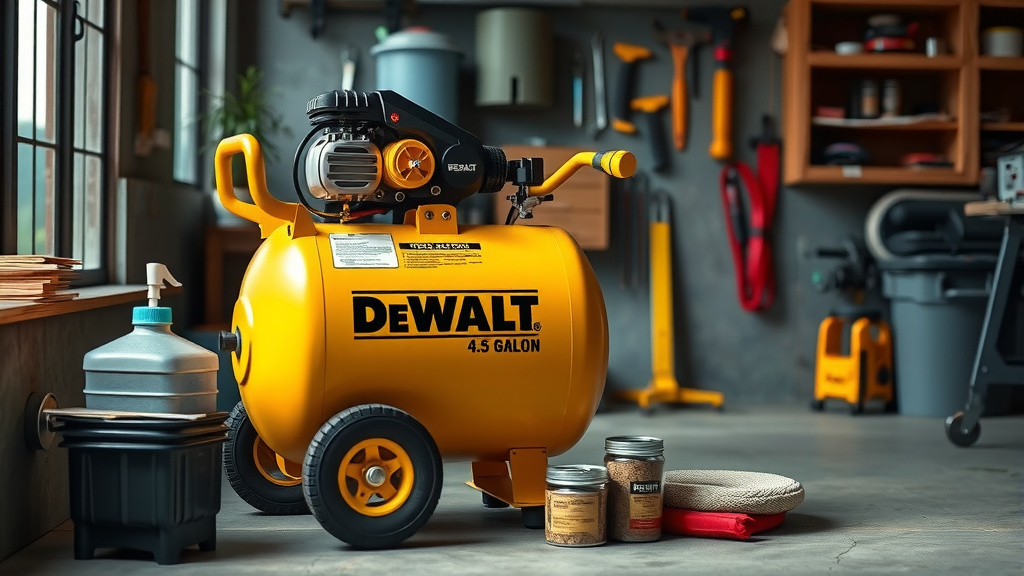
To use your DeWalt Air Compressor 4.5 Gallon, first connect your air hose and plug it into a grounded electrical outlet.
Next, adjust the pressure regulator to your tool’s requirement, allow the tank to fill, and then securely attach your air tool.
- Get started by unpacking your new DeWalt compressor and checking for any shipping damage.
- Connect your air hose securely to the universal coupler and plug the unit into a standard outlet.
- Prioritize safety by wearing eye and ear protection before operating the compressor.
- Adjust the pressure output using the regulator dial to match your specific air tool’s needs.
- Remember to drain moisture from the tank regularly to keep your compressor in top shape.
How To Use DeWalt Air Compressor 4.5 Gallon?
Using your DeWalt 4.5 Gallon air compressor involves a few straightforward steps: setting it up safely, understanding its controls, and performing basic maintenance. It’s simpler than you might think!
Unboxing Your New Compressor
When your new DeWalt 4.5-gallon air compressor arrives, take a moment to inspect the packaging. Look for any dents or tears. Carefully remove the compressor from its box, making sure all components are present.
You’ll typically find the compressor unit itself, an owner’s manual, and perhaps some initial fittings. Keep that manual handy; it’s a great resource for specific details.
Understanding Key Components
Before you even plug it in, get familiar with your compressor’s parts. You’ll see the tank, the motor, the pressure gauges, the regulator, and the air outlet coupler. Knowing these helps you operate it confidently.
The tank holds the compressed air. The motor and pump work together to fill it. The gauges show tank pressure and regulated output pressure. The regulator lets you control air going to your tools. The coupler is where your air hose connects.
Safety First: Always Wear Protection
Operating an air compressor can be noisy and involves high-pressure air. That’s why safety gear is not optional. Always wear eye protection, like safety glasses, to shield against debris.
Ear protection, such as earmuffs or earplugs, is also very important. Compressors can produce significant noise, and prolonged exposure can damage your hearing (Mayo Clinic).
Essential Safety Checklist
- Wear safety glasses or goggles.
- Use hearing protection (earmuffs/earplugs).
- Ensure the work area is well-ventilated.
- Keep children and pets away from the operating unit.
- Verify the power cord is in good condition.
Choosing the Right Location
Where you place your compressor matters. Pick a flat, stable surface that can support its weight. It also needs to be in a dry area, away from rain or excessive moisture.
Adequate ventilation is another important factor. The motor needs to breathe to prevent overheating. Don’t operate it in an enclosed cabinet or directly against a wall.
Connecting Your Air Hose
Your DeWalt 4.5-gallon compressor has a universal quick-connect coupler. This is where your air hose attaches. Simply push the collar back, insert the hose fitting, and release the collar. It should snap firmly into place.
Make sure the connection is snug. A loose connection will cause air leaks, reducing efficiency and making your compressor work harder. A little tug can confirm it’s secure.
Plugging It In: Powering Up
Always plug your compressor into a grounded electrical outlet. A three-prong plug indicates it’s grounded. Avoid using extension cords if possible.
If you absolutely need an extension cord, use a heavy-duty, outdoor-rated cord that matches the compressor’s power requirements. An undersized cord can cause voltage drop and motor damage (electrical safety guidelines).
Setting the Air Pressure Regulator
This is a key step. Each air tool you use will have a recommended operating pressure, usually listed in PSI (pounds per square inch). Locate the regulator knob on your compressor.
Turn the knob to adjust the output pressure to match your tool’s needs. You’ll see the regulated pressure gauge move as you turn the knob. Many experts suggest setting it slightly below the tool’s maximum to start, then adjusting up if needed.
Allowing the Tank to Fill
Once plugged in and the regulator is set, turn on the compressor. You’ll hear the motor start working, and the tank pressure gauge will begin to climb. The compressor will automatically shut off when it reaches its maximum pressure.
This initial fill can take a few minutes. Don’t attach your air tool until the tank is fully pressurized and the compressor has cycled off. This ensures you have a full reserve of air.
Attaching Your Air Tool
With the tank full and the pressure regulated, you can now attach your air tool. Connect your tool’s fitting to the end of your air hose. Again, ensure it’s a secure, leak-free connection.
Now you are ready to use your air-powered nail gun, tire inflator, or other pneumatic tool. Remember to always follow the specific safety and operation instructions for your chosen air tool as well.
Common Uses for Your DeWalt 4.5 Gallon Compressor
A 4.5-gallon tank is quite versatile for many home and shop tasks. It’s perfect for inflation, powering nail guns, and light painting jobs. You might be surprised by all it can do.
We found that this size is a great balance between portability and sufficient air capacity for common DIY projects. It’s often called a “pancake” or “hot dog” style compressor for its shape, making it easy to move around.
| Air Tool Type | Typical PSI Range | Common Uses |
|---|---|---|
| Brad Nailer | 70-100 PSI | Trim work, small projects |
| Stapler | 70-100 PSI | Upholstery, screening |
| Tire Inflator | 10-120 PSI | Car, bike tires, sports balls |
| Blow Gun | 30-90 PSI | Cleaning dust, drying surfaces |
| Small Paint Gun | 20-50 PSI | Touch-ups, crafts |
When Your Compressor Cycles On and Off
Don’t be alarmed if your compressor turns on by itself while you’re using a tool. This is normal. It means the tank pressure has dropped below a certain threshold, and the pump is refilling it.
This automatic cycling keeps a consistent supply of air to your tools. If it cycles too often, your tank might be too small for the tool, or you might have an air leak somewhere.
Draining the Tank: A Key Maintenance Step
After each use, or at least weekly if used often, you must drain the moisture from the tank. There’s a drain valve at the bottom. Open it slowly to let out compressed air and water.
Why is this important? Compressed air creates condensation inside the tank. If left undrained, this water can cause rust and shorten the life of your compressor. Research often connects tank draining to extended compressor longevity (industry standards).
Storing Your DeWalt Compressor
Once you’re done and the tank is drained, disconnect your air hose and power cord. Store the compressor in a clean, dry location. Keeping it out of extreme temperatures helps protect its components.
Wiping it down to remove dust and debris also helps. Treating your tools with a little care ensures they are ready for the next job.
Conclusion
Mastering your DeWalt 4.5 Gallon air compressor is a straightforward process that truly expands your DIY capabilities. By focusing on correct setup, prioritizing safety, and performing routine maintenance like tank draining, you ensure a reliable and long-lasting tool.
Remember, the goal is always efficient and safe operation. Take your time, get familiar with its features, and you’ll find this compressor to be an incredibly helpful addition to your workshop.
How do I know what PSI to set my DeWalt 4.5 gallon compressor to?
You should always check the manufacturer’s recommendations for the specific air tool you are using. This information is typically found in your air tool’s user manual or printed directly on the tool itself. The DeWalt compressor’s regulator gauge allows you to precisely set this output.
Can I use an impact wrench with a 4.5-gallon air compressor?
While a 4.5-gallon compressor can technically power an impact wrench for very brief bursts, it generally isn’t ideal for continuous use. Impact wrenches require a high volume of air (CFM) which a smaller tank may struggle to supply consistently, leading to frequent cycling and reduced efficiency. It’s better suited for smaller tasks.
Why is my DeWalt compressor making too much noise?
A certain level of noise is normal for air compressors due to the motor and pump. However, if it’s excessively loud or unusual, it could indicate an issue. Check for loose parts, ensure it’s on a stable surface, and verify the air filter isn’t clogged. Always wear hearing protection as a standard practice.
How often should I check the air filter on my compressor?
It’s a good practice to check your air filter regularly, especially if you use your compressor frequently or in dusty environments. Many experts recommend inspecting it monthly and cleaning or replacing it as needed. A clean filter ensures optimal performance and prevents dust from entering the motor.
What kind of oil does a DeWalt 4.5 gallon air compressor use?
Most DeWalt 4.5 gallon air compressors are oil-free, meaning they do not require oil for lubrication. Always consult your specific model’s owner’s manual to confirm if your unit is oil-free or requires a specific type of compressor oil. Using the wrong type of oil, or adding oil to an oil-free unit, can cause damage.