
How To Use Goodyear Air Compressor?
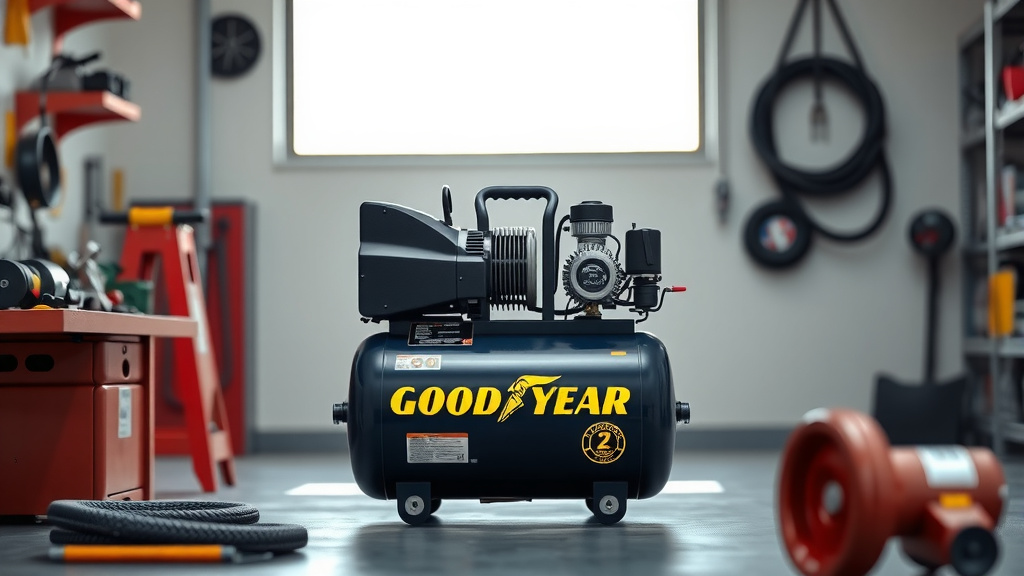
To use a Goodyear air compressor, first ensure it’s on a level surface, connect it to a suitable power source, and always read your specific model’s manual.
Proper operation involves attaching the correct air tool, adjusting the pressure regulator to your task’s requirement, and consistently observing safety measures.
Here’s a quick overview of what you’ll find in this guide:
- Before you start, make sure your compressor is stable and plugged in safely.
- Connect your air hose and chosen tool securely before any operation.
- Always adjust the pressure (PSI) to match the needs of your specific job.
- Prioritize safety by wearing eye and ear protection during use.
- Regularly drain the tank and check filters to keep your unit performing well.
How To Use Goodyear Air Compressor?
Using a Goodyear air compressor is straightforward when you follow a few key steps. It means understanding your specific model, setting it up correctly, and always prioritizing your safety.
Understanding Your Goodyear Compressor Model
Goodyear offers many air compressor types, from portable units to larger stationary models. Each one is designed for different tasks, so knowing your model helps you use it best. Some are oil-lubricated, others are oil-free.
You’ll find key components like the motor, air tank, and pressure gauges. Knowing what each part does makes you a more confident user. Think of it like knowing the controls of your car.
Safety First: Always Prioritize
Before you even plug in your unit, safety must be your top concern. We found that most accidents with air tools are preventable with proper precautions (Occupational Safety and Health Administration).
Always wear personal protective equipment (PPE), like safety glasses to protect your eyes from debris. Earplugs or earmuffs are also a good idea, as compressors can be noisy. It’s like wearing a helmet when riding a bike; it’s just smart.
Prepare your work area by ensuring it’s well-lit and free of clutter. Keep children and pets away from the operating compressor. You want plenty of room to move safely.
Setting Up Your Compressor
Finding the right spot for your compressor is important. Place it on a stable, level surface to prevent tipping. Many experts say a garage floor or workshop bench is ideal.
Next, connect it to a suitable power outlet. Make sure the electrical circuit can handle the compressor’s power demands. Using a proper extension cord, if needed, with the correct gauge is essential.
If your Goodyear model is oil-lubricated, check the oil level before first use and periodically thereafter. The manual will show you the correct dipstick or sight glass to use. Just like checking your car’s oil.
Attaching Air Tools
This is where the fun begins! Your compressor needs air tools to do its work. You’ll need to connect an air hose to the compressor’s outlet.
Air hoses attach using quick-connect couplers and fittings. Simply pull back the collar on the coupler, insert the male fitting from the hose or tool, and release. Give it a gentle tug to ensure it’s secure.
Always make sure your connections are tight. A loose connection can cause air leaks, which reduces efficiency and creates a safety hazard. It’s like ensuring a garden hose is properly attached before turning on the water.
Operating Your Compressor Safely
Once everything is connected, it’s time to power on your Goodyear air compressor. Simply flip the main power switch. You’ll hear it build pressure in the tank.
Before using a tool, you need to adjust the pressure. Most compressors have a regulator knob and a gauge. Turn the knob until the gauge shows the recommended PSI for your specific air tool. We found that most tools have their optimal pressure listed in their manual (tool manufacturers typically provide this).
Keep an eye on the tank pressure gauge while working. It tells you how much air is available. Your compressor will cycle on and off to maintain the set pressure. This is completely normal.
Different Uses for Your Compressor
Your Goodyear air compressor is a versatile tool for many projects around the home or shop. Think of it as a power source for a whole suite of gadgets.
One common use is tire inflation for cars, bikes, or sports equipment. It’s much faster than a hand pump. You’ll simply attach an inflation chuck to your air hose.
For DIY projects, a compressor can power nail guns for framing or finish work. It takes the effort out of driving nails. You might also use it for cleaning dust from workshops or drying surfaces with a blow gun.
Some larger compressors can even be used for painting with the right spray gun. Always check your compressor’s capacity and the tool’s requirements. This ensures a smooth painting job.
Table: Common Compressor Tools & Uses
Here’s a quick guide to some popular air tools and their typical uses, along with suggested pressure ranges:
| Tool Type | Common Use | Typical PSI Range |
|---|---|---|
| Tire Inflator | Inflating vehicle tires, bike tires, sports balls | 20-90 PSI (depends on item) |
| Blow Gun | Cleaning debris, drying surfaces, dusting workspaces | 40-70 PSI |
| Brad Nailer | Light woodworking, trim installation, crafts | 70-100 PSI |
| Impact Wrench | Loosening/tightening lug nuts, heavy fastening | 90-110 PSI |
| Paint Sprayer (HVLP) | Applying paint, stains, clear coats | 20-50 PSI |
Maintenance Essentials for Longevity
Just like any tool, your Goodyear compressor needs care to last a long time. The most important task is draining the tank. Condensation builds up inside the tank, leading to rust if not removed.
Locate the drain valve, usually at the bottom of the tank. Open it after each use or daily if you use it frequently. You’ll see water and air expel. Close it once only air comes out. This step is like watering a plant; it keeps it healthy.
Regularly check the air filter and clean or replace it as needed. A clogged filter makes the compressor work harder. If your model is oil-lubricated, follow the manual for oil change intervals.
Troubleshooting Common Issues
Don’t panic if your compressor acts up. Many issues have simple fixes. If you experience a sudden pressure drop, first check for leaks in your hose or connections. A soapy water solution sprayed on connections will show bubbles where air is escaping.
If the compressor runs constantly without building pressure, it might be a stuck check valve or a serious leak. We found that small leaks are often at fittings. If your compressor has no power, check the circuit breaker or fuse. Make sure the unit is properly plugged in.
Checklist for Optimal Performance
A quick check before and after use can make a big difference. Here’s a simple checklist:
- Is the power cord free of damage and properly grounded?
- Are all quick-connect fittings and hose clamps fully secured?
- Is the air tank completely drained of any moisture?
- Have you inspected the air filter for dirt or blockages?
- Is your working area clear, safe, and well-ventilated?
- Are you wearing appropriate eye and hearing protection?
Conclusion
Using your Goodyear air compressor effectively and safely is all about preparation, understanding your tools, and consistent maintenance. By following these practical steps, you’ll not only ensure smooth operation but also extend the life of your valuable equipment. Remember, a well-cared-for compressor is a reliable compressor. Enjoy your projects!
How do I know what PSI to set for my air tool?
Most air tools, like nail guns or impact wrenches, will have a recommended operating PSI (pounds per square inch) listed directly on the tool, in its instruction manual, or on the packaging. Always refer to these guidelines to ensure optimal performance and avoid damage to the tool or your work. Typically, a regulator on your compressor lets you adjust this pressure.
Is it normal for my air compressor to run intermittently?
Yes, it’s completely normal for your air compressor to cycle on and off while you’re using it or even when it’s just sitting idle with air in the tank. This is how the automatic pressure switch works. It maintains the desired air pressure in the tank by kicking on when the pressure drops below a certain point and shutting off once it reaches its upper limit. This preserves power and prevents over-pressurization.
Why is it important to drain the air tank after use?
Draining the air tank after each use is crucial because as the compressor operates, moisture in the air condenses inside the tank. If this water isn’t drained regularly, it can lead to rust and corrosion within the tank, weakening its structure and potentially causing a dangerous rupture. It also prevents rust particles from being carried into your air tools, which can cause damage.
Can I use any extension cord with my air compressor?
No, you should not use just any extension cord. Air compressors draw a significant amount of power, especially during startup. Using an undersized or too-long extension cord can lead to voltage drop, overheating, and potential fire hazards. Always use a heavy-duty extension cord with the correct gauge (thickness) and length specified in your Goodyear compressor’s manual. A shorter, thicker cord is generally better.
What kind of maintenance does an oil-free air compressor need?
Oil-free air compressors require less maintenance than oil-lubricated models, but they still need care. The main tasks include regularly draining the air tank of condensation and inspecting/cleaning or replacing the air filter. Since there’s no oil, you don’t need to check or change oil levels. Always consult your specific Goodyear model’s manual for precise maintenance schedules.
