
How Many Watts Does A 2.5 HP Air Compressor Use?
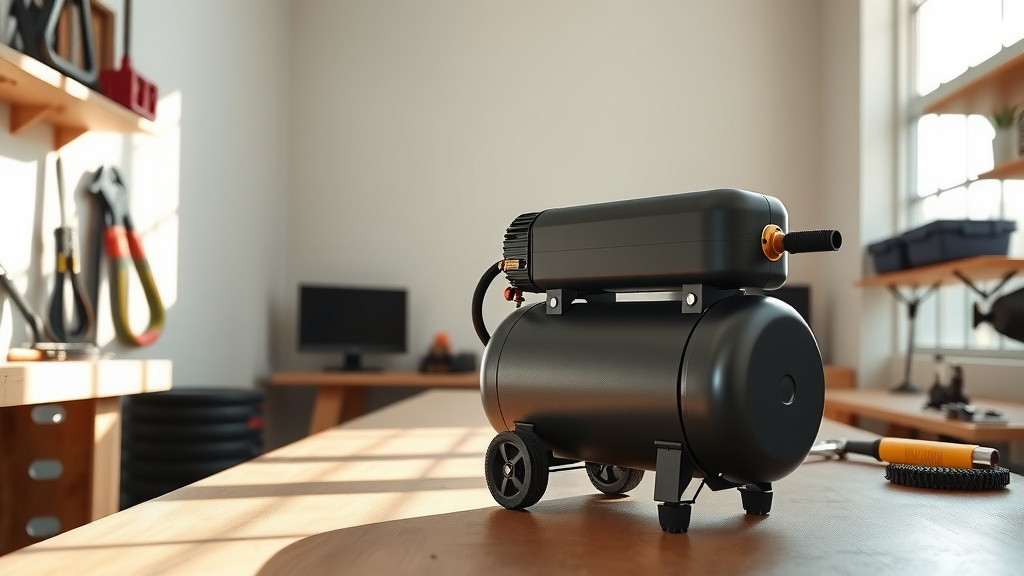
A 2.5 HP air compressor typically uses between 1500 to 1875 watts of power during operation.
This wattage can fluctuate based on factors like motor efficiency, load, and the voltage supply to your unit.
- A 2.5 horsepower air compressor generally draws 1500 to 1875 running watts.
- Starting wattage can be significantly higher, often double the running watts for a brief moment.
- Several factors, including motor efficiency and voltage, affect the actual power consumption.
- Most 2.5 HP compressors require a dedicated 15-amp, 120-volt circuit for safe operation.
- Understanding these power needs helps you choose the correct circuit and prevent tripping breakers.
You’re looking to understand the power needs of your 2.5 HP air compressor, and that’s a smart move. Knowing how many watts your compressor uses is key for electrical safety and planning. It helps you avoid tripped breakers and ensure your power supply is up to the task.
Think of it like knowing how much fuel your car needs. You don’t want to run out, or worse, put the wrong type in! We’re here to help you navigate the watts, amps, and volts of your compressor with practical, easy-to-understand information.
How Many Watts Does A 2.5 HP Air Compressor Use?
A 2.5 horsepower (HP) air compressor will generally draw around 1500 to 1875 watts when running. This range converts from the HP rating, but real-world usage can vary a bit.
This running wattage is what your compressor consistently uses once it’s up and running. It’s the “cruising speed” for your compressor’s electrical needs.
Understanding Horsepower and Watts
Horsepower (HP) is a measure of mechanical power, while watts measure electrical power. There’s a common conversion rule: 1 HP equals about 746 watts. However, motors aren’t 100% efficient, so they need more electrical input to produce that mechanical output.
That’s why a 2.5 HP motor doesn’t just use 1865 watts (2.5 x 746). It needs extra power to overcome inefficiencies, heat loss, and internal friction. You’re essentially paying for that extra effort to do the work.
The Real-World Wattage Calculation
When you account for typical motor efficiency, which often ranges from 75% to 85%, the wattage goes up. We found that for a 2.5 HP motor, you’re usually looking at an electrical draw closer to 600-750 watts per HP. This gives us our 1500 to 1875-watt range for a 2.5 HP unit.
Always check your compressor’s nameplate or manual for its exact wattage or amperage. This label is your most reliable source of information for your specific model.
Running Watts vs. Starting Watts: The Crucial Difference
Here’s something important to remember: your compressor needs a lot more power to start than to run. Think about pushing a heavy cart from a standstill versus keeping it rolling. That initial push requires extra energy.
The starting wattage, or surge wattage, can be two or three times higher than the running watts. For a 2.5 HP compressor, this could mean a brief spike of 3000 to 5000 watts. This surge is why circuits often trip when a compressor first kicks on.
Why Starting Watts Matter for Your Circuit
If your electrical circuit can’t handle this brief surge, your breaker will trip, shutting everything down. It’s like trying to drink from a firehose with a small straw. The circuit protects itself from being overloaded, which is a good thing for preventing electrical hazards.
This is why understanding both running and starting watts is key when you’re deciding where to plug in your compressor. You need enough “headroom” on your circuit.
What Factors Influence a Compressor’s Wattage?
Several things can change how many watts your 2.5 HP compressor actually uses. It’s not a fixed number, but more of a dynamic range. Let’s look at some key influences:
- Motor Efficiency: A more efficient motor draws less power for the same output.
- Voltage Supply: If your voltage is lower than ideal, the compressor might draw more amps (and thus more watts) to compensate.
- Load on the Compressor: The harder your compressor works (e.g., trying to reach high PSI quickly), the more power it consumes.
- Age and Condition: Older motors or those with worn components might be less efficient and draw more power.
- Ambient Temperature: Extreme temperatures can affect motor performance and efficiency.
The Impact of Voltage Fluctuation
Electricity isn’t always perfectly stable. If your wall outlet is supplying, say, 110V instead of a full 120V, your compressor’s motor might draw more amperage to achieve its stated horsepower. More amps at a slightly lower voltage can still lead to higher actual wattage use. It’s a balance.
Circuit Breaker Requirements for a 2.5 HP Compressor
Given the typical wattage, most 2.5 HP air compressors are designed to run on a standard 120-volt household circuit. However, you’ll almost certainly need a dedicated 15-amp or even a 20-amp circuit.
| Compressor HP | Approx. Running Watts | Typical Starting Watts | Minimum Circuit Amperage (120V) |
|---|---|---|---|
| 1.0 HP | 750 – 950 W | 1500 – 2000 W | 15 Amps |
| 2.5 HP | 1500 – 1875 W | 3000 – 5000 W | 15-20 Amps (Dedicated) |
| 3.0 HP | 1800 – 2250 W | 3600 – 6000 W | 20 Amps (Dedicated) |
Many experts say it is best to have a dedicated circuit for your air compressor. This means no other appliances or lights share that specific circuit. This prevents other devices from drawing power and potentially contributing to an overload when your compressor starts.
Why a Dedicated Circuit is Your Best Friend
Imagine trying to share a single slice of pizza with five friends. Everyone gets a tiny bit. Now imagine having your own slice. That’s the difference a dedicated circuit makes. It gives your compressor all the power it needs, without competition.
If you’re unsure about your home’s electrical capacity, it’s always a good idea to consult a qualified electrician. They can verify your wiring and ensure your setup is safe and compliant with local electrical codes (Electrical Code standards).
Tips for Efficient Compressor Use and Power Management
You can manage your compressor’s power usage effectively with a few simple habits. It’s all about making your compressor work smarter, not harder.
- Regular Maintenance: Keep your compressor well-maintained. Clean filters and proper oil levels (if applicable) help the motor run more efficiently.
- Check for Leaks: Air leaks in hoses or fittings make your compressor run more often. Fixing them saves power.
- Match Tool to Compressor: Don’t try to run a heavy-duty air tool with a compressor that’s too small. This overworks the motor.
- Proper Storage: Storing your compressor in a moderate temperature can help with its initial startup and overall performance.
Is Your Extension Cord Up to the Task?
If you use an extension cord, make sure it’s rated for the compressor’s amperage and is as short as possible. A cord that’s too thin or too long can cause a voltage drop, forcing your compressor to draw more amps. This can lead to overheating and damage to both the cord and the compressor.
Always opt for a heavy-duty, outdoor-rated extension cord with a low gauge number (e.g., 12-gauge). The lower the gauge, the thicker the wire and the better it handles power.
Conclusion
Understanding “How Many Watts Does A 2.5 HP Air Compressor Use?” is essential for safe and efficient operation. You now know that a 2.5 HP unit typically runs on 1500 to 1875 watts, with a significant surge during startup. This knowledge empowers you to select the right circuit, manage power effectively, and ensure your compressor serves you reliably.
Remember, your compressor is a powerful tool. Treating its electrical needs with respect ensures it performs well and keeps your workspace safe. Happy compressing!
What is the typical amperage of a 2.5 HP air compressor at 120 volts?
At 120 volts, a 2.5 HP air compressor typically draws between 12.5 to 15.6 amps during running operation. Always check the specific compressor’s nameplate, as this can vary slightly by model.
Can I plug a 2.5 HP air compressor into any standard wall outlet?
While a standard wall outlet is typically 120V, it might only be on a 15-amp circuit shared with other devices. For a 2.5 HP air compressor, it’s highly recommended to use a dedicated 15-amp or 20-amp circuit to handle the starting surge without tripping the breaker.
Does the tank size affect the wattage usage of an air compressor?
No, the tank size itself does not directly affect the wattage drawn by the motor. The wattage is determined by the horsepower of the motor. A larger tank will simply allow the compressor to run less frequently because it stores more compressed air, not that it uses more power per run cycle.
How do I find the exact wattage of my specific 2.5 HP air compressor?
The most accurate way to find your compressor’s wattage is to check the manufacturer’s nameplate or product manual. It will often list the operating amperage, which you can multiply by the voltage (e.g., Amps x Volts = Watts) to get the precise wattage.
Is it possible to reduce the wattage consumption of my 2.5 HP air compressor?
You can’t change the motor’s design wattage, but you can minimize how often it runs or how hard it works. This includes regularly checking for air leaks, using appropriate tools for the compressor’s capacity, and maintaining the unit properly. These steps contribute to more efficient overall power usage.
