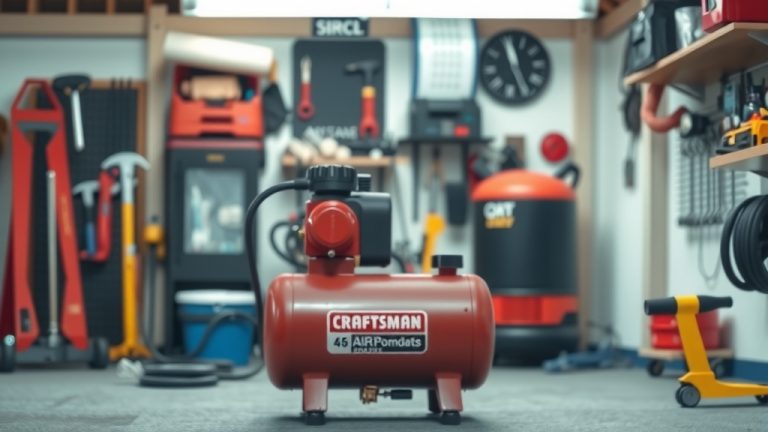
How To Compare Air Compressors?
To compare air compressors effectively, focus on key specifications like CFM (Cubic Feet per Minute), PSI (Pounds per Square Inch), horsepower, and tank size.
The best way to compare air compressors is by matching their performance metrics directly to your specific tool requirements and usage patterns.
Here’s a quick summary to guide your air compressor comparison:
- Always prioritize CFM and PSI values to match your air tools.
- Tank size influences how long you can use tools continuously.
- Consider if you need an oil-lubricated model for durability or an oil-free one for less maintenance.
- Think about where you’ll use it – noise levels and portability matter.
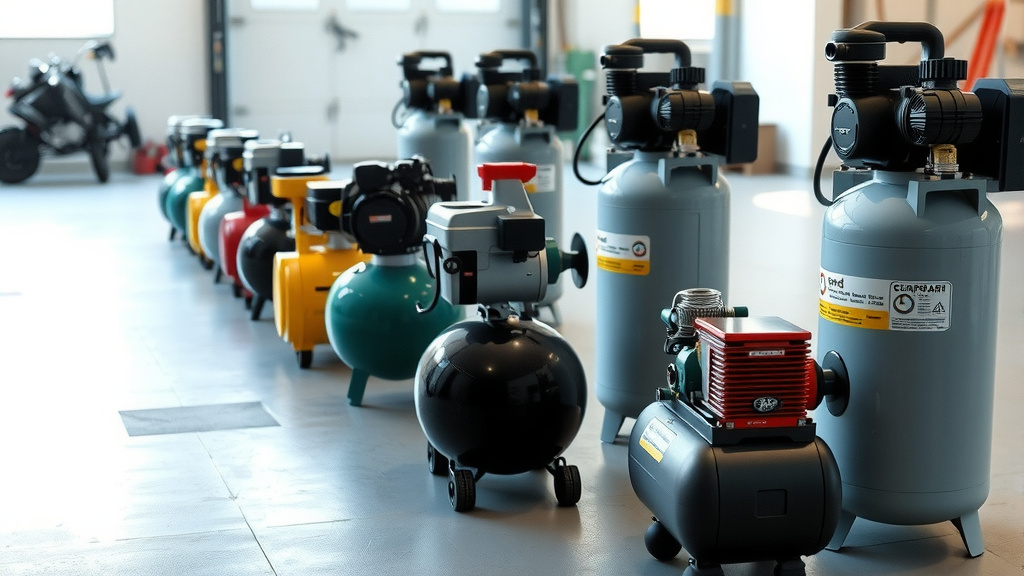
- Match the compressor’s type (pancake, hot dog, twin stack) to your space and job needs.
How To Compare Air Compressors?
Comparing air compressors means looking beyond the sticker price. It involves understanding specific measurements and matching them to what you genuinely need for your projects.
You want a compressor that supports your work, not one that constantly struggles or overpowers the task.
Why Comparing Air Compressors Matters for You
Think of it this way: buying the wrong air compressor is like trying to drive a nail with a sledgehammer or build a house with a toy hammer. It’s either overkill or underkill. You need the right tool for the job.
This comparison journey ensures you get a compressor that’s just right.
Avoid Underpowering Your Tools
Have you ever had an air tool that just feels sluggish? That often happens when your compressor can’t keep up. It’s like trying to run a marathon on a glass of water.
Matching your compressor’s output to your tools prevents those frustrating slowdowns.
Save Money and Frustration
A compressor that’s too small will work constantly, wear out quickly, and waste electricity. One that’s too big costs more upfront and can be harder to move around.
Doing your homework saves you both money and headaches in the long run, as many experts agree (Energy Star).
Understanding Key Air Compressor Specs
Air compressors come with several numbers stamped on them. These aren’t just random figures; they tell you the machine’s true capability. Let’s break down the most important ones.
Think of these specs as the compressor’s language; once you understand it, you can pick the perfect one.
CFM: Your Air Compressor’s Breath
CFM stands for Cubic Feet per Minute. This measurement tells you how much air your compressor can deliver. It’s like the lung capacity of your machine.
If your air tools need lots of air to run, you’ll need a compressor with a higher CFM.
PSI: The Air Compressor’s Punch
PSI (Pounds per Square Inch) indicates the pressure at which the air is delivered. It’s the force behind the air, like how hard a punch lands.
Most air tools will list a required PSI. You need a compressor that can meet or exceed this number.
The CFM @ PSI Connection
You’ll often see CFM listed with a corresponding PSI, like “4 CFM @ 90 PSI.” This is important! The CFM rating changes based on the pressure.
Always compare the CFM at the PSI your tools require, not just the peak CFM.
Horsepower: Raw Power Measurement
Horsepower (HP) generally indicates the strength of the compressor’s motor. More HP often means more potential air output.
While important, don’t let HP be your only guide. Sometimes a lower HP motor with a very efficient pump can outperform a higher HP, less efficient one (Consumer Reports).
Tank Size: How Much Air Can You Store?
The tank size, measured in gallons, tells you how much compressed air the unit can store. Think of it as a battery for your air.
A larger tank means the compressor runs less often for short bursts of air, but it also takes longer to fill initially.
Continuous vs. Intermittent Use
For tools that require a steady, continuous stream of air, like sanders or grinders, a larger tank is beneficial. It provides a buffer.
For intermittent use, like nailing or inflating tires, a smaller tank might be perfectly fine, as the tank can refill between uses.
Oil-Lubricated vs. Oil-Free: Which Is Right?
This is a big choice with implications for maintenance and longevity. Oil-lubricated compressors typically run quieter and have a longer lifespan.
They do require regular oil changes and checking, similar to a car engine. Oil-free models are lighter, require less maintenance, and are often more portable.
However, oil-free compressors can be louder and might not last as long in heavy-duty applications. We found that many users choose oil-free for casual use, while pros often go with oil-lubricated.
Noise Levels and Portability Considerations
Where will you use your air compressor? In a quiet garage? On a noisy job site? These questions guide your decision on noise and portability.
Your ears will thank you for considering the noise factor upfront!
Decibels: A Quieter Workspace?
Compressors can be loud, often reaching 80-90 decibels, which is like a lawnmower. Some “quiet” models exist, operating closer to 60-70 decibels (like a normal conversation).
If you’re working indoors or for long periods, a quieter model could be a game-changer for your comfort.
Wheels and Handles: Easy Moving?
If your projects take you around the workshop or to different job sites, portability is key. Look for models with sturdy wheels and comfortable handles.
Even small compressors can be heavy, so good mobility features are genuinely helpful.
Matching the Air Compressor to Your Tools
This is where all the numbers come together. Always check the CFM and PSI requirements for your most demanding air tool first.
Your compressor must meet or exceed these numbers to ensure your tools run efficiently.
- Painting requires high CFM at low PSI.
- Impact wrenches need moderate CFM at high PSI.
- Nail guns need low CFM at moderate PSI.
- Sanders often demand higher, consistent CFM.
- Tire inflation usually needs moderate PSI and lower CFM.
Comparing Compressor Types: A Quick Look
Different designs serve different needs. Here’s a simplified table to help you compare common air compressor styles.
Each type has strengths, so pick what fits your work area and mobility needs best.
| Type | Typical Use | Portability | Tank Shape |
|---|---|---|---|
| Pancake | Light duty, nailing, inflating | High | Flat, round |
| Hot Dog | Medium duty, carpentry, painting | Medium | Long, horizontal |
| Twin Stack | Medium-heavy duty, framing, automotive | Medium-High | Two horizontal tanks |
| Vertical / Stationary | Heavy duty, garage, shop use | Low | Tall, upright |
Beyond the Numbers: Other Factors to Weigh
While specs are vital, other practical aspects affect your overall experience. Don’t overlook these details when making your decision.
Sometimes, the little things make a big difference in how much you enjoy using your new equipment.
Duty Cycle: How Long Can It Run?
The duty cycle tells you how long a compressor can run continuously before needing to cool down. It’s often expressed as a percentage, like “50% duty cycle.”
For professional, sustained use, a higher duty cycle is absolutely essential. Many home compressors have lower duty cycles.
Brand Reputation and Warranty
Researching a brand’s reputation for reliability and customer service can save future headaches. Look up reviews and see what current owners say.
A good warranty offers peace of mind. It shows the manufacturer stands behind their product. Many experts say a longer warranty often reflects confidence in product quality (Consumer Reports).
A Quick Checklist for Your Comparison
Use this short checklist to keep your thoughts organized when looking at different models. It’s like your personal scorecard for compressors.
- Does the CFM @ PSI meet my most demanding tool’s requirement?
- Is the tank size appropriate for my typical usage (intermittent or continuous)?
- Do I prefer oil-lubricated (durability) or oil-free (low maintenance)?
- Is the noise level acceptable for my work environment?
- Are the portability features (wheels, handles) suitable for my needs?
- What is the brand’s reputation, and what kind of warranty does it offer?
Conclusion
Comparing air compressors doesn’t have to feel overwhelming. By focusing on CFM, PSI, tank size, and considering practical aspects like noise and portability, you can make a truly informed choice.
Remember, the goal is to find a compressor that works efficiently with your tools and fits comfortably into your workspace and budget. You’re now equipped to make that confident decision!
How much CFM do I really need?
You need to calculate the CFM requirements of your most air-intensive tool. Check its specifications, add about 10-20% for a safety margin, and ensure your compressor meets or exceeds that number. For instance, if your paint sprayer needs 8 CFM, aim for a compressor that delivers at least 9-10 CFM.
Is a higher PSI always better for an air compressor?
Not necessarily. While higher PSI means more pressure, most air tools operate optimally at 90 PSI. A compressor with a much higher max PSI than you need might just be costing you more without offering a practical benefit for your specific tools. Focus on the required PSI for your tools, not just the maximum an air compressor can generate.
What’s the difference between single-stage and two-stage compressors?
Single-stage compressors compress air once, while two-stage compressors compress it twice. The two-stage process allows for higher PSI, increased efficiency, and typically cooler operation, making them better for heavy-duty, continuous industrial or commercial applications. For most home or light workshop tasks, a single-stage compressor is sufficient.
How often should I drain my air compressor tank?
You should drain your air compressor tank after every use or at least daily if you use it frequently. Moisture accumulates inside the tank as air is compressed, and this can lead to rust and tank deterioration over time. Draining it regularly helps prevent corrosion and extends the life of your compressor.
Can I use an air compressor indoors?
Yes, you can use most air compressors indoors, but consider the noise level and ventilation. Oil-lubricated compressors can emit some oil mist, so good ventilation is important for air quality. Extremely loud compressors might be uncomfortable for indoor use, so a quieter, oil-free model is often preferred for indoor settings like a home garage or workshop.