
How To Put Air Compressor In Car?
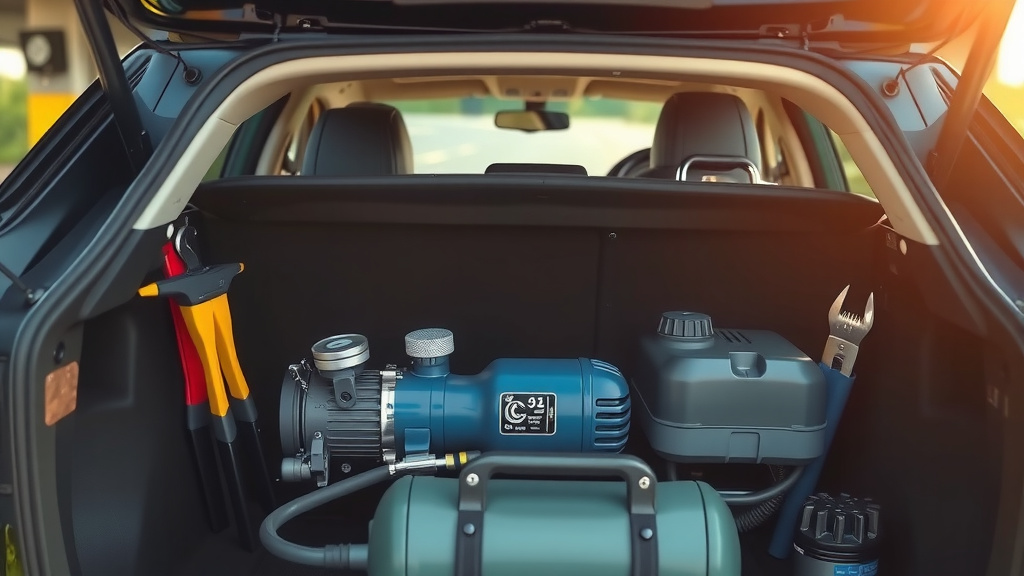
To put an air compressor in your car, simply plug its 12V power cord into your vehicle’s cigarette lighter outlet or connect its clamps directly to your car battery terminals.
Once powered, you attach the compressor’s air hose nozzle to your tire valve, set the desired pressure, and turn it on to inflate your tires quickly.
- A portable air compressor is a lifesaver for tire emergencies on the road.
- You can easily power most compressors using your car’s 12V accessory socket or battery.
- Store your compressor in a secure, accessible spot like your trunk or under a seat.
- Always check your tire’s recommended pressure before you begin to avoid over-inflation.
- Regular checks and proper use help keep your tires safe and extend their lifespan.
How To Put Air Compressor In Car?
Putting an air compressor in your car means more than just tossing it into the trunk; it involves knowing how to connect and use it effectively. We found that the process is straightforward, mainly involving power connection and proper hose attachment. You’ll be ready for unexpected low tires in no time.
Why Carry a Car Air Compressor?
Think of it as your tire’s personal assistant, always on standby. Ever been in a rush only to find a flat? A portable air compressor turns that frown upside down. It offers immense convenience and peace of mind for any driver.
It’s not just for emergencies, though. You can maintain optimal tire pressure, which improves fuel efficiency and extends tire life. Many automotive experts agree that properly inflated tires are safer and perform better (Automotive Safety Council). Isn’t that a great feeling?
Choosing Your Car Air Compressor
Selecting the right air compressor for your car isn’t tricky, but it does matter. You’ll typically find two main types: the compact 12V models and the more robust heavy-duty units. Which one fits your driving style best?
Most drivers find a portable 12V compressor perfect for everyday use. They’re small, lightweight, and plug right into your car’s power outlet. For larger vehicles or frequent off-road adventures, a heavy-duty model with battery clamps might be a better fit.
Here’s a quick look at common types:
| Feature | Portable 12V Compressor | Heavy-Duty Compressor |
|---|---|---|
| Power Source | Car’s 12V outlet | Car battery via clamps |
| Typical Use | Light cars, bikes, occasional use | Trucks, SUVs, frequent use, faster inflation |
| Inflation Speed | Slower, for small top-ups | Faster, for larger tires or flats |
| Portability | Very compact, easy to store | Larger, more robust, might need more space |
Where to Store Your Compressor Safely
You’ve got your compressor, now where should it live? The key is accessibility and security. You don’t want it rolling around, becoming a projectile during a sudden stop. We found that the trunk is a popular spot for most drivers.
Consider placing it in a dedicated storage bag or a compartment if your car has one. Some people prefer under a seat, which keeps it out of sight but still within reach. Just make sure it’s snug and won’t shift unexpectedly.
Connecting Your Compressor to Your Car
This is where the magic happens! Connecting your compressor is usually a breeze, but depends on your model. Most portable units are designed for simple plug-and-play. Are you ready for a quick power-up?
If you have a 12V compressor, simply insert the plug into your car’s cigarette lighter socket. For heavy-duty models, you’ll use alligator clamps. Attach the red clamp to the positive (+) terminal and the black clamp to the negative (-) terminal on your car battery. Always make sure your car’s engine is running when using battery clamps to avoid draining your battery (Manufacturer Guidelines).
Connection Checklist:
- Ensure your car engine is running (if using battery clamps) or ignition is on (for 12V sockets).
- Locate your car’s 12V outlet or battery terminals.
- Plug in the 12V cord or securely attach the battery clamps (red to positive, black to negative).
- Keep compressor on a stable, flat surface during operation.
- Avoid placing the compressor on soft surfaces that could block its vents.
Using Your Compressor: A Step-by-Step Guide
Okay, power connected, now let’s get those tires filled! Using the compressor is straightforward. Just follow these simple steps to ensure a safe and effective inflation.
Checking Tire Pressure First
Before you even touch the compressor, know your target. Look for the recommended tire pressure on a sticker inside your driver’s side door jamb or in your owner’s manual. This is your golden number, your guide to perfect inflation.
Attaching the Nozzle
Unscrew the cap from your tire’s valve stem. Then, firmly attach the compressor’s air hose nozzle to the valve stem. You might hear a slight hiss; that’s normal. Make sure it’s a tight, secure connection to prevent air leaks.
Inflating Your Tire
Turn on your compressor! Many models have a built-in gauge, or you can use a separate tire gauge. Watch the pressure climb and turn off the compressor when you reach your target. Don’t go over the recommended PSI; over-inflation can be dangerous.
Detaching and Storing
Once done, turn off the compressor. Quickly detach the nozzle from the valve stem and replace the valve cap. Allow the compressor to cool down before packing it away. Always store it neatly to protect the cords and hoses. You’re all set!
Troubleshooting Common Issues
Sometimes, things don’t go perfectly, and that’s okay. If your compressor isn’t working, check the fuse in your car’s 12V socket first. A blown fuse is a common culprit. Also, ensure the connection to the tire valve is snug; leaks prevent proper inflation.
Is it inflating slowly? Your tire might be very low, or the compressor might not be powerful enough for your tire size. Patience is key, or perhaps a stronger model might be a good idea for you.
Safety First: Important Reminders
Safety is not just a slogan; it’s a practice. Always operate your compressor in a well-ventilated area. The compressor can get warm during extended use, so avoid touching hot parts. Giving it a break during longer inflation jobs can also prevent overheating (Safety Data Sheets).
Never leave a compressor unattended while it’s running. Over-inflating a tire can lead to a blowout, which is incredibly dangerous. Always keep an eye on the pressure gauge. Your well-being is paramount.
Maintenance for Longevity
Just like your car, your compressor appreciates a little care. After each use, wipe down the unit to remove dirt or dust. Check the air hose for any cracks or damage, as this can lead to leaks. Proper maintenance ensures your tool is ready when you need it.
Store your compressor in a dry, cool place, away from extreme temperatures. Keeping the cords and hoses neatly wrapped prevents kinks and wear. A little love goes a long way in extending its life.
Conclusion
Having an air compressor in your car is truly a game-changer for tire maintenance and emergency preparedness. From quickly topping off a low tire to saving you from a roadside assistance call, its value is undeniable. Remember to choose the right type, connect it correctly, and use it safely. With these practical tips, you’re not just putting an air compressor in your car; you’re equipping yourself with a powerful tool for peace of mind on every journey.
Can I leave an air compressor in my car all the time?
Yes, you can generally leave a portable air compressor in your car. Many drivers store them in the trunk or under a seat. Just ensure it’s secured so it doesn’t move around while driving, and protect it from extreme heat or cold if possible, though most are built to withstand typical car temperatures.
How long does it take to inflate a car tire with a portable compressor?
Inflation time varies greatly based on the compressor’s power and how flat your tire is. A small, portable 12V compressor might take anywhere from 3 to 8 minutes to add 5-10 PSI to a moderately low tire. Filling a completely flat tire could take 10-15 minutes or longer.
Do air compressors need to be plugged into the car battery or just the 12V outlet?
It depends on your compressor model. Most compact, portable compressors plug directly into your car’s 12V accessory (cigarette lighter) outlet. Larger, more powerful heavy-duty models often connect directly to your car battery terminals using alligator clamps to draw more power.
What PSI should I inflate my car tires to?
You should always inflate your car tires to the manufacturer’s recommended pressure, not the maximum pressure listed on the tire itself. This recommended PSI (pounds per square inch) can usually be found on a sticker inside your driver’s side door jamb or in your car’s owner’s manual.
Is it okay to use a portable air compressor for several tires in a row?
Yes, for most portable compressors, it’s generally fine to inflate a few tires consecutively. However, if you notice the unit getting very hot, it’s a good idea to let it cool down for 10-15 minutes between tires to prevent overheating and extend its lifespan. Always follow the manufacturer’s specific guidelines.
