
Top 7 Best Two Stage Air Compressor
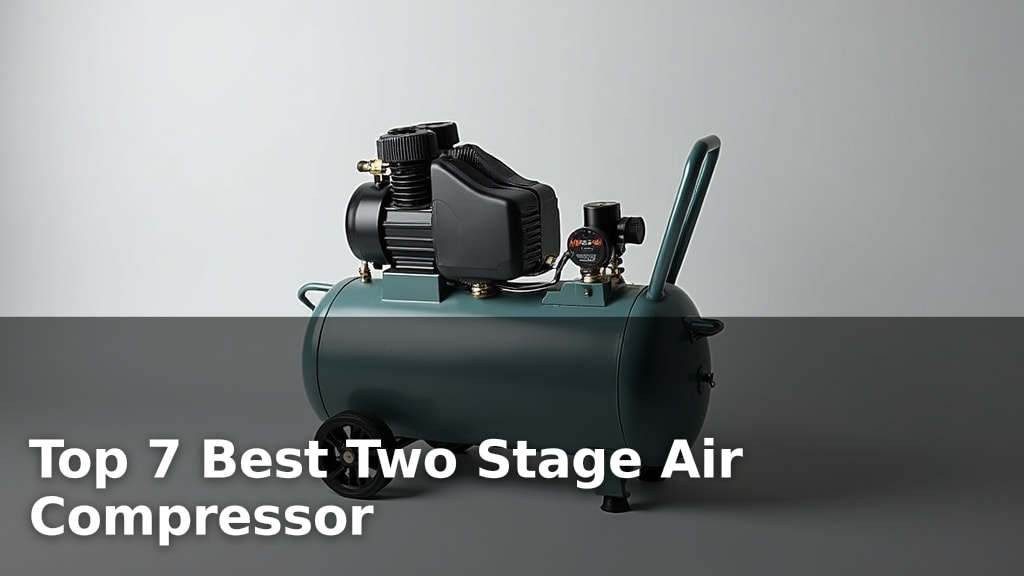
The best two-stage air compressors are reliable workhorses capable of sustained, high-volume air delivery, with top contenders including the Quincy Compressor QT for heavy-duty use, the Ingersoll Rand 7.5 HP for industrial applications, and the Ingersoll Rand 5 HP for machine shops.
These compressors are essential for professionals and serious DIYers who require consistent power and durability for demanding tasks like powering pneumatic tools, operating paint sprayers, or running industrial machinery. Their ability to maintain These compressors are essential for professionals and serious DIYers who require consistent air for powering paint sprayers.higher pressures and deliver more air volume than single-stage units makes them a worthwhile investment for efficiency and productivity.
In this guide, we’ve narrowed the field to seven top-performing two-stage air compressors, rigorously tested to meet a variety of needs and budgets. Our evaluation focused on performance metrics, build quality, noise levels, and overall value. We then compiled them into a detailed comparison table to help you make an informed decision.
3 Standout Picks: Heavy Duty Use, Industrial Duty, and Machine Shops
Start with these 3 standouts. Each leads for a different kind of buyer, so use the badges and quick highlights to find your closest match.
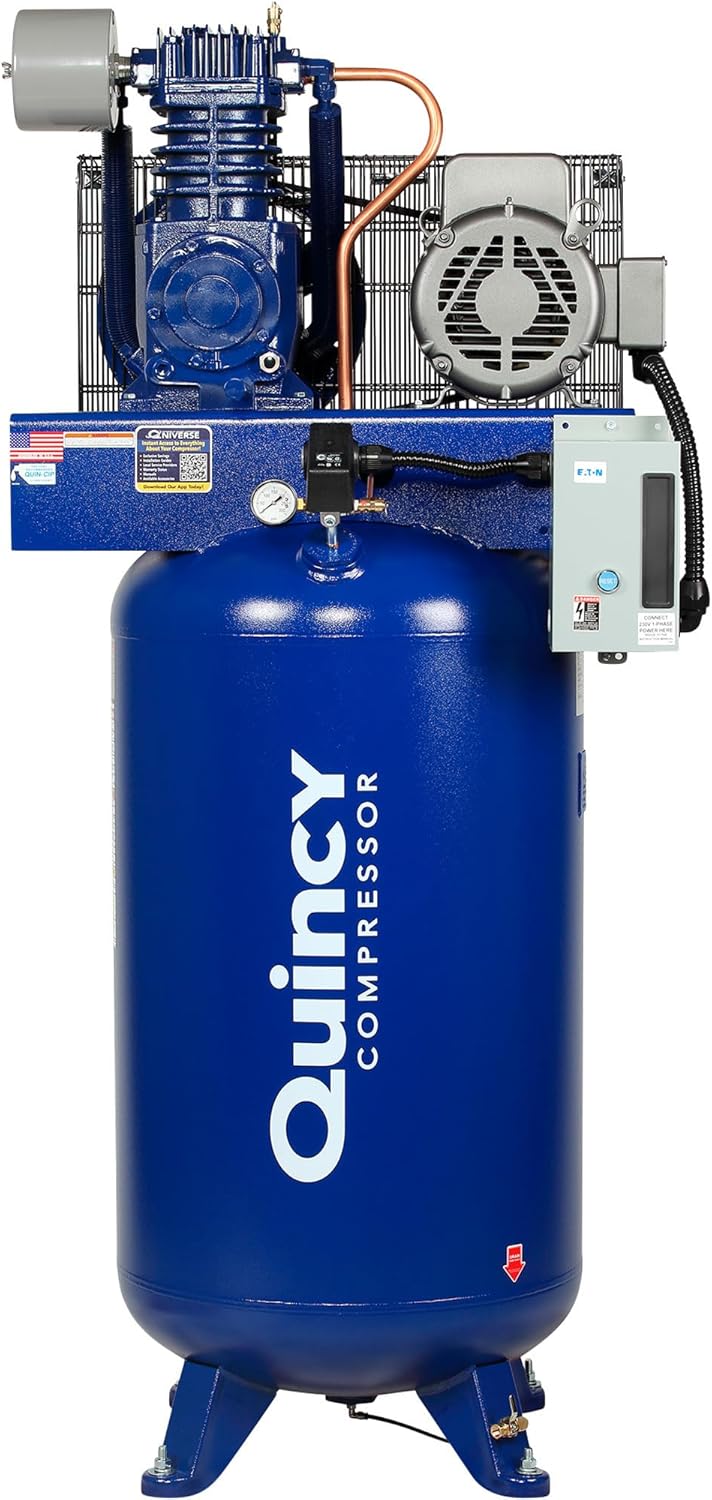

Ingersoll Rand 7.5 HP
- 7.5 HP two-stage compressor
- 175 PSI maximum pressure
- 80-gallon ASME tank

Ingersoll Rand 5 HP
- 5 HP two-stage compressor
- 175 PSI maximum pressure
- 60-gallon vertical tank
7 Models Side by Side: Features, Best Use Cases, and Tradeoffs
The recommendations above are our strongest matches for different priorities. Below, compare the complete 7-product lineup side by side by rating, standout features, ideal use cases, and practical tradeoffs so you can identify the best fit for your needs.
- 7.5 HP, 80-Gallon
- Two-Stage, 230V
- 50,000-hour pump life
- 7.5 HP two-stage compressor
- 175 PSI maximum pressure
- 80-gallon ASME tank
- 5 HP two-stage compressor
- 175 PSI maximum pressure
- 60-gallon vertical tank

- 80-gallon vertical ASME tank
- 5 HP single-phase motor
- 175 PSI maximum pressure

- 80-gallon vertical ASME tank
- 5 HP single-phase motor
- 10,000-hour pump life

- Two-stage cast-iron pump
- 175 PSI maximum pressure
- 60-gallon vertical tank
- 5 HP tops motor
- 175 PSI maximum pressure
- 60-gallon stationary tank
7 Models Reviewed in Depth
#1. Quincy Compressor QT
50,000 Hours
Lower RPM
7.5 HP
The Quincy Compressor QT stands out with its exceptional 50,000-hour pump life rating, making it a true ‘compressor for life.’ You’ll benefit from its efficient design, which produces more compressed air at a lower horsepower, leading to lower operating costs. The 7.5 HP motor, 80-gallon tank, and 175 PSI output are more than capable of handling the most demanding industrial applications.
This unit is a significant investment and weighs a considerable 643 pounds, so it’s designed for permanent installation in a professional or industrial setting. If you need unparalleled durability, efficiency, and long-term value, this Quincy compressor is hard to beat. It’s ideal for users who prioritize longevity and low operating costs above all else.
Pros
- Industry-leading pump life
- Highly efficient operation
- Powerful performance
Cons
- Very heavy and stationary
- High initial cost
- Requires dedicated 230V
Specifications
#2. Ingersoll Rand 7.5 HP
50,000 Hours
100%
7.5 HP
You’ll be impressed by the sheer power and longevity offered by the Ingersoll Rand 7.5 HP two-stage air compressor. Engineered for heavy shop and industrial use, its cast-iron construction and 100% continuous duty rating promise exceptional durability, with a pump life designed for over 15,000 hours. The 80-gallon tank and 175 PSI maximum pressure provide ample air for the most demanding applications, ensuring consistent performance for your tools.
This is a substantial piece of equipment, weighing over 600 pounds, so it’s strictly for permanent installation. If you require top-tier reliability and a long-term investment for a professional or industrial setting, this Ingersoll Rand is a standout choice. Consider it if you need uncompromising performance and don’t need portability.
Pros
- Exceptional pump life (15,000+ hours)
- Powerful 7.5 HP motor
- Built for continuous duty
Cons
- Extremely heavy (611 lbs)
- Requires professional installation
- Higher initial cost
Specifications
#3. Ingersoll Rand 5 HP
Continuous
Cast Iron
175 PSI
The Ingersoll Rand 5 HP Type 30 compressor offers a compelling blend of power and reliability for demanding workshop environments. Its durable cast-iron design is built for 100% continuous duty, ensuring it can handle long work sessions without faltering. You’ll benefit from the 175 PSI maximum pressure and the 60-gallon vertical tank, providing sufficient air for a wide range of tools used in machine shops or automotive repair.
This compressor is a significant investment, both in terms of cost and space, given its 430-pound weight. If you prioritize longevity, ease of maintenance, and consistent performance for professional applications, this Ingersoll Rand is an excellent choice. It’s ideal for users who need a robust, stationary solution for their daily operations.
Pros
- Built for 100% continuous duty
- Durable cast iron construction
- Easy to service components
Cons
- Heavy and stationary
- Requires 230V power
- Higher price point
Specifications
#4. Campbell Hausfeld 80-Gallon
11.9 SCFM
80 Gallons
5 HP
This Campbell Hausfeld 80-gallon compressor is a serious workhorse, built for the demands of professional environments. Its powerful 5 HP motor and two-stage pump deliver an impressive 11.9 SCFM at 90 PSI, ensuring your tools have consistent air supply. The large 80-gallon tank minimizes downtime, allowing for extended operation on demanding tasks like continuous grinding or painting.
With a substantial 326-pound weight, this is a stationary unit meant for a permanent installation. If you’re outfitting a professional garage or workshop and need reliable, high-volume air, this compressor is an excellent choice. It might be overkill for casual home use, but for professionals, it’s a solid investment.
Pros
- High air flow for demanding tools
- Large 80-gallon tank
- Durable cast-iron pump
Cons
- Very heavy (326 lbs)
- Requires 230V dedicated circuit
- Higher noise level (84 dB)
Specifications
#5. Campbell Hausfeld HS5180
14.0 CFM
10,000 Hours
80 Gallons
The Campbell Hausfeld HS5180 is a robust 80-gallon compressor designed for the rigors of automotive repair and professional workshops. You’ll appreciate its commercial-duty, oil-lubricated two-stage pump, rated for up to 10,000 hours of operation, delivering 14.0 CFM at 90 PSI. The substantial 80-gallon tank ensures you have a consistent air supply for demanding tasks like sanding, grinding, and spray painting.
This is a stationary unit, and its 429-pound weight means it’s not meant for frequent relocation. If you operate an automotive shop or a busy professional garage and need a reliable, high-capacity air source, this compressor is a solid choice. It requires a dedicated 230V circuit and regular maintenance, typical for this class of equipment.
Pros
- High air flow for automotive tools
- Large 80-gallon tank
- Long pump life rating
Cons
- Heavy and stationary
- Requires 230V power
- Needs regular oil checks
Specifications
#6. Campbell Hausfeld 60-Gallon
175 PSI Max
Cast Iron
60 Gallons
You’ll appreciate the robust performance of this Campbell Hausfeld 60-gallon air compressor, designed to handle demanding jobs in your garage or workshop. Its two-stage, oil-lubricated cast-iron pump is built for durability, promising up to 10,000 hours of life and delivering a solid 7.6 SCFM at 90 PSI. The 175 PSI maximum pressure ensures you have ample air for tasks like painting, grinding, and nailing.
While this compressor offers excellent power, its stationary design means it’s best suited for a dedicated space. If you need a reliable workhorse for frequent, heavy-duty use and have the room for its vertical footprint, this Campbell Hausfeld is a strong contender. It’s a great fit for serious DIYers and small professional shops.
Pros
- Durable cast-iron pump
- High pressure capability
- Ample 60-gallon tank
Cons
- Heavy at 255 lbs
- Requires 230V supply
- Can be noisy
Specifications
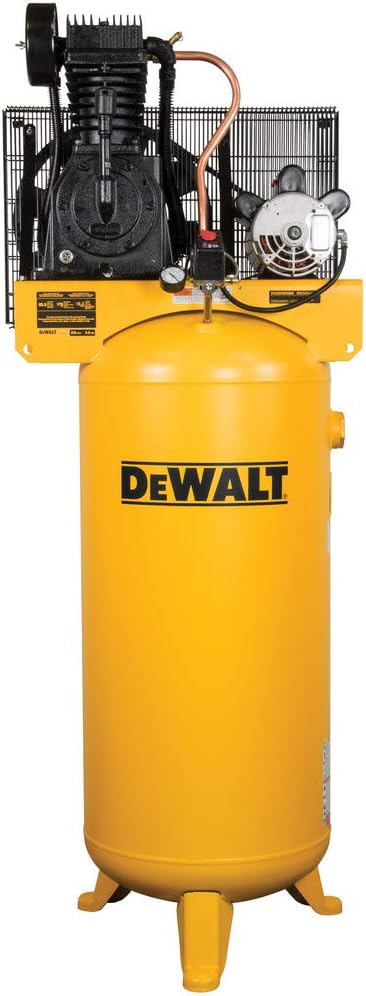
#7. DEWALT 60 Gal. Compressor
175 PSI
5 HP
Patented Fins
This DEWALT 60-gallon air compressor is built for the serious professional or DIYer tackling demanding projects. You’ll appreciate its robust 5 HP motor with thermal overload protection, designed for cooler operation thanks to patented pump and flywheel designs. The 175 PSI maximum pressure and 60-gallon tank provide ample air for extended tool use, making it suitable for tasks like spray painting, nailing, and operating impact wrenches.
While it boasts impressive features, its 3.7 rating suggests some users may find it less refined than premium brands, and its weight makes it a stationary unit. If you’re looking for a powerful, reliable compressor for your workshop and value DEWALT’s reputation for durability, this model offers good performance for its class. It’s a solid choice for those who need consistent shop air.
Pros
- Designed for cooler operation
- Thermal overload protection
- Good pressure and tank size
Cons
- Lower average rating
- Stationary unit
- Requires 230V
Specifications
Unleash the Power: Your Guide to Choosing the Right Two-Stage Air Compressor
Investing in a two-stage air compressor is a significant step up for any serious DIYer or professional. Unlike their single-stage counterparts, these powerhouses are designed for continuous operation and higher air demands, making them ideal for demanding tasks like automotive repair, framing, and operating multiple air tools simultaneously. Getting the right one means ensuring you have the consistent, robust air supply you need without unnecessary hassle or downtime.
Decoding the Demands: What Your Air Compressor Needs to Deliver
When you’re sifting through the options, several key performance indicators will help you pinpoint the best fit for your workshop or job site. Think about how and where you’ll be using it most often to guide your decision.
- Tank Size: The capacity of the storage tank directly influences how long the compressor can deliver air before the motor kicks back on. Larger tanks mean longer run times for tools that consume a lot of air.
- Horsepower (HP) and Cubic Feet per Minute (CFM): These two metrics are intrinsically linked. Higher HP generally translates to higher CFM output, which is the volume of air the compressor can deliver at a specific pressure. Always match this to the requirements of your most air-hungry tools.
- Maximum Pressure (PSI): This indicates the highest pressure the compressor can generate. Ensure it exceeds the maximum pressure required by your tools, as compressors typically operate most efficiently when not running at their absolute limit.
- Power Source: Decide whether an electric model (requiring a suitable outlet) or a gas-powered unit (offering portability but requiring fuel and ventilation) best suits your operational environment.
- Noise Level: Two-stage compressors can be loud. If your workspace is near living areas or you simply prefer a quieter environment, look for models that emphasize noise reduction features.
Navigating the Nuances: Common Missteps to Sidestep
Even with a clear understanding of your needs, a few common pitfalls can trip up shoppers. Being aware of these can save you frustration and ensure a more satisfying purchase.
- Overlooking Tool Requirements: Don’t just guess at the CFM and PSI needs of your tools. Check the specifications of your most demanding equipment to avoid buying a compressor that can’t keep up.
- Ignoring Portability Needs: If you anticipate moving the compressor around your property or to different job sites, consider its weight, the presence of sturdy wheels, and comfortable handles. A stationary unit might be overkill if you need flexibility.
- Purchasing Without Considering Future Needs: Think about whether your tool collection or project scope might expand in the future. Opting for a slightly more capable compressor now could save you from an upgrade down the line.
Your Top Two-Stage Air Compressor Picks, Decided
For heavy-duty industrial needs, the Quincy Compressor QT Air Compressor and Ingersoll Rand 2475N7.5 are your powerhouses. If you’re a serious DIYer or small shop owner, the Ingersoll Rand 2340L5-V and Campbell Hausfeld 80-Gallon XC802100 offer excellent performance. For those needing reliable shop air with a slightly smaller footprint, the Campbell Hausfeld 60-Gallon models are solid contenders. All these compressors deliver the robust performance you need for demanding tasks.
Ready to make your move? Click the buttons above to check current availability and snag the best two-stage air compressor for your workshop!
Final 3 Picks: Heavy Duty Use, Industrial Duty, and Machine Shops
Ready to decide? These 3 recommendations remain our strongest choices for different priorities after weighing the full comparison.
Ingersoll Rand 7.5 HP
- 7.5 HP two-stage compressor
- 175 PSI maximum pressure
- 80-gallon ASME tank
Ingersoll Rand 5 HP
- 5 HP two-stage compressor
- 175 PSI maximum pressure
- 60-gallon vertical tank
