
How To Calculate Air Compressor Efficiency?
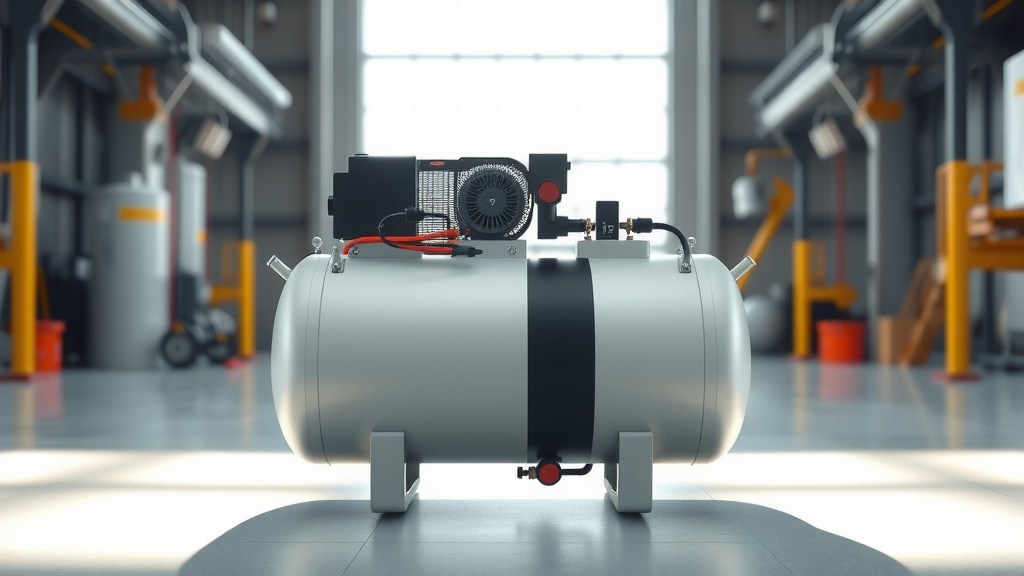
To calculate air compressor efficiency, you primarily look at its volumetric efficiency (how much air it actually delivers versus its theoretical displacement) and specific power (how much energy it consumes per unit of compressed air).
High air compressor efficiency means you get more usable compressed air for less electrical input, saving you money on operational costs.
Here’s what you’ll find in this guide, quickly:
- Understanding your air compressor’s efficiency is key to saving money and optimizing performance.
- Efficiency isn’t just about CFM; it’s also about specific power consumption.
- Regular maintenance and proper sizing play a huge role in keeping your compressor efficient.
- You can measure efficiency by comparing air output (CFM) to power input (kW).
- Choosing the right compressor technology, like VSD, can significantly boost efficiency.
How To Calculate Air Compressor Efficiency?
Calculating air compressor efficiency involves comparing the actual air delivered (measured in CFM or m3/min) against the electrical power consumed (in kW).
This calculation helps you understand if your compressor is working optimally or costing you more than it should.
Why Does Air Compressor Efficiency Matter to You?
Think of your air compressor as the heart of your operations. If it’s not efficient, it’s like running a marathon with heavy weights.
You’ll spend more energy for the same output. Nobody wants that, right?
Saving Money on Energy Bills
Air compressors are known for being energy hogs. In fact, many experts say they can account for a significant portion of a facility’s electricity bill.
An inefficient compressor means you’re literally blowing money away. Improving efficiency directly translates to lower energy costs.
Boosting Your Production
When your compressor runs efficiently, it delivers the consistent air pressure your tools and processes need.
This leads to smoother operations and increased productivity. Downtime caused by an underperforming compressor can be costly.
The Two Main Types of Compressor Efficiency
When we talk about air compressor efficiency, we’re usually focusing on two key aspects.
These two types help you paint a complete picture of your compressor’s true performance.
Volumetric Efficiency: The Air You Get
Volumetric efficiency tells you how much air your compressor actually delivers compared to its theoretical maximum.
It’s about the volume of free air delivered per unit of displacement. You want this number to be as high as possible.
Specific Power: The Energy You Use
Specific power is a measure of how much power your compressor uses to produce a certain amount of compressed air.
This is often expressed as kW/100 CFM or kW/m³/min. A lower specific power means better efficiency, and it’s something we found to be a critical metric for cost savings.
Key Formulas for Calculating Efficiency
Ready to get a little technical? Don’t worry, these formulas are straightforward and help you understand your compressor’s heart.
You don’t need to be a math wizard to apply these simple calculations.
Measuring Volumetric Efficiency
To find your compressor’s volumetric efficiency, you compare the actual flow rate to the theoretical flow rate.
Actual Flow Rate (FAD, Free Air Delivery) / Theoretical Flow Rate (Displacement) x 100% gives you the percentage.
Calculating Specific Power Consumption
This is often the most impactful number for your wallet. It shows you the true cost of generating air.
Specific Power = Total Power Input (kW) / Actual Free Air Delivery (CFM or m³/min). Lower is always better here.
Here’s a quick glance at how specific power can vary:
| Compressor Type | Typical Specific Power (kW/100 CFM) | Comments |
|---|---|---|
| Fixed Speed Rotary Screw | 18 – 25 | Efficient at full load, less so at partial load. |
| Variable Speed Drive (VSD) | 15 – 22 | Excellent at varying loads, matches demand. |
| Reciprocating (Piston) | 20 – 30 | Good for intermittent use, but can be less efficient for continuous demand. |
Practical Steps to Measure Your Compressor’s Efficiency
So, how do you actually put this into practice? It’s not as hard as it sounds.
You can gather some data yourself to get a clearer picture of your compressor’s health.
Gathering Your Data
You’ll need a few key pieces of information to start your efficiency audit. Think of it like a quick health check-up for your machine.
Many experts suggest having these numbers handy for accurate analysis.
Here’s a checklist of what you’ll need:
- Actual air flow (CFM or m³/min) – often found on the compressor’s data plate or measured with an air flow meter.
- Total electrical power consumed (kW) – measure with a power meter or look at motor nameplate data.
- Operating pressure (PSI or bar).
- Operating hours.
- Compressor model and make.
Making Sense of the Numbers
Once you have your data, plug it into the specific power formula we discussed. Compare your results to industry benchmarks.
For example, if your specific power is much higher than typical for your compressor type, it’s a red flag.
Factors That Hurt Your Compressor’s Efficiency
Even the best compressors can become inefficient over time if certain issues aren’t addressed. It’s like a car needing a tune-up.
Are any of these factors quietly costing you money?
Air Leaks: The Silent Thief
This is arguably the biggest efficiency killer. Research consistently shows that a typical plant can lose 20-30% of its compressed air due to leaks (Department of Energy).
Fixing leaks is often the quickest way to improve your system’s efficiency.
Improper Sizing and Usage
If your compressor is too big for your needs, it will cycle frequently and waste energy. If it’s too small, it will constantly run at maximum load, also leading to inefficiency.
Many experts recommend sizing your compressor to meet your actual demand, plus a little extra for future growth.
Lack of Regular Maintenance
Dirty filters, worn-out components, and old oil can all make your compressor work harder than it needs to.
Just like any machine, routine maintenance keeps it humming along efficiently.
Boosting Your Air Compressor Efficiency
So, you’ve identified some areas for improvement. Great! What can you do about it?
Here are some straightforward strategies to get your compressor running at its best:
- Conduct regular leak detection: Use ultrasonic leak detectors and fix leaks promptly.
- Implement a planned maintenance schedule: Change filters, oil, and separators as recommended by the manufacturer.
- Upgrade to Variable Speed Drive (VSD) technology: If your demand fluctuates, a VSD compressor adjusts its speed to match, saving significant energy.
- Optimize your system pressure: Running your system just 2 PSI higher than needed can increase energy consumption by 1% (Compressed Air Challenge).
- Consider heat recovery: Many compressors generate a lot of heat. Can you capture and reuse that heat for other processes?
Conclusion
Calculating and understanding air compressor efficiency isn’t just an academic exercise; it’s a practical step towards significant operational savings.
By focusing on metrics like specific power and addressing common efficiency killers, you can ensure your compressed air system works smarter, not harder.
Taking action now will lead to a healthier bottom line for your business. So, why not start your efficiency audit today?
Frequently Asked Questions About Air Compressor Efficiency
Is a higher CFM always better for efficiency?
Not necessarily. While CFM (Cubic Feet per Minute) indicates air output, efficiency also considers the power input (kW) needed to produce that CFM. A higher CFM with disproportionately high power consumption might mean lower overall efficiency. You want good CFM with low specific power.
How often should I check my compressor’s efficiency?
It’s a good idea to monitor key metrics monthly or quarterly. A full efficiency audit by a professional might be beneficial annually or every few years, especially if you notice a spike in energy bills or a drop in performance.
Can ambient temperature affect air compressor efficiency?
Absolutely! Higher ambient temperatures mean the compressor has to work harder to cool the air, which can reduce efficiency. Colder intake air generally leads to better efficiency, up to a point. Ensure your compressor has proper ventilation.
What’s the difference between FAD and displacement?
Displacement is the theoretical volume of air a compressor can move based on its design. FAD (Free Air Delivery) is the actual volume of air delivered at a given pressure, after accounting for inefficiencies like heat, leaks, and internal losses. FAD is the more important number for practical use.
Will replacing old air filters really make a difference?
Yes, a big one! Clogged air filters restrict airflow, forcing your compressor to work much harder to pull in the same amount of air. This directly increases power consumption and reduces efficiency, similar to trying to breathe through a pinched nose.
