
How To Increase Air Compressor PSI?
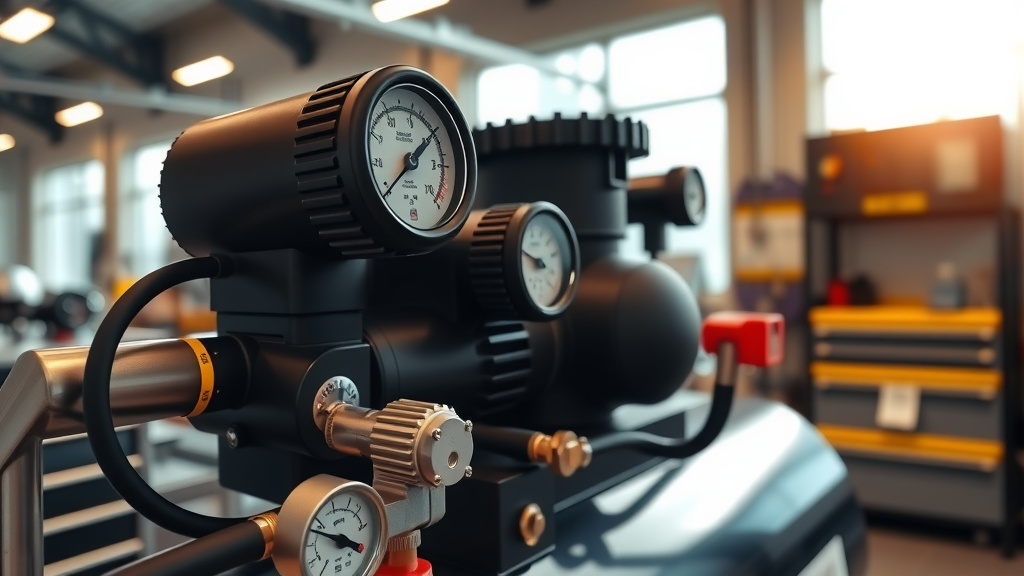
To increase your air compressor PSI, you can first optimize your current setup by fixing air leaks and ensuring proper maintenance.
For a sustained and significant boost in air compressor PSI, you often need to consider a more powerful motor or a compressor designed for higher pressure outputs (research shows).
Thinking about getting more power from your air compressor? You’re not alone! Many of us want our tools to perform better, and often that means a bit more PSI. But how do you get there without breaking the bank or, worse, breaking your compressor?
Here’s the straightforward answer to increasing your air compressor PSI:
- Check and fix all air leaks immediately.
- Ensure your compressor is clean and well-maintained.
- Use appropriate hose and fitting sizes for optimal airflow.
- Consider a larger motor or pump if a significant PSI boost is needed.
- Always prioritize safety and never exceed your compressor’s maximum rated PSI.
How To Increase Air Compressor PSI?
Increasing your air compressor’s PSI typically involves addressing efficiency issues like leaks and maintenance first. If those basic steps aren’t enough, you might look into upgrading key components or even the entire unit.
Understanding Your Current PSI Needs
Before you try to boost your PSI, ask yourself: why do you need more pressure? Is your impact wrench struggling? Or perhaps your sandblaster feels underpowered? Knowing the application helps clarify your goal.
What is PSI, Really?
PSI stands for pounds per square inch. It’s a measure of the force of the air stored in your compressor’s tank. Higher PSI means more force behind the air, which can power more demanding tools.
Key Factors Affecting Air Compressor PSI
Several elements influence your compressor’s ability to produce and maintain pressure. Think of them as the pillars supporting your compressed air system. Understanding these helps you identify potential bottlenecks.
The Simplest First Step: Checking for Leaks
Imagine trying to fill a bucket with a hole in it. That’s what air leaks do to your compressor! They are the most common reason for low effective PSI. Finding and fixing them is often the easiest and cheapest fix.
How do you find them? Mix some dish soap and water in a spray bottle. Spray this solution on all connections, hoses, and valves. If you see bubbles forming, you’ve found a leak! Tighten or replace the faulty part.
Air Leak Detection Checklist
- Check all hose connections and clamps.
- Inspect quick-connect fittings for wear.
- Examine the tank drain valve; ensure it’s fully closed.
- Look for cracks or damage in air hoses.
- Listen for hissing sounds, especially in a quiet workshop.
Optimizing Your Existing Setup for Higher PSI
Sometimes, you don’t need a new compressor; you just need to make your current one work smarter. Small adjustments can make a big difference in the pressure delivered to your tools.
Proper Maintenance for Peak Performance
A well-maintained compressor runs more efficiently. This directly translates to better pressure delivery. Regular checks and replacements are like giving your compressor a tune-up.
This includes things like changing air filters regularly. A dirty filter restricts airflow, making your compressor work harder for less output. If it’s an oil-lubricated unit, keep the oil level correct and change it as recommended (many manufacturers suggest this).
Ensuring Correct Hose and Fitting Sizes
Your air hose and fittings act like arteries in your system. If they are too small, they choke the airflow, causing a significant drop in pressure. This pressure drop happens even if your compressor is putting out high PSI at the tank.
Many people use hoses that are simply too narrow for their high-demand tools. Research often shows that matching hose diameter to tool requirements is vital (ISO standards). A wider hose allows air to flow with less resistance.
Hose Diameter and Airflow Impact
The right hose diameter ensures your tools get the pressure they need without needless loss.
| Hose Inner Diameter | Typical Use | PSI Drop (Estimated) |
|---|---|---|
| 1/4 inch | Light-duty tools, inflation, nail guns | High (significant friction loss) |
| 3/8 inch | Most workshop tools, impact wrenches | Moderate (good balance for many) |
| 1/2 inch+ | High-demand tools, spray painting, heavy shop use | Low (minimal resistance) |
When an Upgrade is Necessary: Boosting Your Compressor’s Power
Sometimes, your current compressor simply can’t deliver the PSI you need, no matter how much you optimize it. At this point, you’re looking at a more substantial change. It’s like wanting to drive faster than your car can go; you might need a new engine.
Considering a Larger Motor or Pump
The pump is the heart of your compressor, doing the actual work of compressing air. A more powerful pump, often paired with a larger motor, can build pressure faster and to a higher maximum PSI if designed for it. We found that this is a direct path to increased pressure (industry analysis).
This isn’t a DIY job for everyone. It often involves compatibility issues and expert installation. Always consult with a professional to ensure the motor and pump are correctly matched to your tank and other components.
Safety First: Important Considerations Before Boosting PSI
Playing with compressed air can be dangerous if you’re not careful. Think of your compressor as a pressurized soda can – you don’t want it to explode! Safety should always be your top concern.
Know Your Compressor’s Max Rated PSI
Every air compressor has a maximum rated PSI. This is the absolute highest pressure it can safely handle. You will find this number on a data plate or label attached to the compressor unit (manufacturer guidelines).
Never, ever exceed this limit. Over-pressurizing can lead to catastrophic failure, causing serious injury or property damage. Your compressor is designed with these limits for a reason.
Safety Valves and Pressure Switches
These are your compressor’s built-in safety features. The pressure switch turns the motor off when the target PSI is reached. The safety valve (or relief valve) is a critical backup, opening automatically if the pressure switch fails, preventing over-pressurization.
Do not tamper with these components! Modifying them can remove vital safety mechanisms, turning your compressor into a potential hazard. Regular testing of the safety valve, by pulling its ring briefly, ensures it’s working (OSHA recommendations).
Avoiding Common Pitfalls When Adjusting PSI
While the desire for more power is understandable, some actions can do more harm than good. Let’s make sure you avoid common mistakes that could cost you time, money, or even your safety.
Don’t Overpressurize Your System
It sounds obvious, but trying to squeeze more PSI out of a compressor than it’s designed for is a recipe for disaster. Tools, hoses, and fittings all have their own pressure ratings too. Exceeding any of these can lead to component failure.
A burst hose under high pressure can whip around violently. A failing tank can explode with devastating force. Always work within the specified limits of your entire air system.
Matching Tools to Compressor Capacity
Your tools have specific PSI requirements. Using a tool that demands 120 PSI with a compressor that only delivers 90 PSI will result in poor performance. Similarly, a tool designed for 90 PSI doesn’t necessarily perform better at 150 PSI.
We found that understanding the CFM (cubic feet per minute) requirements of your tools is also important. While PSI is pressure, CFM is airflow. Both need to be adequate for a tool to work effectively (tool manuals typically specify this).
Conclusion
Increasing your air compressor PSI is a goal many users share, and it’s certainly achievable. Start with the simplest, most cost-effective steps like fixing leaks and ensuring proper maintenance. These often yield surprising improvements.
If your needs exceed your current compressor’s capabilities, consider upgrading to a unit with a more powerful pump or motor. Remember, safety is paramount. Always operate within your equipment’s rated limits and never compromise on critical safety features. With a bit of care and smart choices, you’ll have your compressor delivering the pressure you need, safely and efficiently.
What are common reasons for low air compressor PSI?
Common reasons for low PSI include air leaks in hoses or connections, a dirty air filter restricting flow, insufficient motor or pump power for the demand, or a malfunctioning pressure switch not allowing the compressor to build to its set maximum.
Does a larger air tank increase PSI?
No, a larger air tank does not increase the maximum PSI your compressor can produce. It only stores more compressed air at that maximum PSI, allowing for longer continuous use of air tools before the compressor cycles on again.
How often should I check my air compressor for leaks?
It’s a good practice to check your air compressor for leaks whenever you notice a drop in performance or hear the compressor running more frequently than usual. For regular use, a quick visual and soap-water check every few months is often recommended (maintenance guides).
Can I adjust the pressure switch to get higher PSI?
While some pressure switches allow for minor adjustments to the cut-in and cut-out pressure, you should never adjust it beyond the compressor’s maximum rated PSI. Doing so creates a significant safety hazard and can damage your equipment.
Will changing my air hose to a wider diameter actually increase my tool’s PSI?
Yes, changing to a wider air hose can effectively increase the PSI delivered to your tools, especially for long runs or high-demand tools. A wider hose reduces friction and pressure drop, allowing more of the compressor’s output pressure to reach the tool (engineering principles).
