How to Use a Dual Action Airbrush
To use a dual action airbrush, press the trigger for air, then pull it back for paint. Start air before paint, move the brush, and release paint before air to reduce splatter.
On this page (12 sections)
- How to Use a Dual Action Airbrush
- What is a dual action airbrush?
- What do you need before using a dual action airbrush?
- How do you prepare paint for a dual action airbrush?
- How do you hold and trigger a dual action airbrush?
- How far should you hold the airbrush from the surface?
- How do you practice consistent lines and paint flow?
- Which airbrush setup suits a beginner?
- How do you avoid splatter and uneven spray?
- How do you clean a dual action airbrush after use?
- Does compressor type affect airbrush use?
- What is the easiest way to learn dual action control?
How to Use a Dual Action Airbrush
To use a dual action airbrush, press the trigger for air, then pull it back for paint. Start airflow before paint, move the brush steadily, and release paint before air when you finish each pass.
A dual action airbrush gives you separate control over air and paint from one trigger. That control helps you move from fine lines to broader coverage without stopping, but your finger must coordinate two movements at once.
What is a dual action airbrush?
A dual action airbrush controls air with downward trigger pressure and paint with backward trigger movement. Pressing down opens airflow.
Pulling back opens the paint path and increases the amount of paint entering the air stream.
This differs from a single action airbrush, where the trigger generally starts the spray and paint flow is adjusted separately. Dual action control takes practice, but it gives you more control over line width, shading, and paint coverage.
The Iwata NEO CN is designed for dual action control and includes a smooth main lever action. It has a detachable larger cup for bigger mixes and a smaller cup for small-batch projects.
If you are comparing different spray tools, our guide to the best paint spray gun explains how airbrushes differ from larger paint sprayers.
What do you need before using a dual action airbrush?
You need an airbrush, a compatible air source, suitable paint, a hose, cleaner, and a test surface. You should also have ventilation and eye protection appropriate for the paint you use.
Check that the hose fits both the airbrush and compressor. Keep the brush upright while filling the cup, and avoid filling it so high that paint can spill into the trigger area.
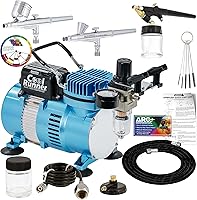
A complete kit can reduce setup questions for a beginner. The Master Airbrush Cool Runner II Airbrush Kit includes 3 airbrushes, a compressor with 2 cooling fans, a hose, cleaning brushes, a holder, and a color mixing wheel.
See our guide to the best airbrush kit for beginners if you want to compare complete setups before choosing separate parts.
How do you prepare paint for a dual action airbrush?
Prepare paint by mixing it to a smooth consistency that suits your nozzle and air pressure. Paint that is too thick may spit or clog, while paint that is too thin may run across the surface.
Strain paint when the paint instructions allow it, especially if you see lumps or dried material. Mix only what you need for the session and keep the cup covered when possible.
Test the mixture on scrap material before spraying the project. Check the spray pattern, drying behavior, and coverage, then adjust the paint or pressure one change at a time.
Do not assume every paint type uses the same thinner or cleaner. Follow the paint manufacturer's instructions and keep incompatible chemicals out of the airbrush.
How do you hold and trigger a dual action airbrush?
Hold the airbrush like a pen, with your index finger resting naturally on the trigger. Keep your wrist relaxed and let your arm guide the brush so the distance stays more consistent.
Use this trigger sequence:
- Press down to start airflow.
- Pull back slightly to start paint.
- Move the brush before adding more paint.
- Pull back farther for wider coverage.
- Push the trigger forward to reduce paint.
- Release paint before releasing airflow.
The key is air first, paint second, paint off first, and air off second. This sequence helps clear paint from the nozzle before airflow stops.
Practice straight lines, dots, curves, and gradual fades on scrap paper or cardboard. Keep the brush moving during a pass so paint does not build up in one spot.
How far should you hold the airbrush from the surface?
Hold the airbrush close enough for control but far enough to avoid wet pools. Your best distance depends on the nozzle, paint mix, pressure, and the finish you want.
A closer brush with less paint can create a narrow line. A farther brush with more paint can cover a wider area, but too much distance may create dry spray or a rough surface.
Keep the airbrush square to the surface for an even pass. If you angle it too much, paint can land unevenly and the line may become wider on one side.
Use light passes instead of trying to cover the surface in one heavy coat. Allow each layer to dry according to the paint instructions before adding another.
How do you practice consistent lines and paint flow?
Practice consistent lines by moving your hand at a steady speed while changing only one trigger movement at a time. Start with air and add a small amount of paint, then repeat the same pass with slightly more trigger movement.
Draw parallel lines across scrap material. Try to keep their width and darkness similar, then practice stopping the paint before reaching the end of each line.
For fine detail, use less backward trigger movement and keep the brush closer. For broader coverage, pull back farther while increasing your movement speed so the surface does not become too wet.
A dual action airbrush rewards small adjustments. Large trigger movements can release more paint than expected, especially when the brush is close to the work.
Which airbrush setup suits a beginner?
A beginner may prefer a complete kit when learning trigger control, paint mixing, and compressor setup at the same time. A kit can keep the main parts together and reduce compatibility checks.
The Master Airbrush Cool Runner II Air Brush includes 3 airbrushes, a dual-fan compressor, a 6 ft hose, a water-based acrylic paint set, cleaning brushes, and a learning guide.
The included G22 and G25 brushes use dual action control, while the E91 is a single action siphon-feed brush. That mix can help you compare trigger styles as you learn.
For brand-specific comparisons, see the best Iwata dual action airbrush options and the best dual action airbrush guide. Readers interested in another established brand can also compare the best Paasche airbrush kit.
How do you avoid splatter and uneven spray?
Avoid splatter by keeping the paint mix smooth, starting airflow before paint, and keeping the nozzle clean. Spitting can also happen when paint dries at the tip or when the trigger is pulled back too quickly.
Release paint before airflow when ending a pass. If the spray changes suddenly, stop and check the paint level, nozzle, needle, hose connection, and pressure setting.
Do not keep increasing pressure to solve every spray problem. Excess pressure can make thin paint dry quickly or spread overspray beyond the area you intended to cover.
Make short test sprays after any change. This gives you a controlled way to check whether the problem came from paint, pressure, distance, or trigger movement.
How do you clean a dual action airbrush after use?
Clean a dual action airbrush as soon as you finish spraying. Dried paint can restrict the nozzle and make the trigger feel inconsistent during the next session.
Empty leftover paint into the proper waste container. Rinse the cup with the cleaner suitable for your paint, then spray cleaner through the airbrush until the spray is clear.
Use a soft brush around the cup and exposed nozzle area. Avoid forcing tools into small openings, and follow the airbrush manufacturer's instructions before removing the needle or nozzle.
Wipe the needle carefully if the instructions allow it. Store the airbrush dry, with its parts protected from dust and accidental impact.
Does compressor type affect airbrush use?
The compressor affects air consistency, operating noise, and how long you can spray before stopping. The airbrush still depends on correct paint mixing and trigger control, so a larger compressor does not replace practice.
A compressor with cooling fans can be useful for longer sessions. Both Master Airbrush kits above include a Cool Runner II compressor with 2 cooling fans and a 0.8 cfm air flow capacity.
A dual-stage compressor is a different category from a dual action airbrush. Read What Is A Dual Stage Air Compressor? to understand the compressor term, then review What Is A Dual Stage Air Compressor? for the related explanation.
What is the easiest way to learn dual action control?
The easiest method is short practice sessions with one paint mix, one pressure setting, and a scrap surface. Keep the brush moving and make small changes to backward trigger movement.
Begin with dots, lines, and simple fades. Once those feel steady, practice curved lines and overlapping passes.
Choose an airbrush that matches the way you want to learn. The Iwata NEO CN suits readers who want a single dual action brush with 2 cup sizes.
The Master Airbrush kits suit readers who want the compressor and multiple brush types together.
The main decision rule is simple: choose a single dual action brush for focused practice, or choose a complete kit when you also need an air source and accessories. Either way, use air first, add paint gradually, and clean the brush after every session.
Frequently asked questions
What is a dual action airbrush?
A dual action airbrush uses one trigger to control both air and paint. Pressing the trigger starts airflow, while pulling it back increases paint flow.
This lets you change line width and coverage while you work, but it takes more coordination than a single action airbrush.
How do you control paint flow on a dual action airbrush?
Press the trigger down for air, then pull it back slowly for paint. Move the brush before adding more paint, and pull back farther only when you need wider coverage.
Release paint first, then air, to help prevent paint from collecting at the tip.
What pressure should a beginner use with a dual action airbrush?
Start with the lowest pressure that gives a steady spray, then adjust after checking the paint mix and nozzle. The right setting depends on paint thickness, nozzle size, distance, and the surface.
Follow the airbrush and paint makers' instructions for safe operating limits.
How do you clean a dual action airbrush?
Empty the cup, rinse it with the cleaner recommended for your paint, and spray the cleaner through the brush until it runs clear. Wipe the cup and nozzle area carefully, then follow the manufacturer's instructions for deeper cleaning and needle removal.