How To Use Fortress Air Compressor?
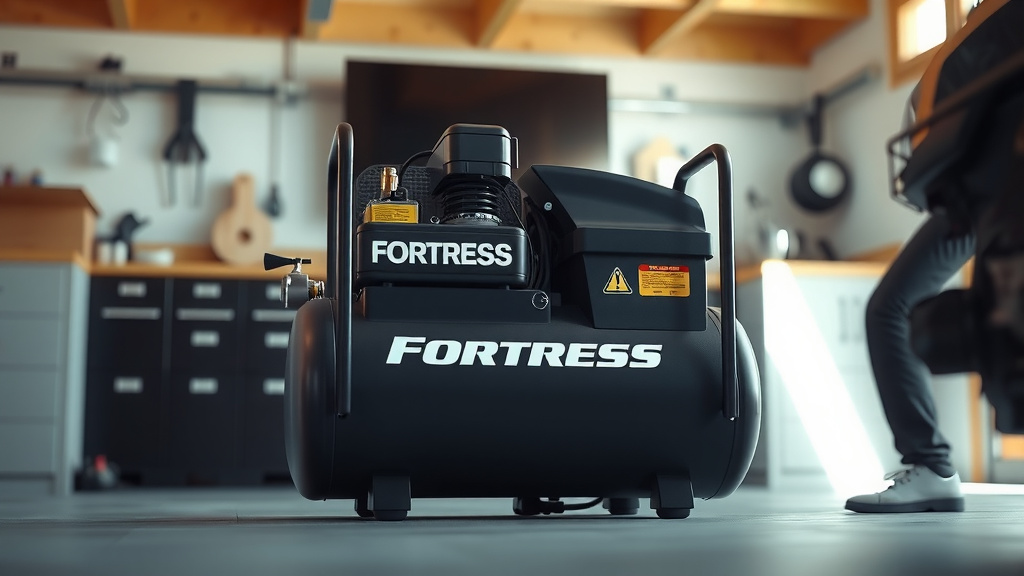
To use your Fortress Air Compressor, first, ensure it’s on a stable, level surface, then connect your desired air tool to the quick-connect coupler.
Always adjust the regulator to the required PSI for your task, and remember to drain the tank after each use to maintain its longevity and prevent rust.
- Get started quickly with your Fortress Air Compressor by checking for damage and connecting tools safely.
- Adjust air pressure accurately using the regulator for different jobs like inflating tires or operating nail guns.
- Regular maintenance, especially draining the air tank, is crucial for long-term performance and safety.
- Troubleshoot common issues by checking power, hose connections, and pressure settings if your compressor acts up.
- Always prioritize safety: wear eye protection and ear protection, and read your user manual before operating.
How To Use Fortress Air Compressor?
Using a Fortress Air Compressor involves a few straightforward steps, from initial setup to regular maintenance, ensuring safe and efficient operation for all your projects.
You will find it’s a reliable partner once you understand its basic functions and care routine.
First Steps: Unboxing Your New Fortress Compressor
When your new Fortress compressor arrives, take a moment to unbox it carefully. Look for any visible damage from shipping.
You want to ensure all parts are present before you even think about plugging it in. Think of it like checking all the ingredients before you start cooking.
Safety First: What You Need to Know
Before doing anything else, always read your owner’s manual. We found that many experts recommend familiarizing yourself with all safety warnings (OSHA).
Wear eye protection and hearing protection. Air compressors can be noisy and propel debris, so keeping yourself safe is paramount.
Finding the Perfect Spot for Your Compressor
Place your Fortress Air Compressor on a stable, level surface. It needs good air circulation around it to prevent overheating.
Keep it away from walls or corners that might block its vents. Imagine giving it room to breathe, just like you need space to work comfortably.
Getting Familiar with Your Compressor’s Parts
Knowing the names of the parts makes using your compressor much simpler. It is like knowing the controls of your car.
Let’s quickly go over the key components you will be interacting with regularly.
Power Switch and Circuit Breaker
You will see a main power switch, usually clearly marked. There is also often a thermal overload protector or circuit breaker.
If the motor overheats, this breaker will trip to prevent damage. You just reset it, let it cool, and you are good to go again.
The Pressure Gauges and Regulator
Your Fortress compressor has two gauges: one shows the tank pressure, and the other shows the regulated outlet pressure.
The regulator knob lets you adjust the working air pressure (PSI) for your tools. Many experts say adjusting this is key for optimal tool performance.
Quick-Connect Couplers and Hoses
These are where your air hose attaches. The quick-connect makes it easy to snap hoses and tools on and off.
Ensure your air hose is rated for the maximum pressure your compressor produces. This prevents bursts and keeps you safe.
Setting Up for Your First Project
Now that you know the parts, let’s get you ready to tackle your first task. This is where the fun begins!
It is simpler than you might think to go from zero to fully operational.
Connecting Your Air Hose and Tool
First, securely attach your air hose to the quick-connect coupler on the compressor. Then, connect your chosen air tool to the other end of the hose.
Give both connections a gentle tug to ensure they are firm. A loose connection means wasted air and less power.
Adjusting Air Pressure: The Right PSI
Check your air tool’s manual for its recommended operating PSI. Turn the regulator knob to set the outlet pressure to this specific level.
You can read the setting on the regulated pressure gauge. Too little pressure, and your tool struggles; too much, and you might damage it (or your project!).
Powering On Your Fortress Compressor
With everything connected and adjusted, it is time to bring your compressor to life. It will make some noise, which is perfectly normal.
Think of it as the compressor getting ready for action, like a car engine rumbling to life.
The Initial Air Tank Fill Cycle
Plug the compressor into a grounded electrical outlet. Flip the power switch to “ON.” The motor will start, and the tank will begin to fill with air.
It will run until it reaches its maximum pressure, then automatically shut off. This might take a few minutes, depending on the model.
Ready to Work: Starting Your Project
Once the compressor stops, it means the tank is full, and you are ready to use your tool. As you work, the pressure in the tank will drop.
The compressor will automatically cycle back on to refill the tank, keeping your working pressure consistent. This is its built-in automation working for you.
Common Fortress Compressor Applications
Fortress compressors are incredibly versatile, useful for a wide array of tasks around your home or workshop. What will you do with yours?
Here are just a few ideas that come to mind, showcasing its practical benefits:
- Inflating Tires: From car tires to bicycle tires, keep them at the perfect PSI.
- Operating Nail Guns: Make trim work or framing much faster and easier.
- Blowing Dust and Debris: Quickly clean your workbench or tools.
- Painting with Spray Guns: Get a smooth, professional finish on your projects.
- Powering Air Wrenches: Tackle stubborn bolts on vehicles or machinery.
Keeping Your Fortress Compressor in Top Shape
Regular maintenance is not just a suggestion; it is a necessity for the longevity of your compressor. Think of it as giving it a health check-up.
A little care goes a long way in ensuring your Fortress unit performs reliably for years.
Draining the Air Tank: A Must-Do Task
After each use, you must drain any moisture from the air tank. Open the drain valve, usually located at the bottom of the tank.
Condensation builds up, and if left inside, it causes rust. Research often connects regular tank draining with significantly extending compressor life (NIST).
Checking and Cleaning Air Filters
Periodically inspect the air intake filter. A dirty filter can restrict airflow, making the compressor work harder and less efficiently.
Clean or replace it as recommended in your manual. A clean filter is like clear lungs for your compressor.
Troubleshooting Basic Compressor Issues
Even the most reliable tools can sometimes hit a snag. Don’t worry, many common issues have simple solutions you can try yourself.
Here is a quick look at a few typical problems and their fixes, helping you get back to work quickly:
| Problem | Possible Cause | Simple Fix |
|---|---|---|
| Compressor won’t start | No power, tripped breaker | Check power cord, reset breaker |
| Low air pressure | Regulator set too low, air leak | Adjust regulator, check hose connections |
| Runs constantly | Air leak, check valve issue | Listen for leaks, consult manual |
| Excessive noise | Loose parts, low oil (if applicable) | Tighten fasteners, check oil level |
Important Safety Practices to Remember
Your safety is always the top priority when working with power tools, especially air compressors. Let’s make sure you remember these key points:
Following these simple guidelines will keep you and your workspace secure:
- Always wear ANSI-approved eye protection.
- Use hearing protection, as compressors can be loud.
- Ensure the compressor is on a stable, level surface.
- Never point the air nozzle at yourself or others.
- Disconnect power before performing any maintenance.
- Always drain the tank after each use to prevent rust.
Conclusion
Using your Fortress Air Compressor effectively is all about understanding its basic operation, following safety guidelines, and performing routine maintenance. From setting it up and connecting your tools to adjusting pressure for specific tasks, you now have the knowledge to confidently tackle a variety of projects.
Remember, a well-maintained compressor is a safe and efficient one, ready to serve your needs for a long time. So go ahead, plug it in, and make some sawdust or pump up those tires with confidence!
How do I know what PSI to set for my air tool?
You should always consult your specific air tool’s owner’s manual. Most tools have a recommended operating pressure range. Setting the PSI within this range ensures optimal performance and prevents damage to the tool or your project.
What is the importance of draining the air tank?
Draining the air tank after each use is vital because air compressors generate condensation, which collects as water inside the tank. If this water is not drained, it can lead to rust and corrosion, significantly shortening the lifespan of your compressor and potentially contaminating your air supply. Many experts say this is the single most important maintenance step.
Can I use an extension cord with my Fortress Air Compressor?
While generally not recommended, if you must use an extension cord, ensure it is a heavy-duty, grounded cord of the correct gauge for the compressor’s amperage and length. Using an undersized cord can cause voltage drops, leading to motor damage or fire hazards. Always check your manual for specific guidance.
My Fortress compressor cycles on and off too frequently. Is this normal?
Frequent cycling can sometimes be normal if you are using a high-demand tool or if your tank size is small. However, excessive cycling could also indicate an air leak in your hoses, fittings, or the compressor itself, or an issue with the pressure switch. Check for leaks first, and if the problem persists, consult your manual for troubleshooting.
What kind of air tools can I use with a Fortress Air Compressor?
Fortress Air Compressors are compatible with a wide range of air tools, provided the tool’s CFM (cubic feet per minute) and PSI requirements fall within your compressor’s capabilities. Common tools include nail guns, staplers, impact wrenches, air ratchets, blowguns, paint sprayers, and tire inflators. Always match the tool’s needs to your compressor’s output.