
How To Use Regulator On Air Compressor?
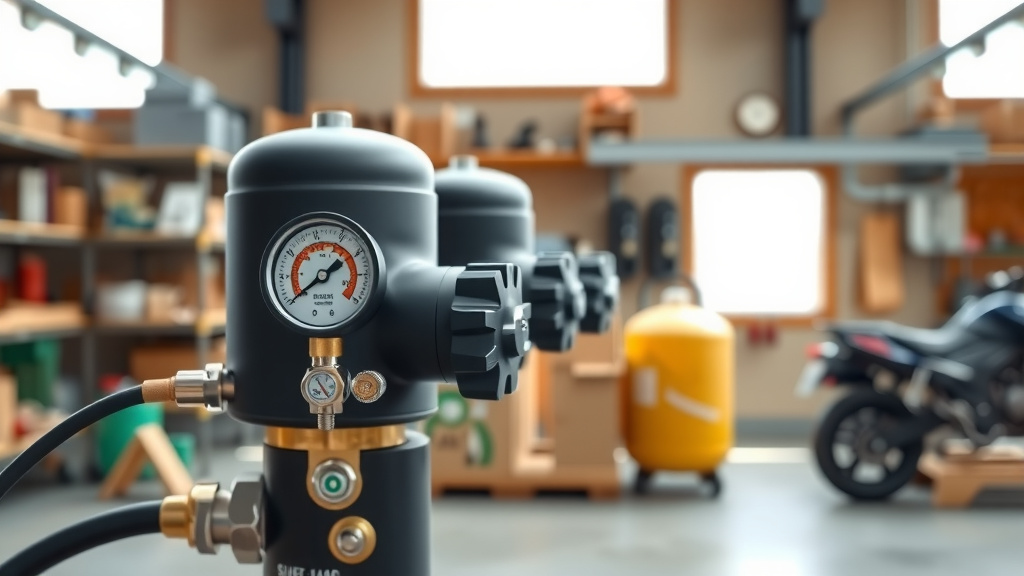
To use a regulator on your air compressor, first connect your air tool to the air hose, then turn the compressor on.
Next, adjust the regulator knob clockwise to increase the output pressure, or counter-clockwise to decrease it, until you match the pressure required by your specific air tool.
- Understand your regulator’s purpose for safe and effective air tool operation.
- Always check your tool’s PSI requirement before adjusting the pressure.
- Connect your air hose and tool, then turn the regulator knob to set the desired PSI.
- Monitor the regulator gauge to ensure consistent pressure during your work.
- Regular checks and cleaning prolong your regulator’s life and maintain accuracy.
How To Use Regulator On Air Compressor?
An air compressor regulator is your control center for air pressure, ensuring your tools receive the exact amount of air they need. Properly using it means safer work and better results.
What Exactly is an Air Compressor Regulator?
Think of your air compressor as a big engine and the regulator as its throttle. It’s a device that controls the output air pressure from your tank to your air tools.
Without it, your tools might get too much or too little air, which isn’t ideal for any project.
Why is a Regulator So Important?
A regulator protects your air tools from damage and helps you perform tasks accurately. Each air tool, from nail guns to paint sprayers, needs a specific pressure range to work right.
Using the wrong pressure can lead to poor finishes, tool wear, or even dangerous situations. Many experts say that consistent pressure is key for professional results (Occupational Safety and Health Administration).
Finding Your Regulator
Most air compressors have their regulator clearly visible, often near the tank’s pressure gauge. It typically looks like a knob or dial with an adjacent pressure gauge.
If you’re unsure, check your compressor’s manual; it will point you right to it.
Key Parts of Your Regulator
Your regulator usually has a main adjustment knob, a pressure gauge to display the output PSI, and often a smaller knob to lock your chosen setting. Some also include a filter to catch moisture.
Understanding these parts helps you control your air flow precisely.
Steps to Use Your Air Compressor Regulator
Using your regulator might seem tricky at first, but it’s simpler than you think. Let’s walk through it step-by-step to get you going.
Safety First, Always!
Before doing anything, ensure your compressor is on a stable, level surface. Wear appropriate safety glasses and hearing protection, especially when operating loud tools.
Safety isn’t just a suggestion; it’s a necessary step before any project begins.
Connecting Your Tool
First, attach your air hose to the compressor’s air outlet. Make sure it’s snug. Then, connect your chosen air tool to the other end of the hose.
Always double-check these connections to prevent air leaks and ensure a secure setup.
Setting the Pressure
Now, turn on your air compressor and let it build up to its maximum tank pressure. Once it stops, check your air tool’s required PSI (pounds per square inch).
This information is usually stamped on the tool itself or found in its manual. Many guidelines point to starting with a lower pressure and increasing it slowly (National Institute for Occupational Safety and Health).
Adjusting for the Job
Locate the adjustment knob on your regulator. Turn it clockwise to increase the output pressure, or counter-clockwise to decrease it. As you turn, watch the regulator’s output gauge.
Aim for the PSI that your air tool needs. A quick analogy: it’s like adjusting the volume on your radio, but for air!
Monitoring Your Pressure
Once you set the pressure, use your air tool. Keep an eye on the regulator gauge during operation. It helps you see if the pressure is holding steady.
If the pressure dips too low, pause your work and let the compressor catch up or adjust the regulator again.
Common Regulator Issues and Fixes
Even the best regulators can sometimes act up. Knowing common issues helps you troubleshoot quickly and get back to work.
Pressure Fluctuations
Does your pressure jump around? This might mean your air lines have a blockage, or the regulator itself is aging. We found that cleaning or replacing air filters often resolves this.
Sometimes, simply ensuring the compressor has enough air in its tank can also help maintain steady pressure.
Leaking Air
Hearing a hiss? Air leaks reduce efficiency and make your compressor work harder. Check all connections first, as loose fittings are common culprits.
A little bit of soapy water on joints can show you exactly where the bubbles are forming, pinpointing the leak (Purdue University Extension).
Tips for Optimal Regulator Use
- Always know your tool’s PSI requirement.
- Don’t overtighten connections; snug is enough.
- Release tank pressure after each use.
- Store your compressor in a clean, dry area.
- Check the air filter regularly and clean or replace it.
- Never leave your compressor running unattended for long periods.
Choosing the Right Regulator
When it’s time for a new one, how do you choose? Different regulators suit different needs. Here’s a quick guide:
| Regulator Type | Best For | Key Feature |
|---|---|---|
| Standard Duty | Light DIY, Brad Nailers | Cost-effective, simple |
| Heavy Duty | Professional Shops, Impact Wrenches | Higher flow rate, durable |
| High Flow | Sandblasting, Painting | Maintains pressure with high demand |
Selecting the right regulator ensures your air system performs its best. Consider what tools you use most often.
Regulator Maintenance Checklist
Keeping your regulator in shape helps it serve you well for years. A little care goes a long way.
- Annually: Check for any visible wear or damage to the housing and gauges.
- Monthly: Inspect the air filter; clean it if it looks dirty.
- Every few uses: Ensure all connections are still tight and leak-free.
- As needed: If pressure becomes erratic, consider a professional inspection.
When to Replace Your Regulator
If your regulator consistently fails to hold pressure, shows visible cracks, or can no longer adjust correctly, it’s time for a replacement. A failing regulator can harm your tools and your projects.
Don’t wait until it completely breaks; proactive replacement saves headaches (Consumer Product Safety Commission).
Conclusion
Using an air compressor regulator correctly is a fundamental skill for anyone using air tools. It helps ensure safety, protects your equipment, and delivers the best possible results for your projects. By understanding its parts, following proper steps, and performing regular maintenance, you’ll master this essential device in no time.
Remember, a well-regulated compressor makes for a happy workshop and successful work every time. So go ahead, adjust that knob with confidence, and make your air compressor work precisely for you!
Is it better to turn the air compressor regulator up or down?
It’s generally better to set the air compressor regulator to the specific PSI required by your air tool. Going too high can damage the tool or project, while too low can make the tool ineffective. Always match the tool’s recommended pressure.
Can you run an air tool without a regulator?
While some simple tasks might seem to work without a regulator, it is strongly discouraged. Running an air tool without a regulator exposes it to the compressor’s full tank pressure, which is usually much higher than needed. This can damage the tool, make it unsafe, and lead to inconsistent results.
How do I know what PSI to set my air compressor regulator to?
You should always check the PSI recommendation provided by the manufacturer of your specific air tool. This information is typically printed on the tool itself, in its user manual, or on the product packaging. Always follow these guidelines for optimal performance and tool longevity.
Why is my air compressor regulator not working?
A regulator might stop working due to a few common reasons. It could be a clogged air filter, a leak in the regulator body or connections, or internal wear and tear on the diaphragm or spring. Sometimes, moisture buildup can also affect its function. Inspecting for leaks and cleaning the filter are good first steps.
Does the air compressor regulator affect air volume (CFM)?
While a regulator primarily controls pressure, it can indirectly affect the effective air volume (CFM) reaching the tool if the pressure is set too low. If your tool needs a certain CFM at a specific pressure to operate correctly, and the regulator limits that pressure, the tool might not perform at its full potential. However, the regulator itself doesn’t directly increase the compressor’s output CFM.
