Use an Old Pressure Switch with a New Air Compressor?
You can use an old pressure switch with a new air compressor only when the pressure settings, electrical rating, ports, and unloader setup match. Check the compressor manual and switch specifications before connecting power.
On this page (8 sections)
- How do you check if a new compressor is compatible with an old pressure control?
- Why do cut-in and cut-out pressures matter?
- Does the motor's electrical setup have to match?
- Do the ports and pipe threads need to match?
- Why does the unloader valve matter?
- How can you set an old pressure switch safely?
- What other controls should you check?
- What is the final compatibility rule?
You can use an old pressure switch with a new air compressor only when the switch matches the new compressor's pressure, electrical, mechanical, and unloader requirements. A matching pipe thread alone does not prove compatibility.
A pressure switch starts and stops the motor at set pressure points. Before reusing one, compare its cut-in pressure, cut-out pressure, phase, motor rating, connection ports, and unloader arrangement with the new compressor.
That comparison also needs to cover the tank rating and safety valve setting. A switch that was safe on an older unit may push a new unit beyond what its tank, pump, or motor can handle.
For a quick explanation of the part, read What Is a Compressor Pressure Switch?. It helps separate the switch's control job from the tank, pump, motor, safety valve, and gauges.
If any major detail does not line up, pause before wiring or plumbing the switch in. Reusing it becomes a guess, and compressor controls need exact matches rather than close ones.
Set up also matters once the switch is in place. Watch a full cycle, confirm the start and stop points, and check fittings for leaks before putting the compressor into regular use.
How do you check if a new compressor is compatible with an old pressure control?
Compare the old switch and new compressor line by line before wiring anything. The most important checks are pressure range, electrical load, port layout, compressor phase, and the way the unloader connects.
Write down the information on the old switch. Then find the new compressor's manual or nameplate and compare:
- Cut-in pressure, where the compressor starts
- Cut-out pressure, where the compressor stops
- Motor voltage and phase
- Motor horsepower or current requirement
- Tank and manifold connection size
- Number and purpose of ports
- Unloader valve connection
- Safety valve and gauge arrangement
The new compressor's safety valve and tank rating place limits on the pressure setting. Never raise the switch setting just because the old switch can be adjusted higher.
Why do cut-in and cut-out pressures matter?
The old pressure switch must operate within the new compressor's approved pressure range. Cut-in is the lower restart point, while cut-out is the point where the motor stops.
A switch with a higher cut-out setting can expose the new tank or pump to pressure above its intended limit. A lower setting may be safe but can reduce stored air and change how often the compressor runs.
The differential between the two settings also affects cycling. If the compressor starts and stops too often, check the pressure settings, tank size, air leaks, and tool demand rather than assuming the switch is compatible.
Can a new compressor use an old pressure control with a different PSI range?
Only if the pressure range suits the new compressor and its safety components. The switch must stop the pump before the tank reaches an unsafe level, and its start point must be appropriate for the motor and pump.
The Urubize 23474570 Pressure Switch for Ingersoll Rand is set at 135 PSI cut-in and 175 PSI cut-out. Its title identifies compatibility with Ingersoll-Rand 3-phase 2340, 2475, 2545, and 7100 reciprocating compressors, plus 7.5HP single-phase 2475 models.
This switch suits a replacement where those compressor models, pressure points, phase, horsepower, and port connections match. Its 4-port layout is intended for tank, gauge, safety valve, and manifold connections.
Don't treat the model number alone as proof of fit. Compare the new compressor's wiring and connections before installation.
Does the motor's electrical setup have to match?
Yes. The pressure switch must be suitable for the new motor's voltage, phase, and electrical load.
A switch that controls a small single-phase motor may not be suitable for a larger motor or a 3-phase system. The contacts, enclosure, and wiring inside the switch all have limits, and those limits shape what kind of motor it can control safely over time.
Check whether the new compressor uses single-phase or 3-phase power. Then compare the switch's electrical information with the compressor motor requirements and the installation instructions.
Voltage alone is not enough, because phase, full load current, and starting load can change the demands placed on the contacts.
This suits owners who can read the nameplates and wiring diagram with care. It suits less well when labels are missing, markings are faded, or the switch came from an earlier compressor without clear documentation.
Turn off and isolate power before opening the switch cover. If the electrical ratings or wiring diagram are unclear, have a qualified person identify the connections.
Do not rely on wire color alone, since earlier installations may not follow the pattern you expect.
Motor size also affects cycling. A larger or harder starting motor can draw more current each time the compressor starts, and frequent short cycles can add wear to contacts that were chosen for lighter duty.
Set up should follow the switch and compressor instructions in order. Confirm the breaker or fuse protection, ground arrangement, terminal tightening, and cable entry sealing before restoring power.
Care after installation means watching the first starts closely. Humming, breaker trips, slow starts, or a motor that strains under load are signs to stop and recheck the match.
Those symptoms should not be treated as normal break in behavior.
There is also an honest trade off here. Reusing a switch can save money when every rating lines up, but a mismatch can damage the motor or create an electrical hazard.
When proof of the right rating is missing, replacement with a switch designed for the new compressor is the safer choice.
Do the ports and pipe threads need to match?
Yes. The switch must connect to the new compressor's manifold or tank plumbing without forcing mismatched threads.
Port count also matters because gauges, safety valves, and unloaders may need separate connections.
A switch can have a connection that looks close but uses a different thread standard. Confirm the size, thread type, sealing method, and purpose of every port.
The Square D Pumptrol Pressure switch for compressed has a 1-port 95-125 PSI design with an unloader and on/off lever. Its model is 9013FHG12J52M1X, and its technical information includes a 0.25 inch NPSF internal fluid connection.
This style may suit a setup that needs one pressure connection and a manual on/off lever. It is not automatically interchangeable with a 4-port switch, because the plumbing and accessory connections may be arranged differently.
For more replacement options, compare the Best Air Compressor Pressure Switch guide after confirming your compressor's requirements.
Why does the unloader valve matter?
The unloader must match the new compressor's discharge-line arrangement. It releases pressure that can remain in the line after shutdown, helping the motor restart with less trapped pressure.
A built-in unloader does not make every switch universal. Check the tube size, connection point, and operating method in the compressor instructions.
The Urubize 23474653 Air Compressor Pressure Switch is set at 145 PSI cut-in and 175 PSI cut-out. Its title identifies it for Ingersoll Rand 2340L5, 2340N5, 2340D5-V, TS4N5, TS4L5, and TS51 5HP single-phase air compressors.
Choose this type when the new compressor matches the named 5HP single-phase applications, pressure settings, and 4-port connection layout. Its 4 ports are intended for connections such as the tank, gauge, and safety valve.
If you need an Ingersoll Rand replacement, see Best Ingersoll Rand Air Compressor Pressure Switches for a focused comparison.
How can you set an old pressure switch safely?
Set the switch only within the new compressor's approved range, and never use adjustment to solve a compatibility mismatch. Changing a spring does not correct the wrong phase, port layout, motor rating, or unloader connection.
Before adjustment, confirm the tank rating, safety-valve setting, compressor manual, and switch instructions. Keep the pressure difference large enough to avoid rapid cycling, while staying within the compressor's stated limits.
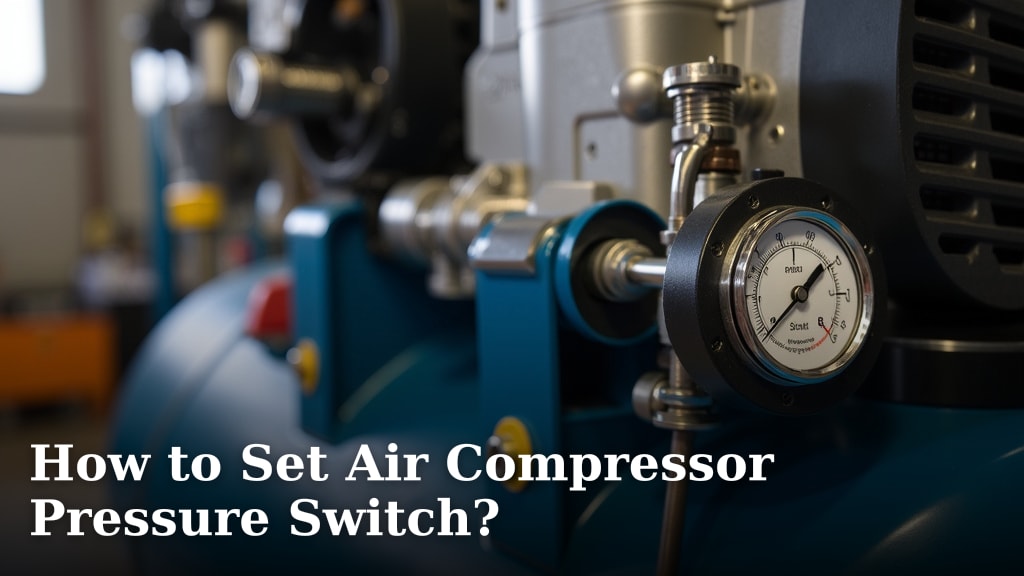
The guide to How to Set Air Compressor Pressure Switch? explains the adjustment process and the checks to make before changing the pressure points.
After installation, watch the first complete cycle. The motor should start and stop at the intended pressures, the unloader should release pressure as designed, and no fitting should leak.
What other controls should you check?
The pressure switch is only one part of the compressor control system. The regulator controls downstream tool pressure, while the pressure switch controls when the compressor motor runs.
Use How To Control PSI On Air Compressor? when you need to separate tank pressure from the regulated air pressure sent to a tool.
Some systems also use a governor or related control to manage compressor operation. What Does The Air Compressor Governor Control? can help you identify which component is responsible for a symptom.
Stop and inspect the setup if the motor hums, trips a breaker, starts under heavy strain, leaks through the unloader, or continues running after the intended cut-out pressure. Do not bypass the safety valve or continue operating with uncertain wiring.
What is the final compatibility rule?
Reuse an old pressure control only when every major requirement matches: pressure settings, electrical system, compressor phase, motor load, ports, threads, and unloader connection. If one of those checks fails, choose a pressure switch designed for the new compressor.
Pick the Urubize 23474570 for the listed Ingersoll-Rand compressor applications with 135/175 PSI control and 4-port connections. Pick the Square D model for a compatible 95/125 PSI, single-port setup with an on/off lever.
Pick the Urubize 23474653 for the listed 5HP single-phase Ingersoll Rand applications with 145/175 PSI control.
When the new compressor is compatible with an old pressure control, install it according to the electrical and plumbing instructions, then confirm the first full cycle before regular use.
Frequently asked questions
Can I reuse an old pressure switch on a new air compressor?
You can reuse it only if its cut-in and cut-out pressures, electrical rating, port arrangement, compressor phase, horsepower, and unloader connection match the new compressor. Turn off power before checking wiring, and follow the compressor and pressure-switch instructions.
Do pressure switches fit all air compressors?
No. Pressure switches differ in pressure range, electrical contacts, connection size, port count, phase, and motor rating.
A switch that fits the pipe can still be unsafe or unsuitable if its settings or electrical capacity do not match the compressor.
What does an unloader valve do on an air compressor pressure switch?
An unloader valve releases trapped pressure from the compressor discharge line when the motor stops. This can let the motor restart with less load, but the valve must connect correctly to the compressor system for it to work as intended.
Should I set an old pressure switch to match a new compressor?
Do not change the pressure range until you confirm the new compressor's allowed settings. The tank, motor, safety valve, and pump must all support the selected cut-in and cut-out pressures, and the safety valve must remain functional.