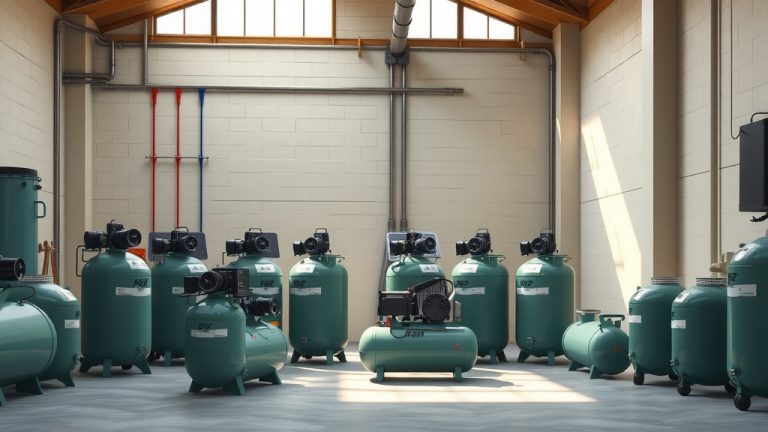
What Is A Desiccant Dryer For An Air Compressor?
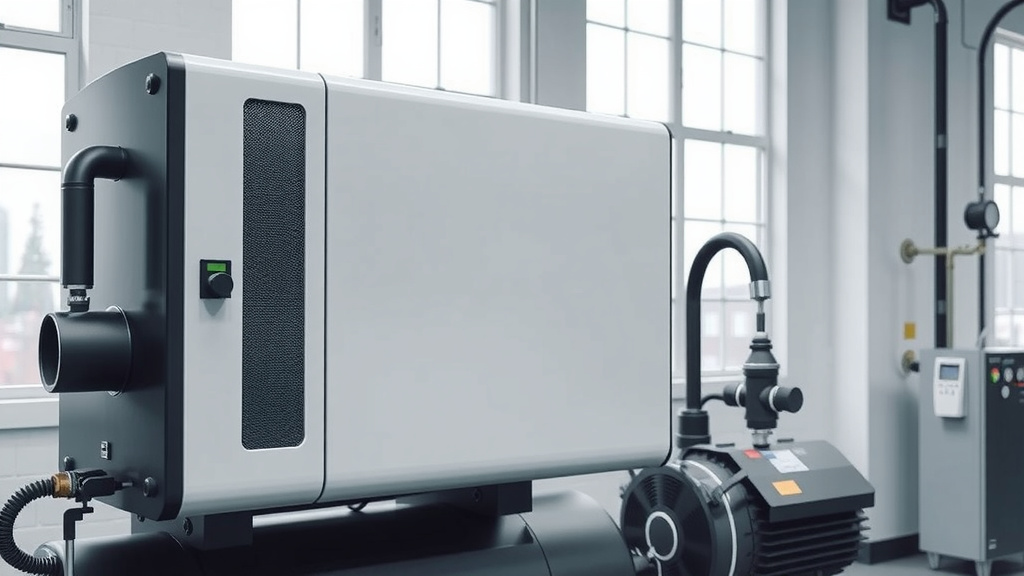
A desiccant dryer for an air compressor is a specialized system that removes moisture from compressed air using adsorbent beads.
This type of dryer is essential for reaching extremely low dew points, making it a top choice for sensitive industrial applications.
If you need a quick summary of what we found, here is the short version:
- It uses porous materials like silica gel to trap water.
- It prevents pipes from freezing in cold weather.
- It provides cleaner air than standard refrigerated models.
- It requires periodic bead replacement to stay efficient.
- It is ideal for painting, labs, and food processing.
What Is A Desiccant Dryer For An Air Compressor?
A desiccant dryer is a piece of equipment that cleans your air by pulling out water vapor. It uses a process called adsorption to stick water molecules to the surface of tiny beads.
How The Adsorption Process Works
Unlike a sponge that soaks up water, these beads trap moisture on their outer surface. We found that most systems use two towers to keep the air flowing without stopping.
One tower cleans the air while the other tower dries its beads. This cycle switches back and forth so you always have a steady supply of dry air.
Why Dry Air Matters For Your Tools
Water is the enemy of machines and air-powered tools. If moisture gets inside, it can cause expensive rust and ruin your finished work.
Have you ever seen water spitting out of a spray paint gun? A desiccant dryer stops that problem before it starts, giving you a perfect finish every time.
Reaching Ultra-Low Dew Points
Standard dryers only get air down to about 38 degrees. Many experts say a desiccant system can reach -40 or even -100 degrees (ISO 8573-1).
The Different Types Of Desiccant Dryers
Not every dryer works the same way. You should pick the one that fits your budget and your specific air needs.
Heatless Desiccant Dryers
These are the most common types found in small shops. They use a small amount of dried air to blow the moisture off the wet beads.
We found that these are simple to maintain because they have fewer moving parts. But, they do waste some air during the cleaning process.
Heated Purge Dryers
These models use electric heaters to dry out the desiccant beads. This means they don’t waste as much compressed air as heatless versions.
They cost more upfront, but they can save you money on power in the long run. Large factories often prefer these for their high efficiency.
Comparing Dryer Technologies
How do you know which dryer is right for you? Look at this table to see the main differences between common styles.
| Feature | Refrigerated Dryer | Desiccant Dryer |
|---|---|---|
| Dew Point | 35°F to 40°F | -40°F to -100°F |
| Best Use | General Shop Tools | High-End Painting/Labs |
| Maintenance | Low | Medium |
| Price | Lower | Higher |
Common Desiccant Materials Used
The “magic” happens inside the tank where the beads live. Different materials perform differently based on your environment.
Activated Alumina
This is a very tough material that resists breaking down. Many experts say it is the best choice for achieving a -40 degree dew point.
Silica Gel Beads
You might recognize these from small packets in shoe boxes. In a compressor, they work great at lower temperatures and are very efficient.
Molecular Sieve
This material has very tiny pores for extreme drying. It is used when you need the highest air quality possible for sensitive electronics.
Who Needs A Desiccant Dryer?
If you only fill up tires, you likely don’t need one of these. But for professional work, they are often a smart choice.
Do you work in a cold climate? If your air lines run outside, a standard dryer might let water freeze and block your pipes.
A desiccant dryer keeps lines open even in the middle of winter. Industries like medicine and food also use them to keep bacteria from growing in wet air.
Maintenance Tasks To Keep In Mind
You can’t just plug it in and forget it forever. A little regular care makes the system last for many years.
- Check the mufflers for clogs every month.
- Look at the color-changing humidity indicator.
- Replace the pre-filters to keep oil off the beads.
- Drain any collected liquid from the bottom of the tanks.
- Test the switching valves to ensure they move freely.
- Swap out the old desiccant every 2 to 3 years.
Potential Downsides To Consider
While they are great for drying, they have a few small trade-offs. They can be quite noisy when they purge air from the towers.
They also cost more to run than a simple fridge-style dryer. You have to decide if ultra-dry air is worth the extra utility cost for your business.
Choosing The Right Size For Your Shop
Don’t just buy the biggest one you can find. You need to match the dryer to the CFM output of your air compressor.
If the dryer is too small, the air will move too fast for the beads to catch the water. Always check the rating on the side of the unit before buying.
Conclusion
A desiccant dryer is the ultimate tool for fighting moisture in your air system. By using adsorbent beads, it creates air that is bone-dry and safe for any task. While it costs a bit more, the protection it offers your tools and projects is often worth the price. We found that most serious professionals eventually move to desiccant drying for the best results.
Is a desiccant dryer better than a refrigerated one?
It depends on your needs, but for extreme dryness, the desiccant version is much better. It reaches lower temperatures that a fridge dryer simply cannot touch.
How long do the drying beads last?
Under normal use, the beads usually last between 2 and 5 years. If oil gets into the tank, you might have to replace them much sooner.
Do these dryers use a lot of electricity?
Heatless models use very little electricity, but they use compressed air instead. Heated models use more power but save on your total air volume.
Can I install one myself?
Yes, if you are handy with plumbing and air lines. Just make sure to install a filter before the dryer to keep it clean.
Are desiccant dryers loud?
They make a loud “whoosh” sound every few minutes when they switch towers. You can add a silencer or muffler to help quiet the noise.