What Is A Good Size Air Compressor?
Choosing a good size air compressor often comes down to matching its power (CFM and PSI) with the demands of your specific air tools and tasks.
A good size air compressor is one that reliably delivers the air volume and pressure your most demanding tools need, without constantly running or falling short.
- For light tasks like tire inflation or brad nailing, a small 1-6 gallon compressor with 1-3 CFM is generally sufficient.
- DIY enthusiasts doing impact wrench work or small painting often need 6-20 gallons and 4-6 CFM.
- Professional work or continuous tools like sanders demand higher CFM (7-10+ CFM) and larger tanks (20+ gallons).
- Always consider the tool’s CFM requirement at 90 PSI for the most accurate sizing.
- Don’t forget factors like noise, portability, and your power supply when making your choice.
What Is A Good Size Air Compressor?
A good air compressor size means finding the sweet spot where it perfectly meets your tool’s needs without being overkill or falling short. It’s like finding the right pair of shoes for a marathon.
You want enough air power for your projects, but not so much that you spend extra money or storage space for power you don’t use. We find that the right fit saves you headaches and keeps your tools happy.
Understanding Air Compressor Basics
When you’re looking at air compressors, you’ll hear three main terms: CFM, PSI, and tank size. Think of them as the engine, the pressure gauge, and the fuel tank for your air tools.
Understanding these numbers is key to making a smart choice. We’ve found that getting these basics right makes selecting a compressor much easier for you.
What is CFM? (Cubic Feet Per Minute)
CFM tells you how much air volume the compressor can deliver each minute. It’s like the horsepower of your air compressor, indicating its work rate.
Every air tool, from a simple nail gun to a heavy-duty sander, has a CFM requirement. You need a compressor that can meet or exceed your tool’s CFM at a specific PSI, usually 90 PSI.
What is PSI? (Pounds Per Square Inch)
PSI measures the air pressure an air compressor can generate. It’s about the force with which the air is pushed out.
Most air tools need a certain PSI to run correctly. While many tools operate around 90 PSI, your compressor needs to produce more than that to keep them running consistently. A higher max PSI allows for more reserve.
Tank Size: Does It Really Matter?
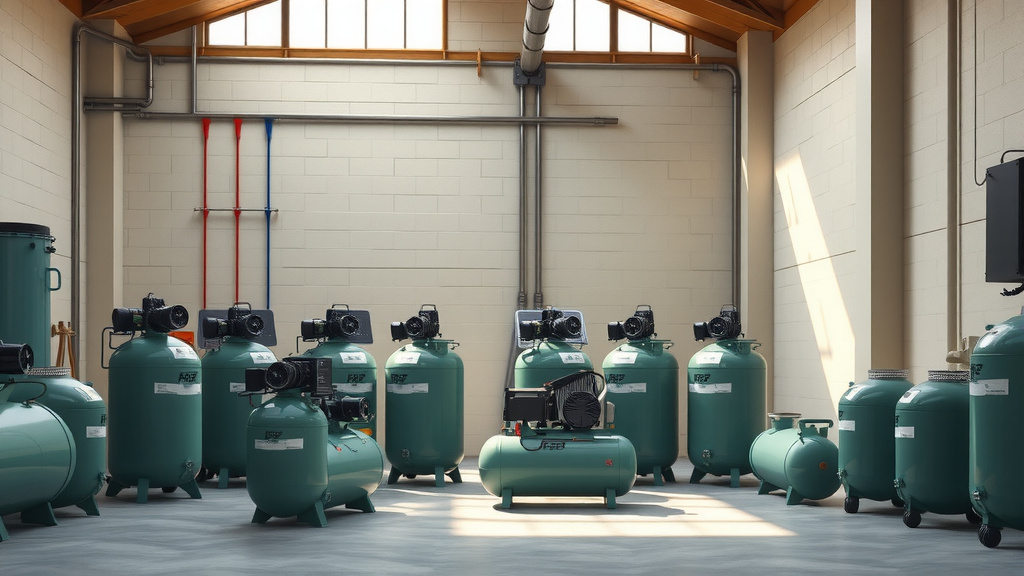
The tank size, measured in gallons, is how much compressed air the unit can store. It’s like a buffer for your air supply.
A larger tank means the compressor runs less frequently, which extends its lifespan and provides a more constant air supply. For quick, intermittent tasks, a small tank is fine, but continuous work truly benefits from a bigger reservoir.
Matching Your Compressor to Your Tasks
The first step in finding a good size air compressor is thinking about what you’ll use it for. Are you inflating tires, framing a house, or painting a car?
Each type of task and tool has different air demands. Let’s break down some common scenarios for you.
For Light-Duty Home Projects
If you’re mainly inflating tires, blowing dust, or using a small brad nailer, you don’t need a huge, powerful machine. A smaller, more portable unit will do the trick.
- Tire inflation: Low CFM (1-2) at 90 PSI, often paired with a 1-6 gallon tank.
- Brad nailers: Typically 1-2 CFM at 90 PSI, a 2-6 gallon tank provides enough bursts of air.
- Blow guns: These need minimal CFM, so a smaller compressor works well for quick clean-ups.
For DIY and Garage Enthusiasts
Are you tackling bigger projects like framing, using impact wrenches for car repairs, or even some small painting? Your needs will be a bit more substantial.
We found that these activities demand a step up in both CFM and tank capacity. Many experts say a 6-20 gallon tank is a good starting point here (Popular Mechanics).
| Tool/Task | CFM @ 90 PSI (Avg.) | Recommended Tank Size |
|---|---|---|
| Inflating Tires/Sports Equipment | 1-2 | 1-6 Gallon |
| Brad/Finish Nailers | 1-3 | 2-6 Gallon |
| Impact Wrenches (Light) | 4-5 | 6-10 Gallon |
| Small Paint Spray Guns | 4-6 | 10-20 Gallon |
| Framing Nailers | 3-5 | 6-10 Gallon |
For Professional Work or Continuous Use
If you’re using air tools constantly, like sanders, grinders, or heavy-duty paint sprayers, you need a workhorse. These tools consume a lot of air continuously.
Research often connects these demands with compressors boasting 7-10+ CFM at 90 PSI and larger tanks, often 20 gallons or more (Tool Digest). You really want a steady flow of air.
Important Considerations Before Buying
Beyond CFM, PSI, and tank size, a few other factors can shape your air compressor choice. Don’t forget to think about your workspace and your comfort.
It’s about making sure the compressor fits into your life, not just your tool bag. Let’s look at what else matters for you.
Noise Levels
Some air compressors can be quite noisy, like a jackhammer. If you work in a residential area or a shared space, a “quiet” or “low-noise” model might be worth the extra cost.
Quiet compressors typically operate below 70 decibels. Many manufacturers are making strides to reduce noise, offering more comfortable options for home use.
Portability vs. Stationary
Do you need to move your compressor around your garage, or even take it to job sites? Then portability is key. Look for wheeled models or smaller, lighter designs.
If your compressor will live in one spot in your workshop, then a heavier, stationary unit might be fine. These often come with larger tanks and more power.
Power Source
Most home and small shop compressors run on standard 120V household current. However, larger, more powerful units often require 240V, like an electric dryer.
Make sure your electrical setup can handle the compressor you choose. Gas-powered compressors are an option for remote sites where electricity isn’t available, but they require proper ventilation.
Common Pitfalls to Avoid
It’s easy to make a few common mistakes when buying an air compressor. The biggest one we found is underestimating your CFM needs.
Buying a compressor that’s too small for your most demanding tool means it will constantly run, wear out faster, and frustrate you with insufficient power. Nobody wants that!
Your Compressor Checklist
- List all the air tools you currently own or plan to buy.
- Find the CFM and PSI requirements for each tool, especially at 90 PSI.
- Add 20-30% to the highest CFM requirement to give yourself a buffer.
- Consider your available electrical power (120V or 240V outlets).
- Think about your noise tolerance and the compressor’s typical operating sound.
- Set a realistic budget, understanding that investing in the right size often saves money later.
Conclusion
Finding a good size air compressor truly depends on you and your projects. There’s no single “best” size, but there is a perfect fit for your specific needs. By carefully considering CFM, PSI, tank size, and your planned tasks, you can confidently choose a compressor that will serve you well for years to come.
What are the key measurements for an air compressor?
The three key measurements are CFM (Cubic Feet Per Minute), PSI (Pounds Per Square Inch), and tank capacity (measured in gallons). CFM indicates air volume, PSI shows pressure, and tank size reveals storage capacity.
Can a small air compressor run an impact wrench?
A very small air compressor (1-2 gallon tank, low CFM) might struggle to run an impact wrench effectively for more than a few seconds. Impact wrenches typically require 4-5 CFM at 90 PSI, so a compressor with at least a 6-gallon tank and matching CFM is usually needed for satisfactory performance.
How much CFM do I need for painting?
For small, intermittent painting jobs with a touch-up gun, 4-6 CFM at 90 PSI might suffice. For continuous, larger painting projects with a full-size spray gun, you’ll generally need 7-10 CFM or more at 90 PSI to maintain a consistent spray pattern.
Is a larger air compressor tank always better?
Not always. While a larger tank means less frequent cycling and a more consistent air supply for continuous tools, it also means a heavier, less portable, and often more expensive unit. For very light, intermittent tasks, a small tank is more practical and cost-effective.
What does “duty cycle” mean for air compressors?
Duty cycle refers to the percentage of time an air compressor can run within a given period (often 10 minutes) without overheating. For example, a 50% duty cycle means it can run for 5 minutes and then needs 5 minutes to cool down. It’s an important factor for continuous use applications.