
What Is PSI on an Air Compressor?
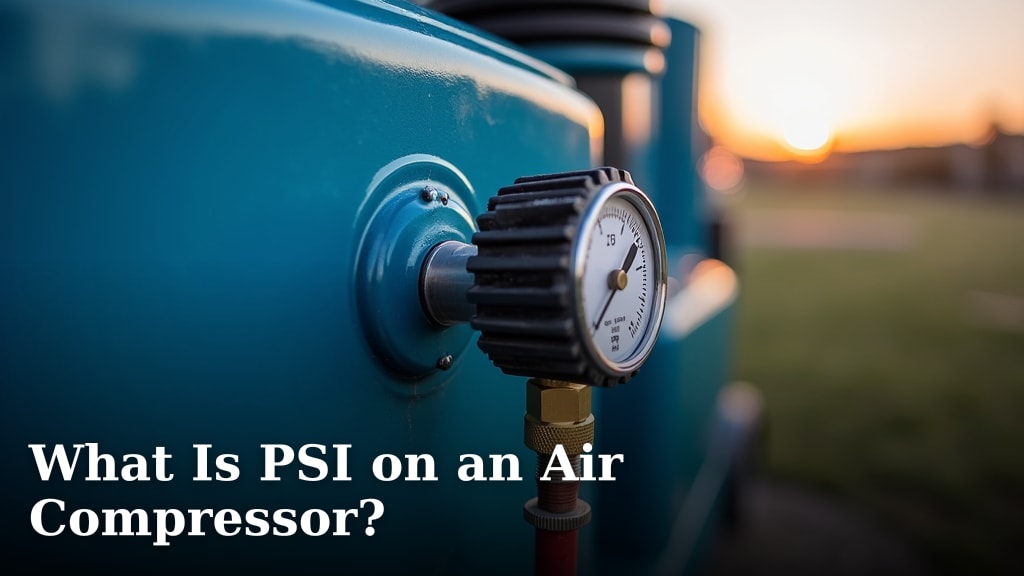
PSI on an air compressor stands for Pounds per Square Inch, which measures the force or pressure of the compressed air. It tells you how much air power your compressor can deliver. A higher PSI means more powerful airflow for your tools.
Understanding PSI is really important for matching your air compressor to your tools. You need enough PSI to power things like nail guns or spray painters. We found that using the right PSI prevents damage and ensures your projects run smoothly. It’s like finding the right battery for your remote control.
- PSI measures air pressure in pounds per square inch.
- It tells you how powerful your air compressor is.
- Different tools need different PSI levels to work correctly.
- Matching PSI to your tools is key for efficiency and safety.
So, you might be wondering how much PSI you actually need, right? Let’s walk through everything you need to know about PSI for your air compressor and tools.
Understanding Air Compressor PSI
So, you know PSI is Pounds per Square Inch, but what does that really mean for your air compressor? It’s basically about how much push the air has when it leaves your machine. Think of it like water pressure in a hose. Higher pressure means more force.
Your air compressor compresses air into a tank. The PSI tells you the pressure inside that tank. When you open a valve or connect a tool, that pressurized air rushes out, ready to do work.
We’ve found that knowing your compressor’s PSI rating helps you figure out its capabilities. It’s a key factor in choosing the right compressor for your needs, whether it’s for a small DIY project or a professional workshop (U.S. Department of Labor).
How PSI Works with Air Compressor Tools
Different air tools need different amounts of air pressure to operate correctly. If your compressor doesn’t deliver enough PSI, your tool might work weakly, slowly, or not at all. It’s like trying to run a high-powered blender on a weak battery; it just won’t perform.
Conversely, too much PSI can also be an issue. It can damage tools or the materials you’re working on. Imagine over-inflating a tire; it can burst. The same principle applies to air tools.
That’s why it’s so important to match your compressor’s output PSI to your tool’s requirements. This often means adjusting a regulator on your compressor to get the perfect pressure for the job. It’s about finding that sweet spot for efficiency and safety.
PSI vs. CFM: The Dynamic Duo
While PSI tells you about the pressure, there’s another important measurement you need to consider: CFM. CFM stands for Cubic Feet per Minute. It measures the volume of air an air compressor can deliver.
Think of it this way: PSI is the strength of the air push, and CFM is the amount of air available. Both are vital. A high PSI with low CFM means strong bursts but not much sustained power. A low PSI with high CFM might push a lot of air, but without much force.
For most air tools, you need both adequate PSI and CFM. We often see people focus only on PSI, but for tools that run continuously, like sanders or grinders, CFM becomes arguably more important than PSI (Compressed Air & Gas Institute).
Why You Need Both PSI and CFM Information
You can have plenty of pressure (high PSI) but not enough air volume (low CFM) to keep a tool running. For example, a nail gun uses a quick burst of high-pressure air. It might need high PSI, but not a huge CFM, since it’s used intermittently.
On the other hand, an orbital sander needs a continuous supply of air. It might not need super-high PSI, but it definitely needs a steady, high CFM to keep it spinning. If your CFM is too low, the sander will sputter and stop.
Always check the specifications of your air tools to see their required PSI and CFM. This information is typically found in the tool’s manual or on the manufacturer’s website. It helps you choose a compressor that can truly power your entire toolkit.
Matching PSI to Common Air Tools
Navigating the various air tool requirements can feel a little daunting at first. But don’t worry, we can simplify it. Most tools fall into general categories for PSI needs. Let’s look at some common examples.
Smaller tasks often require lower PSI. For inflating tires or using a blow gun, you might need around 30-90 PSI. These tasks don’t demand a lot of force, so a lower pressure suffices.
For fastening tools like brad nailers or staplers, you’re usually looking at a range of 70-100 PSI. These tools need a decent burst of pressure to drive fasteners cleanly. Too little PSI, and the nail won’t sink fully.
More demanding tools, such as impact wrenches, spray guns, or grinders, can require 90-120 PSI or even higher. These applications need a significant amount of force. Always aim to meet, but not significantly exceed, the manufacturer’s recommendations.
PSI Requirements for Different Tool Types
Here’s a quick overview of typical PSI ranges for common air tools. Remember, these are general guidelines. Always check your specific tool’s manual for exact figures.
| Air Tool Type | Typical PSI Range | Primary Function |
|---|---|---|
| Tire Inflator / Blow Gun | 30-90 PSI | Inflation, cleaning |
| Brad Nailer / Stapler | 70-100 PSI | Light fastening |
| Finish Nailer / Framing Nailer | 80-120 PSI | Medium-to-heavy fastening |
| Spray Gun (Paint/Texture) | 40-90 PSI | Applying coatings |
| Impact Wrench | 90-120 PSI | Torquing nuts/bolts |
| Air Ratchet | 70-90 PSI | Faster fastening in tight spaces |
| Air Sander / Grinder | 90-100 PSI | Surface prep, material removal |
As you can see, the requirements vary quite a bit. If you plan to use a variety of tools, you’ll want a compressor that can handle the highest PSI demands of your most intensive tools, while also offering adjustment for simpler tasks.
Adjusting PSI on Your Compressor
Most air compressors come with a built-in regulator. This is your friend! The regulator allows you to control the output PSI of your compressor. You wouldn’t want to run a delicate brad nailer at the same high pressure as an impact wrench, right?
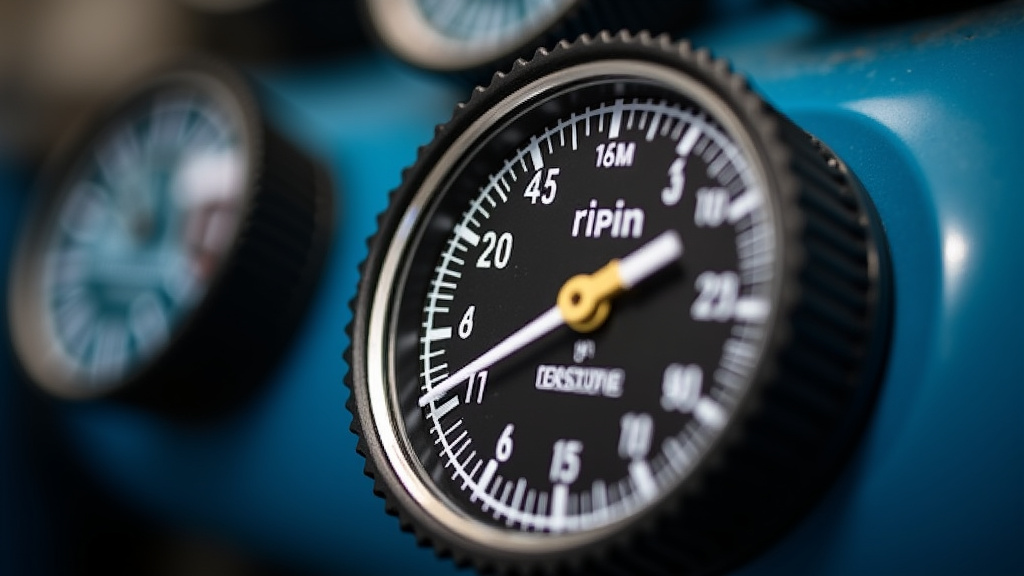
To adjust the PSI, you’ll typically find a knob or dial on your compressor. Often, there will be two gauges: one showing the tank pressure (what’s inside the tank) and another showing the regulated output pressure (what’s going to your tool). You’ll want to focus on the output pressure gauge.
Turn the knob clockwise to increase the output PSI and counter-clockwise to decrease it. It’s a good practice to set your regulator to the recommended PSI *before* you connect your tool, or at least before you start using it. This protects your tools and your work.
Why Proper PSI Regulation Matters
Setting the correct PSI prevents common problems. If your PSI is too low, your tool might fail to perform its task. A paint sprayer might spit instead of spray, or a nail gun might leave nails proud of the surface (Occupational Safety and Health Administration).
If your PSI is too high, you risk several issues. You could damage the internal components of your air tool, shortening its lifespan. You might also accidentally overdrive fasteners or distort materials you’re working on. In some cases, excessively high pressure can even be a safety hazard, causing fittings to fail or hoses to rupture.
Always take a moment to confirm your PSI setting. It’s a small step that can save you a lot of frustration and potential repair costs. Plus, it ensures you get the best performance out of your tools.
What If Your Compressor Doesn’t Have Enough PSI?
Sometimes you might find your air compressor isn’t quite powerful enough for a particular tool. What then? You can’t magically make a compressor put out more PSI than its maximum rating. Its motor and pump simply aren’t designed for it.
If you consistently need more PSI than your compressor can deliver, it might be time to consider an upgrade. Trying to force a small compressor to do big jobs will likely lead to overheating, premature wear, and unsatisfactory results for your projects.
However, before buying a new compressor, double-check your existing setup. Are your hoses too long or too narrow? Long, thin hoses can cause a pressure drop. Are your fittings leaky? Even small air leaks can reduce effective PSI at the tool. Always ensure your system is efficient and leak-free first.
When to Consider a Larger Compressor
We’ve found a few indicators that it’s time to upgrade your air compressor:
- Your tools consistently underperform, even with the regulator set to max.
- The compressor runs constantly, trying to keep up with demand.
- You’re often waiting for the tank to refill before continuing work.
- You’ve added new, more demanding air tools to your collection.
- Your current compressor struggles with even moderate tasks.
If you’re experiencing any of these issues, it’s a clear sign your compressor might not be keeping up. Investing in a compressor with a higher maximum PSI and suitable CFM will make your work much more efficient and enjoyable.
Maintaining Your Compressor for Optimal PSI
Even the best air compressor needs a little love to maintain its performance, particularly its ability to deliver consistent PSI. Regular maintenance can prevent pressure drops and ensure a long, happy life for your machine.
One of the most common issues is moisture build-up. Air compressors generate condensation, which collects in the tank. If not drained regularly (usually daily, depending on use), this water takes up valuable air space and can lead to rust. Rust can then degrade tank pressure capacity and even contaminate your air supply.
Checking for air leaks is also crucial. A small leak in a hose, fitting, or valve might seem insignificant, but it can cause a noticeable drop in the actual PSI reaching your tools. We found that even tiny leaks can add up to a significant loss of overall efficiency.
Checklist for PSI Maintenance
Here’s a simple checklist to help you keep your compressor delivering reliable PSI:
- Drain the tank: Regularly open the drain valve to remove condensation.
- Inspect hoses and fittings: Look for cracks, damage, or loose connections.
- Check air filters: Clean or replace clogged air filters to ensure proper airflow to the pump.
- Monitor for leaks: Listen for hissing noises; apply soapy water to connections to find bubbles.
- Maintain oil levels (if applicable): For oil-lubricated compressors, keep oil at the recommended level.
- Store properly: Keep your compressor in a clean, dry environment to prevent corrosion.
By following these simple steps, you’ll help ensure your air compressor always delivers the PSI you need for all your projects. It’s like regular oil changes for your car; it keeps everything running smoothly and reliably.
Conclusion
You now understand that PSI is much more than just a number; it’s the heart of your air compressor’s power. Matching your compressor’s PSI—and CFM—to your tools is essential for optimal performance and preventing damage. We found that taking the time to regulate your pressure and maintain your equipment ensures smooth operation for every task. By keeping these principles in mind, you’re well-equipped to tackle any project with confidence.
Frequently Asked Questions
What is a good PSI for a home air compressor?
For most home users, an air compressor delivering around 90-120 PSI is sufficient. This range accommodates common tools like nail guns, impact wrenches, and tire inflators. Always check the specific requirements of your tools.
Can I use an air tool with lower PSI than recommended?
While you can connect a tool to lower PSI, it will likely perform poorly or not at all. The tool might operate slowly, incompletely, or lack the necessary force for its intended job. It’s always best to meet the manufacturer’s recommended PSI.
Does higher PSI mean a faster air compressor?
Not necessarily. PSI measures the pressure or force, while CFM (Cubic Feet per Minute) indicates the volume of air delivered. A compressor might have high PSI but low CFM, meaning strong bursts of pressure but not much sustained air volume, which affects continuous tool operation.
How do I know the maximum PSI of my air compressor?
The maximum PSI is usually listed on a label directly on your air compressor or in its owner’s manual. It often refers to the maximum pressure the tank can hold. Your output regulator will allow you to set the working pressure below this maximum.
Is it bad to run an air compressor at its maximum PSI all the time?
Constantly running your compressor at its absolute maximum PSI can put extra strain on the motor and pump, potentially shortening its lifespan. It’s best to regulate the PSI to meet your tool’s specific needs, which is often lower than the compressor’s maximum tank pressure.
