What Is The Biggest 120 Volt Air Compressor?
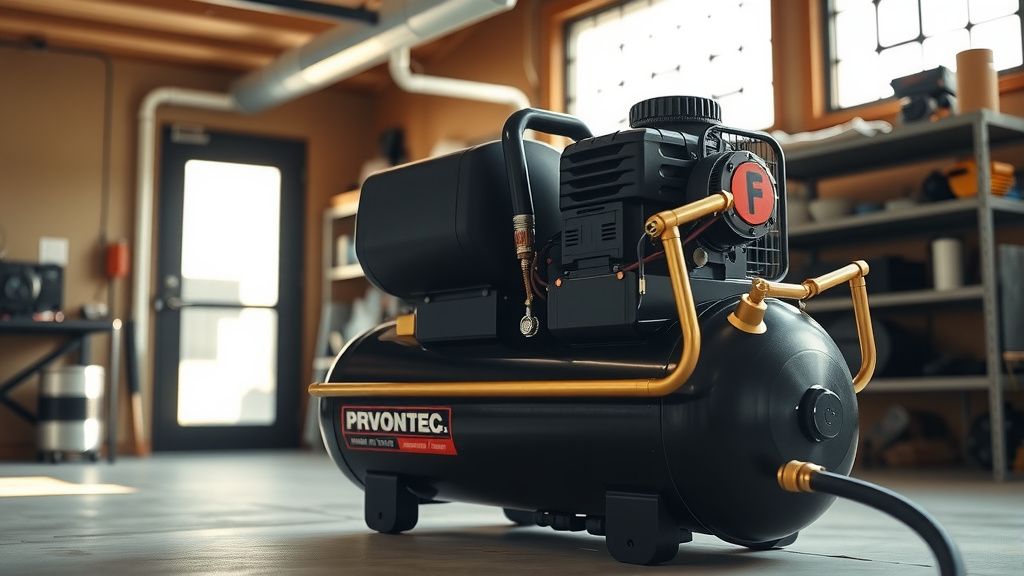
The biggest 120 volt air compressor available typically delivers around 5-6 CFM (cubic feet per minute) at 90 PSI (pounds per square inch). This performance level allows it to operate a wide range of common garage and workshop tools.
You’ll often find these units running on 1.5 to 2 peak horsepower motors, carefully designed to not overload a standard 15-amp household electrical circuit.
Here’s a quick summary of what you’ll find in this guide:
- The largest 120V air compressors balance power with household electrical limits.
- Look for high CFM and PSI for serious DIY or light professional tasks.
- Tank size matters for air storage, but not raw power output.
- Safety and proper electrical considerations are always essential.
- These units are perfect for garages, workshops, and mobile jobs.
What Is The Biggest 120 Volt Air Compressor?
When you hear “biggest,” you might think of physical size. However, for air compressors, “biggest” usually means the highest performance you can get within a specific power limit. For a 120-volt system, that limit is your standard household electrical outlet.
Understanding “Biggest” Performance
What does “biggest” mean for a 120V air compressor? We found it primarily refers to two key metrics: Cubic Feet per Minute (CFM) and Horsepower (HP). These numbers tell you how much air a compressor can deliver and how powerful its motor is.
CFM and PSI: The Real Power Metrics
CFM, measured at a certain PSI, is arguably the most critical spec. It tells you how quickly the compressor can supply air to your tools. Many experts say a higher CFM means the compressor can handle more demanding or continuous tasks (Air Compressor Manufacturers Association).
For 120-volt models, you’ll rarely see anything above 6 CFM at 90 PSI. Anything higher would likely trip a typical 15-amp breaker or require a dedicated 20-amp circuit, which isn’t standard in every home.
Horsepower Limitations on 120 Volts
A standard 120-volt household circuit can only deliver so much power before tripping its breaker. Most powerful 120V air compressors are designed to operate on a 15-amp circuit. This limits the motor size to roughly 1.5 to 2 running horsepower (or up to 4-5 peak HP, a less consistent measurement). Going above this for continuous use is asking for trouble.
We found that manufacturers carefully engineer these units to maximize performance without exceeding those electrical boundaries. It’s a delicate balance, much like trying to fit a race car engine into a compact car – you’re limited by the frame.
Why 120 Volts Limits Your Options
You might wonder why we can’t just plug in a massive, industrial-grade compressor. It all comes down to the electricity flowing through your walls. 120-volt outlets are designed for everyday appliances, not heavy-duty machinery.
The Ampere Wall: Circuit Breaker Basics
Think of your circuit breaker as a watchful guardian. Its job is to prevent too much electricity from flowing, which could cause overheating or even fires. Most household circuits are 15 amps. When an air compressor tries to pull more than 15 amps, *pop* – the breaker trips.
This is why a truly “biggest” compressor needs 240-volt power. Those circuits can handle higher amperages, allowing for much larger motors and significantly higher CFM output.
What a 120V Unit Can Realistically Do
Don’t misunderstand; a 120V compressor is still incredibly useful. It’s your loyal sidekick for many tasks. It can easily handle:
- Inflating tires (cars, bikes, balls)
- Powering nail guns for framing or finishing
- Operating impact wrenches for lug nuts (light duty)
- Running air ratchets, grinders, and sanders (intermittently)
- Blowing off dust and debris from your workbench
These units are perfect for the home garage, DIY enthusiast, or small workshop where portability and convenience are key.
Key Specifications for Big 120 Volt Air Compressors
When you’re shopping for the “biggest” 120V model, you’ll encounter a few terms. Knowing what they mean helps you make a smart choice.
Understanding CFM and PSI Together
Remember, CFM and PSI are partners. You need enough CFM *at* the correct PSI to run your tools. Most air tools list their CFM requirement at 90 PSI. So, when comparing compressors, always look at the “CFM @ 90 PSI” number. We found that the closer the compressor’s CFM matches or exceeds your tool’s requirement, the happier your tool will be.
The Role of Tank Size
A larger tank (say, 20-30 gallons for a 120V unit) doesn’t increase the compressor’s raw power or CFM output. Instead, it stores more compressed air. This means the compressor motor runs less frequently, giving it a break and reducing noise. It’s like having a bigger fuel tank on your car – you go longer between fill-ups.
However, a bigger tank also means a longer initial fill-up time. It’s a trade-off worth considering for your specific uses.
Comparing Top 120 Volt Compressor Types
While we can’t name specific brands or models, we can talk about the types of “big” 120V compressors you’ll often see.
| Type | Typical Tank Size | Key Benefit |
|---|---|---|
| Pancake | 2-6 Gallons | Compact, portable, stable |
| Hot Dog / Horizontal | 4-8 Gallons | Good balance of portability & capacity |
| Twin-Stack | 4-10 Gallons (often 2 tanks) | Enhanced stability, often higher CFM for its class |
| Vertical (Small) | 10-30 Gallons | Larger air reserve, takes less floor space |
Choosing the Right Type for You
For the “biggest” performance within 120V, you’ll likely be looking at twin-stack or smaller vertical tank models. These often have higher CFM ratings, sometimes reaching that 5-6 CFM @ 90 PSI sweet spot. They offer more sustained airflow for things like impact wrenches or sanding projects.
Consider your workspace. Do you need something to roll around easily, or will it stay in one corner? This helps decide between a highly portable unit and a more stationary vertical model.
Making Your Choice: A Quick Checklist
Ready to pick your champion? Here’s a quick list to guide your decision for a powerful 120V compressor:
- CFM @ 90 PSI: Does it meet or exceed the needs of your most demanding tool?
- Tank Size: Is it large enough for your typical usage, reducing motor cycling?
- Noise Level: Are you working in a sensitive environment? Look for “quiet” models.
- Oil-Free vs. Oiled: Oil-free needs less maintenance, but oiled can sometimes last longer.
- Portability: Can you move it where you need it, or will it stay put?
Safety First with Your Air Compressor
Even a 120V compressor is a powerful machine. Always follow safety guidelines. This means wearing eye protection, understanding how to drain the tank, and never pointing the air nozzle at yourself or others. Many experts emphasize the importance of reading your owner’s manual (Occupational Safety and Health Administration).
Electrical Safety Considerations
Ensure your electrical circuit can handle the compressor’s draw. Avoid using long, thin extension cords, as they can cause voltage drop and overheat. If you must use an extension cord, we found that a heavy-duty, outdoor-rated cord (12-gauge or thicker, depending on length) is always the best choice (National Electrical Code).
Maintenance Tips for Longevity
To keep your “biggest” 120V air compressor running strong, a little care goes a long way. Regularly drain moisture from the tank. This prevents rust and keeps your air clean. Check and replace air filters as needed. If it’s an oiled unit, keep an eye on the oil level and change it according to the manufacturer’s schedule. It’s like giving your car regular oil changes; it simply performs better and lasts longer.
Conclusion
Finding the “biggest” 120 volt air compressor means balancing raw power with the limits of your household electricity. You’re looking for the highest CFM at 90 PSI, often in the 5-6 range, paired with a reliable 1.5 to 2 running horsepower motor. Consider tank size for air reserve and choose a style that fits your workspace.
These robust 120V units are champions for most home and light workshop tasks, offering versatility and power without the need for specialized wiring. By focusing on key specs and prioritizing safety, you’ll confidently pick the perfect compressor to tackle all your projects.
What is a good CFM for a 120 volt air compressor?
A good CFM for a 120 volt air compressor is typically between 4 to 6 CFM at 90 PSI. This range is sufficient to operate most common air tools like impact wrenches, air ratchets, and nail guns for intermittent use without excessive waiting for the tank to refill.
Can a 120V air compressor run an impact wrench?
Yes, a 120V air compressor can run an impact wrench, especially for tasks like changing lug nuts on a car. However, for continuous or heavy-duty use, you’ll want a compressor on the higher end of the 120V CFM spectrum (5-6 CFM at 90 PSI) to ensure sustained performance.
What is the largest tank size for a 120V air compressor?
The largest tank size for a 120V air compressor typically ranges from 20 to 30 gallons. While larger tanks store more air and reduce motor cycling, remember that tank size doesn’t increase the compressor’s actual CFM output or motor power; it just extends how long you can use tools before the motor kicks on.
Are 120V air compressors suitable for professional use?
120V air compressors are generally best suited for DIY, home garage, or light-duty professional tasks, especially those requiring portability. For continuous, heavy-duty professional use in a shop or on a job site, a 240V or gas-powered compressor with higher CFM and HP is usually a more efficient and reliable choice.
How do I prevent my 120V air compressor from tripping the breaker?
To prevent your 120V air compressor from tripping the breaker, ensure it’s plugged into a dedicated 15-amp (or preferably 20-amp) circuit with no other high-draw appliances. Avoid using long, thin extension cords; if a cord is necessary, use a heavy-duty 12-gauge or thicker cord that is as short as possible.